Edge AI

Search documents
立讯精密 - 持续打造 ODM + 能力;目标价上调至 77 元人民币
2025-11-03 03:32
Summary of Luxshare Precision Industry Co., Ltd. Conference Call Company Overview - **Company**: Luxshare Precision Industry Co., Ltd. (002475.SZ) - **Industry**: Greater China Technology Hardware - **Market Cap**: Rmb441,032 million - **Current Stock Price**: Rmb63.00 - **Price Target**: Rmb77.00, raised from Rmb55.00 Key Points Industry and Market Dynamics - **Growth Drivers**: The company is focusing on smart manufacturing and enhanced ODM-plus capabilities, which are expected to drive growth in consumer electronics, automotive, and datacom sectors [2][6] - **Emerging Technologies**: Edge AI devices, including smartphones, AI/AR glasses, and wearables, are anticipated to become significant business drivers starting in 2027 [2] Financial Performance - **Earnings Estimates**: The earnings estimates for 2025, 2026, and 2027 have been raised by 4%, 5%, and 19% respectively, reflecting smooth acquisition execution and enhanced capabilities [6][31] - **Revenue Growth**: Projected revenue for 2025 is Rmb335,048 million, increasing to Rmb417,920 million in 2026 and Rmb485,531 million in 2027 [8][38] - **Net Profit Guidance**: For 4Q25, net profit is expected to be between Rmb5,000 million and Rmb5,668 million, representing a year-over-year increase of 17-32% [10] Strategic Acquisitions - **Acquisition of Leoni**: Completed on July 10, 2025, with smooth integration of Wintech's ODM capacity, leading to steady mass production projects [4] - **Global Expansion**: The company has expanded its footprint to 26 countries, which has begun to yield new projects, including partnerships with Chery Europe [4] Product and Service Expansion - **Datacom Offerings**: Luxshare is expanding its datacom portfolio, including advanced copper connectors and optical transceivers, with expectations of substantial growth in the AI datacom business in 2026 [5] - **Automotive Sector Growth**: The automotive business is projected to grow from 5% of total revenue in 2024 to 20% in 2027, supported by the Leoni acquisition [25] Financial Ratios and Valuation - **P/E Ratio**: The stock is currently trading at 22.1x 2026 estimated P/E, which is attractive compared to its 5-year average of 28x [6] - **Operating Margin**: Expected to remain stable at approximately 5-6% over the coming years, supported by scale expansion [28] Risks and Challenges - **Margin Pressure**: Gross margin is under pressure due to a shift in business mix and increased exposure to lower-margin assembly operations [28] - **Market Risks**: Potential risks include worse-than-expected demand for smartphones and wearables, as well as competition leading to lower gross margins [24] Conclusion - **Investment Thesis**: The company is positioned for strong profit growth, with a projected increase of 26% YoY in 2025 and 22% in 2026, driven by new product offerings and successful integration of acquisitions [13][25] - **Recommendation**: The stock is rated as Overweight, with a price target of Rmb77.00, indicating a potential upside of 22% from the current price [8][34]

GSI Technology outlines $6.0M–$6.8M Q3 revenue guidance as Gemini-II advances in edge AI and defense markets (NASDAQ:GSIT)
Seeking Alpha· 2025-10-30 23:27
Group 1 - The article does not provide any specific content or key points related to a company or industry [1]



GSI Technology, Inc. Announces Second Quarter Fiscal 2026 Results
Globenewswire· 2025-10-30 20:05
Core Insights - GSI Technology closed a $50 million financing to support the development of its Gemini-II platform and initiate the Plato chip design, reinforcing its position in the edge AI market [3][6][10] - The company reported a revenue of $6.44 million for the second quarter of fiscal 2026, reflecting a 41.6% year-over-year increase, driven by strong demand for SRAM solutions [4][6] - The Gemini-I Associative Processing Unit has been validated by Cornell University research, demonstrating performance comparable to NVIDIA's A6000 GPU while consuming over 98% less energy, highlighting the potential of GSI's compute-in-memory architecture [3][12] Financial Performance - For the second quarter of fiscal 2026, GSI Technology achieved net revenues of $6.44 million, up from $4.6 million in the same quarter of the previous year and $6.3 million in the prior quarter [4][6] - Gross margin for the second quarter was 54.8%, an increase from 38.6% year-over-year but a decrease from 58.1% in the previous quarter, primarily due to product mix [4][6] - The company reported a net loss of $3.2 million, or $0.11 per diluted share, compared to a net loss of $5.5 million, or $0.21 per diluted share, in the same quarter of the previous year [9][8] Sales and Customer Insights - Sales to KYEC accounted for 12.5% of net revenues in the second quarter, while sales to Nokia decreased significantly from 17.8% to 3.1% year-over-year [5] - Military/defense sales represented 28.9% of shipments in the second quarter, down from 40.2% in the same period last year [5] - SigmaQuad sales increased to 50.1% of shipments in fiscal 2026's second quarter, compared to 38.6% in the same quarter of the previous year [5] Operating Expenses and Cash Position - Total operating expenses for the second quarter were $6.7 million, a decrease from $7.3 million in the same quarter of the previous year [6][8] - Research and development expenses were $3.8 million, down from $4.8 million year-over-year, indicating a focus on cost management [6][7] - The company ended the quarter with a cash balance of $25.3 million, significantly up from $13.4 million at the end of the previous fiscal year [10][6]

Ambiq Unveils Apollo510 Lite SoCs to Power the Always-On Edge with Dual-Mode Bluetooth Connectivity
Globenewswire· 2025-10-28 13:00
New Apollo510 Lite SoC Series delivers breakthrough energy efficiency and AI performance for smarter, longer-lasting connected devices AUSTIN, Texas, Oct. 28, 2025 (GLOBE NEWSWIRE) -- Ambiq Micro, Inc. ("Ambiq"), a leading provider of ultra-low-power semiconductor and AI solutions, today announced the Apollo510 Lite System-on-Chip (SoC) Series – the newest member of its Apollo5 family. Designed to meet the growing demand for always-on intelligence at the edge, the series delivers advanced AI processing, mul ...

Lantronix Edge AI Technology Powers Sightline's New AI-Driven Video Processor for Mission-Critical Drone Applications
Globenewswire· 2025-10-28 11:30
Core Insights - Lantronix Inc. has been selected by Sightline Intelligence to integrate its NDAA/TAA-compliant solution into Sightline's high-performance video processor for drone platforms, enhancing its presence in the drone and defense technology markets [1][2][5] Company Overview - Lantronix is a global leader in Edge AI and Industrial IoT solutions, providing intelligent computing, secure connectivity, and remote management for mission-critical applications [9] - The company focuses on high-growth markets, including smart cities, enterprise IT, and unmanned systems for both commercial and defense sectors [9] Industry Context - The global drone and defense technology markets are projected to reach $57.8 billion by 2030, indicating significant growth potential [2] - The collaboration with Sightline Intelligence positions Lantronix to capitalize on the accelerating adoption of drones in both commercial and military domains [5] Technology and Product Features - The new solution enables real-time AI-based object detection, classification, and tracking, supporting autonomous applications in defense and ISR sectors [2][3] - Lantronix's technology is built on Qualcomm® Dragonwing™ processors, offering full HD performance, dual-channel processing, and support for various standards, making it suitable for scalable, mission-critical deployments [4][7] Strategic Importance - The partnership with Sightline validates Lantronix's technology leadership and opens long-term opportunities in the defense and commercial sectors [3][5] - The design win enhances Lantronix's footprint in high-growth, high-barrier-to-entry markets, positioning the company favorably for future growth [5]

The AI Infrastructure Gold Rush: How This Week’s $27 Billion Bet Signals a New Era of Computing
Medium· 2025-10-27 08:48
Core Insights - The recent $27 billion investment by Meta in AI infrastructure signals a significant shift towards a new computing paradigm, emphasizing the importance of infrastructure in controlling market dynamics [3][18] - Companies that master access to massive computing resources, AI-native user interfaces, and edge computing capabilities will dominate the AI-first world [15][16] Investment Trends - Meta's $27 billion commitment to a data center in El Paso represents a strategic move to secure AI supremacy, highlighting the necessity for substantial upfront investments in computing power [3][4] - The trend indicates a move away from lean, cloud-first startups towards ventures that either establish deep infrastructure partnerships or effectively leverage large-scale platforms [5][16] Technological Developments - OpenAI's launch of the ChatGPT Atlas browser marks a shift from traditional keyword-based search to conversational discovery, potentially reshaping user interaction with information [6][7] - Apple's M5 chip enhances AI capabilities at the device level, democratizing access to AI processing power and enabling new categories of applications [10][11] Future Opportunities - The concept of space-based data centers, as proposed by NVIDIA-backed Starcloud, illustrates innovative thinking in infrastructure, addressing challenges faced by terrestrial data centers [13][14] - Entrepreneurs are encouraged to rethink fundamental assumptions about infrastructure to uncover significant opportunities in the evolving landscape [14][16] Strategic Considerations - The current infrastructure investments are likened to the early internet era, suggesting that the companies making these investments will shape the future of computing [17][18] - Success in the AI-first world will require strategic planning around infrastructure partnerships, AI integration, and user experience design [16][18]


Peraso (NasdaqCM:PRSO) 2025 Conference Transcript
2025-10-22 14:32
Summary of Peraso's Conference Call Company Overview - **Company Name**: Peraso - **Incorporation**: 2008, went public in December 2021 through a merger - **Business Focus**: Semiconductor company specializing in high-speed wireless technology, particularly mmWave technology, similar to Nvidia's business model [1][2] Industry Insights - **Market Growth**: The millimeter wave market is projected to grow from $5 billion this year to approximately $30 billion by 2023, representing an annual growth rate of about 25% [5] - **Military Segment Growth**: The military segment for millimeter wave technology is expected to grow at a rate of 42% due to its stealth capabilities [5] Core Business Areas 1. **Fixed Wireless Access**: - Focus on providing high-speed internet, particularly in rural areas where large telcos do not operate [6] - Lead customer: Ubiquiti, a $40 billion company with eight products based on Peraso's chips [6] 2. **Military Communications**: - Emphasis on stealthy communication capabilities that are undetectable in military environments [4] - Ongoing trials and demos with the U.S. government and other international military entities [10][11] 3. **Edge AI Applications**: - High bandwidth video processing for applications like self-driving cars and factory automation [12][13] 4. **Transportation**: - Trials in Asia to provide internet access on moving trains [14][15] Technological Advantages - **Beamforming Technology**: - Allows for long-distance signal transmission (over 25 kilometers) with low interference, making it suitable for dense urban environments and military applications [4][7] - **Patent Portfolio**: - Strong patent portfolio with 60 issued and pending patents, including nine essential claim patents in IEEE 802.11ay [2] Financial Performance - **Revenue**: - Fiscal 2024 revenue was $14.5 million, with 90% from legacy memory products [20] - mmWave revenue was $1.5 million in 2024, with a trajectory to reach approximately $10 million in 2025 [21][22] - **Gross Margin**: - Targeting a gross margin of 50% for mmWave products, with a current margin of about 48% [22] - **Cash Position**: - Reported $1.8 million in cash as of June 30, with plans to extend runway into mid-2026 [22] Market Position - **Competitive Landscape**: - Peraso is a sole supplier in the unlicensed mmWave market, while Qualcomm and MediaTek dominate the licensed segment [24] - **Total Addressable Market (TAM)**: - Estimated at about half a billion dollars for unlicensed mmWave technology [24] Challenges and Opportunities - **Adoption Barriers**: - The transition to mmWave technology is slow as customers adapt to the new high-frequency technology [24] - **Potential Acquisition**: - Mobix Labs has expressed interest in acquiring Peraso, with ongoing discussions about a potential hostile takeover [27][28] Conclusion - Peraso is positioned as a leader in the mmWave semiconductor market with significant growth opportunities in various sectors, particularly military and urban communications. The company is navigating challenges related to technology adoption and market competition while maintaining a focus on expanding its customer base and product offerings [18][19]

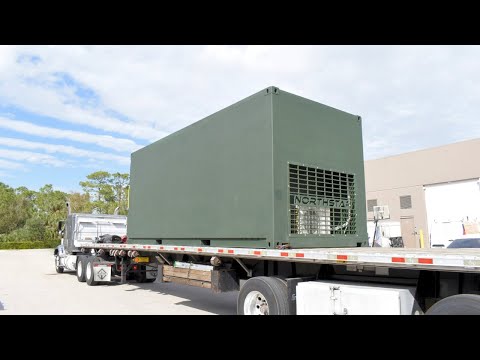
Northstar Enterprise + Defense Expands Leadership in Modular Data Centers with Owens Corning Collaboration and AI-Optimized Edge Infrastructure
Prnewswire· 2025-10-22 14:00
Core Insights - Northstar Enterprise + Defense is advancing its AI-optimized modular data center platform through collaborations with Owens Corning and other distributed computing companies, positioning itself in the growing edge AI and modular infrastructure market projected to reach $269.8 billion by 2032 [2][3] Collaboration and Innovation - The partnership with Owens Corning focuses on integrating advanced composite and insulation technologies into Northstar's Modular Data Center (MDC) product line, enhancing durability, insulation efficiency, and sustainability [2][3] - This collaboration aims to accelerate the transition to low-carbon, high-resilience infrastructure tailored for AI and defense applications [3] Deployment and Performance - Northstar has successfully deployed a modular disaster recovery network node for a major U.S. telecom provider and a full-scale modular data center for a Fortune 50 enterprise, demonstrating its capability to meet urgent demands with rapid deployment [4][5] - The AI-ready MDCs support compute densities up to 150kW per rack, facilitating high-throughput reinforcement learning and decentralized AI processing [5][6] Manufacturing and Sustainability - Northstar's MDCs are constructed using proprietary Fiber Reinforced Polymer (FRP) composites, making them up to 30% lighter than aluminum and deployable without heavy equipment [6][8] - Each MDC is designed for net-zero carbon manufacturing, contributing to reduced embedded emissions compared to traditional materials like steel or concrete [8][12] Security and Compliance - The next-generation mobile SCIF modular units are engineered to meet stringent security standards, ensuring protection against electronic, EMP, and cyber threats [8][9] - These modules are designed for easy transport and rapid deployment, enhancing operational efficiency in mission-critical environments [9][10] Strategic Vision - Northstar Technologies Group aims to integrate advanced materials and intelligent manufacturing across its business units, redefining the construction of mission-critical infrastructure [9][10] - The company emphasizes sustainability and American manufacturing leadership through its innovative approaches [10][12]

Lantronix to Report Fiscal 2026 First Quarter Results on Nov. 5, 2025
Globenewswire· 2025-10-22 11:30
Core Viewpoint - Lantronix Inc. is set to release its financial results for the first quarter of fiscal 2026 on November 5, 2025, after market close [1] Financial Results Announcement - The financial results will cover the period ended September 30, 2025 [1] - An investor conference call and audio webcast will be held on the same day at 1:30 p.m. Pacific Time [2] - Investors can access the live conference call by dialing specific numbers for U.S. and international participants [2] Conference Call Details - A replay of the conference call will be available starting at approximately 5:00 p.m. Pacific Time on November 5, 2025 [3] - Telephonic replay options will be available until November 13, 2025, with specific dialing instructions provided [3] Company Overview - Lantronix Inc. is recognized as a global leader in Edge AI and Industrial IoT solutions [4] - The company focuses on delivering intelligent computing, secure connectivity, and remote management for mission-critical applications [4] - It serves high-growth markets such as smart cities, enterprise IT, and defense unmanned systems, facilitating digital transformation [4]
Water Tower Research Spotlights Ainos-NEXCOM Partnership as Catalyst for High-Growth Edge AI Expansion
Accessnewswire· 2025-10-20 12:30
Core Insights - Ainos, Inc. has formed a strategic partnership with NEXCOM International Co., Ltd. to enhance its AI-powered scent digitization technology [1] - The collaboration aims to tap into the approximately $60 billion edge AI market, which is expected to expand global industrial channels [1] - The partnership is set to accelerate the commercialization of Ainos' AI Nose technology, contributing to advancements in intelligent sensing and industrial sustainability [1] Company Overview - Ainos, Inc. is recognized as a leader in AI-powered scent digitization [1] - NEXCOM International Co., Ltd. is a Taiwan-based pioneer in industrial computing and edge AI solutions [1] Market Potential - The partnership targets the edge AI market, valued at around $60 billion, indicating significant growth opportunities [1] - The collaboration is expected to enhance the reach and application of AI Nose technology across various industrial sectors [1]