元学习

Search documents
新西兰奥克兰大学段雨晴:以脏数据为突破口,Z世代重塑AI创新范式
Huan Qiu Wang Zi Xun· 2025-07-06 06:52
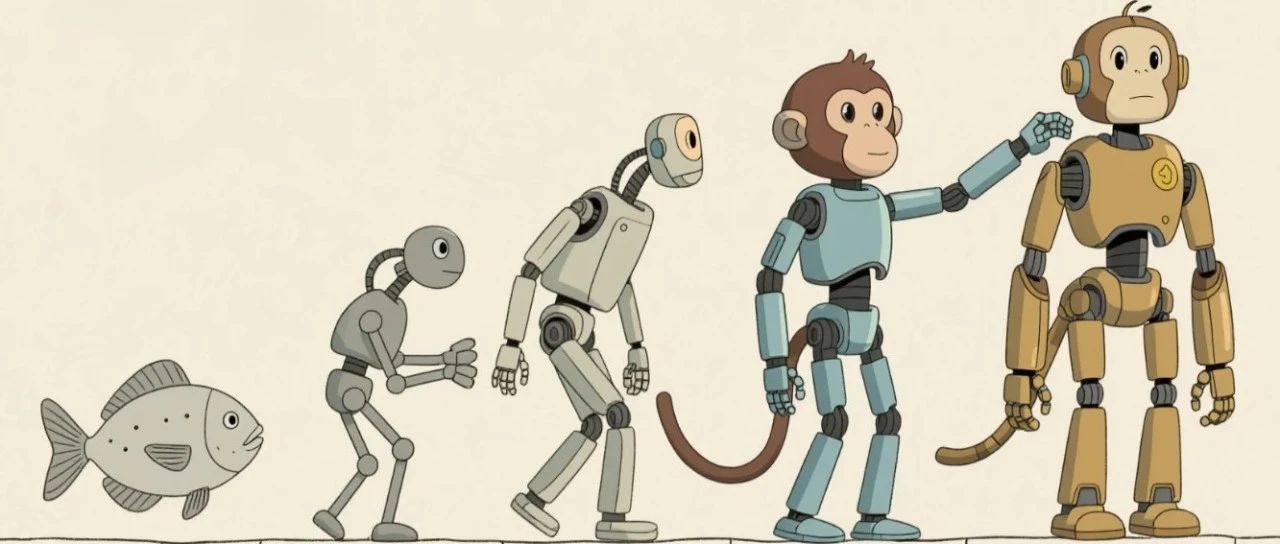
Group 1 - The core theme of the event is how big data analysis drives AI optimization and innovation, emphasizing the importance of interpreting complexity rather than just the quantity of data [2] - Z generation possesses a unique ability to extract valuable signals from noise in a data-saturated environment, which is crucial for both humans and AI systems [3] - Retaining "dirty data" can sometimes be more valuable than overly cleaned data, especially in fields like fraud detection where atypical behaviors are key indicators [3] Group 2 - Cross-domain data fusion is essential for AI optimization, allowing for a more comprehensive understanding of market dynamics beyond traditional financial metrics [4] - The shift from "big data samples" to "small data samples" highlights the importance of "meta-learning," enabling AI to adapt quickly with fewer data points [4][5] - This transition offers advantages such as enhanced privacy protection and improved response speed, allowing AI to remain efficient in rapidly changing environments [6]


LLM已能自我更新权重,自适应、知识整合能力大幅提升,AI醒了?
机器之心· 2025-06-14 04:12
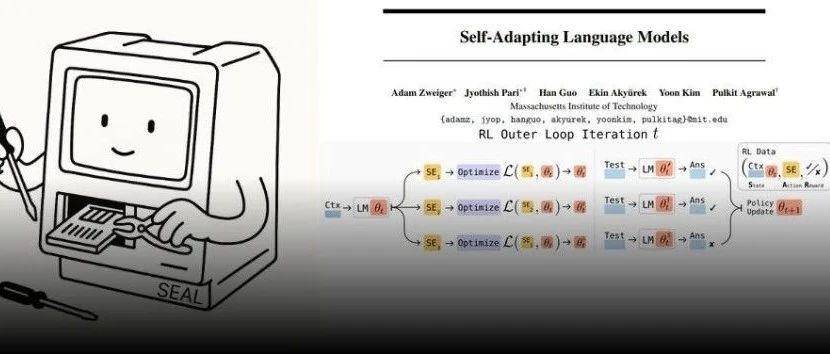
Core Insights - The article discusses the increasing research and discussions around AI self-evolution, highlighting various frameworks and models that aim to enable AI systems to improve themselves autonomously [1][2]. Group 1: AI Self-Evolution Frameworks - Several notable frameworks for AI self-improvement are mentioned, including "Darwin-Gödel Machine" (DGM), "Self-Reinforcement Training" (SRT), "MM-UPT" for multimodal large models, and "UI-Genie" for self-improvement [1]. - OpenAI's CEO Sam Altman envisions a future where humanoid robots can autonomously manufacture more robots and essential infrastructure, indicating a significant leap in AI capabilities [1]. - A recent MIT paper titled "Self-Adapting Language Models" introduces SEAL (Self-Adapting LLMs), which allows language models to update their weights based on generated training data [2][4]. Group 2: SEAL Methodology - SEAL employs a self-editing mechanism through reinforcement learning, where the model generates its own training data and updates its weights based on performance improvements [10][12]. - The SEAL framework consists of two nested loops: an external reinforcement learning loop for optimizing self-editing generation and an internal update loop for adjusting model parameters [13][15]. - The model's training involves generating self-edits and using supervised fine-tuning to update its parameters, enhancing its adaptability to new tasks [18][19]. Group 3: Experimental Results - In few-shot learning experiments, SEAL achieved a success rate of 72.5%, significantly outperforming baseline methods, which had success rates of 0% and 20% [34][36]. - For knowledge integration tasks, SEAL demonstrated improved accuracy, achieving 47.0% in single passage scenarios and 43.8% in continued pretraining, surpassing other training methods [38][40]. - The results indicate that SEAL's reinforcement learning approach leads to more effective self-edits, enhancing overall model performance [43].
LSTM之父22年前构想将成真?一周内AI「自我进化」论文集中发布,新趋势涌现?
机器之心· 2025-06-02 05:22
Core Insights - The article discusses the evolution of AI systems towards self-improvement, highlighting recent advancements in self-learning models, particularly the "Darwin Gödel Machine" (DGM) and other frameworks [1][4][6]. Group 1: Darwin Gödel Machine (DGM) - DGM utilizes foundational models and open-ended algorithms to create and evaluate new AI agents, capable of reading and modifying its own Python code for self-improvement [4][6]. - DGM has demonstrated significant self-improvement capabilities, with performance metrics increasing from 20.0% to 50.0% on the sw-bench and from 14.2% to 30.7% on Polyglot, surpassing manually designed agents [10]. - The system operates by alternating self-modification and downstream task evaluation, continuously generating and scoring new agents [10][8]. Group 2: Self-Rewarded Training (SRT) - SRT is an online self-training reinforcement learning algorithm that allows large language models to self-supervise and train without external labels, enhancing performance through self-generated feedback [14][16]. - Initial experiments show that SRT can achieve performance comparable to standard reinforcement learning methods that rely on gold-standard answers, although it may eventually face performance degradation [18][21]. - Strategies to mitigate reward hacking include early stopping, using offline-generated labels for self-training, and implementing curriculum learning to maintain model performance [22][24][26]. Group 3: Multi-Modal Unsupervised Post-Training (MM-UPT) - MM-UPT is a framework for continuous self-improvement of multi-modal large models in completely unsupervised settings, validated across multiple benchmarks [30][32]. - The framework employs a voting mechanism to generate pseudo-labels from self-generated data, allowing models to enhance their reasoning capabilities without external supervision [39][40]. - Experiments indicate that MM-UPT can improve accuracy from 66.3% to 72.9% on the MathVista benchmark, demonstrating its effectiveness compared to previous unsupervised methods [39][40]. Group 4: UI-Genie Framework - UI-Genie is designed to address challenges in GUI agents, focusing on trajectory validation and the acquisition of high-quality training data [45][47]. - The framework includes a reward model that efficiently processes historical context and unifies action-level and task-level rewards, enhancing the agent's learning capabilities [45][50]. - Experimental results show that UI-Genie achieves state-of-the-art performance across multiple GUI agent benchmarks after iterative self-improvement cycles [52].