动脉粥样硬化

Search documents
Cell子刊:秦川/田代实/王伟团队揭示动脉粥样硬化通过外泌体加剧大脑损伤
生物世界· 2025-05-09 03:55
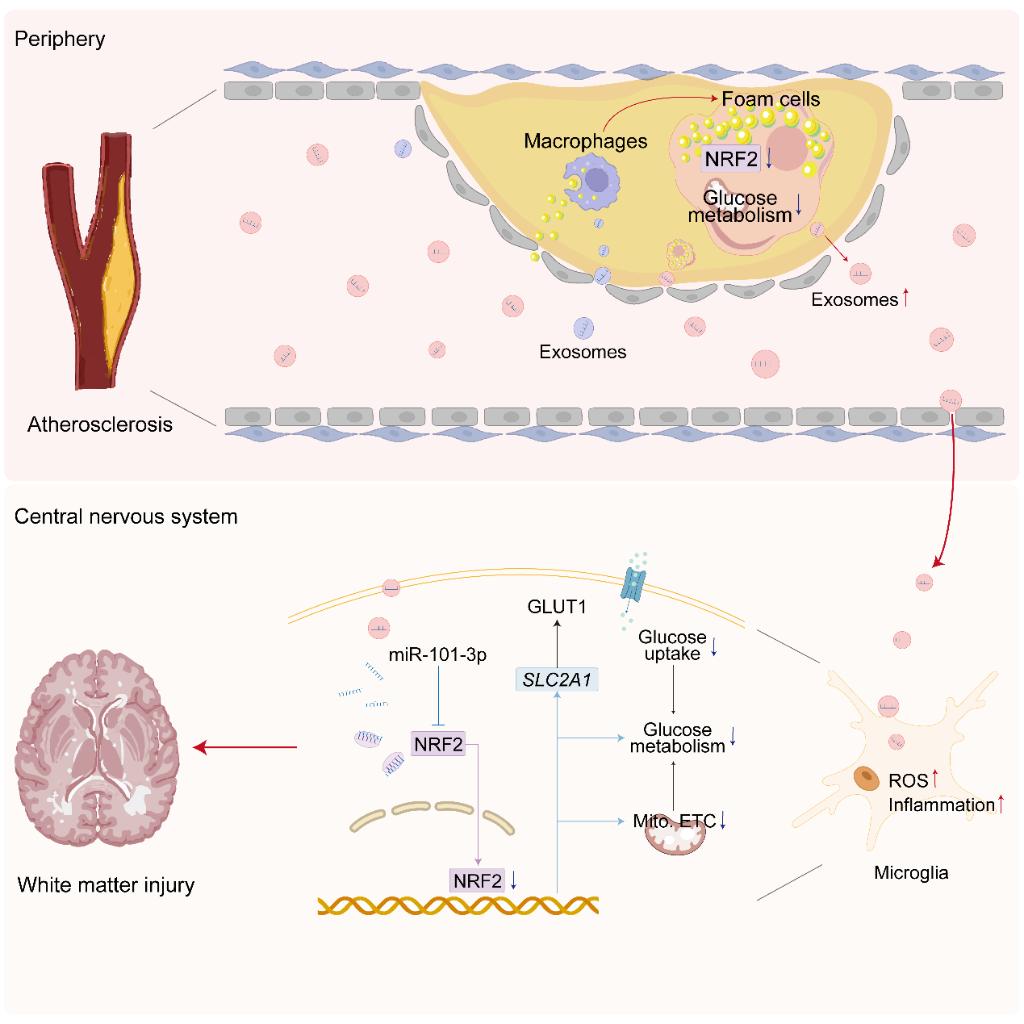
Core Viewpoint - The study reveals that exosomes derived from macrophage-derived foam cells in atherosclerotic plaques exacerbate ischemic white matter injury and vascular cognitive impairment by transmitting metabolic defects to microglia [2][5][10]. Group 1: Research Findings - Atherosclerosis (AS) is identified as an independent risk factor for vascular cognitive impairment (VCI), with unclear mechanisms [2]. - The research team discovered that exosomes in the circulation of AS patients worsen ischemic white matter injury and VCI [5]. - Foam cells produce exosomes that target microglia in the central nervous system, transmitting oxidative stress imbalance and metabolic defects through the miR-101-3p-Nrf2-Slc2a1 signaling axis [5][7]. Group 2: Potential Therapeutic Targets - The study confirms that inhibiting miR-101-3p or activating Nrf2 can counteract the effects of atherosclerotic exosomes and improve vascular cognitive impairment [6][7]. - The findings suggest a long-distance connection between peripheral macrophages and microglia, providing new insights and potential therapeutic targets for atherosclerosis-induced vascular cognitive impairment [3][10].


最新研究揭示动脉粥样硬化加剧脑白质损伤的机制
Xin Hua She· 2025-05-09 01:53
Core Insights - The research conducted by Professor Qin Chuan's team at Huazhong University of Science and Technology reveals the pathogenic mechanism by which atherosclerosis exacerbates white matter injury and cognitive dysfunction, providing new perspectives for the prevention and treatment of vascular cognitive impairment in atherosclerotic populations [1][4] Group 1: Research Findings - The study highlights the increasing prevalence of vascular dementia, which is the second most common type of dementia after Alzheimer's disease, particularly as the global population ages [1] - Atherosclerosis is linked to vascular dementia, but the underlying pathological mechanisms connecting atherosclerosis to white matter injury and cognitive dysfunction have not been clearly defined, posing significant challenges for prevention and treatment [1] - The research utilized various techniques, including public databases, atherosclerosis patient cohorts, single-cell sequencing, and multi-omics analysis, to discover the heterogeneity of circulating exosomes in atherosclerosis [1] Group 2: Mechanisms and Implications - The identified exosomes can transmit oxidative stress and metabolic defects to microglial cells in the central nervous system, thereby exacerbating ischemic white matter injury and cognitive dysfunction, revealing a novel pathophysiological mechanism [1] - The study provides potential targets for risk warning and comorbidity treatment in patients with atherosclerosis-related vascular cognitive impairment [4] - Assessing the levels of peripheral blood exosomal miR-101-3p in atherosclerosis patients may predict the progression of atherosclerotic plaques and the risk of vascular cognitive impairment [4] - Targeting Nrf2 with clinical drug interventions may offer a new therapeutic approach for treating atherosclerosis combined with vascular cognitive impairment [4]