历史文化保护

Search documents
城市更新留住历史根脉
Jing Ji Ri Bao· 2025-06-03 22:18
Core Viewpoint - Urban renewal is being actively explored across various regions, focusing on enhancing urban functions and quality while preserving historical memories and balancing commercial interests with cultural protection [1][4]. Group 1: Urban Renewal Projects - In Guizhou, the urban renewal initiative has been a key driver for high-quality new urbanization, with significant achievements including the completion of 4,316 old community renovations benefiting over 679,300 households, and the construction of 465,500 units in shantytown renovations [1]. - Beijing's urban renewal projects include over 2,000 planned initiatives aimed at improving living environments and enhancing urban construction levels, with a focus on key areas and commercial districts [2]. - The Jiangxi province has recognized the Hongdu Night Alley cultural commercial street improvement project as an exemplary case of old street renovation, investing 67.5 million yuan to enhance local culture and create over 1,000 jobs [3]. Group 2: Cultural Preservation - Beijing's new regulatory framework emphasizes the importance of historical and cultural preservation in urban planning, aiming to harmonize traditional culture with modern civilization [4]. - Jiangxi province prioritizes historical culture protection as a prerequisite for urban renewal, avoiding large-scale demolitions and focusing on organic updates that maintain the city's cultural lineage [5][6]. - The integration of cultural elements into urban renewal projects in Guizhou has resulted in improved living conditions while preserving the city's historical essence [5]. Group 3: Economic and Social Impact - Urban renewal is seen as a systematic approach to reconstructing urban functions and enhancing residents' well-being, with projects in Guizhou and Jiangxi demonstrating significant economic revitalization and cultural engagement [7]. - The transformation of the Taiping Road area in Guiyang into a trendy consumer district illustrates the potential for urban renewal to enhance economic vitality while restoring cultural memories [7]. - Jiangxi's focus on cultural innovation and heritage protection has led to the establishment of research centers and immersive cultural experiences, contributing to both cultural preservation and urban quality enhancement [7].
广州积极稳步实施城市更新行动 推动高质量实现老城市新活力
Ren Min Ri Bao· 2025-05-28 22:16
Core Insights - Guangzhou is actively implementing urban renewal actions to enhance living conditions, stimulate economic growth, and showcase cultural charm, aiming for high-quality revitalization of old cities [1][8] Group 1: Policy and Framework - Guangzhou's urban renewal efforts are guided by innovative policies, including the establishment of a "1+N+X" policy system for urban village renovation and a "1+N" policy for old residential area upgrades [2] - The city has introduced the first local regulations for urban village renovation in the country, focusing on systematic planning and preventing large-scale demolitions [2] - A multi-participant mechanism has been established to encourage public involvement and attract social capital for urban renewal projects [2] Group 2: Improvement of Living Environment - The urban renewal initiatives prioritize public service resource allocation, addressing deficiencies in basic services such as water, electricity, and roads [3] - Significant achievements include the completion of 3,126 kilometers of "three-line" rectification, installation of over 100,000 fire safety facilities, and the addition of 1,371 community green spaces [3] - Specific projects, such as the renovation in the Yuexiu District, have focused on infrastructure improvements and community service enhancements [3] Group 3: Economic Development - Urban renewal is closely linked to the development of a modern industrial system, promoting industrial transformation and upgrading [5] - Projects like the Yongqingfang renovation have successfully integrated various business models, fostering cultural and industrial growth [5] - Policies have been implemented to retain, transform, and attract industries, with a focus on nurturing traditional industries and developing new ones [5] Group 4: Cultural Heritage Preservation - The urban renewal strategy emphasizes the importance of historical and cultural resource preservation, integrating cultural heritage into the renewal process [7] - Initiatives have been launched to protect and restore historical buildings, with 740 cultural relics preserved across a total area of 280,000 square meters [7] - Projects like the renovation of the old Nanhai County community highlight the commitment to maintaining cultural identity while modernizing urban spaces [7]
走进西安碑林新馆
Ren Min Ri Bao· 2025-05-23 21:56
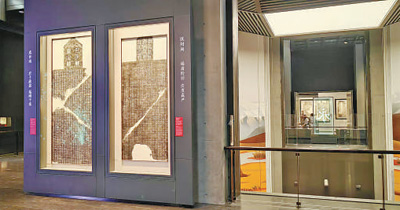
丰碑如林,翰香远溢;佛道造像,庄严清虚;墓虎村牛,威猛驯良——这里,就是被称为翰海奇观、雕 塑宝库的西安碑林。 西安碑林新馆为一座地上一层、地下二层的大型清水混凝土建筑,由中国建筑设计研究院崔恺院士团队 设计规划。主体建筑设计既突出历史文化,又融入现代时尚,注重体现碑林与孔庙、明城墙等文脉的整 体性。新馆展陈面积较原先增加3倍,许多名碑独占一厅。过去,即使唐代颜真卿、柳公权书丹名碑也 只能"睡大通铺",如今,这些名碑都住上了"豪华单间",使其艺术魅力充分彰显。 (作者为西安碑林博物馆研究员) 图为西安碑林新馆一角。 陈根远供图 《 人民日报 》( 2025年05月24日 06 版) (责编:岳弘彬、牛镛) 碑林新馆建成,博物馆拿出许多压箱底的国之重宝。 《马璘残碑》又名《马璘新庙碑》,唐大历十四年(779年)六月书,撰文者为程浩,书额者是唐隶名 家韩择木长子韩秀实。71岁的吏部尚书颜真卿为刚过世的唐代"中兴猛将"扶风郡王马璘的家庙立《马璘 新庙碑》,他举荐自己老部下韩择木的长子、49岁的韩秀实用隶书书写碑额"唐故尚书左仆射知省事扶 风王赠司徒马璘庙碑"20字,以示对晚辈书艺的肯定与提携。是碑著录首见欧阳修《集 ...

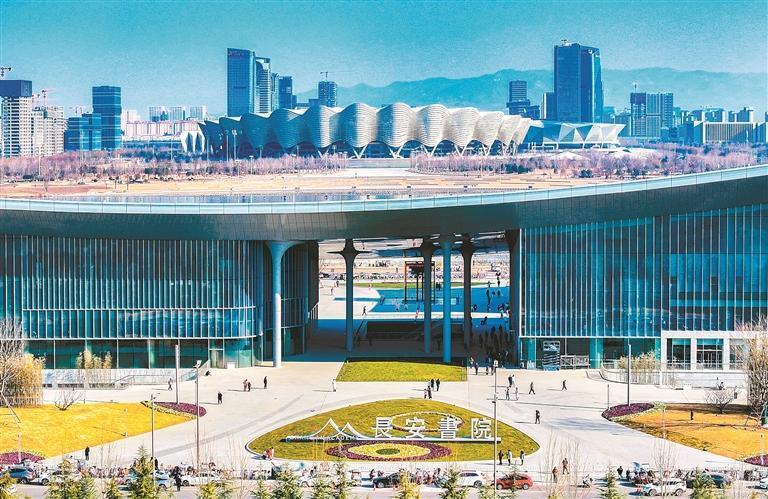
从历史走向未来 绘就现代城市新图景
Xi An Ri Bao· 2025-04-09 03:10
Core Viewpoint - The article discusses the approval and implications of Xi'an's Land Spatial Overall Plan (2021-2035), emphasizing sustainable development and the integration of historical and cultural preservation with modern urban planning [1]. Group 1: Harmonious Coexistence - The plan emphasizes the integration of natural and cultural elements, reflecting Xi'an's historical significance and geographical features [2]. - The proposed overall framework includes "one screen, one belt, eight waters, seven fields, two hearts, and six pieces," aiming to balance historical preservation with modern urban development [2]. - The design principles of "harmony yet difference" and "singing in harmony" are highlighted as essential for maintaining uniqueness while fostering collaboration [2]. Group 2: Cultural Heritage Preservation - Xi'an's unique identity as a "thousand-year ancient capital" is underscored, with a focus on integrating natural landscapes into cultural heritage protection [3]. - The plan aims to create a systematic approach to cultural heritage preservation, emphasizing continuity, constraint, and dynamism [4]. - It includes the establishment of cultural protection lines and the incorporation of newly discovered historical sites into the protection framework [4]. Group 3: Multi-level Protection Strategies - The plan promotes the integration of cultural heritage into modern urban life, ensuring the preservation of significant historical sites and their surrounding environments [5]. - It emphasizes the importance of urban axes in guiding development and preserving historical order, including cultural heritage displays along these axes [5]. - The vision includes Xi'an as a key international gateway city and a representative of Chinese civilization, aiming for a balance between cultural heritage and modern urbanization [5].