科学营养

Search documents
汤臣倍健2024ESG内核:用科学营养促发展,以绿色智造提效益
Jing Ji Guan Cha Wang· 2025-05-16 07:01
Core Viewpoint - The company emphasizes the integration of ESG principles into its core business strategy, showcasing its commitment to sustainable development and social responsibility through its "LIFE" ESG framework [1][4]. Group 1: ESG Strategy and Implementation - The company has launched its "LIFE" ESG strategy, which stands for Leadership, Integrity, Family & Friends, and Exploration, aiming to create sustainable value for consumers, industry, and society [1]. - The CEO highlights the importance of embedding ESG principles into the company's strategic DNA, reflecting its role as a leader in the dietary supplement industry [1]. - The company has established a model for sustainable growth that balances social responsibility with commercial value over its 30 years of operation [1]. Group 2: Green Manufacturing Practices - The company’s transparent factory in Zhuhai exemplifies its commitment to green manufacturing, utilizing innovative production processes, green packaging, and clean energy to reduce environmental impact [2]. - Since the factory's operation, the company has reduced greenhouse gas emissions by over 117,200 tons in 2024 compared to the previous year, and its solar panel installation has a capacity of 1.014 megawatts, generating 1.3 million kilowatt-hours annually [2]. - The factory has implemented water-saving measures that are expected to save approximately 346,700 yuan annually in water and wastewater treatment costs [2]. Group 3: Technological Innovation and Research - The company has set a "Scientific Nutrition 2030" strategy to drive technological innovation and establish new growth points within the industry [4]. - It has invested 637 million yuan in research and development from 2021 to 2024, resulting in 451 patents, including 130 invention patents related to raw materials and formulations [5]. - The company collaborates with various industry associations and has published 68 research papers in authoritative scientific journals, contributing to the high-quality development of the industry [5]. Group 4: Social Responsibility and Public Health - The company actively engages in public health initiatives, including nutrition education programs that have reached over 77,000 individuals through various community activities [7]. - It has launched projects focused on improving child nutrition, covering over 170 schools and benefiting more than 120,000 children [8]. - The company has donated nearly 96 million yuan to improve public health and continues to conduct diverse nutrition knowledge dissemination activities [8]. Group 5: Future Outlook - The company believes that integrating ESG into business operations will create a win-win value ecosystem, benefiting both society and the business itself [8]. - As more companies adopt similar ESG strategies, the positive effects are expected to enhance consumer market quality, environmental governance, and social welfare [8].

中国中老年营养健康食品专题报告:食养银龄,洞察中老年营养健康消费图景
灼识咨询&量子之歌· 2025-05-15 04:00
Investment Rating - The report does not explicitly provide an investment rating for the industry Core Insights - The Chinese nutrition and health food market is experiencing stable growth, with a compound annual growth rate (CAGR) of 5.7% from 2019 to 2024, and an expected acceleration to 6.6% from 2024 to 2029. Nutritional functional foods are projected to grow at a CAGR of 8.5%, indicating a rising consumer acceptance of daily nutritional supplements and functional foods [13][14][15] - The market is driven by multiple factors including an aging population, rising income levels, the proliferation of e-commerce channels, government policy support, and increasing health awareness among consumers [15][16] Summary by Sections Industry Overview - The Chinese nutrition and health food sector is categorized into nutritional functional foods and health foods, focusing on safety and functionality to meet the daily nutritional needs of specific populations, particularly the elderly [7][9] Market Dynamics - The market is characterized by a high concentration of suppliers in the upstream segment, supported by strong R&D capabilities in the midstream, and a diverse sales model in the downstream, integrating online and offline channels [11][12] Consumer Trends - The dietary structure of the elderly population in China is significantly imbalanced, with regional disparities exacerbating nutritional deficiencies and increasing chronic disease risks, making dietary optimization a core national health strategy [9][10] Market Size and Growth - The market for nutritional health foods in China is projected to reach CNY 5,223 billion by 2024, with nutritional functional foods accounting for CNY 2,891 billion and health foods for CNY 2,331 billion [14] Product Segmentation - The nutritional functional food industry is diversifying into six key segments: weight management, sports nutrition, beauty nutrition, gut health, healthy snacks, and basic nutrition, catering to the varied health needs of consumers [20][21][29][30] Future Trends - The market is expected to see a shift towards personalized nutrition and precision health products, driven by advancements in technology and consumer demand for tailored health solutions [33][34]
汤臣老矣,尚能倍健否
Sou Hu Cai Jing· 2025-03-24 07:08
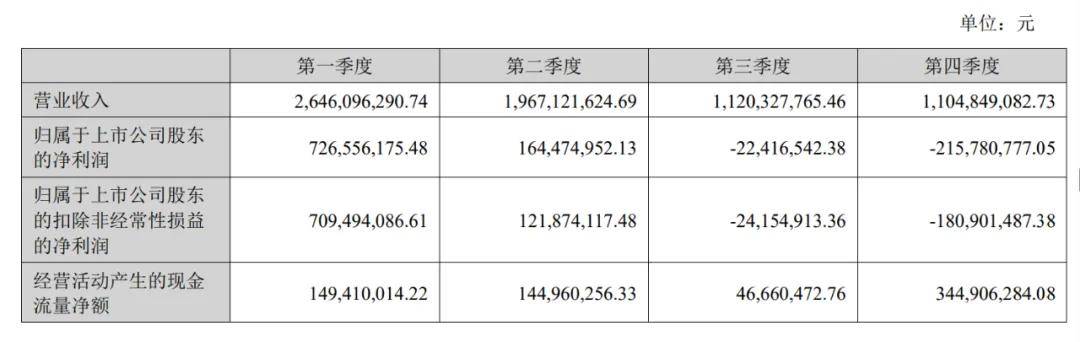
Core Viewpoint - Tongrentang Baijian has reported its worst annual performance ever, with significant declines in both revenue and net profit, indicating a severe downturn in its business operations and market position [1][4]. Group 1: Financial Performance - In 2024, Tongrentang Baijian achieved a revenue of 6.838 billion yuan, a decrease of 27.30% compared to the previous year [1]. - The net profit attributable to shareholders was 653 million yuan, down 62.62% year-on-year, with a shift to a net loss of 22.42 million yuan in Q3 and a further loss of 216 million yuan in Q4 [1][3]. - The company’s total market value has plummeted to approximately 20.5 billion yuan, a reduction of two-thirds from its peak market value of over 60 billion yuan in 2021 [1]. Group 2: Industry Context - The dietary supplement (VDS) market in China reached a retail scale of 225.3 billion yuan in 2023, growing by about 11.6% year-on-year, with a projected growth of 3.7% to 232.3 billion yuan in 2024 [2]. - Despite the overall market growth, Tongrentang Baijian's performance has been characterized by a significant decline across all its major brands and sales channels [4]. Group 3: Market Challenges - The company faces intensified competition from new entrants in the dietary supplement market, with a record number of new companies emerging, leading to price wars and market share erosion [5]. - The shift in consumer demographics towards younger consumers has resulted in a mismatch between Tongrentang Baijian's traditional product offerings and the preferences of the new consumer base [9][12]. - The company's reliance on traditional sales channels has hindered its ability to adapt to the rapidly growing e-commerce landscape, particularly in live-streaming sales [13][16]. Group 4: Product and Channel Strategy - Tongrentang Baijian's product lineup remains heavily focused on traditional items like protein powder and calcium supplements, which are less appealing to younger consumers [7]. - The company has attempted to upgrade its core products but has faced challenges in execution, leading to significant revenue declines [6][5]. - The transition to online sales has been slow, with the company missing out on the explosive growth of platforms like Douyin and Kuaishou, which have become critical for market penetration [14][16].