考古发现

Search documents
三国名将今又见:访朱然家族墓地|访古
Jing Ji Guan Cha Bao· 2025-06-13 00:35
Group 1 - Zhu Ran was a notable general of the Eastern Wu during the Three Kingdoms period, known for his military achievements and close relationship with Sun Quan [2][4] - Zhu Ran's family background includes his adoptive father Zhu Zhi, who was a significant figure in the Eastern Wu, and his biological father Shi Chong [6] - The discovery of Zhu Ran's tomb was accidental during a warehouse expansion in 1984, leading to a significant archaeological excavation [9] Group 2 - The tomb of Zhu Ran is characterized by its large structure, consisting of a front and back chamber, with a total length of 9.1 meters and a depth of 3.6 meters [11] - Over 140 burial items were unearthed from Zhu Ran's tomb, including lacquered wooden artifacts, ceramics, and coins, indicating the wealth and status of the burial [15][20] - Notable artifacts include a lacquered tray depicting court life, which reflects the high craftsmanship of the period and serves as a historical narrative of the era [26] Group 3 - The tomb contained significant items such as wooden name cards and a lacquered case, which were used to denote the identity and status of the deceased [22][24] - The presence of a lacquered tray with a depiction of a royal banquet suggests the cultural practices and social hierarchies of the time [26][28] - The tomb's opulence, despite Zhu Ran's personal preference for simplicity, indicates the high regard in which he was held by Sun Quan and the Eastern Wu [28]
被埋没的宝藏古城:访寿春古城|访古
Jing Ji Guan Cha Bao· 2025-05-20 00:56
Core Insights - The article discusses the archaeological significance of the ancient city of Shouchun, highlighting its historical importance and recent discoveries that shed light on the Chu state during the Warring States period [1][2][3]. Archaeological Discoveries - Shouchun ancient city, located in Shouxian County, has a history of over 2000 years and features the best-preserved Song Dynasty city wall in China, with a total length of 7147 meters [2][5]. - The archaeological site of Shouchun city includes a large area of approximately 26.35 square kilometers, with significant findings such as the southwest small city site, which is comparable in scale to the Chu feudal lord city [5][6]. - Excavations have revealed a complex water management system, including artificial waterways that divided the city into functional areas for production, living, and transportation [6][8]. Historical Context - The site was once the capital of the Chu state during the late Warring States period, with significant figures such as the Spring and Autumn period's lord Huang Xie associated with it [3][4]. - The archaeological work has confirmed the location and scale of the ancient capital, with evidence suggesting it developed from the original capital of the Cai state [5][6]. Cultural Artifacts - Numerous artifacts have been unearthed, including bronze vessels, jade items, and pottery, which reflect the advanced craftsmanship and cultural practices of the Chu state [10][12]. - The findings from the Wu Wang Dun tomb, which is the largest and most complex high-ranking tomb of the Chu state discovered to date, include over a thousand artifacts, indicating the burial practices and social hierarchy of the time [9][11]. Ongoing Research - Archaeological work at the Shouchun site continues, with expectations for further discoveries that will enhance understanding of the region's historical and cultural significance [14].
探寻文明之光
Ren Min Ri Bao· 2025-04-28 22:36
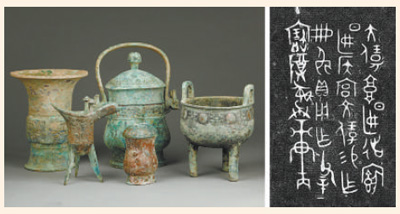
Group 1 - The discovery of five bronze ritual vessels at the Liulihe site in Fangshan, Beijing, provides evidence of Beijing's 3,000-year history of city construction, with the inscription "太保墉燕" indicating the role of the Duke of Zhou in establishing the capital in the Yan region [2] - The excavation at the Zhouyuan site in Baoji, Shaanxi, yielded 213 pieces of oracle bones with 295 characters, reflecting significant aspects of ancient society, including astronomy, geography, and military affairs, and revealing the relationship between the Western Zhou king and the feudal lords [4] - The 2024 national top ten archaeological discoveries highlight the importance of textual materials in understanding ancient societies, confirming the nature of various sites and contributing to the study of historical contexts [5] Group 2 - The Jin'ning Hebo site in Yunnan uncovered "Dian Kingdom Prime Minister Seal" clay seals and inscriptions indicating the establishment of Yizhou County during the Western Han period, providing insights into the governance structure of the Han dynasty in border regions [6]