
郢爰

Search documents
恒定不灭的黄金:神秘的天外来客,俘虏了古今人类(之四)
Sou Hu Cai Jing· 2025-12-17 05:45
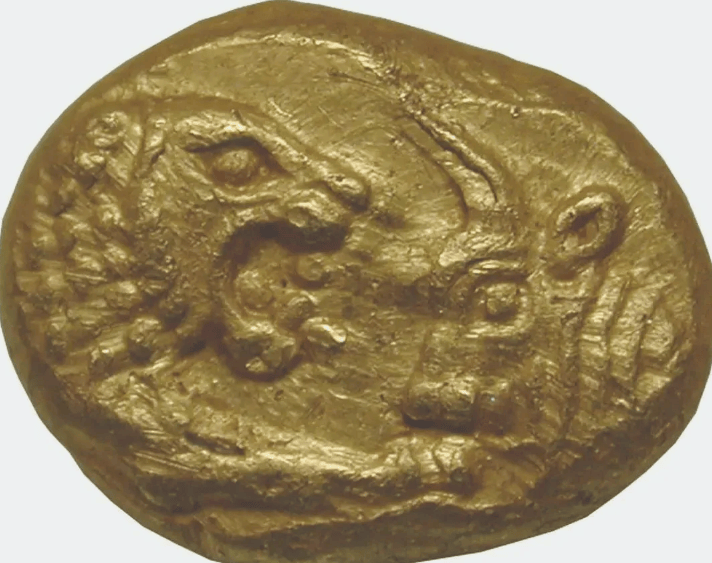
Group 1: Historical Significance of Gold Artifacts - The Sanxingdui gold artifacts represent the peak of early precious metal craftsmanship in ancient China, with over 2000 grams of gold used in various items such as gold staffs and masks [1] - The earliest known coins were minted in Lydia around the 6th century BC, made from natural gold-silver alloys, leading to significant wealth for the Lydians [2] - The oldest known Chinese coins, known as Yingyuan, were used during the Warring States period and had a gold content of over 90%, primarily used for significant transactions and gifts [3] Group 2: The Golden Age of the Western Han Dynasty - The largest quantity of gold artifacts found in China comes from the Western Han tomb of the Marquis of Haihun, with 478 pieces totaling 115 kilograms, marking the "Golden Age" of the Western Han [4] - The purity of the gold artifacts from this period is exceptionally high, reaching 99%, with various forms serving both currency and ceremonial purposes [4] Group 3: Modern Gold Utilization and Value - Colombia is renowned for its historical gold production, with the Bogotá Gold Museum housing over 30,000 ancient gold artifacts [11] - Modern smartphones contain gold in various components, with an iPhone containing approximately 0.034 grams of gold, valued at about 13.3 yuan [11] - Historically, the total market value of all gold mined is around $30 trillion, with annual supply and demand stable at approximately 4,500 tons [12][13]

被埋没的宝藏古城:访寿春古城|访古
Jing Ji Guan Cha Bao· 2025-05-20 00:56
Core Insights - The article discusses the archaeological significance of the ancient city of Shouchun, highlighting its historical importance and recent discoveries that shed light on the Chu state during the Warring States period [1][2][3]. Archaeological Discoveries - Shouchun ancient city, located in Shouxian County, has a history of over 2000 years and features the best-preserved Song Dynasty city wall in China, with a total length of 7147 meters [2][5]. - The archaeological site of Shouchun city includes a large area of approximately 26.35 square kilometers, with significant findings such as the southwest small city site, which is comparable in scale to the Chu feudal lord city [5][6]. - Excavations have revealed a complex water management system, including artificial waterways that divided the city into functional areas for production, living, and transportation [6][8]. Historical Context - The site was once the capital of the Chu state during the late Warring States period, with significant figures such as the Spring and Autumn period's lord Huang Xie associated with it [3][4]. - The archaeological work has confirmed the location and scale of the ancient capital, with evidence suggesting it developed from the original capital of the Cai state [5][6]. Cultural Artifacts - Numerous artifacts have been unearthed, including bronze vessels, jade items, and pottery, which reflect the advanced craftsmanship and cultural practices of the Chu state [10][12]. - The findings from the Wu Wang Dun tomb, which is the largest and most complex high-ranking tomb of the Chu state discovered to date, include over a thousand artifacts, indicating the burial practices and social hierarchy of the time [9][11]. Ongoing Research - Archaeological work at the Shouchun site continues, with expectations for further discoveries that will enhance understanding of the region's historical and cultural significance [14].