
楚国文化

Search documents
国博重磅大展“遇见考烈王”启幕
Xin Lang Cai Jing· 2025-12-27 07:24
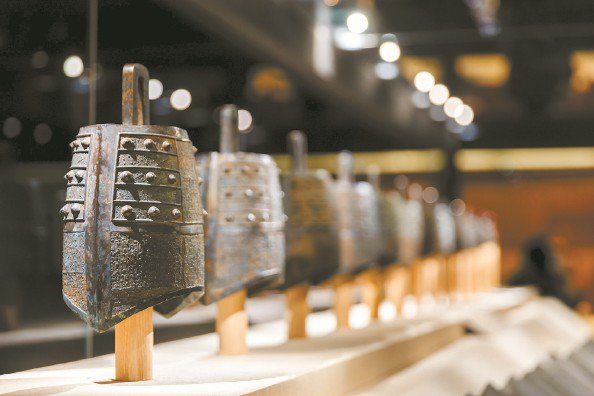
Core Insights - The exhibition "Encountering King Koryo - Archaeological Discoveries from the No. 1 Tomb of King Wu Wang Dun in Huainan, Anhui" opened at the National Museum of China, showcasing the largest and most complex royal tomb of the Chu state from the Warring States period [2] - Over 10,000 precious artifacts have been unearthed from the site between 2020 and 2024, with the exhibition featuring more than 200 selected items [2] - The exhibition is divided into four sections: "Sealed Treasures," "Coffin Inscriptions," "Exquisite Chu Treasures," and "Belonging to Huaxia," highlighting significant bronze ritual vessels and exquisite jade artifacts [2] Group 1 - The No. 1 Tomb of King Wu Wang Dun is recognized as a "cultural treasure trove" of the Chu state, with artifacts that span over a thousand years [2] - The exhibition will last for four months, allowing visitors to engage with the historical artifacts directly [2] - Notable items include a set of bronze ritual vessels, a complete set of bronze bells, and intricately designed jade pieces, showcasing the craftsmanship of the era [2] Group 2 - The tomb also revealed two sets of musical bells, known as "Niu Bells," which are characterized by their decreasing sizes and intricate designs, reflecting the musical culture of the Chu people [3] - A rare spherical bronze urn, believed to have been used for holding fine wine or soup, exemplifies the romantic aesthetic of Chu culture [3] - The exhibition features a painted lacquer wood table adorned with dragon and phoenix motifs, along with a matching lacquer cup, highlighting the unique artistic expression of the Chu civilization [3]

被埋没的宝藏古城:访寿春古城|访古
Jing Ji Guan Cha Bao· 2025-05-20 00:56
Core Insights - The article discusses the archaeological significance of the ancient city of Shouchun, highlighting its historical importance and recent discoveries that shed light on the Chu state during the Warring States period [1][2][3]. Archaeological Discoveries - Shouchun ancient city, located in Shouxian County, has a history of over 2000 years and features the best-preserved Song Dynasty city wall in China, with a total length of 7147 meters [2][5]. - The archaeological site of Shouchun city includes a large area of approximately 26.35 square kilometers, with significant findings such as the southwest small city site, which is comparable in scale to the Chu feudal lord city [5][6]. - Excavations have revealed a complex water management system, including artificial waterways that divided the city into functional areas for production, living, and transportation [6][8]. Historical Context - The site was once the capital of the Chu state during the late Warring States period, with significant figures such as the Spring and Autumn period's lord Huang Xie associated with it [3][4]. - The archaeological work has confirmed the location and scale of the ancient capital, with evidence suggesting it developed from the original capital of the Cai state [5][6]. Cultural Artifacts - Numerous artifacts have been unearthed, including bronze vessels, jade items, and pottery, which reflect the advanced craftsmanship and cultural practices of the Chu state [10][12]. - The findings from the Wu Wang Dun tomb, which is the largest and most complex high-ranking tomb of the Chu state discovered to date, include over a thousand artifacts, indicating the burial practices and social hierarchy of the time [9][11]. Ongoing Research - Archaeological work at the Shouchun site continues, with expectations for further discoveries that will enhance understanding of the region's historical and cultural significance [14].