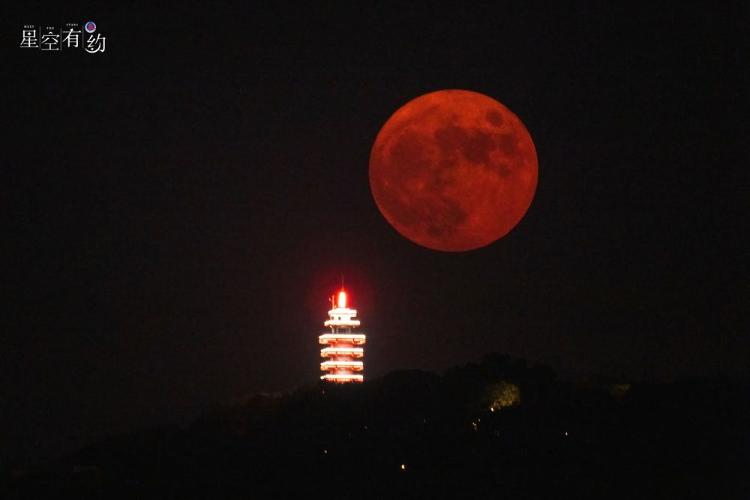
超级月亮

Search documents
今年“个头”最大的“超级月亮”即将“上线”
Xin Hua She· 2025-11-03 08:26
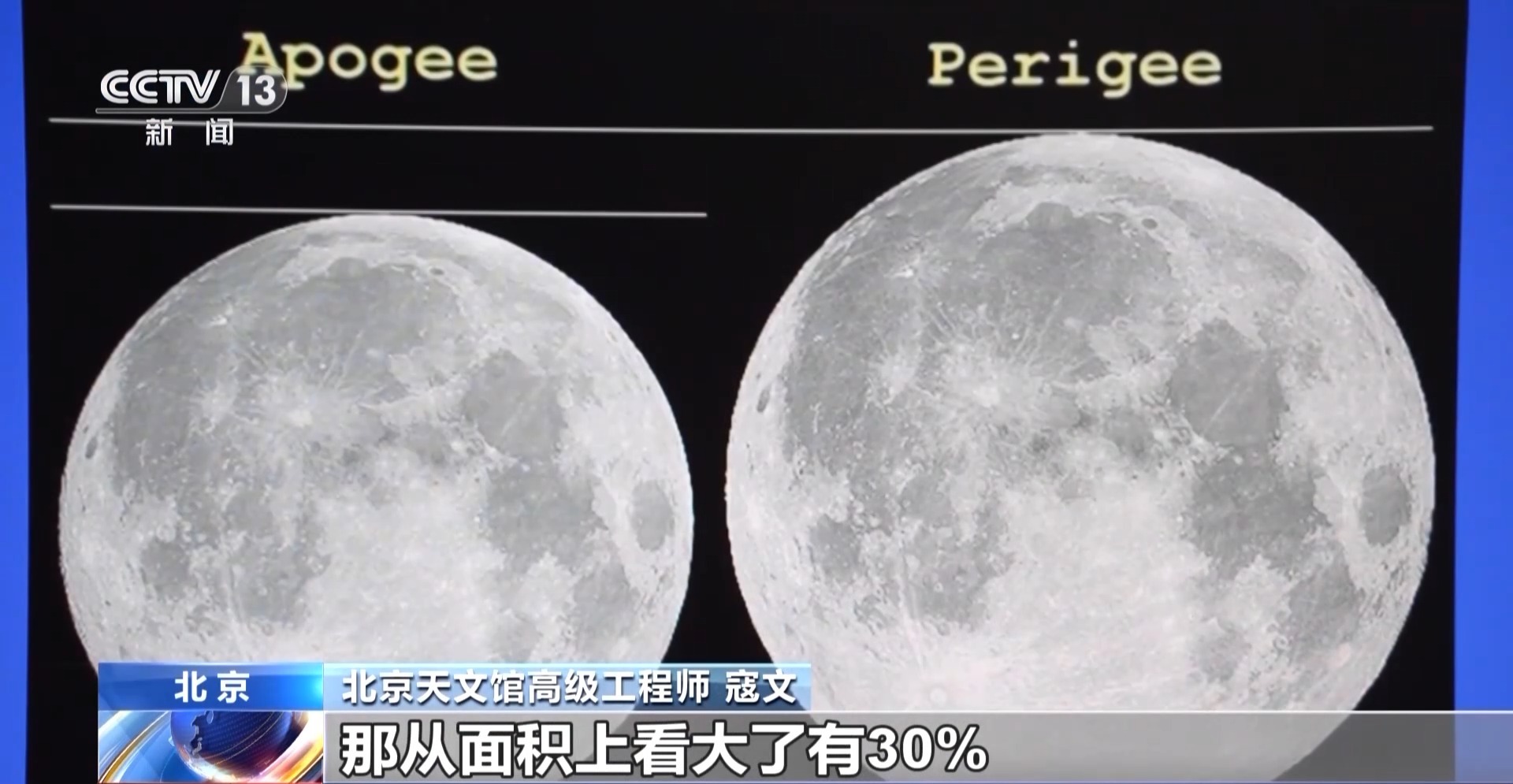
Core Viewpoint - The "Supermoon" phenomenon will occur on November 5, 2024, marking the largest full moon of the year, providing an excellent opportunity for moon gazing if the weather permits [1]. Group 1: Astronomical Explanation - The term "Supermoon" refers to a full moon that occurs when the moon is near its perigee, the closest point to Earth in its elliptical orbit, which is less than 360,000 kilometers away [2]. - The farthest point in the moon's orbit is called apogee, where it is over 400,000 kilometers away from Earth [2]. - The visual size of the moon appears larger at perigee compared to apogee, following the principle of "near big, far small" [2]. Group 2: Upcoming Supermoons - The two largest perigee full moons in 2025 will occur on November 5 and December 4, with the November moon being slightly larger, both having an angular diameter of nearly 34 arcminutes [6]. Group 3: Viewing Recommendations - The optimal time to view the Supermoon is one hour after sunset, with the moon appearing golden as it rises and becoming brighter as night progresses [7]. - Photographers are encouraged to capture creative images by incorporating unique landscapes during the moonrise [7].

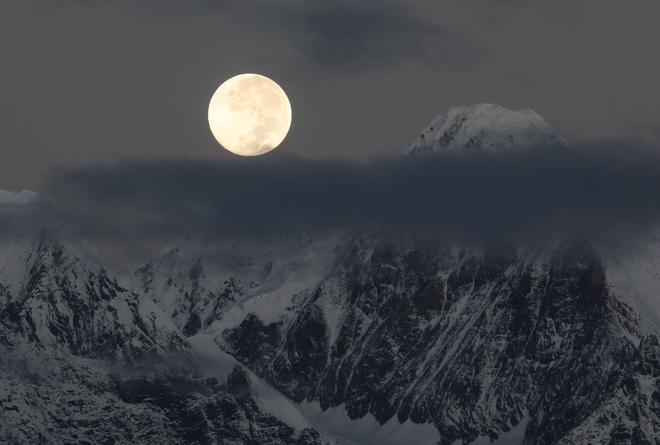
今年最大“超级月亮”要来了!广州最佳观赏时间→
Huan Qiu Wang Zi Xun· 2025-11-03 05:58
Core Points - A new "supermoon" will appear in the night sky from November 5 to November 6, which is the largest "supermoon" of the year in terms of visual diameter [1][3] - The moon will reach its fullest point on November 5 at 21:19, with a visual diameter of 33.98 arc minutes, larger than the sun's visual diameter at any time of the year [3] - The moon will be at its closest distance to Earth on November 6 at 06:27, at a distance of 356,833 kilometers [3] Observational Details - In Guangzhou, the moon will rise on November 5 at 17:23 from the eastern horizon, and the sun will set at 17:47 [5] - The moon will reach its highest point in the sky on November 6 at 00:12, positioned directly south with an elevation of 87 degrees, resulting in nearly vertical moonlight [5] - If the weather conditions prevent viewing this "supermoon," another opportunity will arise on December 5 to see the second-largest "supermoon" of the year [5]
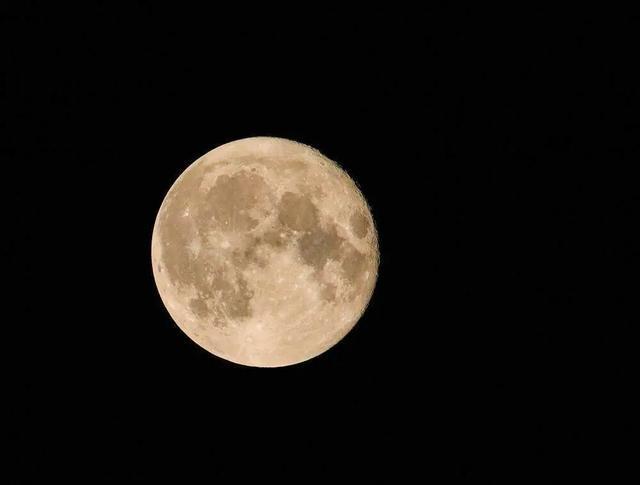
年度最大“超级月亮”,要来了!
新华网财经· 2025-11-01 05:20
Core Points - The article discusses the upcoming "supermoon" event on November 5, 2025, which will be the largest of the year [1][3] - The supermoon will occur when the moon is at its closest point to Earth, approximately 357,000 kilometers away [3] - There will be a total of three supermoons in 2025, with the previous ones on October 7 and the next one on December 5 [6] Summary by Sections - **Supermoon Details** - The supermoon will appear as a full moon at 21:19 on November 5, 2025, and will be the closest full moon of the year [3] - The phenomenon is scientifically referred to as a perigee full moon, where the moon appears larger and brighter than usual [6] - **Observation Recommendations** - The best time to observe the supermoon is within one hour after sunset [9] - Ideal observation locations include open areas such as rooftops, mountain tops, or seaside [9]
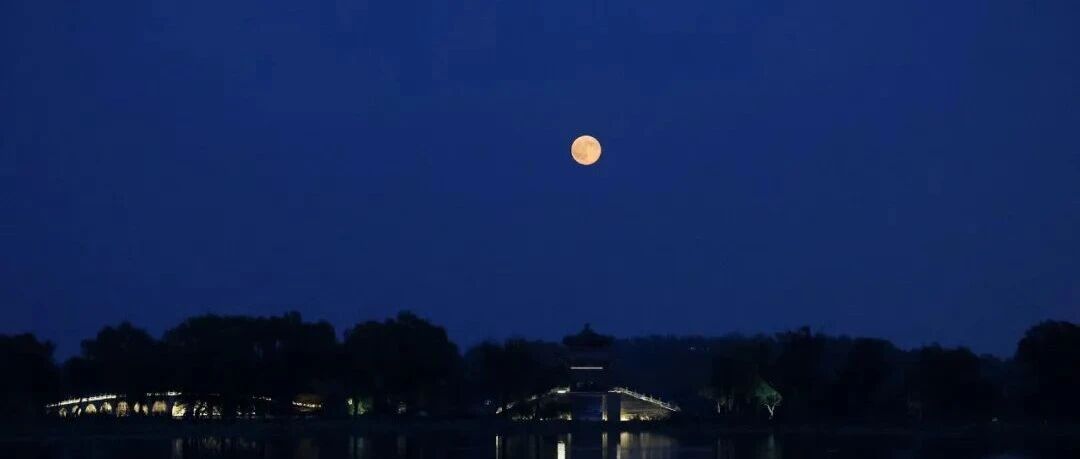
年度最大超级月亮11月5日登场,这份观测指南请收好
Yang Shi Wang· 2025-11-01 00:47
Core Points - The largest "supermoon" of the year is predicted to occur on November 5, with the moon reaching its fullest form at 21:19 and closest to Earth at approximately 357,000 kilometers on November 6 at 6:27 [1][11] - The term "supermoon" is not a scientific term but describes the phenomenon when the moon is at its perigee and full [5][11] - The best time to observe the supermoon is within one hour after sunset, as the moon appears larger due to the "moon illusion" effect when it is near the horizon [6][10] Observation Details - The sunset in Beijing on November 5 is around 17:04, with the moon rising at approximately 16:40 and setting the next morning at 7:32 [10] - Ideal observation locations include high points in cities, landmark buildings, or open areas like mountains or beaches [10] - No special equipment is needed to enjoy the supermoon, but binoculars or small telescopes can enhance the viewing experience by revealing surface details [10] Scientific Explanation - The supermoon phenomenon occurs when the moon is at its perigee, which is typically less than 360,000 kilometers from Earth, coinciding with a full moon [11][12] - The moon's elliptical orbit causes variations in distance, with a complete cycle taking about 27.5 days, while the lunar phases cycle takes about 29.5 days [11][12] - In 2025, there will be three supermoons, occurring on October 17, November 5, and December 5 [13]
年度最大超级月亮11月5日登场,这份观测指南请收好!
Yang Shi Wang· 2025-10-31 18:43
Core Points - The largest "supermoon" of the year is expected on November 5, 2025, with the moon reaching its fullest form at 21:19 and closest to Earth at approximately 357,000 kilometers on November 6 at 6:27 [1][21] - The term "supermoon" is not a scientific term but describes the phenomenon where the moon appears larger and brighter due to its proximity to Earth during a full moon [5][15] - The best time to observe the supermoon is within one hour after sunset, as the moon appears larger when it rises near the horizon due to the "moon illusion" effect [8][12] Observation Details - The sunset in Beijing on November 5 is around 17:04, with the moon rising at approximately 16:40 and setting on November 6 at about 7:32 [12] - Ideal observation locations include high vantage points such as city skyscrapers, mountain tops, or coastal areas to enhance visibility [12] - No special equipment is needed to enjoy the supermoon, but binoculars or small telescopes can provide a closer look at lunar features [14] Scientific Explanation - The phenomenon of a "supermoon" occurs when the moon is at its perigee (closest point to Earth) and simultaneously in the full moon phase, making it appear about 30% larger in area compared to a typical full moon [3][21] - The moon follows an elliptical orbit around Earth, with distances varying from approximately 360,000 kilometers at perigee to over 400,000 kilometers at apogee [17][21] - The cycle of the moon's phases, including the time from one full moon to the next, is about 29.5 days, influenced by both the moon's orbit and Earth's orbit around the sun [19][21]
11月天宇“超级月亮”领衔星空盛宴
Zhong Guo Xin Wen Wang· 2025-10-24 12:58
Core Points - November will feature several astronomical events including a "Supermoon," lunar occultation of the Pleiades, and Uranus opposition, creating a spectacular celestial display in the autumn sky [1][2] Group 1: Supermoon - The "Supermoon" will occur on the evening of November 5, when the moon reaches its perigee and is full, appearing larger and brighter than usual, with a visual diameter of up to 34 arcminutes [1] Group 2: Lunar Occultation - On November 6, a lunar occultation of the Pleiades star cluster will take place, although bright moonlight may hinder visibility, requiring telescopes for optimal observation [1] Group 3: Uranus Opposition - Uranus will reach opposition on November 21, providing the best viewing opportunity of the year as it will be closest to Earth, appearing with a unique blue-green hue in telescopes [2] Group 4: Observation Recommendations - It is recommended to observe these celestial events in locations away from city lights for better visibility, with most phenomena requiring binoculars or telescopes for enhanced viewing, except for the "Supermoon" which can be seen with the naked eye [2]
@赏月者 十五的月亮十六圆 “超级月亮”即将上线
Yang Shi Wang· 2025-10-06 23:11
Core Viewpoint - The article highlights the significance of the Mid-Autumn Festival, emphasizing its historical roots and cultural importance in celebrating family unity and national peace [1]. Summary by Relevant Sections - **Cultural Significance**: The Mid-Autumn Festival, also known as the Moon Festival or Reunion Festival, has been celebrated since ancient times, with its formal recognition dating back to the Song Dynasty. It symbolizes people's hopes for family completeness and national stability [1]. - **Celebratory Activities**: Traditional activities during the festival include moon gazing, eating mooncakes, and enjoying lantern displays, which foster a sense of joy and togetherness among families and communities [1]. - **Astronomical Event**: This year's Mid-Autumn Festival coincides with a "supermoon," where the moon appears larger and brighter than usual due to its proximity to Earth. The peak of the full moon will occur on October 7 at 11:48 AM, allowing for optimal moon viewing on the evening of October 7 [1].
天涯共此时 !第一波中秋圆月美图来了
Yang Shi Xin Wen· 2025-10-06 11:33
中秋之夜 圆月如期而至 你的朋友圈被刷屏了吗? 第一波"超级月亮"美图来了 看!这轮中秋明月,并非"小时不识月,呼作白玉盘"的稚气,而是一轮饱满、圆润,带着些许蜜糖般暖黄色的大月亮。 在北京定都阁,圆月与古建相映成趣,一瞬间,仿佛穿越了时光,与古人共赏同一片清辉。 今夜,无论你身在何方 是与家人团聚,还是独自打拼 抬头望见这同一轮明月时 便已是我们最浪漫的相连 "今晚的月亮真美"这句话在今晚有了最具体的模样。无数人拍下月亮,只为发给那个心里想着的人。月光,成了最含蓄也最直白的告白。 当别人在用手机,大神们已经架起了专业照相机,在他们的镜头下,月球的细节纤毫毕现,展现出一种令人震撼的硬核之美。 今年中秋是"十五的月亮十六圆",最圆时刻为7日11时48分,而且这轮中秋满月的"个头"在本年度所有满月中排名第三,称得上是一轮"超级月 亮"。"超级月亮"来临时,月球运行到离地球较近的位置,看起来会比平时的满月更大、更明亮一些,十分值得观看。 月是故乡明,景是人间美。今夜,最极致的美景,不在远方,恰恰就在这触手可及的团聚与陪伴里。 当月亮成为背景板,与我们熟悉的人间烟火同框时,便构成了这个节日最独特的浪漫。 ...
“最热中秋”静候“超级月亮”
Jie Fang Ri Bao· 2025-10-06 02:16
记者 戚颖璞 预报显示,未来十天,中心城区最高温均在30℃及以上。10月5日为上海常年平均入秋时间。由于 热力持续"在线",今年上海入秋偏晚已是板上钉钉。这一现象的核心原因在于副热带高压的异常表现。 相较于常年同期,今年副热带高压不仅强度偏强,位置也明显偏北。 据新华社天津10月5日电 俗话说"十五的月亮十六圆",今年中秋的月亮印证了这句话,月亮最圆时 刻发生在10月7日11时48分。天文科普专家表示,可于6日晚和7日晚欣赏这轮大圆月亮。 "如果把本年度的满月按照大小'排排个儿',中秋满月是距离地球第三近的,称得上是一轮'超级月 亮'。"中国天文学会会员、天文科普专家修立鹏说,2025年还有两次近地点满月发生在11月5日夜晚和 12月5日凌晨。 今天是中秋节,预报显示,今天上海最高气温或触及35℃高温线,以多云天气为主,整体天气条件 还是比较适宜赏月的。 记者梳理发现,今年中秋节可能成为自2005年以来最热的中秋节。2005年中秋节是9月18日,气象 资料显示,当天上海气温达35℃。 ...
准备观赏!今年中秋满月是一轮“超级月亮”
Qi Lu Wan Bao· 2025-10-06 00:35
2023年9月29日,在北京门头沟区拍摄的中秋月。 今年中秋满月还有一个特别之处,它是一轮"超级月亮"。"超级月亮"不是一个天文术语,本质上是"近地点 满月",也就是满月时月球正好位于近地点附近,视直径比一般时候的满月大一些,亮度也高一点,但仅 凭肉眼是难以分辨出这种差别的。修立鹏表示,"超级月亮"并不罕见,每年都会有,且不止一次。 一年又中秋,赏月正当时。俗话说"十五的月亮十六圆",今年中秋的月亮印证了这句话,月亮最圆时刻发 生在10月7日11时48分。天文科普专家表示,喜欢赏月的朋友可于6日晚和7日晚欣赏这轮大圆月亮。 为什么"十五的月亮十六圆"?中国天文学会会员、天文科普专家修立鹏解释说,月球本身不发光,在围绕 地球运动的过程中,太阳、地球、月球三者的相对位置在有规律地变化,月相也在不断变化。月球的这种 盈亏和圆缺变化周期称为朔望周期,平均时间是29.53天。 连续四年在广西南宁市拍摄的中秋月特写(拼版)。 2022年9月10日,在重庆渝中区拍摄的中秋月。 在农历的编排规划中,朔日的日期固定为农历月的初一这天,但望日的日期是不定的。从朔日到望日的时 间最短不到14天,最长超过了15天,平均长度是14.7 ...