Active ETFs

Search documents
Bitcoin Drops Below $85,000, Could it go below $80,000?
Bloomberg Television· 2025-12-02 00:01
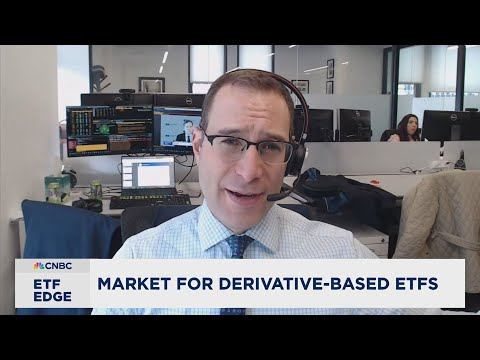
ETF Market Dynamics - Outflows from Bitcoin ETFs are small relative to the massive inflows over the past 18 months, representing only a couple percentage points [1] - Ethereum ETFs have experienced approximately $25 billion outflows, warranting close attention [2] - A significant portion of the outflows is attributed to the basis trade, a strategy favored by hedge funds [3] - The basis trade, involving selling front-month futures contracts and buying spot at the same time, offered an annualized yield that has fluctuated, reaching 20% at times but now below 5% [4][5] - Decreased interest in the basis trade is driving money out of these ETFs, while retail investors and long-term investment advisors continue to buy [5] - The ETF space is experiencing aggressive growth, with inflows exceeding $1 trillion this year [15] Crypto Regulation and Taxation - Uncertainty surrounding regulatory clarity from the SEC and CFTC has been a concern for institutional investors in crypto ETFs and crypto investing [7] - Tax changes, including guidance from the IRS on "good income" versus "bad income," are expected to reshape the crypto landscape [6][8] - The tax treatment of staking yield, where assets are locked up to contribute to the network in return for in-kind Ethereum, is currently unclear [9][10] - Crypto ETFs are starting to allow for staking yield, but some institutional investors are hesitant due to potential tax implications [10] ETF Product Innovation - Hundreds of new crypto ETFs with different variations, leverage, and yield plays are expected to launch [12] - "Manufactured yield" products, using derivatives to generate high yields (sometimes over 80%), are gaining popularity [12][13] - Active ETFs, including "boomer candy" products offering downside protection, are growing rapidly, with legacy asset managers entering the market [13][14] - Goldman Sachs is acquiring a company specializing in buffer products, indicating a significant move into the active ETF space [14][15]


Goldman Sachs to buy Innovator Capital Management in $2B push into active ETFs
Proactiveinvestors NA· 2025-12-01 20:03
Group 1 - Proactive provides fast, accessible, informative, and actionable business and finance news content to a global investment audience [2] - The news team covers medium and small-cap markets, as well as blue-chip companies, commodities, and broader investment stories [3] - Proactive has bureaus and studios in key finance and investing hubs including London, New York, Toronto, Vancouver, Sydney, and Perth [2] Group 2 - The company is focused on sectors such as biotech and pharma, mining and natural resources, battery metals, oil and gas, crypto, and emerging digital and EV technologies [3] - Proactive adopts technology to enhance workflows and improve content production [4] - All content published by Proactive is edited and authored by humans, ensuring adherence to best practices in content production and search engine optimization [5]


Goldman Sachs to buy ETF sponsor Innovator in $2B cash-and-stock deal
Fox Business· 2025-12-01 17:33
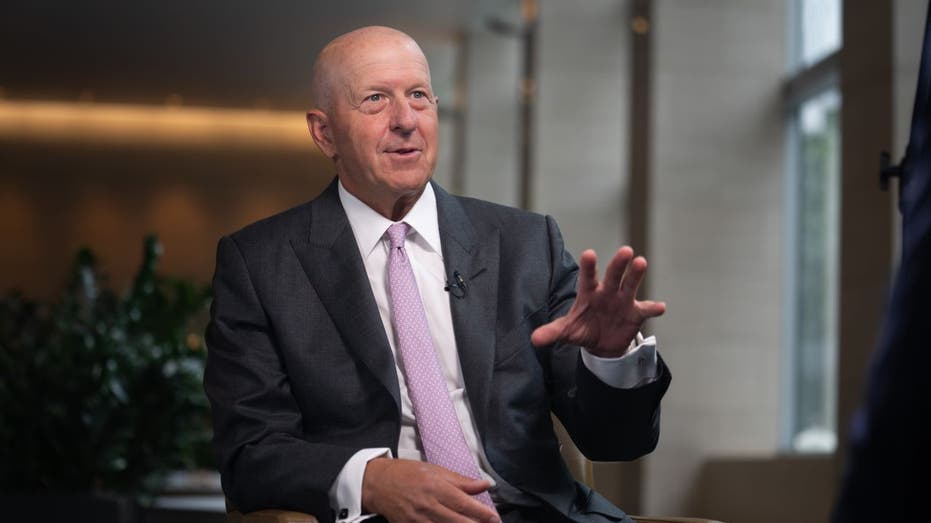
Core Viewpoint - Goldman Sachs is acquiring Innovator Capital Management for approximately $2 billion to enhance its presence in the rapidly growing active exchange-traded fund (ETF) market [1][9]. Group 1: Acquisition Details - The acquisition will be a cash-and-stock deal valued at around $2 billion [1]. - The transaction is anticipated to close in the second quarter of 2026 [9]. - Innovator Capital Management manages $28 billion in assets across 159 defined outcome ETFs as of September 30, 2025 [8]. Group 2: Market Context - Active ETFs have seen a resurgence as investors prefer a more hands-on investment approach due to lower returns from passive index products amid tighter monetary policies [1]. - Global assets in actively managed ETFs have reached $1.6 trillion, growing at a compound annual growth rate of 47% since 2020 [2]. - Goldman Sachs CEO David Solomon highlighted that active ETFs are a dynamic and transformative segment in the public investment landscape [4]. Group 3: Personnel Changes - Innovator's co-founder and CEO Bruce Bond, along with other key executives, will join Goldman Sachs Asset Management following the acquisition [8]. - An additional 60 employees from Innovator are expected to integrate into Goldman Sachs Asset Management's Third-Party Wealth and ETF teams [8].
Goldman to buy Innovator Capital Management for $2B
Yahoo Finance· 2025-12-01 10:29
Core Viewpoint - Goldman Sachs is acquiring Innovator Capital Management for $2 billion, which will add $28 billion in assets to Goldman's management portfolio [1][2]. Group 1: Acquisition Details - The acquisition will significantly enhance Goldman's exchange-traded fund (ETF) offerings, incorporating 159 defined outcome ETFs [2]. - The transaction is expected to close in the second quarter of 2026, pending regulatory approval and other customary conditions [3]. Group 2: Market Context - Innovator Capital Management is recognized for pioneering defined outcome ETFs, which utilize options to provide specific ranges of returns and losses [4]. - The defined outcome ETF market has seen substantial growth, increasing from $183 million in assets under management in 2018 to nearly $27 billion by August 2023 [4]. Group 3: Growth Potential - Defined outcome ETFs have experienced a 66% compound annual growth rate since 2020, highlighting their rapid adoption in the investment landscape [5]. - Goldman Sachs views defined outcome ETFs as a crucial element of the expanding active ETF market, aimed at delivering innovative structured strategies to investors [5]. Group 4: Leadership and Integration - Innovator's CEO Bruce Bond and other key executives will remain with Goldman Sachs Asset Management post-acquisition, ensuring continuity in leadership [5]. - The integration will involve over 60 Innovator employees joining Goldman's Third-Party Wealth and ETF teams [5]. Group 5: Competitive Position - Following the acquisition, Goldman Sachs Asset Management will rank among the top-10 active ETF providers globally, managing over 215 ETF strategies with total assets exceeding $75 billion [6].
X @Bloomberg
Bloomberg· 2025-11-14 13:24
Investment Flows - Investors are allocating capital into active ETFs [1] - The trend indicates a shift of assets into the ETF structure rather than a renewed focus on alpha-seeking strategies [1]
5 Years In, This ETF Charts a New Path for Core Bond Funds
Etftrends· 2025-11-06 17:49
Core Insights - The SEC's 2019 ETF rule has significantly streamlined ETF product development, leading to a surge in new ETF launches, particularly benefiting active ETFs in the bond market [1][2] - The Avantis Core Fixed Income ETF (AVIG), launched in October 2020, exemplifies the active ETF approach to core bond funds, charging a competitive fee of just eight basis points [2][3] - AVIG focuses on global investment-grade debt securities, aiming for a weighted average maturity close to that of the Bloomberg Barclays U.S. Aggregate Bond Index, and employs an analytical approach to assess expected income and capital appreciation [2][3] Performance and Appeal - AVIG's strategy emphasizes outperformance and lower costs, distinguishing it from traditional mutual fund core bond offerings, while providing greater transparency and flexibility [3] - The active management of AVIG allows for quicker adaptation to market changes, such as replacing defaulted securities more efficiently than passive funds [3] - Year-to-date, AVIG has returned 7%, indicating strong performance and making it an appealing option for investors looking to refresh their core bond allocations [3]

MSCI(MSCI) - 2025 Q3 - Earnings Call Transcript
2025-10-28 16:02
Financial Data and Key Metrics Changes - MSCI reported organic revenue growth of 9%, adjusted EBITDA growth of 10%, and adjusted earnings per share growth of over 15% in Q3 2025 [6] - The company repurchased $1.25 billion worth of shares in Q3, bringing year-to-date repurchases to over $1.5 billion, with an additional $3 billion authorized for future repurchases [6] Business Line Data and Key Metrics Changes - The index franchise achieved recurrent net new subscription sales growth of 27%, with 43% growth in the Americas [7] - Total AUM in investment products linked to MSCI indices reached $6.4 trillion, including $2.2 trillion in ETFs and $4.2 trillion in non-ETFs [7] - Analytics delivered recurrent net new sales growth of 16%, driven by strong adoption of risk tools and equity models by hedge funds [8] - Subscription run rate growth for wealth managers was nearly 11%, while asset owners posted 9% growth [12][14] - Subscription run rate growth for banks and broker dealers was 9%, with a record level of recurring sales [15] Market Data and Key Metrics Changes - Equity ETFs linked to MSCI indexes captured $46 billion of inflows during Q3 2025 [17] - The index retention rate remained durable at nearly 96% [17] - Sustainability and climate solutions saw an 8% subscription run rate growth, with climate solutions growing at 16% [19] Company Strategy and Development Direction - MSCI is focusing on expanding its presence in private credit and enhancing its client segmentation strategy [10][25] - The company is leveraging AI to enhance existing products and develop new capabilities, aiming for significant value creation for shareholders [9][41] - MSCI is committed to helping the active asset management industry recover by creating new products, particularly in the active ETF space [31][60] Management's Comments on Operating Environment and Future Outlook - Management expressed optimism about long-term opportunities and the ability to drive growth from recent innovations [16] - The company is seeing solid momentum in delivering new products and capabilities, translating into tangible results [21] - Management acknowledged challenges in the sustainability and climate segment but emphasized the potential for monetization through indices [54] Other Important Information - MSCI launched a private credit factor model and a new global taxonomy for private assets, enhancing transparency and standardization [8][9] - The company is actively developing datasets and products for market makers and broker dealers to fuel liquidity [33] Q&A Session Summary Question: Strategy around private credit - Management is bullish on private credit, emphasizing the need for transparency tools for private credit funds to attract investors [24][25] Question: New products and marketing efforts - The strategy includes creating new products for the active asset management industry and expanding into other client segments [31][35] Question: AI opportunities and cost savings - AI is expected to dramatically increase margins by creating new products and reducing operational costs [63][64] Question: Sales momentum in asset management - The sales momentum is attributed to upselling additional content and services to existing clients, particularly in index [68] Question: Competitive moat against new entrants - MSCI's proprietary data and trusted brand create significant barriers to entry for competitors [72][75] Question: Performance of net new sales in EMEA - There was a decline in net new sales in EMEA, with management noting the need for further product innovation in that region [78]

Active ETF TSPA Hits $2 Billion in AUM
Etftrends· 2025-10-28 14:52
Core Insights - Active ETFs are gaining prominence with an increasing number of launches contributing to the overall growth of the ETF market [1] - The T. Rowe Price U.S. Equity Research ETF (TSPA) has surpassed $2 billion in assets under management (AUM), reflecting its strong performance and investor interest [1] - TSPA has experienced a $618 million increase in AUM over the past six months, driven by both net inflows and price appreciation [1] Performance Metrics - TSPA has achieved a return of 14.2% year-to-date, outperforming its category average during the same period [1] - The fund has also outperformed its average over one- and three-year periods, indicating consistent performance [1] Investment Strategy - TSPA employs a research-based portfolio construction process aimed at providing similar economic exposure while seeking to outperform benchmark portfolios [1] - The fund charges a competitive fee of 34 basis points, which is attractive for investors [1] - T. Rowe Price's fundamental analysis capabilities are leveraged to identify key stocks that significantly contribute to overall market growth [1] Future Outlook - TSPA's focus on fundamental research allows it to adapt more flexibly compared to passive investment strategies, making it a compelling option for investors seeking active exposure [2] - The fund aims to outperform its benchmark by identifying firms that meet strict performance guidelines, which could enhance its appeal as the year concludes [2]

You'll pay more for active ETFs than passive funds. Is it worth it?
Youtube· 2025-10-23 17:22
Core Insights - The trend towards alternative investment strategies, including derivatives and active ETFs, is gaining traction among investors seeking diversification and income generation [2][6][10] ETF Market Dynamics - ETFs have evolved over the past 30 years, providing access to various investment strategies that were previously unavailable to common investors [2][3] - There has been explosive growth in specific market segments, particularly in precious metals and cryptocurrencies, indicating a shift towards these alternatives becoming mainstream assets [4][6] Investor Behavior - Investors are increasingly using covered call strategies and other options-based approaches to manage risk and enhance income from existing holdings [2][3] - The current market environment, characterized by high yields and a weaker dollar, is prompting investors to seek uncorrelated assets to diversify their portfolios [8][12] Product Innovation - The ETF industry is witnessing rapid product innovation, with a significant increase in the launch of active ETFs and alternative-based products [10][12][20] - New managers are successfully entering the market, indicating a shift in the competitive landscape and a growing acceptance of diverse ETF offerings [12][14] Fee Structure and Performance - The trend towards active ETFs has led to a higher fee structure, reflecting the increased complexity and management effort required [15][16] - Investors are becoming more tolerant of higher fees for active management, especially when compared to traditional hedge fund fees [17][18] Due Diligence and Complexity - There is a growing demand for due diligence as investors navigate the complexities of new ETF products that utilize options, leverage, and derivatives [18][20] - Clients are increasingly interested in understanding how these new products fit into their overall portfolio strategy and risk-return profiles [19][20]

You’ll pay more for active ETFs than passive funds. Is it worth it?
CNBC Television· 2025-10-23 16:45
ETF Market Trends & Innovation - ETFs are providing access to strategies previously unavailable to common investors, such as covered call and option premium strategies [2] - Explosive growth is seen in specific market segments like precious metals (gold) and cryptocurrencies (Bitcoin) [4] - Alternative assets, including precious metals and crypto, are increasingly being adopted into mainstream investment portfolios to diversify and find uncorrelated assets [6] - Product innovation is driven by new demand, with a focus on active ETFs and derivative strategies [8][9][12] - The industry has shifted towards active ETFs, with new entrants differentiating themselves through innovative product offerings [10][11][12] Fees & Performance - While passive ETFs have seen fee compression, active ETFs can support higher fees due to the increased workload [14][15] - Higher fees for active management put pressure on managers to deliver performance [15][16] - The ETF fees should be compared to other industries like structured notes or hedge funds, where similar profiles or payoffs may come at a higher cost (e g, 2 and 20 in hedge fund wrapper) [17] - There's increased tolerance for fee elasticity, especially if end-users can access high-octane active management [17] Due Diligence & Risk - Due diligence conversations have increased due to the complexity of new ETF products using options, leverage, and swaps [18] - Clients are interested in how these new alternative-based ETF products function within their overall portfolio and their risk-return profile [18] - Investors are seeking to understand the potential systemic risks associated with the rapid pace of ETF innovation and launches [19][20]