Asset Tokenization

Search documents
资产代币化:除了效率提升,投资者还需关注什么?
Sou Hu Cai Jing· 2025-11-28 06:04
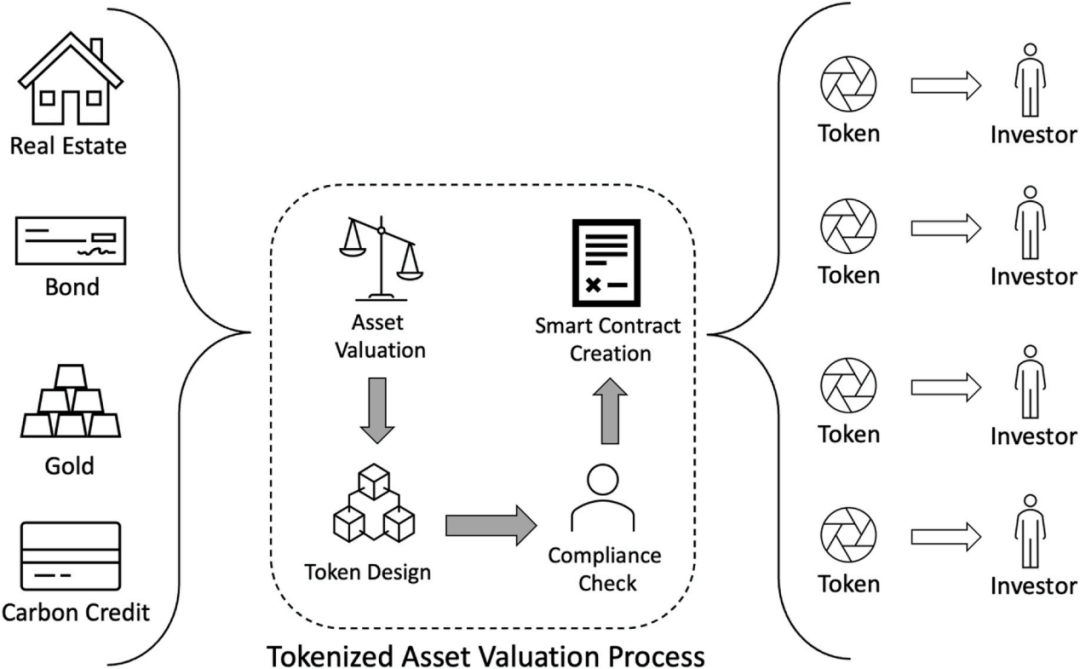
Core Insights - The article discusses how blockchain technology is reshaping traditional asset management through asset tokenization, highlighting its potential to enhance transaction efficiency and create value while also presenting new challenges in governance, risk distribution, and market trust [1][2]. Group 1: Asset Tokenization Overview - Asset tokenization refers to converting physical or digital assets into blockchain-based tokens, enabling trading and management on decentralized platforms, which alters liquidity structures and significantly reduces costs and time delays associated with traditional transactions [2][3]. - The motivation behind tokenization is to enhance asset liquidity, lower investment barriers, and promote more effective resource allocation [3]. Group 2: Transaction Cost Theory (TCT) and Tokenization - Transaction Cost Theory (TCT) provides a framework for analyzing cost structures in economic exchanges, indicating that traditional markets often have high transaction costs due to information asymmetry and imperfect contract enforcement [5]. - Tokenization reduces these costs through automation via blockchain and smart contracts, enhancing market efficiency, but it also raises concerns about governance and regulatory challenges in decentralized environments [5]. Group 3: Methodology - The research involved four case studies representing different asset classes: real estate, gold, bonds, and carbon credits, utilizing semi-structured interviews with 30 participants from various roles to gather data on transaction efficiency, value creation, governance, and market trust [6]. Group 4: Findings on Transaction Mechanisms - Tokenization significantly impacts transaction mechanisms by eliminating intermediaries and reducing costs, as seen in real estate where smart contracts facilitate direct ownership transfers, cutting down on time and fees [8]. - However, the removal of intermediaries introduces challenges in dispute resolution and error handling, potentially undermining investor confidence [8]. Group 5: Access and Ownership - Tokenization lowers investment barriers for high-value assets through fractional ownership, allowing smaller investors to participate in markets previously inaccessible, thus democratizing investment opportunities [9]. - It also enhances trading flexibility for traditionally illiquid assets, as demonstrated in the carbon credit market, where real-time trading is made possible [9]. Group 6: Governance and Oversight - Tokenization promotes decentralized governance, allowing token holders to participate in key decisions, which theoretically reduces agency costs and single points of failure [10]. - However, decentralized governance faces challenges in coordination efficiency and compliance, particularly across different regulatory jurisdictions [10]. Group 7: Compliance and Trust - The immutability and transparency of blockchain are seen as tools to enhance market trust, providing reliable transaction records and preventing fraud [12]. - Nonetheless, the rigidity of blockchain can limit the system's ability to respond to errors or market manipulation, potentially harming long-term trust [12]. Group 8: Discussion on Efficiency and Value Creation - Tokenization enhances transaction efficiency by eliminating intermediaries and lowering costs, with significant implications for various asset classes, particularly in real estate [15]. - It creates value by enabling broader access to previously inaccessible asset classes, although market volatility and security vulnerabilities may offset theoretical benefits [15]. Group 9: Decentralization and Risk Distribution - While decentralization improves efficiency and inclusivity, it complicates risk distribution and trust mechanisms, as the absence of intermediaries can increase system vulnerability to errors and fraud [16]. - Decentralized governance may be less efficient due to participant interest divergence and high coordination costs, while blockchain's transparency can limit flexibility in addressing market manipulation [16].

X @CoinMarketCap
CoinMarketCap· 2025-11-28 04:25
LATEST: 🇵🇭 The Philippines is sitting on a $60B opportunity from asset tokenization by 2030, with nearly half of all government bond account holders already owning them in tokenized form, according to a new white paper. https://t.co/DZxxPHXDQn ...
X @Token Terminal 📊
Token Terminal 📊· 2025-11-26 21:30
RT Token Terminal 📊 (@tokenterminal)ELI5 "ASSET TOKENIZATION"Asset tokenization = representation of an asset outside of its ledger of origin.1⃣Original asset: stock, bond, real estate, cryptocurrency, NFT, token, etc.2⃣Ledger of origin: state-governed registries, corporate databases, blockchains, etc.3⃣Token issuer: regulated entity, DAO, or immutable smart contract,4⃣Destination ledger: a ledger with improved and/or complementary functionality vs. the ledger of origin.5⃣Tokenized asset: a more performant ( ...
X @Token Terminal 📊
Token Terminal 📊· 2025-11-25 22:24
ELI5 "ASSET TOKENIZATION"Asset tokenization = representation of an asset outside of its ledger of origin.1⃣Original asset: stock, bond, real estate, cryptocurrency, NFT, token, etc.2⃣Ledger of origin: state-governed registries, corporate databases, blockchains, etc.3⃣Token issuer: regulated entity, DAO, or immutable smart contract,4⃣Destination ledger: a ledger with improved and/or complementary functionality vs. the ledger of origin.5⃣Tokenized asset: a more performant (and risky) representation of the ori ...
评估亚太地区稳定币的现状-Assessing the lie of the land for Stablecoins in Asia-Pacific
2025-11-24 01:46
Summary of the Conference Call on Stablecoins in Asia-Pacific Industry Overview - The report focuses on the evolving landscape of stablecoins in the Asia-Pacific region, particularly in light of the GENIUS Act passed in July 2025 and recent stablecoin IPOs in the US [1][2] - Many Asia-Pacific countries are considering the introduction of local currency stablecoins, but the regulatory framework is still in development [1][2] Key Insights - **Regulatory Landscape**: The regulatory environment for stablecoins is rapidly evolving, with countries like Singapore, Australia, and Japan already having frameworks in place for stablecoin issuance [11][20] - **Adoption Potential**: Korea, Singapore, and Hong Kong are identified as having the highest potential for stablecoin adoption due to their familiarity with crypto and high cashless payment rates [3][10] - **Market Size**: The USD-denominated stablecoin market cap is approximately $300 billion, while Asia currency-based stablecoin market cap is only around $49 million, indicating significant room for growth [9] Opportunities and Challenges - **Cross-Border Payments**: Stablecoins present a natural opportunity for cross-border payments, with potential transaction cost reductions of 60-80% compared to traditional systems [29] - **Corporate Interest**: Corporates are beginning to shift their focus towards stablecoins, with some already signing agreements for stablecoin transactions [2][40] - **Financial Institutions' Response**: Local banks are becoming increasingly aware of the risks posed by stablecoins, particularly regarding FX commissions and trade finance earnings [40] Regulatory Developments - **Australia**: The RBA is exploring the role of stablecoins through Project Acadia, focusing on the development of a Central Bank Digital Currency (CBDC) [17] - **Korea**: The Bank of Korea emphasizes the need for traditional banks to lead stablecoin initiatives to ensure monetary policy efficacy [17] - **Hong Kong**: The Stablecoins Ordinance requires a license for stablecoin issuance, with 36 applications received by the HKMA as of September 2025 [17] - **China**: The PBOC maintains a cautious stance towards stablecoins, focusing on the promotion of the digital yuan instead [18] Market Dynamics - **Demographics**: Countries with a higher share of younger populations and foreign workers are expected to drive demand for stablecoins, particularly for cross-border remittances [10][11] - **Technological Adoption**: Advanced digitization in Asia, characterized by a young population of "digital natives," supports higher adoption rates for stablecoins [6] Financial Institutions' Initiatives - Financial institutions are adapting to the changing landscape by exploring partnerships and developing blockchain-based solutions for stablecoin transactions [63] - Examples include POSCO International's collaboration with JPMorgan Kinexys for a blockchain-based global payment system and Mitsubishi Corporation's plans to use JPY-pegged stablecoin for internal payments [45] Conclusion - The stablecoin ecosystem in Asia-Pacific is still in its early stages, but the potential for growth is significant as regulatory frameworks develop and corporates begin to adopt these digital currencies [1][2][9]
X @Token Terminal 📊
Token Terminal 📊· 2025-11-22 19:41
The 'incumbent' is innovating.Only a matter of time until the chain column is populated by @RobinhoodApp as well. https://t.co/P5QlglqblZToken Terminal 📊 (@tokenterminal):WEEKLY FUNDAMENTALS1/ Asset Tokenization, the Return of the Incumbents?Our most recent newsletter focuses on asset tokenization and the impact it could end up having on the crypto markets.We explore (i) how asset tokenization works, (ii) why incumbent companies might have https://t.co/mPtsnQqFOb ...
Robo.ai Partners with Zand Bank, the Middle East's First Fully Digital Bank, to Pioneer a New Paradigm in Machine Economy Fintech
Prnewswire· 2025-11-21 12:22
Core Insights - Robo.ai has signed a strategic Memorandum of Understanding (MOU) with Zand Bank to integrate its intelligent hardware ecosystem with Zand Bank's digital financial system, focusing on AED stablecoin payments, IoT asset custody, and Real-World Asset (RWA) tokenization [1][2] Group 1: Partnership Objectives - The collaboration aims to address payment and compliance challenges within the "Machine Economy" by embedding Zand Bank's financial infrastructure into Robo.ai's hardware terminals [2] - The partnership will enable seamless, automated transactions between humans and machines, enhancing the economic value generated by intelligent devices [2] - Zand Bank's custodial services and AED stablecoin will facilitate compliance and access to international markets, including the Middle East, Africa, and South Asia [2] Group 2: Company Profiles - Zand Bank is the first fully digital bank in the Middle East, licensed by the Central Bank of the UAE, and rated BBB+ by Fitch Ratings, focusing on bridging Traditional Finance and Decentralized Finance [3] - Robo.ai is a technology company listed on Nasdaq, aiming to build a global AI robotics network platform and integrate intelligent terminals with a unified AI operating system [4] Group 3: Technological Innovations - The partnership will enhance transaction efficiency through automatic settlement for Human-to-Machine (H2M) and Machine-to-Machine (M2M) interactions by integrating Zand Bank's AED stablecoin into Robo.ai's IoT devices [4] - The collaboration will also focus on secure custody of digital assets and the tokenization of physical assets, improving liquidity and financing options [4] - Additionally, the partnership aims to generate auditable on-chain ESG reports to support Dubai's 2050 Net Zero Carbon emissions target [4]

X @Wu Blockchain
Wu Blockchain· 2025-11-21 04:59
Asset tokenization platform Securitize has partnered with Plume Network’s Nest protocol to bring institutional assets on-chain, the behind products from Apollo, Hamilton Lane, VanEck, and BlackRock.Meanwhile, Bitcoin staking protocol Solv Protocol will invest $10 million into Nest Vaults to enhance the liquidity of the associated asset pools.https://t.co/W5tIh5Marv ...
以太坊技术路线调整引关注,区块链应用场景扩展惠及XBIT用户群体
Sou Hu Cai Jing· 2025-11-20 15:26
Core Insights - The global cryptocurrency market experienced significant developments on November 20, including a key legal ruling, technological innovations, and a historic price surge for Bitcoin [1] Legal Developments - U.S. Federal Judge Lewis Kaplan ruled that FTX co-founder Gary Wang would avoid prison time, receiving three years of supervised release and forfeiting $11 billion in assets, marking a significant conclusion to criminal cases related to FTX [3] - Wang's cooperation with government investigations and his technical contributions were highlighted, providing a legal reference for compliance in the cryptocurrency industry [3] Technological Innovations - A Swiss church implemented an automated AI system named "Jesus" that accepts cryptocurrency donations and provides religious guidance, resulting in a 20% increase in donation revenue [5] - Ethereum's development path is shifting focus from Layer 2 solutions to optimizing the mainnet execution environment, with proposed upgrades potentially increasing network throughput by over 1000 times [7] Market Trends - Bitcoin reached a historic high of $99,199 on November 21, driven by continued institutional investment, notably MicroStrategy's $4.6 billion investment [5] - The alternative token market showed activity, with Shiba Inu's burn rate increasing by 6,223%, demonstrating the role of token economics in price adjustments [5] Regulatory Environment - U.S. Federal Judge Reed O'Connor's ruling on November 21 invalidated the SEC's dealer rules, clarifying the legal environment for decentralized finance (DeFi) participants [5] - SEC Chairman Gary Gensler announced his departure, signaling potential shifts in U.S. cryptocurrency regulatory policies [7] Industry Statistics - The global digital asset market capitalization surpassed $3 trillion, with stablecoins like Tether (USDT) and USD Coin (USDC) playing crucial roles in providing price stability [7] - Cybersecurity issues remain a pressing concern, with losses exceeding $3.5 billion in 2024 due to hacking and fraud, highlighting the need for improved security infrastructure in the cryptocurrency sector [7] Industry Events - The North American Blockchain Summit held on November 20-21 in Dallas focused on practical applications of blockchain across industries and regulatory trends in the U.S. and internationally [7]