
Supply disruption

Search documents
Why Oil May Not Surge Much Despite Iran Conflict | Insight with Haslinda Amin 03/02/2026
Bloomberg Television· 2026-03-02 07:38
Combat operations continue at this time in full force, and they will continue until all of our objectives are achieved. President Trump. They're saying the military will sustain its attacks on Iran, even as he warns of more US casualties.And despite rising fears that a prolonged campaign could deplete the country's defense capabilities. Live from Singapore, this is inside with Haslinda Amin, where we dive deeper into the global ramifications of this with crucial context and shop analysis. Oil spikes As the ...


European stocks set to slump as markets react to U.S., Israeli strikes on Iran
CNBC· 2026-03-02 06:08
Market Impact - European stocks are expected to open lower, with the U.K.'s FTSE index down 0.6%, Germany's DAX down 1.5%, France's CAC 40 down 1.4%, and Italy's FTSE MIB down 1.2% [2] - Global markets are experiencing a downturn following the U.S. and Israeli attacks on Iran, which have resulted in significant geopolitical tensions [2][3] Oil Prices - Crude oil prices surged more than 8% due to fears of major supply disruptions stemming from the conflict [3] Military Actions - Iran has initiated retaliatory strikes against U.S. bases in the Middle East, resulting in the deaths of three U.S. service members [3] - The U.S. and Israeli assault on Iran was prompted by Iran's refusal to comply with U.S. demands regarding its nuclear program, following unsuccessful negotiations [4]

Oil prices expected to stay high for days, all eyes on Strait of Hormuz flows
Reuters· 2026-03-02 02:38
Core Viewpoint - Oil prices are expected to remain high due to escalating conflicts in the Middle East, particularly affecting supply flows through the Strait of Hormuz, which accounts for over 20% of global oil supply [1]. Group 1: Oil Price Projections - Crude futures surged more than 8% to multi-month highs following U.S. and Israeli attacks on Iran, leading to significant market volatility [1]. - Citi analysts predict Brent crude will trade between $80 and $90 per barrel in the coming week, with a potential pullback to $70 if tensions de-escalate [1]. - Goldman Sachs estimates an $18 per barrel risk premium in crude prices, which could decrease to a $4 premium if 50% of flows through the Strait of Hormuz are halted for a month [1]. Group 2: Supply Disruptions - Wood Mackenzie warns that oil prices could exceed $100 per barrel if tanker flows through the Strait are not quickly restored, indicating a dual supply shock affecting both current exports and OPEC+ spare capacity [1]. - OPEC+ has agreed to increase output by 206,000 barrels per day for April, but the ongoing conflict may hinder effective supply management [1]. - Societe Generale analysts suggest that the most likely scenario is a short-lived spike in oil prices, followed by a partial retracement as markets assess supply continuity [1].

What the Iran Attacks Mean for Oil, Gold Prices
Bloomberg Television· 2026-03-01 15:02
We should spend some time focusing on the importance of this channel, this conduit for the transit of oil and gas in the Middle East to all parts of the world. He explained the importance of it. The gravity of the situation where we see from Maersk and other is really a standstill when it comes to the transit of these shipments.Well, I think it's prudent and important to stay away from a war zone once it initially starts. But the potential for Iran to really dis discombobulated traffic in the Strait of Horm ...
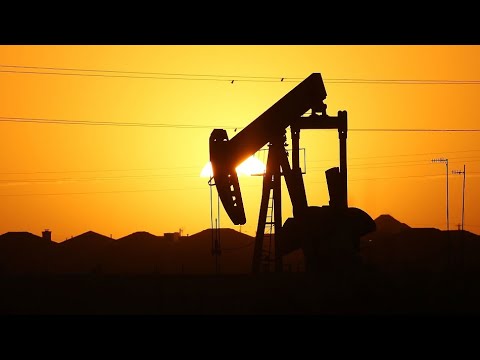
Market analysts react to US-Israel strikes on Iran
Reuters· 2026-02-28 13:53
Group 1 - The United States and Israel launched strikes on Iran, targeting its leadership, which has escalated tensions in the Middle East and raised concerns about regional stability [6][2]. - Nearby oil-producing Gulf Arab countries are on edge due to fears of escalation, leading some oil majors and trading houses to suspend crude oil and fuel shipments via the Strait of Hormuz [2][3]. - Analysts predict that oil prices are likely to remain elevated due to potential disruptions in production and passage, with estimates suggesting a 10-25% premium on oil prices, and a risk of a 50% premium if the Strait of Hormuz is blocked [2][3]. Group 2 - The potential for disruption through the Strait of Hormuz could impact over 20% of global oil and LNG flows, potentially driving oil prices into triple digits and LNG prices to retest record highs from 2022 [3][4]. - Initial market reactions are expected to price in higher risks of supply disruptions, with scenarios ranging from modest disruptions to significant attacks on regional oil infrastructure [3][4]. - A full closure of the Strait of Hormuz is deemed unlikely, but even partial disruptions could lead to several million barrels per day being affected, pushing oil prices above $100 [4].

U.S. will keep key oil routes open, even if it strikes Iran - analyst
Youtube· 2026-02-20 09:16
Geopolitical Impact on Oil Prices - President Trump is expected to decide within 10 to 15 days whether to continue negotiations with Iran or initiate military action, which has led to increased oil prices, with WTI trading at $67 per barrel and crude above $72 per barrel [1][2] - Oil prices have risen more than 6% this week and have seen double-digit gains so far this year, primarily driven by geopolitical tensions related to the US-Iran situation [3][4] Market Fundamentals and Supply Concerns - Despite a generally well-supplied global oil market, three factors are supporting current prices: concerns about Iran, significant buying by China for stockpiling, and high freight rates [6][7] - Analysts initially forecasted oil prices in the $60 range based on fundamental data, but current prices around $72 reflect a combination of geopolitical risk premiums and other factors [5][11] Price Volatility and Future Projections - The oil market is experiencing volatility due to a shift in sentiment regarding supply risks, with potential price spikes if military action occurs, which could lead to demand destruction at prices above $100 to $120 per barrel [8][22] - Historical data suggests that while military interventions may raise concerns, they do not always result in actual supply disruptions, indicating a cautious approach to forecasting future price movements [17][21] Chinese Demand and Inventory Dynamics - Chinese inventory builds have been a significant factor supporting oil prices, and a slowdown in this buying could provide relief to the market if prices spike [23] - The market is closely monitoring the Strait of Hormuz, a critical chokepoint for global oil supply, with historical trends indicating it is unlikely to remain closed for extended periods [19][20]
Oil Spikes as Threat of US Conflict With Iran Increases
Youtube· 2026-02-19 20:55
Core Viewpoint - The oil market is experiencing fluctuations due to potential geopolitical tensions, particularly regarding Iran, which could lead to supply disruptions and affect prices significantly. Group 1: Current Oil Prices and Market Trends - West Texas Intermediate crude oil is currently priced at $66.50, reflecting a 2% increase today, following a period of low prices earlier this year [1] - The lowest price for oil this year was $55, and the market is now approaching last year's average price, which was around $80 [3] - Historical trends indicate that supply disruptions in the Middle East often lead to price peaks, after which Western producers typically sell forward, causing prices to decline [3] Group 2: Geopolitical Factors and Supply Concerns - Traders are focused on how high oil prices can rise and when they can adjust their hedges to manage supply surpluses in the Western hemisphere [4] - There are concerns about whether Gulf states can maintain excess capacity if the Strait of Hormuz is blocked, which could impact global oil supply [4][5] - The U.S. administration's relationships with Middle Eastern producers, particularly Saudi Arabia, may influence supply levels and pricing strategies [6] Group 3: Impact of Venezuelan Oil and Western Hemisphere Supply - The shift in oil supply dynamics is evident, with net liquid fuel exports from the U.S. and Canada reaching 8 million barrels per day, compared to 11 million barrels per day during the peak prices of $145 [11] - Venezuela's oil production is contributing to the trend of increased supply from the Western Hemisphere, which includes countries like Canada, Brazil, and Guyana [12] - The geopolitical landscape is changing, with Venezuela's oil previously going to Cuba, now facing restrictions, which may further isolate Iran, China, and Russia [12]
2026 年跨商品展望更新:当前位置战术性看多原油与贵金属,结构性看多欧洲铝期货-Cross-Commodity Outlook 2026 Update tactically bullish oil and precious metals from current levels structurally bullish aluminium EUAs
2026-01-15 02:51
Summary of Key Points from the Commodity Outlook Update Industry Overview - The report provides an update on the outlook for energy, metals, bulks, and agricultural commodities for 2026, with a focus on oil, precious metals, aluminium, and EUAs [1] Oil Market Insights - Oil prices are expected to rally to around $70/bbl due to rising geopolitical risks related to Iran and Russia/Ukraine, alongside export disruptions from Kazakhstan, Libya, and Algeria [2] - A moderation in geopolitical risks is anticipated by the second half of 2026, with potential price pressures from a fundamental surplus and political influences ahead of the November 2026 US mid-term elections [2] Precious Metals Forecast - Silver is projected to outperform gold, with expected prices of $100/oz for silver and $5,000/oz for gold [3] - The report suggests that these price levels will provide opportunities for producers and central banks to hedge against price declines [3] Aluminium and Base Metals Outlook - Aluminium is expected to maintain a bullish trend, with a near-term price target of $3,400/t, supported by macroeconomic factors and supply constraints [21] - Copper prices are forecasted to reach $14,000/t in the near term, driven by market momentum and demand expectations [25] - Nickel prices are projected to rise to $20,000/t in the short term but are expected to retreat to $16,000/t over the next 6-12 months due to supply growth and market surplus [28] Natural Gas and LNG - The report anticipates a global LNG oversupply starting in 2027, with average prices projected at $9.5/MMBtu for JKM LNG and $8.8/MMBtu for TTF in 2026 [37] - US natural gas prices may decline further due to strong production, but winter demand remains a factor [37] Agricultural Commodities - Coffee prices are expected to decline to $3.40/lb in 3 months and $3/lb in 12 months due to increasing inventories and favorable crop conditions in Brazil and Vietnam [46] EUAs and Carbon Pricing - EUAs are projected to reach €95/t as policymakers avoid direct intervention in the EU ETS, focusing on support for energy-intensive industries [44] - The EU Commission has expanded the list of eligible sectors for indirect cost compensation, reinforcing the bullish outlook for EUA prices [45] Additional Insights - The report highlights the potential for further inflows into base metals driven by macroeconomic factors and investor sentiment [19] - There is a cautionary note regarding the sustainability of current price levels beyond the first quarter of 2026, with expectations of profit-taking and market corrections [13][14] This summary encapsulates the key insights and forecasts from the commodity outlook update, providing a comprehensive overview of the expected trends and market dynamics across various sectors.
原油监测:地缘政治风险升温,上调 0-3 个月布伦特原油预测至 70 美元 桶;波动为生产商提供更多套保机遇-Oil Monitor Upgrading 0-3mth Brent forecast to 70bbl on rising geopolitical risks spikes are opportunities for more producer hedging
2026-01-14 05:05
Summary of Key Points from the Conference Call Industry Overview - The focus of the conference call is on the oil industry, specifically regarding Brent crude oil prices and geopolitical risks affecting supply and pricing dynamics. Core Insights and Arguments 1. **Brent Price Forecast**: The 0-3 month price target for Brent crude oil has been upgraded to $70 per barrel from the previous range of $55-65 per barrel, driven by rising geopolitical risks, particularly related to Iran and Russia/Ukraine [1][2][6] 2. **Geopolitical Risks**: Increased tensions in Iran and ongoing conflicts involving Russia and Ukraine are contributing to a higher geopolitical risk premium, which is expected to support oil prices in the near term [1][7] 3. **Iranian Oil Production**: Iran's crude oil production is approximately 3.9 million barrels per day (b/d), with exports around 1.3 million b/d. Protests in Iran could lead to supply disruptions, particularly if oil-rich regions like Khuzestan are affected [2][3] 4. **Oil Inventories**: Current oil inventories are at comfortable levels, with OECD stocks at approximately 1,144 million barrels, which is up 42 million barrels year-over-year. However, a 1-2 million b/d outage could quickly deplete spare capacity and push prices higher [2] 5. **Political Unrest**: While protests have intensified in urban centers, they have not significantly impacted Iran's core oil production areas, thus limiting immediate supply disruptions [3] 6. **US Policy Impact**: The US administration's policies, including tariffs on nations trading with Iran, are amplifying short-term price volatility without significantly altering core oil flows. A stock build of 1.6 million b/d is expected through the first half of 2026 [6] 7. **Market Dynamics**: Despite the geopolitical tensions, global oil supply is projected to increase by 1.8 million b/d this year, suggesting that any price rally may be temporary. Recommendations include selling Brent crude if prices exceed $70 per barrel [7] Additional Important Information - The report emphasizes the potential for producer hedging in response to price spikes, as OPEC+ has the capacity to increase supply if significant disruptions occur [1] - The analysis indicates that while geopolitical risks are currently high, the fundamentals of the oil market remain looser compared to previous crises, suggesting a more stable long-term outlook [1][7]

节前资金获利了结,基本金属冲高回落
Zhong Xin Qi Huo· 2025-12-30 00:30
1. Report Industry Investment Rating No information provided in the content. 2. Core Viewpoints of the Report - In the short - to medium - term, before the New Year's Day, funds take profits, causing base metals to rise and then fall. However, the logic of weak US dollar expectation and supply disruption concerns remains unchanged. After copper, aluminum, and tin stop falling, low - buying and long - position opportunities can be considered. In the long - term, there are still expectations of potential incremental stimulus policies in China, and supply disruption issues for copper, aluminum, and tin still exist, with expectations of tightening supply and demand, so the price trends of copper, aluminum, and tin are optimistic [1]. - Different metals have different price trends: copper prices are expected to be strong due to strong supply contraction expectations; alumina prices are under pressure with weak cost support; aluminum prices are expected to be oscillating and strong due to positive macro expectations; aluminum alloy prices are expected to be oscillating and strong with cost support; zinc prices will oscillate with non - ferrous metals due to the divergence of domestic and foreign inventory trends; lead prices may weaken in supply and demand despite rebounding with non - ferrous metals; nickel prices will oscillate due to Indonesian policy expectations; stainless steel prices will oscillate as nickel iron prices rise; tin prices will oscillate at a high level due to the resilience of rigid demand [2]. 3. Summary by Relevant Catalogs 3.1行情观点 3.1.1 Copper - Information: China's copper smelters set the 2026 copper concentrate long - term processing fee benchmark at $0/ton and $0/pound. In November 2025, China's electrolytic copper production increased month - on - month and year - on - year, and the cumulative increase from January to November was 11.76%. On December 29, the spot price of 1 electrolytic copper was at a discount to the contract [7]. - Logic: The US economy is resilient, and the Fed's interest - rate cut and balance - sheet expansion support copper prices. Copper mine supply disruptions increase, and the long - term processing fee hits a record low. Chinese copper smelters plan to reduce production, strengthening the supply contraction expectation. Demand is weak in the off - season, and LME's position limit reduces the risk of a short squeeze [7]. - Outlook: Copper prices are expected to be oscillating and strong [7]. 3.1.2 Alumina - Information: On December 29, the northern spot comprehensive price of alumina rose, and the national weighted index also increased. The alumina warehouse receipt decreased [7][8]. - Logic: Macro sentiment amplifies price fluctuations. High - cost production capacity fluctuates, but the supply contraction is insufficient, and the inventory is still accumulating. Raw material prices are weak, and the cost support is general. The warehouse receipt is being destocked, but there is pressure on the upper side of the price [8]. - Outlook: Alumina prices are expected to oscillate [8]. 3.1.3 Aluminum - Information: On December 29, the average price of SMM AOO aluminum increased, and the inventory of aluminum ingots and aluminum rods rose. In November 2025, China's unforged aluminum and aluminum product exports decreased year - on - year but increased month - on - month. South32 raised the offer price of aluminum ingot premiums to Japan [9]. - Logic: The macro outlook is positive. Domestic production capacity is high, while overseas power shortages may tighten supply in the long term. High aluminum prices suppress demand, and inventory accumulates [9][10]. - Outlook: In the short - term, aluminum prices are expected to be oscillating and strong. In the medium - term, the price center may rise [10]. 3.1.4 Aluminum Alloy - Information: On December 29, the price of Baotai ADC12 increased, and the warehouse receipt increased. An Indonesian electrolytic aluminum project started trial production [11]. - Logic: The supply of scrap aluminum is tight, providing strong cost support. The weekly operating rate increased, but there are still risks of production cuts in the medium - term. Demand may weaken marginally after the end of the automotive seasonal sales rush [11]. - Outlook: In the short - and medium - term, aluminum alloy prices are expected to be oscillating and strong [11]. 3.1.5 Zinc - Information: On December 29, the spot prices of zinc in different regions had different premiums to the main contract. As of December 29, SMM's seven - region zinc ingot inventory decreased. In November 2025, China's zinc concentrate imports increased [12][13]. - Logic: The macro outlook is positive. Short - term zinc ore supply is tight, and smelter profits decline, reducing zinc ingot production. Domestic consumption is in the off - season, and demand is average. In the short - term, zinc ingot exports will continue, and social inventory may decline. In the long - term, supply may increase while demand growth is limited [13]. - Outlook: In the short - term, zinc prices will oscillate at a high level. In the long - term, there is a possibility of price decline [13]. 3.1.6 Lead - Information: On December 29, the price of waste electric vehicle batteries increased, and the price of lead ingots also rose. The social inventory of lead ingots decreased, and the futures warehouse receipt increased slightly [14]. - Logic: The spot premium decreased, and the original - recycled price difference increased. The price of waste batteries rose, expanding the smelting profit of recycled lead, and production is expected to increase. Demand from electric bicycles weakens, and the battery factory's operating rate declines marginally [14][15]. - Outlook: Lead prices are expected to oscillate [15]. 3.1.7 Nickel - Information: On December 29, the Shanghai nickel warehouse receipt increased, and the LME nickel inventory decreased. The average price of high - nickel pig iron rose. Indonesia plans to revise the nickel ore RKAB and the mineral benchmark price calculation formula [15][16][17]. - Logic: Domestic nickel production decreased in November, but Indonesian production increased, and overall supply pressure remains. Demand is in the off - season, and the market is weak. If Indonesia's RKAB plan is implemented, the supply - demand balance will improve [18]. - Outlook: Nickel prices are expected to oscillate, and attention should be paid to policy implementation [18]. 3.1.8 Stainless Steel - Information: The stainless steel futures warehouse receipt decreased. The average price of high - nickel pig iron rose. Some Indonesian nickel mines face fines [19]. - Logic: Nickel iron prices rise, providing cost support. Stainless steel production is expected to decline in December. Inventory may accumulate in the off - season, and the warehouse receipt is at a low level [20]. - Outlook: Stainless steel prices are expected to oscillate, and attention should be paid to Indonesian policy changes [21]. 3.1.9 Tin - Information: On December 29, the LME tin warehouse receipt increased, and the Shanghai tin warehouse receipt decreased. The spot price of tin ingots rose [21]. - Logic: Tin supply is a major concern. Chinese imports from Myanmar increase, but there are still risks. Indonesian supply may be restricted in Q1 2026. African production is limited. Demand is expected to increase due to the global economic environment and the growth of related industries [21]. - Outlook: Tin prices are expected to be oscillating and strong [21]. 3.2行情监测 - Copper: No specific monitoring information provided [24]. - Alumina: No specific monitoring information provided [39]. - Aluminum: No specific monitoring information provided [52]. - Aluminum Alloy: No specific monitoring information provided [65]. - Zinc: No specific monitoring information provided [76]. - Lead: No specific monitoring information provided [89]. - Nickel: No specific monitoring information provided [103]. - Stainless Steel: No specific monitoring information provided [119]. - Tin: No specific monitoring information provided [129]. 3.3中信期货商品指数 - On December 29, 2025, the comprehensive index was 2339.89, down 0.59%; the commodity 20 index was 2687.93, down 0.42%; the industrial products index was 2258.87, down 0.70%. The non - ferrous metals index was 2676.44, with a daily decline of 0.01%, a 5 - day increase of 3.18%, a 1 - month increase of 6.45%, and a year - to - date increase of 15.95% [147][149].