
国家战略

Search documents
从“十四五”到“十五五”的新一轮五年市场择时(上篇)
Nan Hua Qi Huo· 2025-10-23 11:41
1. Report Industry Investment Rating No relevant content provided. 2. Core Viewpoints of the Report - The Five - Year Plan is a crucial tool for China's governance, guiding the country's economic and social development. It has evolved from a command - style plan in the planned economy era to a strategic - oriented plan in the market economy era, and has a profound impact on the capital market, especially the futures market [6][10][34]. - Understanding the Five - Year Plan is essential for investors to make forward - looking asset allocations, as it can help them identify investment opportunities and risks by providing insights into policy directions and industry trends [10]. 3. Summaries According to Relevant Catalogs 3.1 The Significance of the Five - Year Plan in China - **Reasons to Focus on the Five - Year Plan** - It is the top - level design and strategic blueprint for national development, guiding the actions of the government, market players, and the public. It also reflects the country's long - term goal of building a socialist modern country [6][9]. - It serves as the core basis for policy - making and resource allocation, influencing fiscal, monetary, industrial, and regional policies. The industries emphasized in the plan often become investment hotspots in the capital market [8][10]. - It is a barometer of the macro - economic cycle and industrial trends, indicating the direction of economic development and industrial structure adjustment [10]. - **Importance of the Five - Year Plan** - It promotes the modernization of the national governance system and capacity through a scientific, democratic, and legal decision - making process and a complete goal - governance loop [11][12]. - It ensures the long - term stable development of the economy and society by providing stable expectations, coordinating regional and industrial development, and helping the country cope with major risks and challenges [13]. - It has a profound impact on the capital market, especially the futures market. The specific arrangements in the plan directly affect the supply - demand pattern and price trends of relevant futures varieties and also drive institutional and product innovation in the futures market [14]. 3.2 The Formulation Process of the Five - Year Plan - **General Process** - **From a procedural steps perspective (seven - step process)**: It includes pre - research and consultation, research and compilation, proposal and implementation, draft formation, review and approval, mid - term evaluation, and final evaluation [23]. - **From a compilation stage perspective (four - stage model)**: It consists of mid - term evaluation, basic idea research, the compilation of the Party Central Committee's "Proposal", and the formal compilation of the "Outline" [23][24]. - **Key Time Points for the "15th Five - Year Plan"** - **Pre - research and basic ideas (2023 - H1 2025)**: The mid - term evaluation of the "14th Five - Year Plan" was completed in 2023, and pre - research for the "15th Five - Year Plan" was carried out [27]. - **Compilation of the Party Central Committee's "Proposal" (Early 2025 - October 2025)**: The Fourth Plenary Session of the 20th Central Committee of the Communist Party of China was held on October 20, 2025, to discuss the "Proposal" [27]. - **Formal compilation of the "Outline" (November 2025 - March 2026)**: The State Council will form the draft of the "15th Five - Year Plan Outline" based on the "Proposal" and submit it to the National People's Congress in March 2026 for approval [27][28]. - **Compilation Subjects and Decision - Making Mechanisms** - **Compilation Subjects**: The National Development and Reform Commission plays a leading role, and other ministries and local governments are also important participants, contributing to the compilation of special plans and local plans respectively [30][31]. - **Decision - Making Mechanisms**: The Party Central Committee determines the core content of the plan; the State Council transforms the "Proposal" into a government work plan; the National People's Congress reviews and approves the plan to make it a legally binding national document [31][32]. 3.3 Review of Previous Five - Year Plans - **Decision - Making Models of Previous Five - Year Plans** - **Evolution from "Plan" to "Planning"**: The nature of the Five - Year Plan has changed from a mandatory economic legal document in the planned economy era to a strategic and guiding development blueprint in the market economy era [33][34]. - **Main Content and Tone of Previous Five - Year Plans**: The content and tone of each plan are closely related to the country's strategic needs and development stage, evolving from focusing on industrialization in the early days to emphasizing high - quality development in recent years [35]. - **Evolution Logic**: The Five - Year Plan has shifted from micro - economic instructions to macro - strategic guidance, with the logic starting point changing from "national needs" to a combination of "market demand" and "national strategy" [36]. - **Review of Policy Ideas during Previous Five - Year Plans** - **Evolution of Policy Ideas**: The policy ideas have changed from simply pursuing economic growth speed to emphasizing development quality and efficiency, with a focus on sustainable and comprehensive development [37][38]. - **Shift in Development Focus**: The development focus has gradually shifted from traditional industries to strategic emerging industries and modern services, indicating a transition from factor - driven to innovation - driven economic growth [39]. - **Adjustment of Development Goals**: The development goals have evolved from emphasizing quantitative expansion to focusing on quality improvement, with the introduction of more comprehensive and balanced indicator systems [40][41]. - **Reasons for the Change in Planning Ideas** - The change is driven by factors such as the country's development stage, international environment, institutional environment, technological revolution, and the improvement of governance capacity [45]. 3.4 Review of the Capital Market Performance during Previous Five - Year Plans - **Overall Impact on the Capital Market** - The Five - Year Plan guides the overall market expectations at the macro - level and creates structural opportunities at the meso - level [46]. - **Performance Review of the Futures Market** - **Overall Performance of the Nanhua Composite Index**: It shows a long - term upward trend, with decreasing volatility and a rising index center. The market is more responsive to policy expectations in the early stage of the plan and focuses on goal implementation in the later stage [47][50]. - **Factors Affecting Market Trends**: The market is influenced by fundamental factors, policy interventions, and external factors. The index generally shows a pattern of "rising in the early stage and fluctuating in the later stage" during each plan period [48][49]. - **Event - Driven Effects**: The release of the Five - Year Plan has a short - term event - driven effect on the futures market, with positive market reactions around the release of the "Proposal" and the "Outline" [48][49].
他发新产品了
Sou Hu Cai Jing· 2025-10-22 04:58
Core Insights - The article highlights the investment strategies and performance of Luan Chao, the head of equity investment at Huazhong Fund, who has a decade of experience as a fund manager and is launching a new product called Huazhong Advantage Navigation [1][2]. Group 1: Investment Performance - Luan Chao's flagship product, Huazhong Advantage Leader, has seen a net value increase of 56.11% over the past year, outperforming the benchmark by 36.03% [1]. - The product's top ten holdings were reduced from 69% to approximately 35%, balancing risk and maintaining sharpness in investment [2]. Group 2: Investment Philosophy - Luan Chao advocates a three-pronged investment philosophy of "timing, trend, and stock selection" [3]. - He emphasizes risk control by limiting exposure to any single industry to 30% and maintaining a balanced allocation across sectors [3][4]. Group 3: Historical Investment Decisions - In 2017, Luan Chao focused on cyclical industries like chemicals and real estate, while in 2019, he increased allocations to banks and consumer electronics as the economy recovered [4][5]. - In 2023, he began reducing positions in renewable energy while increasing exposure to AI [6]. Group 4: Investment Framework - Luan Chao has developed an investment framework that combines macroeconomic analysis, industry comparison, and company growth potential, focusing on EPS as a core metric [8]. - His investment style is characterized by a "pyramid" approach, starting with small positions and increasing as market conditions evolve [8]. Group 5: Future Outlook - Luan Chao sees growth as a primary focus, particularly in sectors driven by AI, autonomous control, and consumer demand reshaping [11]. - The new fund, Huazhong Advantage Navigation, will adopt a "growth + new dividend" strategy, targeting high-quality assets in AI and Hong Kong stocks [12]. Group 6: Team and Resources - Huazhong Fund boasts a robust investment research team, enhancing Luan Chao's market sensitivity and strategic depth [13][14]. - The firm has over 200 investment management professionals, making it one of the most experienced teams in the industry [15].
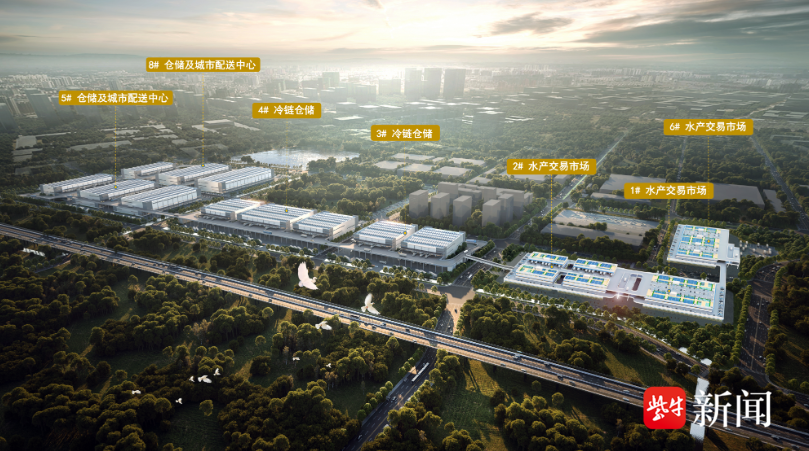
总投资46.56亿元的“超级枢纽”来了!南京国家骨干冷链物流基地在江宁开工
Yang Zi Wan Bao Wang· 2025-10-15 14:54
Core Insights - The Nanjing National Backbone Cold Chain Logistics Base project officially commenced on October 15, with a total investment of 4.656 billion yuan, marking a significant milestone in Nanjing's cold chain logistics development and aligning with national development strategies [1][2] Project Overview - The project is part of the national "14th Five-Year" cold chain logistics development plan, which aims to establish around 100 national backbone cold chain logistics bases, enhancing the modern cold chain logistics network across urban and rural areas [2] - It is categorized as a major industrial project for 2025 in Nanjing and is a large-scale "vegetable basket" initiative, developed through a collaboration between state-owned enterprises and local government [2][5] - The project will be developed in three phases and aims to integrate top cold chain logistics resources in the region, establishing a three-tier cold chain hub network covering the Nanjing metropolitan area, the Yangtze River Delta, and nationwide [2][5] Economic Impact - The project is expected to strengthen Nanjing's position as a hub in the national cold chain logistics network, driving the upgrade of the cold chain industry in East China and facilitating efficient circulation of agricultural products [5] - The Nanjing Agricultural Products Logistics Distribution Center, a key component of this initiative, has been operational since 2009 and is projected to achieve a market transaction volume of 154.356 million tons and a transaction value of 86.586 billion yuan by 2024 [4] Regional Development - Jiangning District, where the project is located, is the largest economic area in Nanjing and is advancing rapidly with 212 ongoing projects, including nine provincial and 89 municipal major projects, with a total investment of 33.87 billion yuan completed by the end of September [6] - Jiangning's strategic location at the intersection of key national economic zones enhances its role as a logistics hub, supported by a robust transportation network including airports, high-speed rail, and highways [7] Logistics Network Enhancement - The Nanjing land port logistics hub was selected for the 2025 national logistics hub construction list, with Jiangning serving as a critical engine for this development, housing 168 logistics companies that form an efficient collaborative logistics network [8] - The project will also contribute to the establishment of a national-level airport economic demonstration zone, enhancing the cold chain logistics infrastructure and supply chain resilience in Nanjing [8] Financial and Strategic Partnerships - A partnership was formed between Nanjing Zhongcai Supply Chain Management Co., Agricultural Bank of China Jiangsu Branch, and Bank of Communications Jiangsu Branch to provide "cold chain finance + digital supply chain" services, facilitating low-interest loans for merchants [8] - The project aims to attract more enterprises and enhance the overall cold chain logistics infrastructure in Nanjing, establishing it as a benchmark for agricultural product cold chain logistics in East China [8]

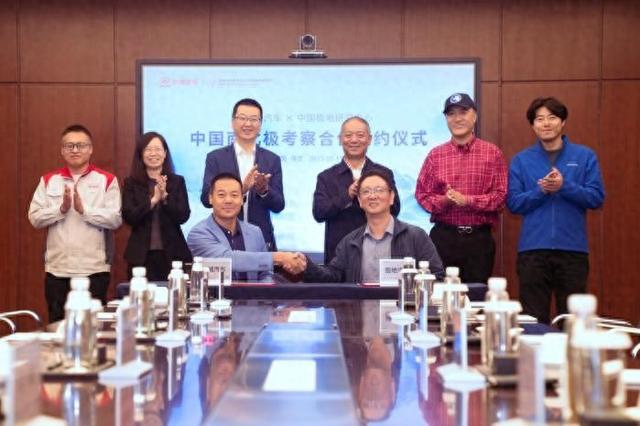
锚定国家战略,长城汽车以硬核品质护航极地科考
Zhong Guo Xin Wen Wang· 2025-10-13 01:29
Core Points - Great Wall Motors has signed a partnership with the China Polar Research Center to support China's polar exploration and jointly develop scientific research vehicles for polar regions [1][3] - This collaboration reflects Great Wall Motors' commitment to national strategic directions and its role in supporting scientific research [3][11] Group 1: Collaboration Details - The partnership will see Great Wall Motors become a key member of the Antarctic exploration support team, taking on responsibilities for ensuring the safety of China's polar scientific endeavors [3][7] - The Tank 300 diesel version will be utilized for transportation and support during Antarctic research missions, with Great Wall Motors providing technical personnel for on-site support [7][9] Group 2: Technical Capabilities - Great Wall Motors has established a comprehensive testing system with over 2,000 experimental projects, focusing on various aspects such as safety, thermal management, and durability to meet high global standards [3][4] - The company has conducted rigorous testing in extreme conditions, including simulations of -40°C temperatures and various weather scenarios, to ensure vehicle reliability in polar environments [4][6] Group 3: Strategic Significance - The collaboration signifies a deep integration of manufacturing capabilities with national strategic missions, highlighting the importance of polar research in China's scientific and geopolitical landscape [11][13] - Great Wall Motors' involvement in polar exploration is seen as a demonstration of China's manufacturing strength and a step towards enhancing the domestic automotive industry's technological capabilities [13][14]

今日视点:丰富A股市场指数体系意义深远
Zheng Quan Ri Bao· 2025-10-09 22:59
Core Viewpoint - The recent meeting held by the China Securities Regulatory Commission (CSRC) emphasized the need to enrich the A-share market index, ETF, and derivative product service system to better serve residents' wealth preservation and appreciation needs, indicating a deeper layout of capital market infrastructure [1]. Group 1: Investment Ecosystem Optimization - Enriching the A-share index system will optimize the investment ecosystem and broaden asset allocation tools, responding to the increasing demand for enhanced investment portfolio yield elasticity as market interest rates trend downward [2]. - Diverse index products, such as ETFs, can help investors efficiently allocate to high-growth sectors and implement specific strategies at lower costs, catering to various risk preferences and investment goals [2]. Group 2: Pricing Efficiency and Company Quality - A robust index system promotes index-based investment development, enhancing pricing efficiency in the capital market through professional management of index funds, which leads to better value discovery in related industries and stocks [3]. - Companies are incentivized to improve market capitalization management and corporate governance to be included in influential indices, fostering a virtuous cycle that enhances information disclosure quality and financial standards [3]. Group 3: National Strategy and Capital-Industry Coordination - A comprehensive index system acts as a "navigation system" for the capital market, guiding funds towards national strategic priorities and quality enterprises, thereby improving capital allocation efficiency [4]. - The introduction of thematic indices, such as those related to "hard technology," effectively conveys policy direction and fosters a positive cycle among policy, capital, and industry [4]. Group 4: Market Maturity and International Influence - A mature capital market is often characterized by a well-developed index system, which is crucial for enhancing the international influence of A-shares [5]. - By developing indices with Chinese characteristics and related derivatives, the A-share market can improve its pricing capability and global attractiveness, providing effective asset allocation and risk management tools for domestic long-term capital [4].
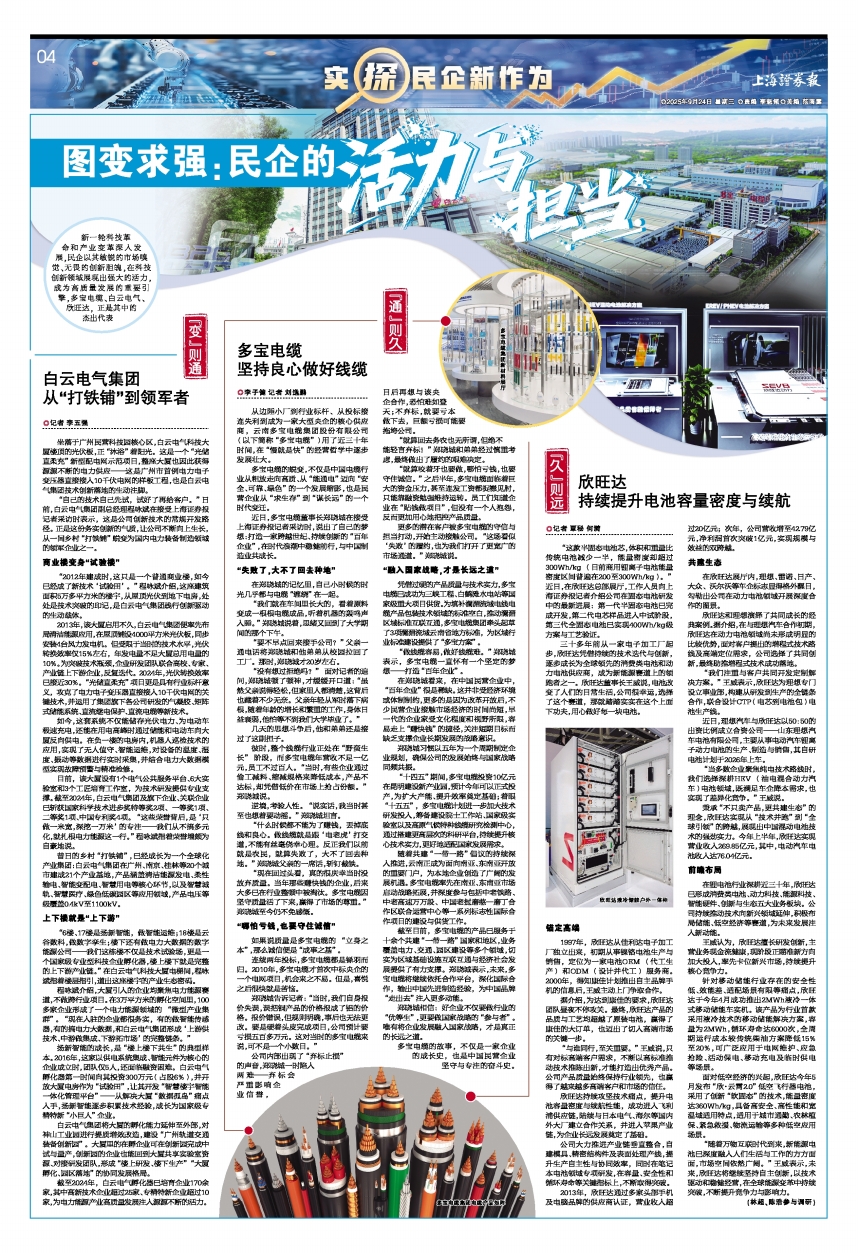
“久”则远 欣旺达持续提升电池容量密度与续航
Shang Hai Zheng Quan Bao· 2025-09-24 00:18
Group 1: Company Overview - Baiyun Electric Group has transformed from a rural "blacksmith shop" into a leading enterprise in the domestic power equipment manufacturing sector, showcasing strong vitality in technological innovation and high-quality development [2][3] - The company has implemented a pragmatic innovation strategy, leading to significant technological breakthroughs in various projects, including a new type of distribution network demonstration project [2][3] Group 2: Technological Advancements - Baiyun Electric has developed a "light storage and flexible charging" project, achieving a photovoltaic conversion rate improvement of nearly 30% and establishing itself as an industry benchmark [2][3] - The company has integrated various new technologies, such as gel and matrix material systems, into its products, enhancing its capabilities in power electronics and direct connections to 10 kV power grids [2][3] Group 3: Industry Impact - Baiyun Electric has established a complete upstream and downstream industrial chain, contributing to the high-quality development of the power storage industry [4] - The company has received multiple awards, including the National Science and Technology Progress Award and the China Patent Award, reflecting its commitment to innovation and excellence [3][4] Group 4: Market Position and Future Plans - Baiyun Electric is actively expanding its influence by establishing innovation parks and collaborating with various enterprises to foster a synergistic development model [4] - The company aims to continue its focus on the power energy service sector, positioning itself as a national-level specialized technology enterprise [3][4]

21专访|昆仑信托万钧:慈善信托有助国企更深融入共同富裕进程
2 1 Shi Ji Jing Ji Bao Dao· 2025-09-10 06:50
Core Viewpoint - Charitable trusts are emerging as a new model that integrates financial tools with public welfare goals, playing a significant role in serving national strategies and adjusting income distribution in the context of promoting common prosperity and deepening financial supply-side reforms [1][2]. Group 1: Role of Charitable Trusts - Charitable trusts can effectively mobilize various social resources through professional asset management, addressing public needs in areas like green development and inclusive finance, while enhancing the credibility of financial services through transparency [3][4]. - The unique characteristics of charitable trusts allow for targeted service models that align with specific national strategies, such as rural revitalization and ecological protection [4]. - Charitable trusts enable sustainable operation of public welfare resources through mechanisms like "retaining principal and using interest," allowing funds to serve strategic goals over extended periods [4][5]. Group 2: Integration and Collaboration - Charitable trusts serve as a cross-sector platform that integrates resources from government, enterprises, and social organizations, creating synergistic effects that enhance the effectiveness of public welfare initiatives [4][6]. - The ability of state-owned enterprises (SOEs) to link industrial resources through charitable trusts is crucial for addressing imbalances in development and pooling donation resources [4][6]. Group 3: Transparency and Accountability - The structured operation of charitable trusts, including professional management and regular disclosures, ensures that funds are accurately aligned with specific national strategic goals, thereby enhancing public trust in charitable activities [5][6]. Group 4: Advantages and Challenges for State-Owned Enterprises - SOEs possess significant advantages in establishing charitable trusts due to their stable funding and resource integration capabilities, which can create large-scale public welfare funding pools [6][8]. - The public credibility of SOEs provides a natural endorsement for charitable trusts, facilitating trust from the government and the public [6][8]. - Challenges include regulatory complexities and a general lack of understanding of charitable trusts among the public and within SOEs, which can hinder effective collaboration and implementation [8][9]. Group 5: Motivation for Establishing Charitable Trusts - Policy incentives are a primary driver for SOEs to establish charitable trusts, as the government encourages the development of such trusts to support various social initiatives [9][10]. - The inherent responsibilities of SOEs to fulfill political and social obligations necessitate their involvement in charitable activities, with charitable trusts serving as a key mechanism for achieving these goals [9][10]. Group 6: Integration with Core Business - Charitable trusts can be integrated into the core operations of SOEs, leveraging industry advantages to create sustainable public welfare initiatives that align with business objectives [10]. - By embedding charitable projects within the entire energy industry chain, SOEs can address local community needs while simultaneously enhancing their operational footprint [10].

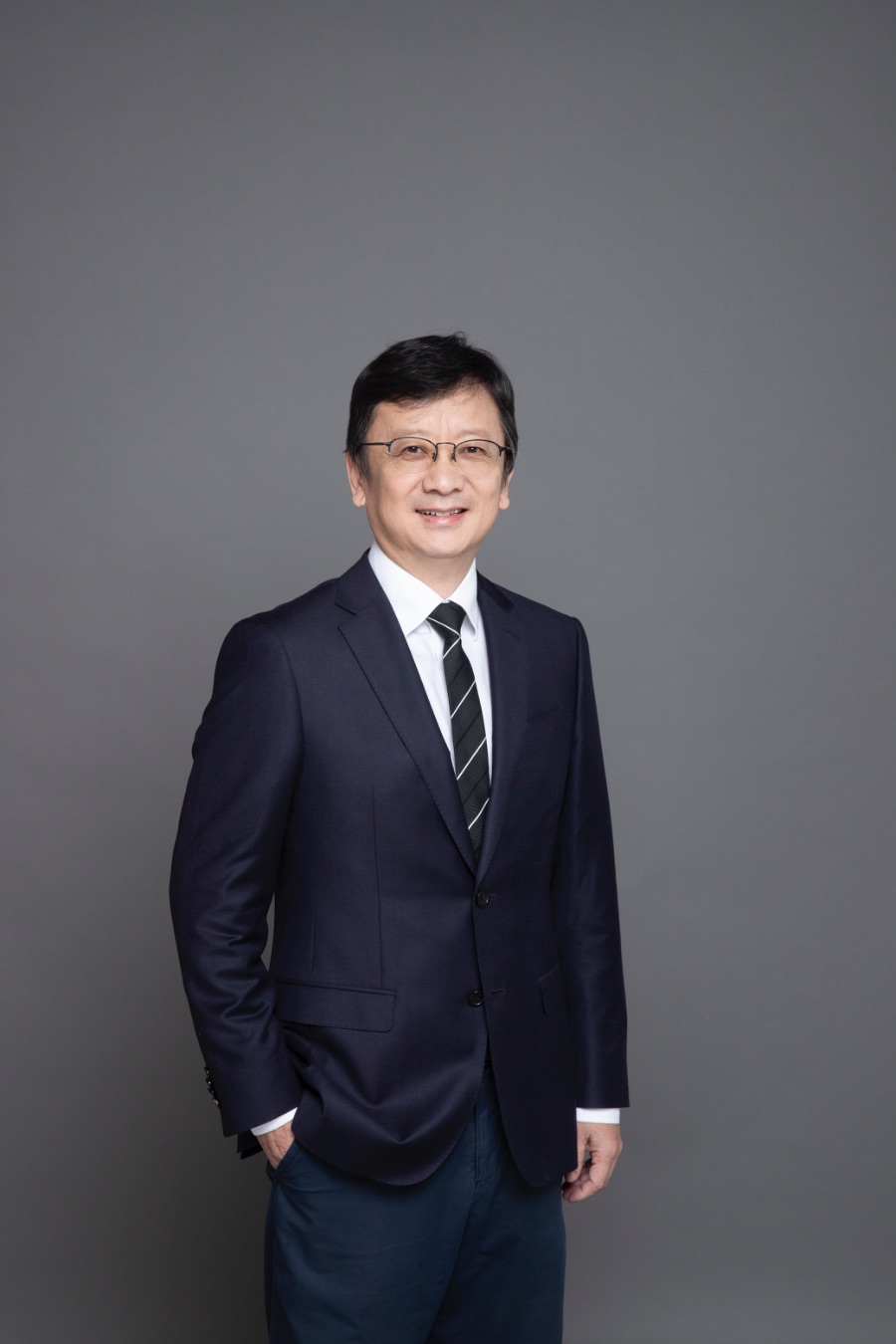
读懂AI本质,才明白刘庆峰为什么说马斯克不懂AI,当全球AI竞争进入深水区
Sou Hu Cai Jing· 2025-08-28 07:21
Core Viewpoint - The statement by Liu Qingfeng regarding Elon Musk's understanding of AI highlights a critical gap in Musk's approach to AI development, emphasizing the need for a deeper connection between AI technology and national strategy [3][18][20] Group 1: AI Competition and National Strategy - The global AI competition has evolved into a national strategic confrontation, with the U.S. and China launching significant AI policies in July 2023 [4][5] - The U.S. identifies China as its primary strategic competitor in AI, focusing on technological protectionism, while China promotes a cooperative and fair approach [4][5] - The number of countries mentioning AI legislation has increased by 21.3% since 2023, indicating a growing recognition of AI's importance at the national level [4] Group 2: Impact on Companies - Companies must align their strategies with national policies to ensure sustainable growth in the AI sector [5][14] - In the U.S., major tech firms like NVIDIA and OpenAI are influenced by government regulations, which can significantly impact their business decisions [6][8] - Tesla's sales have plummeted, resulting in a market value loss of 570 billion, showcasing the adverse effects of Musk's political maneuvers on his business empire [8] Group 3: China's AI Strategy - Chinese AI companies are shifting towards an "application-oriented" strategy, embedding technology into specific sectors to create sustainable business models [9][10] - iFlytek, a leading AI company in China, reported a revenue exceeding 10 billion, with significant growth in AI education and healthcare sectors [10][12] - The Chinese government emphasizes the integration of AI into various industries, with policies supporting AI's role in education and healthcare [10][12] Group 4: Future of AI Development - The development of a self-sufficient AI ecosystem is crucial for China, with a focus on building a robust infrastructure for AI technologies [14][15] - Companies like iFlytek are leading the way in creating a fully autonomous AI model ecosystem, which is essential for long-term sustainability [15][16] - The path forward for AI in China involves a deep integration with national needs and a focus on safety and control, contrasting with Musk's more traditional market-driven approach [18][20]


美国财政部长:英伟达不需要政府的财政支持,不考虑入股!
Sou Hu Cai Jing· 2025-08-28 05:29
Group 1 - The U.S. government is unlikely to invest in Nvidia, as stated by Treasury Secretary Scott Bessent, who emphasized that Nvidia does not require financial support from the government at this time [2][3] - Bessent indicated that the government may consider equity interventions in industries that need restructuring, such as the shipbuilding industry, reflecting a shift in government policy towards direct equity participation to strengthen critical supply chains [3][4] - The recent acquisition of nearly 10% of Intel by the Trump administration highlights the government's focus on maintaining domestic control and competitiveness in the semiconductor industry [3][4] Group 2 - The U.S. government's exploration of diverse tools for industry support is driven by geopolitical changes and global supply chain challenges, indicating a deeper and broader intervention in the economy [4] - Although Nvidia is not currently on the government's investment list, the emphasis on restructuring specific industries suggests future interventions may be more selective and flexible [4]



上海浦东五个经济指标突破“万亿”
Jie Fang Ri Bao· 2025-08-21 02:15
Economic Performance - In the past five years, five economic indicators in Pudong have surpassed the "trillion" mark, with three leading industries nearing half of the city's total [1] - By 2024, Pudong's GDP is projected to reach 1.78 trillion yuan, 1.34 times that of 2020, accounting for 32.9% of the city's total [2] - The total industrial output value is expected to be 1.32 trillion yuan, 1.27 times that of 2020, making up 33.6% of the city's total [2] - The total revenue from the service industry is anticipated to be 1.25 trillion yuan, 1.61 times that of 2020, representing 21.2% of the city's total [2] - The total import and export volume is projected to be 2.61 trillion yuan, 1.25 times that of 2020, accounting for 61.1% of the city's total [2] - Online retail sales are expected to reach 5.88 trillion yuan, 1.34 times that of 2020, making up 37.3% of the city's total [2] Industry Development - The three leading industries—integrated circuits, biomedicine, and artificial intelligence—achieved a scale of 832.3 billion yuan last year, accounting for 46% of the city's total, with an average annual growth rate of 11.7% over the past three years [3] - The proportion of strategic emerging industries in industrial output increased from 48.4% to 53.6% [2] Policy and Reform - Pudong has implemented three national strategic tasks with a landing rate of 93%, resulting in a series of innovative reforms and open results [4] - The "Systematic Opening Overall Plan" has seen 80 tasks largely implemented, with 77 pilot experiences replicated on a larger scale [4] - Key reforms include the first national pilot for importing remanufactured products and the implementation of localized management for imported medical device labels [4] Infrastructure and Urban Development - Pudong has invested 374.22 billion yuan in public welfare, maintaining a fiscal investment ratio of over 46% [6] - The "Five Rings" water system project aims to enhance ecological landscapes and urban functionality, covering an area of approximately 199.4 square kilometers and benefiting around 2.3 million residents [6] - The project includes the construction of new parks and green spaces, increasing the per capita park area to 13.4 square meters [6] Social Welfare and Community Development - The "Two Olds and One Village" renovation project has benefited 38,600 households, completing urban village transformations and improving living conditions [7]