
跨学科

Search documents
记者手记:在“两弹一星”纪念之地扬帆星际
Xin Hua She· 2026-01-27 08:35
Core Perspective - The establishment of the Interstellar Navigation College at the Chinese Academy of Sciences marks a significant step towards advancing China's capabilities in deep space exploration, building on the legacy of the "Two Bombs, One Satellite" initiative [1] Group 1: Institutional Development - The Interstellar Navigation College aims to cultivate interdisciplinary talents capable of handling tasks from near-Earth to deep space missions, emphasizing the need for scientific imagination and engineering realization [1] - The college is positioned as a "high ground" for basic research, innovative talent, and international exchange, reflecting an elevation in academic structure and goals [1] Group 2: Collaborative Efforts - The college's approach includes a "mission-driven, interdisciplinary" training model, which continues the tradition of collaborative efforts that were crucial in past scientific breakthroughs [3] - The importance of cross-institutional and cross-disciplinary collaboration is highlighted as essential for tackling the complexities of deep space exploration [3] Group 3: Historical Context and Future Aspirations - The college's foundation is rooted in the historical achievements of scientists like Qian Xuesen, who laid the groundwork for China's space ambitions during challenging times [1] - The aspirations of the college extend beyond technical advancements, aiming to inspire a new generation to explore the universe and contribute to the nation's scientific legacy [3]
纯外语专业停招后,涌现“外语+”新赛道
Jie Fang Ri Bao· 2025-12-12 03:14
Core Viewpoint - Many universities in China are discontinuing foreign language majors in favor of interdisciplinary programs that cultivate composite talents, reflecting a shift towards "foreign language +" models in education [1][2]. Group 1: Changes in Foreign Language Programs - Shanghai University of Finance and Economics has stopped enrolling in 12 foreign language majors, including English, while East China Normal University has discontinued 24 majors, including German [1]. - The trend of discontinuing traditional foreign language programs is seen across various universities, including the University of Science and Technology of China and Beijing Language and Culture University [1]. - The emergence of large language models has raised questions about the necessity of traditional foreign language programs in the context of increasing emphasis on STEM fields [1]. Group 2: Interdisciplinary Approaches - The English major at Shanghai University of Finance and Economics has been replaced with a Business English program, focusing on cultivating talents in "foreign language + finance + digital intelligence" [2]. - Other universities, such as Shanghai International Studies University and Tongji University, are also rebranding their foreign language programs to include interdisciplinary elements, such as "Language Science and Intelligent Applications" and "English (Digital Humanities)" [2]. - The curriculum at these institutions now includes courses in data science, cognitive neuroscience, and artificial intelligence, reflecting a cross-disciplinary trend in foreign language education [2]. Group 3: Regional Studies and International Demand - Regional studies have become a prominent field, with universities establishing research centers to explore cultural and historical contexts of various countries [6]. - Shanghai International Studies University has developed a curriculum that integrates anthropology, history, and geography to enhance regional studies [6]. - There is a significant demand for international civil servants, particularly in organizations like the United Nations, highlighting the need for foreign language skills in international relations [8][9]. Group 4: Specialized Language Training - Shanghai Maritime University has introduced specialized maritime language courses to address the shortage of professional interpreters in the maritime sector [10]. - Shanghai Sanda University is focusing on "foreign language + regional demand" by offering modules in various languages tailored to specific industries, such as business and tourism [10]. - The university's approach includes practical projects to differentiate its offerings from public universities, aiming to produce versatile language professionals [10].
教育部等六部门:支持青年教师进行跨学科、跨领域研究
Bei Jing Shang Bao· 2025-11-05 12:45
Core Viewpoint - The Ministry of Education and other departments in China have issued guidelines to strengthen the development of young teachers in higher education, emphasizing support for innovative and interdisciplinary research [1][2] Group 1: Support for Young Teachers - The guidelines advocate for long-term support for young teachers to engage in original and disruptive technological innovations [1] - There is a push for organized research, encouraging young teachers to participate in cross-disciplinary studies and contribute to scientific and technological advancements [1] - The guidelines promote the integration of research practice with innovation and entrepreneurship, facilitating the transfer and application of scientific achievements [1] Group 2: Evaluation and Assessment - The guidelines call for improvements in the evaluation system for higher education teachers, focusing on supporting young teachers based on their career aspirations and academic fields [2] - Emphasis is placed on evaluating innovation capability, quality, effectiveness, and contributions rather than solely quantitative metrics [2] - The guidelines propose enhancing the evaluation of teaching quality, incorporating teaching performance into assessments for promotions and awards, and increasing the weight of teaching achievements in evaluations [2]
君品谈|汪晖:君子不器,为时代立言
凤凰网财经· 2025-07-16 13:58
Group 1 - The core viewpoint emphasizes the importance of humanities in contemporary society, advocating for a return to humanistic values amidst a utilitarian trend [5][6][10] - The article discusses the historical context of the Southwest Associated University, highlighting the commitment of intellectuals to cultural revival and national salvation, which has influenced the author's academic pursuits [4][8] - The author reflects on the challenges faced by humanities disciplines in a society that prioritizes practical and economic benefits, arguing for a reassertion of the humanities' role in exploring human significance [5][6][10] Group 2 - The author shares personal experiences of studying humanities, emphasizing the importance of staying true to one's values despite societal pressures towards more practical fields [2][3] - The article highlights the need for interdisciplinary collaboration and open academic environments to foster genuine creativity and intellectual exchange [7][10] - The author advocates for breaking down disciplinary boundaries to enhance academic dialogue, suggesting that humanities should engage with perspectives from social and natural sciences [10]

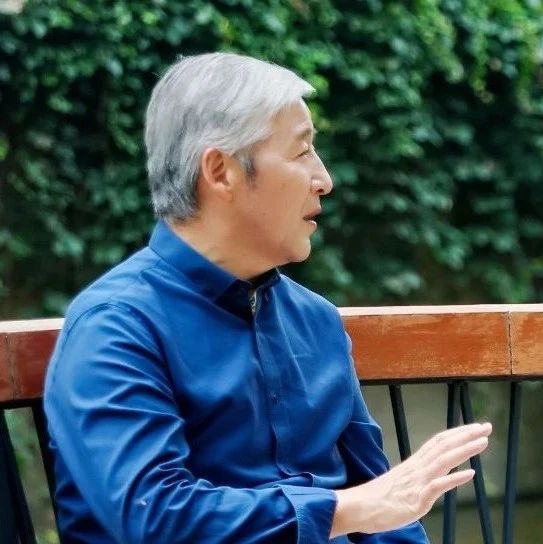
跨界追光:一位物理学博士的科幻文学人生
Xin Hua She· 2025-05-23 08:42
Core Perspective - The article highlights the interdisciplinary approach of Liu Yang, a professor at Chongqing University, who merges science and literature through creative writing and science fiction, emphasizing the connection between the two fields [1][2][3]. Group 1: Background and Career Transition - Liu Yang, originally a condensed matter physics PhD, transitioned from a physics-focused career to a role in the humanities, specifically in creative writing, after being invited to design a sci-fi game world at Southern University of Science and Technology [2]. - His early passion for science fiction influenced his academic path, leading him to write sci-fi novels while conducting scientific research [1][2]. Group 2: Teaching and Research Focus - At Chongqing University, Liu Yang teaches creative writing to students from various disciplines, fostering a dialogue between science and literature [2][3]. - His research includes digital humanities and literary computation, where he analyzes patterns in sci-fi narratives and fractal structures in literature, with findings published in reputable journals [2][3]. Group 3: Contributions to Science Fiction - Liu Yang's novels are characterized as "hard science fiction," integrating scientific knowledge into storytelling, which he describes as "research leftovers" [1][3]. - He believes that the growth of Chinese science fiction reflects the country's technological advancements and the deep integration of science and humanities [3].
新增本科专业怎么选 院长手把手带你看懂新专业
Huan Qiu Wang· 2025-05-14 03:13
Core Insights - The Ministry of Education has announced the approval of 29 new undergraduate majors for 2024, reflecting a response to national strategic needs and high-quality development demands [1][2] - The new majors include Ocean Science and Technology, Integrated Circuit Science and Engineering, Carbon Neutrality Science and Engineering, Health and Medical Security, and Low Altitude Technology and Engineering, aligning educational offerings with national priorities [1][3][4] Group 1: National Strategic Alignment - New majors are designed to meet the core strategic needs of the nation and embrace future opportunities in emerging fields [2] - The Integrated Circuit industry is identified as a strategic, foundational, and leading sector, with a projected talent gap of 300,000 by 2025, while only 30,000 graduates are expected annually [4][9] - The establishment of the Carbon Neutrality Science and Engineering major is a direct response to the urgent need for interdisciplinary talent in the context of the "dual carbon" goals [6][13] Group 2: Interdisciplinary and Practical Focus - New majors emphasize interdisciplinary integration and collaboration with industry to address societal needs [5][6] - The Low Altitude Technology and Engineering major aims to support the rapid development of the low-altitude economy, which is projected to exceed 1 trillion yuan by 2026 [5][10] - Health and Medical Security major focuses on creating a sustainable health security system, integrating modern health management with medical insurance [14][15] Group 3: Career Opportunities and Industry Demand - Graduates from the Integrated Circuit Science and Engineering major can expect high employment rates and competitive salaries, with job opportunities in critical technology sectors [9][18] - The Carbon Neutrality Science and Engineering major is projected to see a surge in demand for talent across various industries, with estimates indicating a need for over 100,000 professionals in the next 5-10 years [9][14] - The Low Altitude Technology and Engineering major is positioned to cultivate top-tier innovative talent to support the development of the low-altitude economy and related technologies [10][16]