
工业数字化转型

Search documents
煤矿现场监控视频实时传输难?贝锐蒲公英助力突破网络瓶颈
Jin Tou Wang· 2025-05-29 00:49
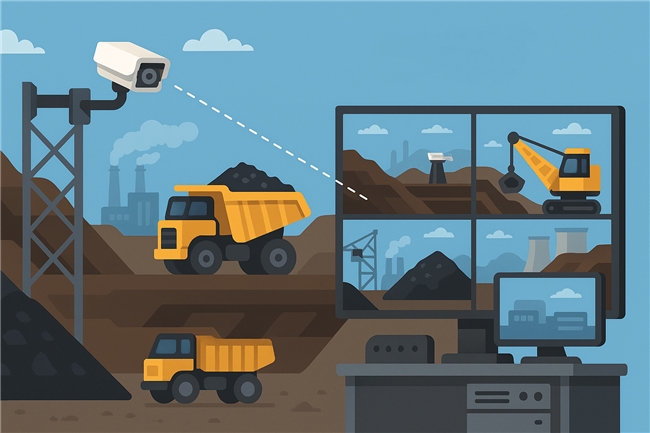
Core Viewpoint - The coal mining industry is increasingly adopting intelligent and centralized video monitoring systems to enhance safety management and regulatory compliance, driven by stringent safety requirements and the need for real-time data transmission [1][5][14] Group 1: Industry Challenges - The coal mining sector faces significant challenges in implementing video monitoring systems due to remote locations and poor network conditions, which hinder real-time transmission of images and video streams [3][5] - Existing network architectures in some coal mining units complicate the process of remote transmission, leading to high costs and extended project timelines [3][5] - Security issues arise when using direct port mapping or public cloud services for data transmission, necessitating more secure solutions [3][13] Group 2: Solutions Offered - The introduction of Beirui Pugongying's global video monitoring networking solution addresses these challenges by providing a high-cost performance and flexible deployment option, ensuring high-quality transmission of images and video streams [5][9] - The R300 series routers are designed for industrial environments, supporting both wired and wireless connections through 4G/5G networks, effectively overcoming issues related to unstable or absent broadband [5][11] - Beirui Pugongying's solution allows for rapid deployment without the need for public IPs or dedicated enterprise lines, significantly reducing network costs for coal mining companies [9][12] Group 3: Deployment and Management - The solution supports remote zero-contact deployment and flexible expansion, accelerating project implementation and reducing labor costs associated with technical personnel [12][14] - Beirui Pugongying's cloud management platform enables real-time monitoring of device and link status, allowing network administrators to manage and troubleshoot remotely without on-site visits [12][14] - The system's ability to dynamically adjust transmission rates based on network conditions enhances stability and efficiency, particularly in high-latency environments [11][14] Group 4: Security and Compliance - Beirui Pugongying's solution meets high security and compliance standards required by the coal and energy sectors, utilizing a private virtual network that encrypts data transmission and avoids exposure to public networks [13][14] - The integrated security mechanisms eliminate the need for additional third-party firewalls or encryption modules, simplifying deployment and reducing overall costs [14]

钢化联产低碳新技术取得重大突破
Zhong Guo Hua Gong Bao· 2025-03-24 07:45
Core Insights - The steel and chemical industries are interdependent, contributing to the stability and sustainable growth of the national economy [1] - The 2025 Steel High-Quality Development Conference emphasized the importance of low-carbon transformation and technological innovation in addressing supply-demand imbalances and enhancing competitiveness [1] Group 1: Industry Challenges and Innovations - Supply-demand imbalance is a major challenge affecting industry development, necessitating continuous technological innovation for differentiation and cost reduction [1] - The steel industry is experiencing a shift towards low-carbon technologies, with significant breakthroughs in integrated steel production and new low-carbon technologies [5] - The global steel industry is expected to see growth in demand, but the structure of that demand may change, with a focus on low-carbon transformation [4] Group 2: Policy and Strategic Recommendations - Digital transformation in industries is crucial for enhancing the resilience of supply chains, with a call for leading enterprises to drive integration and development across the supply chain [2] - The establishment of a national carbon market is vital for promoting green and low-carbon development, with regulations and frameworks already in place [3] - The steel industry is set to face dual control constraints on carbon emissions, emphasizing the need for policy coordination and technological breakthroughs to enhance international competitiveness [5] Group 3: Regional Development and Collaboration - Jiangsu province aims to strengthen various resource guarantees and promote high-quality development in the steel industry, contributing to national goals [4] - The conference gathered nearly 400 participants from various sectors, including government, industry associations, and financial institutions, highlighting the collaborative effort needed for industry advancement [6]