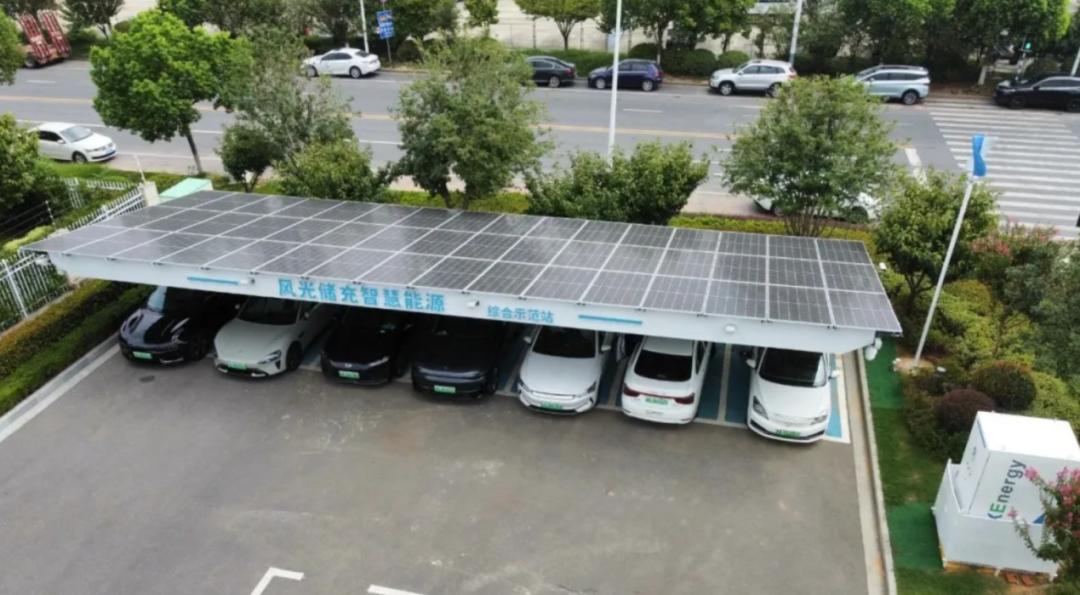
智能化管理

Search documents
西安至十堰高速铁路汉江特大桥顺利合龙
Zhong Guo Xin Wen Wang· 2025-04-14 09:58
Core Viewpoint - The completion of the concrete pouring for the Hanjiang Grand Bridge marks a significant milestone for the Xi'an to Shiyan High-Speed Railway (referred to as "Xi-Shi High-Speed Railway"), establishing a foundation for the full line's connectivity [1][3]. Group 1: Project Overview - The Hanjiang Grand Bridge is the largest span beam and truss combination cable-stayed bridge in China, located in Shiyan City, Hubei Province, with a total length of 917.45 meters and a main span of 420 meters [1]. - The bridge features two main towers, each standing at a height of 186.5 meters, designed by China Railway First Survey and Design Institute Group Co., Ltd. and constructed by China Railway 11th Bureau Group Co., Ltd. [1]. Group 2: Construction Challenges and Innovations - The construction faced significant challenges due to complex geological conditions and environmental factors, including high slopes, hard rock foundations, and large volume concrete works [2]. - A technology research team was established to overcome various technical difficulties, resulting in 54 patent applications and advancements in construction techniques, including intelligent temperature control for large volume concrete [2]. Group 3: Environmental Considerations - The project emphasizes ecological protection and green construction practices, with measures taken to minimize environmental impact during construction, such as conducting work during dry seasons and using ships for mud storage [2]. Group 4: Economic and Strategic Importance - Upon completion, the Xi-Shi High-Speed Railway will create a convenient high-speed rail corridor between Xi'an and Wuhan, reducing travel time from 5 hours to approximately 2.5 hours, thereby enhancing connectivity between urban clusters and supporting national development strategies [3].
光储充一体化大战,华为数字能源和比亚迪都入局了
3 6 Ke· 2025-03-31 23:55
Core Insights - Huawei is making significant moves in the energy sector, focusing on three core strategies: integration of solar, storage, and charging solutions, liquid cooling charging for commercial vehicles, and the establishment of a supercharging alliance to capture national supercharging network opportunities [1] - Huawei Digital Energy, a key business segment, generates over 50 billion RMB in annual revenue, with a strong presence in both domestic and international projects [1] - The global solar-storage-charging market surpassed 65 billion RMB in 2023, with China holding a 51.09% market share, projected to reach 113.42 billion RMB by 2025 [1][2] Group 1: Industry Overview - Solar-storage-charging integration refers to the construction of large charging stations that combine photovoltaic power generation, energy storage systems, and charging facilities [2] - The Chinese government has recently begun to support the development of solar-storage-charging projects, with policies emerging only in the last couple of years [5] - Major players in the solar-storage-charging sector include traditional energy companies and new entrants like Huawei, BYD, and various solar giants [5][7] Group 2: Competitive Landscape - The competitive landscape is shifting, with companies like Huawei and BYD leveraging their existing automotive market presence to expand into energy solutions [8][14] - Huawei's digital energy business reported 52.6 billion RMB in revenue in 2023, nearly matching its cloud computing segment [8] - The integration of solar-storage-charging solutions is expected to intensify competition, with companies aiming to capture market share in the rapidly growing sector [14][19] Group 3: Future Trends - The market is expected to see a shift in focus from international to domestic opportunities as policies supporting solar-storage-charging integration become clearer [16][17] - The importance of intelligent management systems in energy management is increasing, with Huawei's technology covering the entire energy supply chain [17][19] - The entry of new players, including Xiaomi, into the solar-storage-charging market indicates a growing interest and potential for competition in this space [19]