桥梁建设

Search documents
中国最长的跨海大桥,要来了
虎嗅APP· 2026-03-12 10:24
Core Viewpoint - The article discusses the significance of the newly planned cross-sea transportation projects in the Hangzhou Bay area, particularly the Shanghai-Ningbo cross-sea passage, which is expected to enhance connectivity and economic integration in the Yangtze River Delta region. Group 1: Infrastructure Development - The Shanghai-Ningbo cross-sea passage is included in the national 14th Five-Year Plan, indicating a major investment exceeding 100 billion yuan for this super project [6][4]. - The new passage will span 70 kilometers, surpassing the Hong Kong-Zhuhai-Macao Bridge, and will be the longest cross-sea bridge in China upon completion [20]. - The project aims to create a dual-use transportation system for both road and rail, significantly reducing travel time between Shanghai and Ningbo to just over one hour [22]. Group 2: Economic Integration - The Shanghai metropolitan area is evolving into a "province-like" entity, with the cross-sea passage being a strategic move to enhance the integration of the Yangtze River Delta [27]. - The metropolitan area plan encompasses 14 cities in the Yangtze River Delta, establishing it as the largest urban agglomeration in China [28]. - Ningbo is projected to have a GDP of 1.87 trillion yuan by 2025, positioning it as a significant economic player within the metropolitan area [33]. Group 3: Future Projects - In addition to the Shanghai-Ningbo passage, another major project, the Shanghai-Zhoushan-Ningbo cross-sea passage, is also in the pipeline, with a length of 160 kilometers and a higher complexity [25]. - The article highlights the ongoing discussions regarding other major cross-sea projects, such as those in the Taiwan Strait, Bohai Strait, and Qiongzhou Strait, which are still under consideration and face various strategic, technical, and economic challenges [40][48].

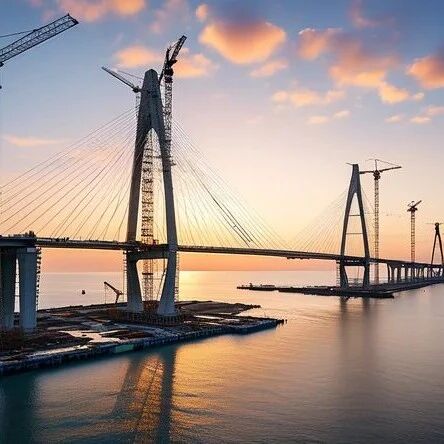
中国大桥再添世界之最!广西苍容浔江大桥正式通车
Ren Min Ri Bao· 2026-02-28 03:48
Core Viewpoint - The Cangrong Expressway has officially opened after nearly four years of construction, enhancing transportation efficiency and promoting local agricultural products [2][6]. Group 1: Infrastructure Development - The Cangrong Expressway, connecting Wuzhou and Yulin in Guangxi, spans approximately 105.31 kilometers and is built to a dual four-lane standard [4]. - The Cangrong Xunjiang Bridge, a key project of the expressway, is the world's largest single-column three-tower spatial cable-stayed bridge, measuring 1,688 meters in length with a main span of 520 meters [4]. Group 2: Economic Impact - The opening of the Cangrong Expressway is expected to improve travel efficiency for local residents and facilitate the export of regional specialty products such as Liu Bao tea and Shatian pomelo [6]. - The expressway will further enhance the Guangxi highway network and promote coordinated development between the Beibu Gulf Economic Zone and the Pearl River-Xijiang Economic Belt [6].

张靖皋长江大桥建设加速,预计2028年10月建成
Xin Lang Cai Jing· 2026-02-27 20:32
Core Viewpoint - The Zhang Jinggao Yangtze River Bridge is a key project during China's 14th Five-Year Plan, expected to be completed by October 2028, significantly enhancing the integration of the Yangtze River Delta region [1] Group 1 - The construction site of the Zhang Jinggao Yangtze River Bridge is currently active, with orderly operations being conducted by the China Communications Second Navigation Engineering Bureau [1] - The bridge is part of a major initiative to promote cross-river transportation infrastructure in the region [1] - Upon completion, the bridge is anticipated to greatly facilitate the integrated development of the Yangtze River Delta area [1]
全省重点项目建设全力冲刺新年“开门红”
Jiang Nan Shi Bao· 2026-02-25 14:32
Core Viewpoint - The construction of key projects in Jiangsu province is actively progressing, aiming to achieve strong momentum for high-quality development in the new year, with a focus on meeting quarterly targets and enhancing industrial growth [1]. Group 1: Major Projects - The Huaneng Jintan Salt Cave Compressed Air Energy Storage Phase II project is under construction, featuring two 350 MW non-reburn compressed air storage units, expected to start operation mid-year, capable of storing 2.8 million kWh of electricity and reducing CO2 emissions by 520,000 tons annually [2]. - The Huaneng Nantong Gas Turbine Innovation Development Demonstration Project is advancing with the second unit's key phases completed, projected to generate 5.2 billion kWh annually and reduce coal consumption by approximately 1.37 million tons [3]. - The Deleijia Phase III wind power key component project is nearing completion, with production expected to start in March, contributing to the renewable energy sector [3]. Group 2: Transportation Infrastructure - The Zhang Jinggao Yangtze River Bridge project is resuming construction with safety training and checks in place, focusing on the main tower's structural integrity [4]. - The Nanjing North Station project, a major high-speed rail hub, is ramping up efforts post-holiday to ensure timely completion and high-quality standards [5]. - The Suzhou Heshan Bridge reconstruction project is enhancing capacity from two to three lanes, improving navigation and traffic flow in the region [5]. Group 3: Government Support - Local government initiatives are facilitating the return of workers and addressing labor shortages, with targeted recruitment efforts yielding over 300 new hires for key enterprises [7]. - A series of measures, including labor support, logistics optimization, and streamlined approvals, are being implemented to ensure project construction progresses smoothly and efficiently [7].
全省重点项目建设奋力冲刺一季度目标任务擂响“奋进鼓” 护航“开门红”
Xin Hua Ri Bao· 2026-02-25 00:14
Core Viewpoint - Jiangsu province is experiencing a surge in construction activity for major projects, aiming to boost high-quality development in the new year through diligent efforts and timely execution of tasks [1] Group 1: Major Projects and Developments - The Huaneng Jintan Salt Cave Compressed Air Energy Storage Project is under construction, featuring two 350 MW non-reburning compressed air storage units, expected to start operation mid-year, capable of storing 2.8 million kWh of electricity and reducing CO2 emissions by 520,000 tons annually [2] - The Huaneng Nantong Gas Turbine Innovation Development Demonstration Project is progressing, with two 745 MW gas-steam combined cycle units projected to generate 5.2 billion kWh annually, reducing coal consumption by approximately 1.37 million tons [3] - The Delijia Phase III Wind Power Key Component Project is nearing completion, with production expected to start in March, contributing to the renewable energy sector [3] Group 2: Transportation Infrastructure - The Zhang Jinggao Yangtze River Bridge is actively under construction, with safety training and checks being conducted to ensure a smooth continuation of work [4] - The Nanjing North Station project, a key high-speed rail hub, is in full swing, with management and workers quickly transitioning to a focused work mode post-holiday [4] - The Suzhou Heshan Bridge reconstruction project is enhancing capacity by widening the bridge and increasing clearance, aimed at improving navigation on the Suzhou section of the Grand Canal [5] Group 3: Government Support and Workforce Management - Local government initiatives are in place to support the resumption of work, including transportation for returning workers and job fairs to address labor shortages [7] - Measures such as optimizing logistics, enhancing labor guarantees, and streamlining approval processes are being implemented to facilitate project construction and ensure a stable start to the year [7]
大湾区“超级工程”里的新春烟火气
Xin Lang Cai Jing· 2026-02-23 21:43
Core Viewpoint - The integration of the Guangdong-Hong Kong-Macao Greater Bay Area is significantly enhanced by major infrastructure projects like the Hong Kong-Zhuhai-Macao Bridge, facilitating cross-border travel and boosting tourism during the Spring Festival [1][2][3][4][5] Group 1: Infrastructure Development - The Hong Kong-Zhuhai-Macao Bridge serves as a "golden channel" connecting the three regions, with over 200,000 travelers crossing since February, making "Bay Area tourism" a popular choice during the Spring Festival [2][3] - Other major projects like the Shenzhen-Zhongshan Bridge and Huangmaohai Cross-Sea Channel are tightening the "one-hour living circle," significantly reducing travel times between cities [4][5] Group 2: Economic Impact - The convenience of cross-border travel has led to a surge in consumer activity, with 250,000 travelers and 46,000 vehicles recorded at the Zhuhai border checkpoint during the Spring Festival [3] - The integration of infrastructure is driving industrial collaboration, allowing for efficient integration of innovation and manufacturing capabilities within the Bay Area [5]
山南市萨热路跨江大桥
Xin Lang Cai Jing· 2026-02-23 02:13
Core Viewpoint - The successful pouring of the first zero block of the main bridge of the Samzhurong River Cross-River Bridge marks a significant milestone in the construction of a major municipal infrastructure project in Shannan City, indicating the project has entered a critical phase for the upper structure of the main bridge [1] Group 1: Project Overview - The total length of the Samzhurong River Cross-River Bridge is 1456 meters, with the main bridge measuring 1366 meters and a total width of 26 meters, designed for four lanes of traffic in both directions [1] - The project is being constructed by China Railway Construction Corporation and is managed by Shannan City Investment [1] Group 2: Construction Techniques - To ensure the quality of the zero block pouring, the project team implemented a scientific construction plan, utilizing insulated materials for formwork and low-temperature early-strength curing techniques to accurately control the concrete curing temperature [1] - These measures have ensured the quality of concrete during winter construction, providing valuable experience for large bridge construction in high-altitude areas [1] Group 3: Economic and Social Impact - Upon completion, the Samzhurong River Cross-River Bridge will serve as a crucial transportation hub connecting the north and south banks of the Yarlung Tsangpo River, significantly reducing travel time and greatly facilitating public transportation [1] - The bridge will also enhance regional connectivity between Shannan City and Lhasa City, promoting industrial complementarity and resource sharing, thereby supporting the integrated development process of Lhasa and Shannan [1]
云端坚守,我在空中“搭”大桥
Xin Hua Wang· 2026-02-21 03:54
Core Viewpoint - The construction of the Yongjiang Grand Bridge, a key project in the Hangzhou-Ningbo railway line, is progressing with a focus on the installation of steel beams, which is critical for the completion of the bridge before the typhoon season in June [1][4]. Group 1: Construction Process - The installation involves lifting steel beams weighing up to 80 tons to a height of 60 meters, requiring precise operations to avoid any errors [1][3]. - The steel beams are assembled using a modular construction technique, similar to "building blocks," consisting of multiple components that must be accurately positioned [1][3]. - The entire lifting and installation process takes approximately 8 hours, during which the operator must remain focused and cannot leave the control cabin [3]. Group 2: Project Significance - The Yongjiang Grand Bridge, measuring 1730 meters in length, is the last critical engineering component of the Hangzhou-Ningbo railway line and features the world's largest asymmetrical cable-stayed bridge span [3]. - The bridge's design accommodates the complex terrain of the Zhenhai Port area while ensuring that navigation along the Yongjiang River is not hindered [3]. Group 3: Workforce Commitment - Nearly 90 construction workers are dedicated to the project during the Spring Festival, showcasing their commitment and responsibility despite being away from their families [4]. - The workers' pride in contributing to a significant infrastructure project that benefits the public is highlighted, emphasizing the importance of their work [3][4].
山海寻梦 共襄发展——记中国在海外建设者的马年春节
Xin Lang Cai Jing· 2026-02-19 08:41
Core Viewpoint - The article highlights the dedication of Chinese builders working on overseas projects during the Spring Festival, emphasizing their commitment to national development and international cooperation [1][2][3]. Group 1: Project Highlights - The China-Kyrgyzstan-Uzbekistan railway project, a key initiative under the Belt and Road Initiative, is in the critical construction phase, aiming to enhance international logistics in Central Asia [2][3]. - The Hungary section of the China-Europe railway project successfully completed a dynamic test at a speed of 160 km/h, significantly reducing travel time between Budapest and Belgrade from 8 hours to approximately 3 hours [3]. - The construction of the largest single bridge project in Malaysia is expected to improve local transportation significantly, with completion anticipated in June [5]. Group 2: Cultural Exchange and Team Spirit - Chinese builders are acting as cultural ambassadors during the Spring Festival, engaging in local traditions such as making dumplings and decorating with lanterns, fostering a sense of community and friendship with local workers [6][7]. - The interactions between Chinese and local engineers during the Spring Festival celebrations illustrate the blending of cultures and the building of friendships, enhancing collaboration on projects [6][7]. Group 3: Personal Growth and Development - Young Chinese professionals, such as Yu Kongxin, are gaining valuable experience and skills while working on international projects, contributing to local infrastructure and economic development [4][5]. - Experienced workers like Peng Zhaokui are not only ensuring project quality but also mentoring local talent, thereby laying a foundation for future development in host countries [5].
山海寻梦 共襄发展——记中国在海外建设者的马年春节
Xin Lang Cai Jing· 2026-02-18 13:07
Core Viewpoint - The article highlights the dedication of Chinese builders who continue to work on overseas projects during the Spring Festival, showcasing their commitment to national development and international cooperation [2][3][6]. Group 1: Project Highlights - The China-Kyrgyzstan-Uzbekistan railway project, a key initiative under the Belt and Road Initiative, is in the critical construction phase, aiming to enhance international logistics in Central Asia [2][3]. - The Hungary section of the Hungary-Serbia railway project successfully completed a dynamic test at a speed of 160 km/h, significantly reducing travel time between the capitals of Hungary and Serbia from 8 hours to approximately 3 hours [3]. - The construction of the largest single bridge project in Malaysia, the Lubuk Bridge, is expected to be completed by June this year, improving transportation in the coastal region of Sarawak [5]. Group 2: Cultural Exchange and Team Spirit - Chinese builders are acting as cultural ambassadors during the Spring Festival, engaging in traditional activities such as making dumplings and decorating with lanterns alongside local workers, fostering a sense of community and friendship [6][7]. - The interactions between Chinese and local engineers during the Spring Festival celebrations highlight the blending of cultures and the warmth of shared experiences, enhancing international relations [6][7]. Group 3: Personal Growth and Development - Young Chinese professionals, like Yu Kongxin, are gaining valuable experience and skills while working on international projects, contributing to local infrastructure and economic development [4][5]. - Experienced workers, such as Peng Zhaokui, emphasize the importance of training local talent, ensuring project quality and providing sustainable benefits to the host countries [5].