特许经营

Search documents
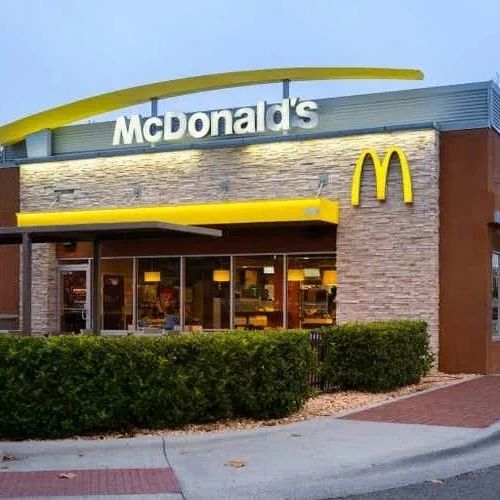
麦当劳:相对安全的股票,即使其产品并非如此
美股研究社· 2025-04-22 10:02
Core Viewpoint - McDonald's is positioned as a resilient stock amidst market volatility, serving as a potential "safe haven" for investors, although its stock rating is currently classified as "hold" due to uncertain growth prospects [2][4]. Valuation and Performance - The current valuation of McDonald's is rated F, showing a decline from D- three months ago, while profitability remains strong at A+ [5]. - The stock's expected price-to-earnings ratio is 25, which is considered reasonable for a mature company, aligning with its five-year average [10][15]. - Historical performance indicates that McDonald's has been viewed as a strong stock, but recent quarters have shown a decline in sales due to inflation and changing consumer preferences [6][10]. Revenue and Profitability - Despite challenges, McDonald's has improved net income and efficiency by focusing on franchising, which has positively impacted profit margins [8]. - The company is expected to achieve revenue growth of 3% in the short term, although this is seen as a modest outlook [10]. Market Position and Strategy - McDonald's is facing increased competition and changing consumer habits, which complicates its growth outlook [10]. - The company is leveraging automation, digitalization, and enhanced franchising relationships to drive efficiency and revenue growth [8]. Analyst Sentiment - Analysts do not currently hold McDonald's stock but are considering placing it on a watchlist for potential buying opportunities if the market experiences significant downturns [17]. - The stock is perceived as a defensive option, akin to a bond compared to the average S&P 500 components over the past decade, which may attract investors seeking stability [19].


星巴克扛不住了?
虎嗅APP· 2025-03-02 23:57
Core Viewpoint - Starbucks is facing significant challenges in the Chinese market, leading to rumors of potential business sales and major layoffs, reflecting the need for strategic changes to ensure future success [1][4][12]. Group 1: Layoffs and Business Challenges - Starbucks announced a global layoff of approximately 1,100 employees, marking the largest in its history, with the last major layoff occurring nearly seven years ago [1][7]. - The company is experiencing a decline in revenue and profitability, with Q1 2025 revenue at $9.398 billion, a year-over-year decrease of 0.3%, and net profit down 23.8% to $781 million [7][10]. - Despite not laying off employees in China, the company is still facing operational challenges, including a significant drop in same-store sales [7][9]. Group 2: Market Position and Competition - Starbucks' market share in China has been eroded from over 60% in 2018 to approximately 40% by 2024, largely due to the rise of local competitors like Luckin Coffee and Manner Coffee [8][18]. - The company has seen a decline in same-store sales, with a notable drop of 6% in Q1 2025, influenced by a 4% decrease in average selling price and a 2% drop in transactions [10][18]. - The competitive landscape has shifted, with local brands appealing to younger consumers through lower pricing strategies, which Starbucks has struggled to match [20][23]. Group 3: Potential Sale and Strategic Partnerships - There are rumors of potential buyers for Starbucks China, including KKR, FountainVest, PAG, and China Resources, indicating a possible shift in ownership or operational strategy [2][17]. - Starbucks is considering a franchise model as a potential solution to its challenges, similar to its strategies in other emerging markets [12][13][16]. - The valuation of Starbucks China is under scrutiny, with estimates exceeding $1 billion, despite declining financial performance [18][19]. Group 4: Strategic Adjustments and Future Directions - Starbucks is attempting to adapt its strategy by focusing on digital transformation and local product innovation, but these efforts have not yet reversed the downward trend in sales [9][24]. - The company has introduced new store formats and membership reforms to enhance customer engagement, but these changes have yet to yield significant improvements [24][25]. - The new CEO, Brian Niccol, is expected to implement strategies that have previously revitalized other brands, emphasizing the need for effective leadership in navigating current market challenges [25][26].