Bias

Search documents
AI : An Idea Worth Spreading | Sudhir Tiku | TEDxRVCE
TEDx Talks· 2025-09-15 16:21
There were ideas in history which changed everything. Fire, electricity, printing press, the internet and now we have artificial intelligence or AI. AI accelerates knowledge, enhances human potential and solves problems one has thought unsolvable.For example, AI can help us to defeat disease. AI now reflects, imitates, generates, calculates and increasingly decides. Decides for you, decides for me, decides for all of us.AI can now predict your decisions. is around education, healthcare, medicine, transporta ...


When AI Gets It Wrong: The Hidden Bias in Our Algorithms | Charan Sridhar | TEDxBISV Youth
TEDx Talks· 2025-09-11 15:21
Bias in AI Performance - AI models exhibit bias based on gender, accent, and race, impacting their effectiveness for different users [2] - Speech recognition models show a significant disparity, with a 35% word error rate for African American speakers compared to 19% for white speakers [4] - Facial recognition models have a higher error rate of over 34% for darker-skinned women compared to less than 1% for light-skinned men [5] Real-World Consequences - Biased facial recognition models used by law enforcement can lead to disproportionate misidentification and incorrect arrests of black and brown individuals [7][8] - AI hiring tools can unintentionally downgrade resumes based on gendered terms, perpetuating historical gender biases [9][10] - In the medical field, AI models can underestimate the severity of illness in black patients due to biases in training data [15] Mitigation Strategies - Algorithmic auditing, involving rigorous testing on diverse datasets, is crucial for identifying and addressing bias in AI models [18] - Transparency is essential, requiring corporations to share the demographics of their training data and justify fairness metrics [19] - Creating diverse and inclusive datasets by including underrepresented voices in the building process is necessary to combat bias at the source [20]

DOJ Special Attorney Ed Martin shows "blatant bias" as he targets Trump's perceived enemies
MSNBC· 2025-08-09 12:11
Concerns Regarding Ed Martin's Investigation - The appointment of Ed Martin, given his past affiliations and lack of prosecutorial experience, raises concerns about bias in investigating Leticia James and Adam Schiff [3][4] - There are doubts about the legitimacy of any charges Martin might bring, with skepticism expressed about his team's competence and potential for harassment through investigations [5][6] Weaponization of Justice System - The discussion highlights concerns about the weaponization of public institutions against American citizens, potentially undermining the justice system and damaging individual lives [7][8][9] - The actions of the current administration could normalize the weaponization of the Justice Department, leading to future reciprocal actions and eroding trust in legitimate investigations [10][11][15] Mortgage Fraud Allegations - Mortgage fraud allegations against Leticia James and Adam Schiff are viewed with skepticism, with concerns that they are politically motivated and lack sufficient evidence of intent [18][19][20][21] Erosion of Norms and Rule of Law - The report emphasizes the erosion of democratic norms and the rule of law, likening the situation to that of a banana republic [13][16][17]

Inclusive Leadership in an AI Era | Laura McClean | TEDxBlack Mountain
TEDx Talks· 2025-08-04 16:51
AI and Leadership - AI will change the way we work, demanding technically literate but deeply human leadership [2] - AI lacks consciousness and human emotion, making human interaction irreplaceable [3] - Inclusive leadership is a business-critical skill in the AI era [4] Inclusivity and Bias in AI - Products designed with a single perspective risk bias and exclusion at scale, impacting AI development [6] - A 2023 Stanford report indicated AI is predominantly built by males in limited geographical hubs [7] - The World Economic Forum's 2023 report showed that only 22% of AI professionals were women [7] - Biased AI decisions can damage people, trust, and brand reputation [9] - Inclusive leadership involves considering those not typically included, building solutions for non-average users [10] Practical Implementation of Inclusivity - When building or scaling a business, it is important to consider the needs of people with different nationalities and neurodiversity [12] - Smart businesses build for the future by considering inclusivity in design, such as office spaces [17] - Businesses that prioritize inclusivity are likely to be more profitable [18] - Leaders should question technology, invest in tools that augment human interaction, and consider who is excluded [21]

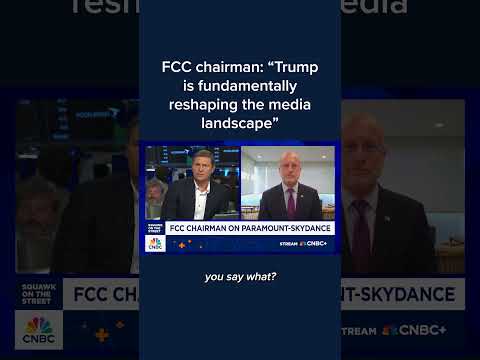
FCC chairman: 'Trump is fundamentally reshaping the media landscape'
CNBC Television· 2025-07-25 18:00
No, listen, you know, if you step back, what's happening here is, you know, I think President Trump is fundamentally reshaping the media landscape. And the way he's doing that is when he ran for election, he ran directly at these legacy broadcast media outlets, ABC, NBC, CBS for years, you know, government officials just allowed those entities with execs sitting in Hollywood and New York to dictate the political narrative. And he has fundamentally changed the game.I mean, you see that really having conseque ...
Biased AI is Already Deciding Your Future | Chioma Onyekpere | TEDxWinnipeg
TEDx Talks· 2025-07-24 15:31
AI Bias & Fairness - AI systems mimic human intelligence, learning from data to make classifications and predictions [6][8] - Bias in AI arises from non-diverse or incomplete data, leading to unfair or discriminatory outcomes [3][4] - AI amplifies existing inequalities by reflecting and perpetuating biases present in the data it's trained on [18] - Assumptions about identity are not valid data, yet AI learns from these assumptions if they are included in the training data [3][4] Examples of AI Bias - Applicant tracking systems can penalize resumes based on gendered language due to biased training data [12][13] - Facial recognition systems misidentify African and Asian faces more frequently than white faces [14] - Voice assistants misunderstand non-white speakers nearly twice as often as white speakers, with error rates up to 35% [16] - Insurance algorithms may charge higher premiums to certain demographics based on biased risk models [16][17] Addressing AI Bias - It is crucial to question the data used to train AI, ensuring it represents the entire population [19] - Building diverse teams can help recognize and identify biases that others might miss [19] - Organizations should set ethical guidelines and audit AI systems for bias, making fairness a performance metric [19][20] - Transparency in AI systems is essential, with models providing citations and reasoning for their decisions [21]

Stop Gaslighting Yourself Out of Leadership | Phaedra Romney | TEDxTwenteU
TEDx Talks· 2025-07-24 14:49
Our next speaker is called Fedra. Fedra Romney. Now, she is a strategic systems architect.I know it's big. And she's also an author of the book The Mach Van Influent. That's two for two for Dutch.Come on, please clap for me right now. I'm doing very well. My Dutch is amazing.It means the power of influence in English. So that book is mostly written for women who are trying to navigate the male dominated hierarchies in the workspaces. And as we all know as humans wherever you are, we all have biases.We all b ...

Split-second judgement | Valentýna Suchá | TEDxAmerican Academy Brno
TEDx Talks· 2025-07-17 15:39
[Music] Hello everyone. Just to start off, you've already made a judgment about me. No, seriously, you did.Whether this is your first impression of me or if you see me around the hallways before I'm your friend or your classmate, you've made the whole picture of me. You decided who I am, whether I'm trustworthy, kind, brave, all of that. And you made that judgment under less than a second.Now, let's try something out. I'm going to show you a picture of two people, and I want you to decide for yourself witho ...

Stacey Abrams on her new book and the ethical questions of AI
NBC News· 2025-07-14 21:30
AI Regulation & Ethical Concerns - AI language models trained on biased data can produce harmful outputs, as demonstrated by Grock's anti-semitic posts [1][7] - The core issue lies in the data used to train AI, where biased or hateful content leads to biased or hateful outputs [7] - Controlling data and algorithms allows for the control of dissent, privilege allocation, and targeted discrimination [9] - Discrimination can be built into AI systems, posing risks to communities through misidentification and false accusations [9][10] - The industry needs to address who is in charge of AI development, what decisions they are making, and who they are considering when making those decisions [10] Tech Firm's Role & Challenges - Tech firms are attempting to address biases in AI, but undoing centuries of bad action with good intention is challenging [6][7] - Internal investigators are brought in to navigate ethical dilemmas, where even the best intentions can clash with ambitions [6][8] - Existing structures may not be built for inclusion, posing challenges for companies trying to do the right thing with AI [8] Individual Responsibility & Action - Individuals have a choice to act and make a difference, even without explicit authority or power [5] - Not having power is not always an excuse for inaction, highlighting the importance of taking affirmative steps [6]

Ahia! | Michele Dusi | TEDxPisogne
TEDx Talks· 2025-06-18 16:30
Artificial Intelligence & Machine Learning - The AI field is currently very popular, with AI being used in chatbots and image generation, making it difficult to distinguish between real and fake [7] - Machine learning, a method where computers learn from data without explicit instructions, underpins most AI used today [14][15] - AI systems learn by being shown vast amounts of data, identifying patterns and characteristics without understanding their real meaning [15][16] - The data used to train AI reflects human opinions, biases, and prejudices, which AI then replicates, making it not neutral [27][28] - AI's reliance on data means it can perpetuate biases present in that data, leading to unfair or discriminatory outcomes [25][26] Data & Its Implications - Human activities generate a large amount of data through devices and online interactions, creating a digital trail that reveals personal information [18][19] - Distorted or biased data can lead to AI systems making incorrect or unfair associations and decisions [22][25] - The solution is not to abandon AI but to understand its limitations and manage the data it uses, similar to understanding how to use fire safely [32][34] Education & Awareness - The industry needs to educate people about AI, its capabilities, and its limitations to foster awareness and responsible use [35] - Continuous dialogue and conferences on AI are essential to build awareness and incorporate diverse perspectives into the collective knowledge [35]