Cost Control

Search documents
X @Bloomberg
Bloomberg· 2025-12-23 06:40
In a year of restrained economic optimism in Europe, investors flocked to a no-thrills airline known for its cost control and focus https://t.co/DbqIDOjAgb ...
Aspen Group Reports Third Consecutive Quarter of Net Income for Second Quarter Fiscal 2026
Globenewswire· 2025-12-15 23:09
Core Viewpoint - Aspen Group, Inc. reported financial results for the second quarter of fiscal year 2026, showing a slight decline in revenue but significant improvements in profitability and operational efficiency [1][4]. Financial Performance - Revenue for Q2 FY2026 was $11.2 million, a decrease of 2% from $11.5 million in Q2 FY2025 [5][6]. - Gross profit increased to $8.4 million, up from $8.1 million year-over-year, resulting in a gross margin of 75% compared to 71% in the previous year [2][9]. - Net income was $0.7 million, a turnaround from a net loss of $(1.1) million in Q2 FY2025, marking the third consecutive quarter of profitability [6][10]. - Adjusted EBITDA rose to $2.5 million, up from $1.5 million, with an adjusted EBITDA margin of 22% compared to 14% [6][12]. Operational Highlights - New student enrollments decreased by 29% year-over-year, with a notable decline at Aspen University (AU) by 17% due to reduced marketing spend [13][7]. - United States University (USU) saw a 9% increase in revenue to $7.3 million, attributed to strong demand and higher revenue per student [8][6]. - The company implemented a restructuring plan that eliminated approximately 75 positions, expected to yield $1.5 million in quarterly savings starting Q3 FY2026 [18][19]. Cash Flow and Liquidity - The ending unrestricted cash balance for Q2 FY2026 was $0.3 million, with a positive cash flow from operations of $0.5 million [19][18]. - The company anticipates resuming marketing spend to support enrollment growth following the repayment of its 15% Debentures [19][30]. Market Position and Strategy - The company aims to sustain profitability and cash flow through disciplined execution and strategic reinvestments in marketing to boost enrollments [4][19]. - Management remains committed to expanding student resources and achieving positive operating cash flow for fiscal year 2026 [4][19].



Cenovus Outlines Capital Plan for 2026, Projects 4% Upstream Growth
ZACKS· 2025-12-12 17:16
Capital Spending Guidance - Cenovus Energy Inc. expects capital investment between $5 billion and $5.3 billion in 2026, including $350 million of turnaround costs, which will be capitalized in 2026 [1] - Approximately $3.5-$3.6 billion will be allocated for sustaining capital expenditures to maintain base production and operations, while an additional $1.2-$1.4 billion will be dedicated to growth and expansion projects [1] Upstream Production Outlook - Total upstream production for 2026 is guided in the range of 945,000 to 985,000 barrels of oil equivalent per day (BOE/d), indicating a year-over-year growth of 4% after adjusting for the acquisition of MEG Energy [2] - Oil sands production is expected to contribute 755,000-780,000 BOE/d, with operating costs per BOE projected between $11.25 and $12.75 [2] - Conventional production is projected to be 120,000-125,000 BOE/d, with operating costs between $11 and $12 per BOE [2] Downstream Throughput and Refining Guidance - Expected downstream crude throughput is projected to be between 430,000 and 450,000 barrels per day (bbl/d), implying a crude utilization rate of nearly 91% to 95% [3] - Canadian refining throughput is estimated at 105,000 to 110,000 bbl/d, with operating costs expected between $11.50 and $12.50 per barrel [3] - U.S. refining throughput is guided between 325,000 and 340,000 bbl/d, with operating costs in the range of $11 to $12 per barrel [3] Corporate Guidance - General and administrative expenses, excluding stock-based compensation, are expected to be in the range of $625-$675 million, remaining broadly flat compared to the previous year [4] - The company anticipates incurring expenses of approximately $150-$200 million related to integration, transaction, and other one-off costs in 2026 [4] Overall Strategy - Cenovus's capital guidance for 2026 reflects a strategy of reducing growth investments compared to 2025, while focusing on debt reduction and returning value to shareholders [5] - The company aims to maintain safe and reliable operations, cost competitiveness, and strengthen its outlook for the coming year [5]


智能手机、笔电品牌2026年Q1预计将涨价
WitsView睿智显示· 2025-12-12 04:33
Core Insights - TrendForce's latest survey indicates that due to anticipated significant increases in memory prices in Q1 2026, global end products will face severe cost challenges, leading smartphone and laptop industries to raise product prices and lower specifications, with sales outlooks being downgraded [2][3]. Group 1: Impact on Smartphone Market - The impact of memory on the BOM cost for consumer devices like smartphones and PCs is rapidly increasing, with even high-performing iPhone models expected to see a notable rise in memory's share of BOM cost, prompting Apple to reassess new device pricing and potentially reduce or eliminate price cuts on older models [2]. - For Android brands targeting the mid-to-low price market, the rising memory prices will force these brands to increase new device pricing and adjust old device prices or supply cycles to mitigate losses [2]. Group 2: Impact on Laptop Market - The rise in memory prices will lead laptop brands to adjust their product mix, procurement strategies, and regional sales layouts, with high-end lightweight laptops being the first to experience significant price pressure due to their design constraints [3]. - In the consumer laptop market, while demand is sensitive to changes in specifications and prices, existing inventory of finished products and low-cost memory will support profitability in the short term. However, a significant price adjustment is expected in the PC market by Q2 2026 [4]. Group 3: Specification Adjustments - "Specification reduction" or "delaying upgrades" has become a necessary strategy for smartphone and laptop brands to balance costs, particularly with DRAM, which has a high cost share [4]. - High-end and mid-range products are expected to see DRAM capacity specifications converge towards the market's minimum standards, slowing the pace of upgrades. In the low-end market, smartphones are projected to revert to a primary configuration of 4GB by 2026, while low-cost laptops will face limitations due to processor compatibility and operating system requirements, making further DRAM reductions unlikely in the short term [4][5].

Will Barrick's Higher Costs Undercut Its Profit Momentum Ahead?
ZACKS· 2025-12-09 14:26
Core Insights - Barrick Mining Corporation's third-quarter profits increased due to higher gold prices, but higher unit costs negatively impacted results [1][7] - The company experienced a 12% year-over-year decline in consolidated gold production, attributed partly to the suspension of operations at the Loulo-Gounkoto mine [2][7] - Barrick's projected cash costs and all-in-sustaining costs (AISC) for 2025 indicate a year-over-year increase at the midpoint of the respective ranges [3][7] Financial Performance - Barrick's cash costs per ounce of gold rose approximately 3% year over year, while AISC increased around 2% year over year, with AISC reported at $1,538 [1][3] - The company's shares have surged 158.4% year to date, outperforming the Zacks Mining – Gold industry's increase of 134.1% [6] Peer Comparison - Agnico Eagle Mines Limited reported total cash costs per ounce of $994, an 8% increase year over year, with AISC at $1,373, reflecting a 7% year-over-year rise [4] - Newmont Corporation lowered its AISC to $1,566 per ounce, a 3% decrease from the prior year, while projecting an increase to $1,630 per ounce in 2025 [5] Earnings Estimates - The Zacks Consensus Estimate for Barrick's earnings in 2025 and 2026 suggests a year-over-year increase of 77.8% and 51.9%, respectively, with EPS estimates trending higher over the past 60 days [8] Valuation Metrics - Barrick is currently trading at a forward 12-month earnings multiple of 12.03, which is about a 7.5% discount compared to the industry average of 13.01X [9]


Inditex Q3 Sales Gain 8.4% as Logistics and Luxury Play Drive Growth
Yahoo Finance· 2025-12-03 08:29
Core Viewpoint - Inditex, the parent company of Zara, is experiencing steady sales growth and is elevating its flagship brand amidst global retail challenges, leading to discussions about its positioning as a luxury brand rather than just a retail entity [1][5]. Financial Performance - Revenues increased by 8.4 percent in constant currency in the third quarter, reaching 9.8 billion euros, surpassing analysts' expectations of 7 to 8 percent growth [2]. - Gross profit rose by 6.2 percent to 6.1 billion euros, with a gross margin of 62.2 percent, indicating strong financial health compared to other retailers facing margin pressures [6]. - Operating expenses increased by only 3 percent, significantly lower than the sales growth rate, showcasing effective cost management [7]. Strategic Initiatives - The company's diversified business model and omnichannel integration have contributed to its resilience and strong performance [3]. - The consistent upscaling of brands under nonexecutive chair Marta Ortega Pérez has enhanced customer loyalty across Inditex's various brands, including Massimo Dutti, Bershka, and Zara Home [4]. Market Outlook - Early fourth-quarter sales are tracking up 10.6 percent in November at constant currency, driven by fall collections, indicating positive momentum heading into the holiday season [7]. - The first three weeks of November showed a 9 percent growth at constant currency, suggesting a healthy outlook for the company's performance [8].

Eastman Chemical Company (NYSE:EMN) 2025 Conference Transcript
2025-12-02 16:52
Eastman Chemical Company (NYSE:EMN) 2025 Conference Summary Industry and Company Overview - **Company**: Eastman Chemical Company - **Industry**: Specialty Chemicals, Advanced Materials, Additives, Functional Products Key Points and Arguments Demand Environment - Demand is currently lighter than expected, particularly in Chemical Intermediates, with North American demand deteriorating due to commodity price pressures and prolonged turnaround times for large crackers [3][4][5] - Advanced Materials and Additives & Functional Products are expected to maintain earnings in line with previous forecasts despite overall lighter demand [3][4] Financial Performance - The company anticipates earnings for Q4 to be slightly below the previously communicated range of $0.75 to $1, primarily due to challenges in the Chemical Intermediates segment [5][6] - Cash flow is projected to approach $1 billion for 2025, supported by inventory management actions taken in Q3 [5][6] Inventory Management - Customers have not significantly built inventory, leading to a cautious approach in managing supply chains [7][8] - The company has made strategic decisions to manage inventory levels effectively, particularly in the fibers and specialty plastics businesses [8][9] Market Segments - Approximately 50% of Eastman's exposure is to discretionary markets, which typically yield higher margins [12] - The automotive sector is a significant focus, with Eastman positioned to benefit from higher-end automotive products due to increased glass usage and technology integration [15][17] Cost Management and Capital Expenditure - Eastman is on track to achieve $75 million in cost reductions for 2025 and an additional $100 million in 2026, focusing on operational efficiencies across the company [25][46] - Capital expenditures are expected to stabilize around $400 million, with potential increases if new projects are initiated [44][45] Future Outlook - The company is optimistic about growth in the packaging sector, particularly in 2026, driven by mechanical recycling and innovative product offerings [22][39] - Eastman is strategically positioned to leverage its investments in digital technologies and supply chain transparency to enhance operational efficiency [9][10] Challenges and Risks - The company faces challenges from consumer demand fluctuations, particularly in discretionary segments, which may impact growth trajectories [38][40] - Ongoing macroeconomic uncertainties, including interest rates and consumer affordability, could influence market conditions and demand recovery [18][20] Strategic Initiatives - Eastman is focusing on enhancing its circular economy initiatives, including the development of a methanolysis facility to support recycled content in packaging [32][33] - The company is committed to maintaining strong partnerships with customers to navigate current market challenges and capitalize on future growth opportunities [38][40] Additional Important Insights - The company has seen a shift in customer behavior, with a focus on maintaining existing relationships rather than expanding new product introductions in a challenging consumer environment [38] - Eastman is actively managing its supply chain to mitigate tariff impacts and enhance operational efficiency, particularly in its textiles and fibers businesses [26][28][27] This summary encapsulates the key insights from the Eastman Chemical Company conference, highlighting the current state of the company, its market segments, financial performance, and strategic initiatives moving forward.

CSX (NasdaqGS:CSX) Conference Transcript
2025-12-02 14:52
Summary of CSX Conference Call Company Overview - **Company**: CSX Corporation - **Industry**: Transportation and Logistics, specifically rail freight Key Points and Arguments Market Trends - The industrial economy is currently experiencing mixed conditions, with challenges in some markets and opportunities in others [1][2] - Strong performance noted in the metal, minerals, and fertilizers markets, while intermodal markets are showing signs of weakness due to tariffs [2][3] - Weaker markets identified include chemicals and forest products, with housing and automotive sectors also facing persistent weakness [3][4] Financial Impacts - A derailment incident impacted coal operations, resulting in an estimated $30 million EBIT impact for the quarter [4] - The automotive market faced approximately $40 million in headwinds due to an aluminum plant fire and chip shortages affecting customers [5][6] Future Outlook - Anticipation of a rebound in the housing and automotive markets, although not expected in the immediate next year [3][12] - Optimism regarding the box plants as leading indicators of industrial recovery, with expectations for a rebound due to previous plant closures [11][12] - The company is ramping up its industrial development side, expecting more opportunities in 2026 and beyond [12] Intermodal and Network Performance - Intermodal operations are performing well, with capacity to absorb incoming volume without additional assets [21][23] - New partnerships and service expansions in the Southeast and Northeast are expected to convert truck volume to rail [23][24] - The Howard Street Tunnel project is anticipated to enhance network capabilities, with completion expected by the end of Q1 [26][27] Leadership and Productivity - The new CEO is focused on service, productivity, and pricing, aiming to align resources for better efficiency [36][37] - Significant opportunities identified in reducing overtime and improving capital discipline, with a 30% reduction in overtime for road trains noted [45][46] - The leadership team is energized and focused on creating a winning culture within the organization [41][42] Cost and Pricing Strategy - The company is optimistic about improving the price-cost spread in 2026, with expectations for stable rates in the truck market aiding intermodal conversion [50][52] - Emphasis on technology investments to enhance pricing strategies and operational efficiencies [60][61] - The focus is on controlling costs while seeking pricing opportunities, with a commitment to delivering value to customers [51][55] Capital Expenditure and Efficiency - Over $1 billion is allocated for track maintenance, with expectations for improved efficiency in capital spending [70][68] - The leadership is committed to rigorous analysis of capital projects to ensure high returns and effective spending [76][78] Competitive Positioning - CSX aims to maintain a strong competitive position amidst industry changes, focusing on service quality and network reliability [63][65] - The company is prepared to evaluate regulatory filings and ensure that customer options remain available in the future [67] Additional Important Insights - The leadership team emphasizes a culture of accountability and efficiency, with a focus on learning from past projects to improve future performance [76][94] - The new CEO's approach is expected to bring significant changes in pricing strategy and operational focus, aligning with the company's goals for growth and efficiency [61][80]

Can HBM Sustain Its Free Cash Flow Momentum Amid Copper Price Swings?
ZACKS· 2025-11-25 13:51
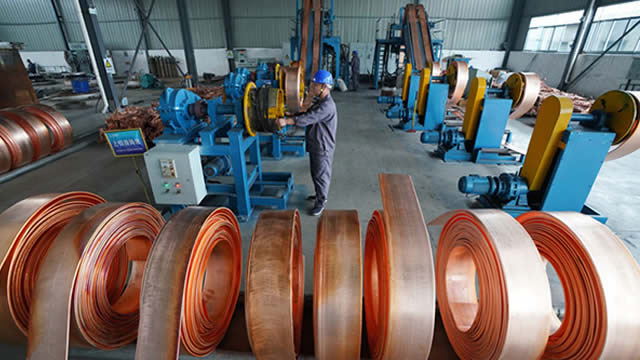
Core Insights - Hudbay Minerals (HBM) has demonstrated resilience by generating free cash flow for eight consecutive quarters, totaling over $400 million in the past year despite operational disruptions from wildfires, social unrest, and supply chain issues [1][11]. Financial Performance - The company attributes its strong performance to diversified copper-gold exposure, effective cost control, and disciplined capital allocation [2]. - Consolidated cash costs were reported at 42 cents per pound, with expectations for full-year cash costs to range between 15 to 35 cents per pound, potentially leading to near-zero or negative net copper cash costs at certain operations [2][3]. Operational Highlights - CFO Eugene Lei noted that byproduct strength and operational discipline helped mitigate lower sales volumes due to delayed concentrate shipments, providing a buffer against copper price volatility [3]. - Hudbay's dual exposure to copper and gold serves as a natural hedge, with gold production exceeding expectations, thereby softening the impact of copper-related disruptions [4]. Challenges and Risks - The company faces ongoing sustainability risks, including inflationary pressures and political volatility in Peru, which could affect operational stability and free cash flow [5][6]. - Management has reduced 2025 capital spending by $35 million, primarily due to timing shifts rather than structural savings, raising concerns about potential future capital expenditure increases related to the Copper World project [5]. Market Position and Valuation - Hudbay's shares have increased by 94% year-to-date, outperforming the industry average increase of 19.4% [13]. - The company trades at a forward price-to-earnings ratio of 13.26, below the industry average and its five-year median of 13.46, indicating potential value [14]. - The Zacks Consensus Estimate predicts a 56.3% rise in Hudbay's 2025 earnings compared to the previous year [15].

Hudbay Minerals (NYSE:HBM) Sees Positive Outlook from RBC Capital Amid Copper World Project Momentum
Financial Modeling Prep· 2025-11-17 18:02
Core Viewpoint - Hudbay Minerals is positioned for growth with the Copper World project expected to significantly increase copper output by 50% starting in 2029, contributing to a positive stock performance and resilience amid operational challenges [1][3][6] Group 1: Company Overview - Hudbay Minerals focuses on copper and gold production, operating several mines in North and South America [1] - The company has a market capitalization of approximately $6.23 billion and a trading volume of 4,467,378 shares [4] Group 2: Recent Performance - RBC Capital upgraded Hudbay's rating to "Outperform" with a stock price of $15.77 and raised the price target from C$24 to C$26 [2][6] - The stock has surged by 54.6% over the past three months, driven by the momentum from the Copper World project and strong gold output [2][6] Group 3: Project Impact - The Copper World project is a key growth factor, expected to boost copper output significantly by 2029 [3][6] - Despite operational challenges, Hudbay has maintained low costs and steady cash flow from gold and silver, enhancing its market resilience [3][6] Group 4: Stock Volatility - Hudbay's stock is currently priced at $15.77, reflecting a slight decrease of 0.57% or $0.09, with fluctuations between a low of $15.09 and a high of $15.97 today [5] - Over the past year, the stock reached a high of $17.73 and a low of $5.95, indicating volatility and potential for growth [5]