
Crypto regulation

Search documents
Crypto for Advisors: Will 2026 Be the Year of Crypto Regulation?
Yahoo Finance· 2026-01-22 16:00
This reflects how markets actually function. The SEC has long overseen disclosures and conduct related to fundraising, while commodities regulators focus on trading, market integrity, and derivatives. Applying that same logic to digital assets provides a clearer and more intuitive framework than attempting to stretch securities law concepts across a token’s entire lifecycle.One of the most encouraging developments is growing alignment around a more functional approach to crypto market structure. Under this ...
Crypto regulation to become global reality this year, PwC says
Yahoo Finance· 2026-01-22 15:25
Core Insights - The global landscape for crypto regulation is expected to become more defined as legislation transitions from draft to law, with countries that establish transparent rules likely to lead the industry [1] - The environment will shift from regulatory debates to execution and competition among jurisdictions to attract capital and legitimacy, with a trend towards increased cross-border coordination for market integrity and investor protection [2] Regulatory Developments - Global regulatory collaboration is accelerating, facilitating institutional adoption of cryptocurrency, with regulation reshaping markets and enabling responsible scaling of digital assets [3] - In the European Union, market participants are adapting to the Markets in Crypto-Assets (MiCA) regulation, while the U.S. faces delays in the CLARITY Act due to opposition regarding stablecoin yields [4] - The U.K. is moving towards a full authorization regime for crypto-asset activities, enhancing investor protections and establishing a dual oversight model for payment stablecoins [5] Industry Trends - The shift towards clearer rules may lead to higher compliance costs for crypto firms but could also unlock new products and deeper institutional participation [3] - The winners in the crypto space will be those who integrate compliance, resilience, and transparency into their core operations [6]
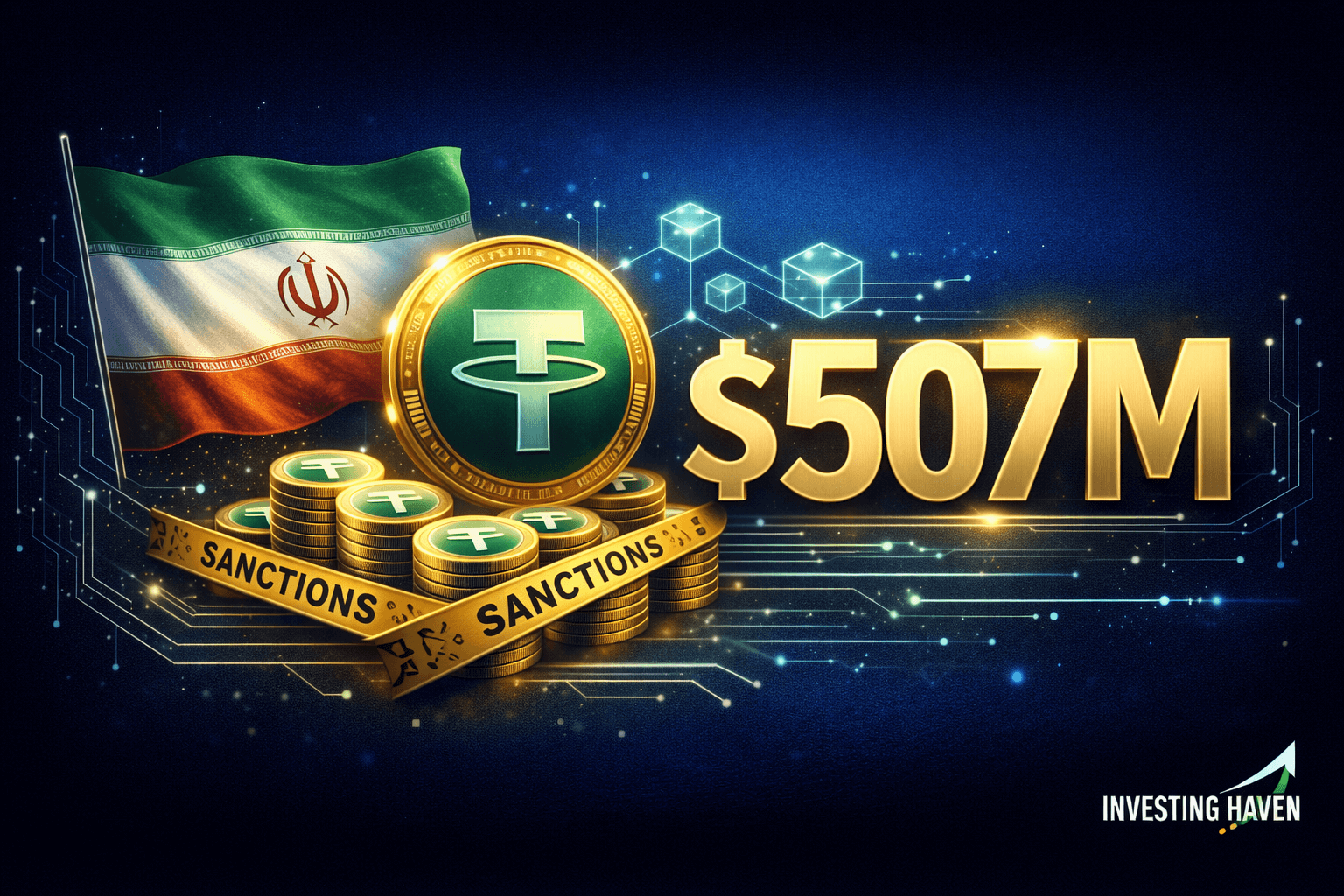
Iran Allegedly Used $507M in USDT to Bypass Sanctions
InvestingHaven· 2026-01-21 17:36
KEY TAKEAWAYSInvestigators link $507 million in USDT to state-connected walletsRoughly 187 wallets and $1 billion in total flows flagged over two yearsStablecoins once again highlighted as tools for cross-border sanctions evasionWhich crypto’s should you be watching right now? Read on…Iran’s Central bank allegedly bypassed sanctions with USDT. Blockchain investigators traced large stablecoin flows to state-linked wallets, revealing how digital dollars can move across borders quietly.Blockchain investigators ...

Cardano Founder Slams Ripple CEO Over Clarity Act: 'You're Handing Keys To The SEC'
Benzinga· 2026-01-21 12:43
Core Viewpoint - The debate over the Senate's Clarity Act highlights a division in the crypto industry, with some leaders arguing that the bill grants excessive power to the SEC and could hinder innovation, while others believe it provides necessary regulatory clarity [1][6]. Group 1: Perspectives on the Clarity Act - Charles Hoskinson, founder of Cardano, criticized Ripple CEO Brad Garlinghouse for supporting the Clarity Act, arguing that it gives too much power to the SEC and enforces flawed regulations that favor banks over innovation [1][3]. - Garlinghouse praised the Clarity Act as a significant step forward, asserting that clarity is preferable to chaos and expressing optimism that issues can be resolved during the markup process [2][7]. - The current draft of the Clarity Act categorizes all cryptocurrencies as securities by default, requiring projects to demonstrate sufficient decentralization to avoid SEC oversight [3][4]. Group 2: Concerns Over Regulation - Hoskinson contended that accepting flawed regulations for the sake of clarity could lock in restrictions for a generation, even as technology evolves [5]. - Brian Armstrong, CEO of Coinbase, aligned with Hoskinson, criticizing the bill for imposing a "de facto ban on tokenized equities" and limiting innovation through excessive regulatory power [6]. - Garlinghouse argued that the existing regulatory chaos has already pushed innovation offshore, and he believes that lawmakers can address SEC power issues during the markup process rather than rejecting the bill entirely [7][8]. Group 3: Legislative Developments - The Senate Banking Committee postponed its scheduled vote on the Clarity Act due to backlash from industry leaders, allowing time for lobbying efforts to amend the bill [9]. - The delay poses a risk of losing momentum for the bill or potentially leading to further dilution of its provisions [10].


Crypto BETRAYAL!! Coinbase KILLS The CLARITY Act!!
Coin Bureau· 2026-01-20 14:00
The holy grail of US crypto regulation was just hours away from a historic vote. For years, we've been told that regulatory clarity was the missing piece of the puzzle. The one thing holding back the tidal wave of institutional capital.The one thing that would finally end the SEC's war on crypto and send us to the moon. Everyone in DC and everyone in crypto had the 15th of January circled on their calendars. It was supposed to be the day the Clarity Act moved out of committee and onto the Senate floor.But t ...

Coinbase CEO: Big banks are trying to 'kill the competition' through crypto regulation
Fox Business· 2026-01-16 02:11
Core Viewpoint - Coinbase CEO Brian Armstrong expressed concerns over a Senate crypto bill that he believes unfairly favors banks, suggesting that the industry should compete on a level playing field [1][4]. Group 1: Industry Concerns - Armstrong stated that many in the cryptocurrency industry share Coinbase's concerns regarding the legislation, emphasizing the negative impact on customers who may receive worse deals from banks due to the bill's provisions [1][2]. - The disagreement centers around whether stablecoin holders should receive reward payments, highlighting the conflict between banks and crypto firms [4]. Group 2: Legislative Actions - The Senate Banking Committee has postponed a vote on the crypto market structure legislation amid pushback from the industry, indicating significant opposition to the proposed bill [2]. - Armstrong felt it was necessary to advocate for customers and all Americans, reflecting the broader implications of the legislation [2]. Group 3: Banking Relationships - Despite the ongoing disputes, Armstrong acknowledged that some banks are adopting a positive approach towards digital assets and are engaging in partnerships with Coinbase for crypto and stablecoin infrastructure [6][7]. - He criticized the lobbying efforts of banks, suggesting they aim to eliminate competition rather than foster a collaborative environment [9].

Coinbase CEO says key crypto vote can be rescheduled after 11th hour cancellation
CNBC· 2026-01-16 00:34
Core Viewpoint - The ongoing negotiations around a major crypto bill are facing significant challenges, particularly due to concerns raised by Coinbase CEO Brian Armstrong regarding provisions that could limit the industry's growth and competitiveness [2][4]. Group 1: Legislative Developments - Senators are committed to advancing a major crypto bill despite a recent setback in the committee vote [1]. - The latest version of the bill was released late Monday, but its approval was already uncertain when Armstrong expressed Coinbase's opposition due to concerns over the bill's provisions [2]. - Following Armstrong's tweet, the Banking Chair Tim Scott postponed the hearing, indicating a need for further discussion [3]. Group 2: Industry Concerns - Armstrong highlighted that the new bill included provisions that surprised him, and by the time concerns were identified, it was too late for amendments [4]. - One major point of contention is the bill's restrictions on crypto exchanges offering interest-like rewards on stablecoins, which could impact the competitive landscape between banks and crypto companies [5][6]. - Banks are actively opposing the bill's language, fearing it could lead to significant capital shifts from traditional deposits to stablecoins, potentially resulting in a credit squeeze of up to $1.2 trillion [6][7]. Group 3: Potential for Compromise - There is a belief among some senators that with more time for negotiations, a compromise can be reached that balances innovation in the crypto space with the interests of the banking sector [7][8]. - The need for a compromise is echoed by various stakeholders, emphasizing the importance of allowing innovation while addressing the concerns of traditional financial institutions [8].

How a battle with bankers tarnished crypto's market structure bill near the finish line
Yahoo Finance· 2026-01-13 21:21
Core Insights - The ongoing negotiations regarding a significant regulatory bill for the crypto industry are being heavily influenced by bank lobbyists, which has disrupted the initial expectations of crypto advocates [1][2][3] Group 1: Legislative Developments - The Senate Banking Committee released a draft bill that includes elements favorable to the crypto industry, but it has also made concessions that negatively impact stablecoin rewards [2][7] - The American Bankers Association argues that the competition from stablecoins could lead to a significant disruption in local lending, potentially amounting to trillions of dollars [5] Group 2: Impact of the GENIUS Act - Following the passage of the GENIUS Act, the crypto sector has been advancing its plans for customer rewards programs, although the law restricts issuers from offering yield on stablecoins [4] - Despite the restrictions, third parties and affiliates can still provide rewards, which has raised concerns among bankers about the potential threat to the U.S. banking system [4] Group 3: Lobbying Dynamics - The crypto industry is facing intense pressure from large banks, which are attempting to reshape the regulatory framework to protect their existing business models [3][6] - The new draft bill includes a compromise that prevents stablecoins from offering rewards in a static manner, akin to a savings account, but allows for rewards based on transactional activity [7]
Analyst revamps Coinbase rating as Clarity Act hearing nears
Yahoo Finance· 2026-01-12 23:17
Group 1 - Coinbase is reconsidering its support for the CLARITY Act due to concerns over the text related to platform-based rewards [1][5] - The CLARITY Act aims to provide regulatory clarity for the crypto markets by establishing distinct classes for digital assets [2][3] - The Act assigns responsibilities to the Commodity Futures Trading Commission (CFTC) and the Securities and Exchange Commission (SEC), creating new regulated entities [3] Group 2 - Banks are concerned that user rewards on crypto platforms may fall under securities or banking laws, potentially affecting traditional banking systems [4] - Coinbase's partnership with Circle allows it to share interest income from reserves backing USD Coin (USDC), providing a steady income stream [6] - The success of USDC directly benefits Coinbase, as it holds a small stake in Circle [6]
Dubai Bans Privacy Tokens Under New DFSA Crypto Framework
Yahoo Finance· 2026-01-12 11:48
Core Insights - Dubai's financial free zone has effectively banned privacy tokens such as Monero and Zcash due to new regulations requiring transaction transparency [1] - The Dubai Financial Services Authority (DFSA) has shifted to a firm-led suitability assessment model for crypto tokens, eliminating its previous list of recognized tokens [2] - Privacy-enhancing technologies are explicitly identified as negative indicators in the DFSA's supervisory guidelines, making them incompatible with know-your-customer requirements [3] Regulatory Framework Shift - The previous system included a list of recognized tokens like Bitcoin and Ethereum, while the updated framework places the responsibility on licensed entities to conduct suitability assessments [4] - Trading history and market liquidity are now part of the evaluation criteria, with approved fiat-backed tokens like Circle's USDC and Ripple's RLUSD remaining available [5] Global Regulatory Alignment - The DFSA's actions align with mainland Dubai's policies, as VARA had already banned privacy tokens in February 2023 [6] - The restrictions reflect a global trend in regulation, with the European Union's MiCA regulation also prohibiting anonymous crypto transfers starting in 2027 [7]