Edge AI

Search documents
Nordic Semiconductor renforce la position de leader de la série nRF54L dans le domaine de l'Edge AI très faible consommation
Prnewswire· 2026-03-11 08:00
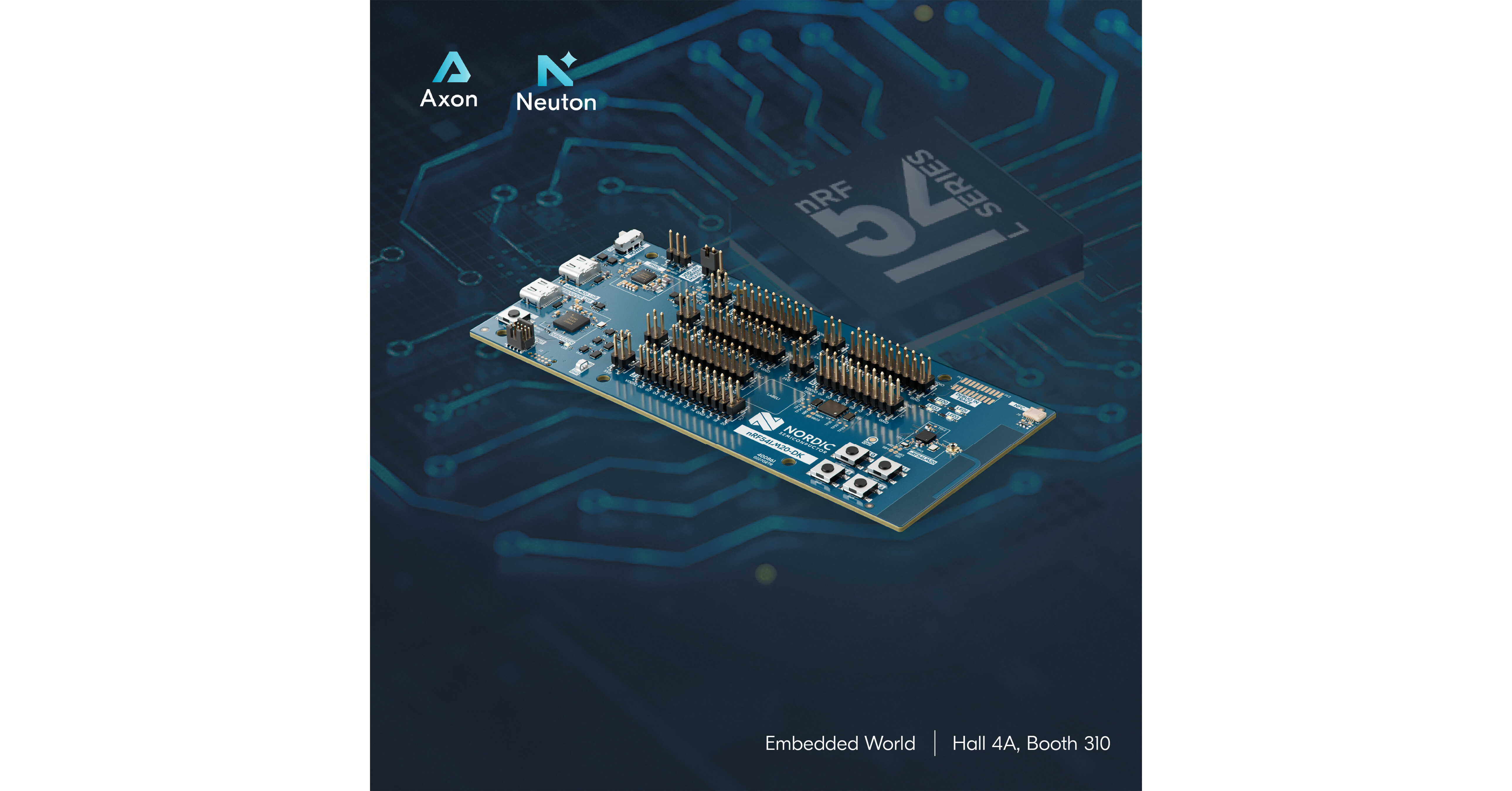
Core Insights - Nordic Semiconductor has made a significant advancement in its Edge AI strategy by introducing the nRF54LM20B SoC, which integrates a Neural Processing Unit (NPU) for enhanced performance in low-power applications [1] - The new NPU allows for real-time AI processing, achieving up to 15 times faster performance with significantly lower energy consumption compared to traditional Arm Cortex processors, and offers 8 times better energy efficiency than the closest competing Edge AI solution [1] Product Features - The nRF54LM20B's NPU enables efficient processing of high-throughput sensor data, audio, and event-triggered workloads on miniature batteries, transforming the capabilities of battery-powered devices [1] - The device supports real-time intelligence for various applications, including activity sensors, smart home devices, audio equipment, industrial and medical sensors, and tracking devices [1] Development Simplification - Nordic Semiconductor has enhanced its Edge AI solution by introducing features that simplify the integration of AI into a wide range of battery-powered IoT products, such as creating custom activation words from simple text input [1] - Developers can now create and optimize Edge AI models directly on the device, allowing for customized parameters and model architectures, which streamlines the design process for wearable devices and industrial sensors [1] - The Nordic Edge AI online tool facilitates model creation for efficient execution on the NPU or CPU, resolving compatibility issues and enabling advanced functionalities like audio classification and anomaly detection [1] Availability - The nRF54LM20 DK is currently available through Nordic's partner distributors, with mass production expected to commence in the second quarter of 2026 [1]

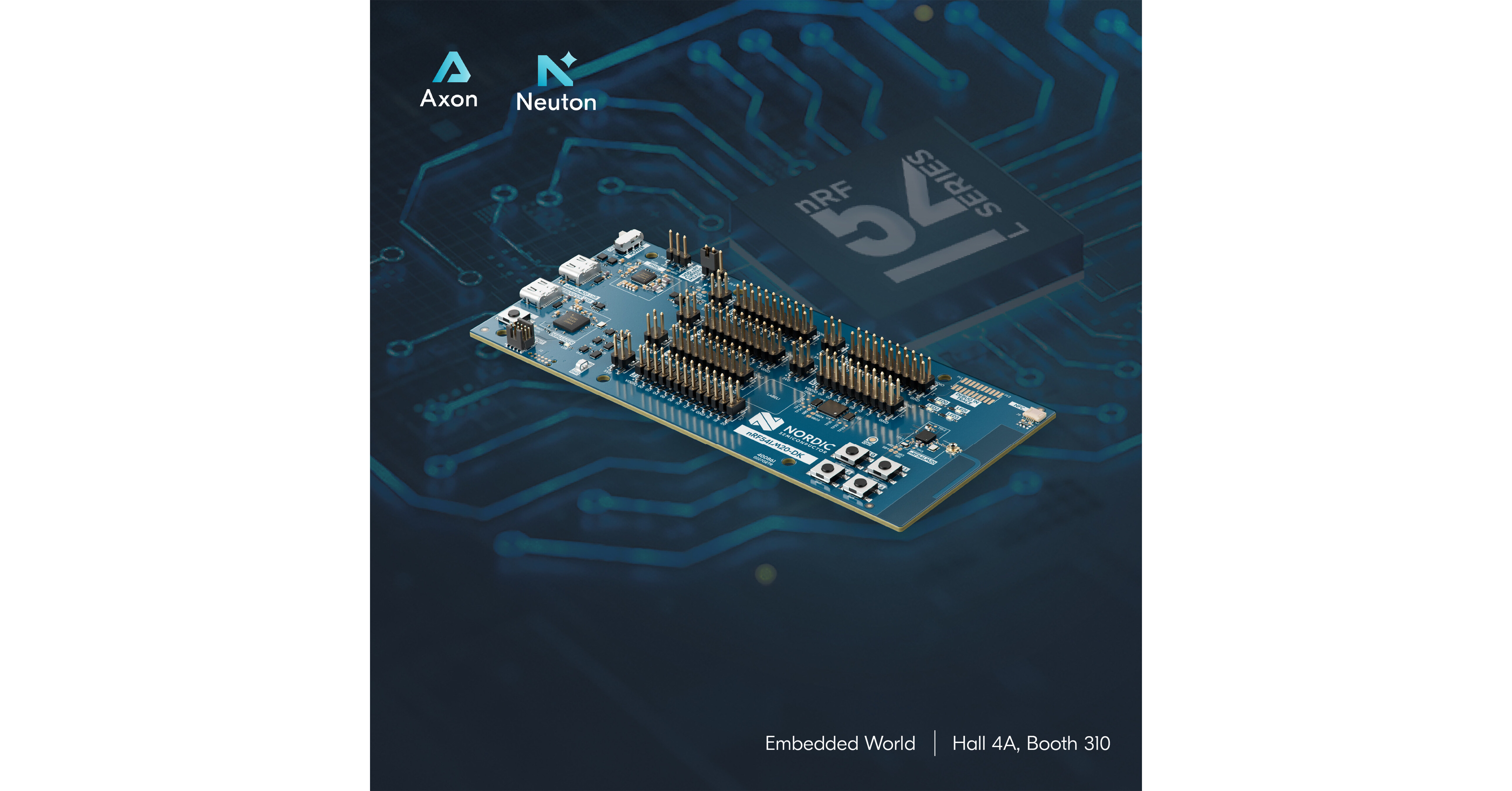
Firma Nordic Semiconductor umacnia wiodącą pozycję serii nRF54L w sztucznej inteligencji brzegowej ultraniskiej mocy
Prnewswire· 2026-03-11 08:00
Core Insights - Nordic Semiconductor announces a significant advancement in its Edge AI strategy by launching the nRF54LM20B SoC, which integrates a Neural Processing Unit (NPU) for real-time intelligence in ultra-low-power devices [1] - The new SoC enhances performance by accelerating TensorFlow Lite models up to 15 times while reducing power consumption compared to Arm Cortex processors, achieving up to 7 times better performance and 8 times improved energy efficiency compared to competing solutions [1] Group 1: Product Features - The nRF54LM20B SoC enables real-time data analysis in battery-powered devices, facilitating applications in wearables, smart home devices, industrial and medical sensors, and audio devices [1] - The integration of NPU allows for precise activity detection, natural sound response, immediate anomaly identification, and motion interpretation without cloud processing [1] Group 2: Developer Support - Nordic Semiconductor simplifies the development of Edge AI by providing advanced hardware acceleration, flexible model support, and intuitive workflows for developers, making it easier to implement intelligence in popular products [1] - The Nordic Edge AI Lab tool allows developers to create models for accelerated inference on the NPU or efficient execution on processors, addressing integration challenges between models, tools, and embedded software [1] Group 3: Cost and Time Efficiency - New features reduce the common barriers to implementing AI in a wide range of battery-powered IoT products, including support for a broader ecosystem and simplified model creation and optimization [1] - Developers can now build Edge AI models by uploading custom datasets and defining model architecture, significantly shortening the time from concept to working prototype [1] Group 4: Availability - The nRF54LM20 DK development kit is available through Nordic's distribution partners, with standard production expected to begin in Q2 2026 [1]
GSI Technology, Inc. (GSIT) Presents at IAccess Alpha Virtual Best Ideas Spring Investment Conference 2026 Transcript
Seeking Alpha· 2026-03-10 20:30
Core Insights - GSI Technologies has over 30 years of experience in the semiconductor industry, primarily known for high-performance SRAM products used in various demanding applications [2] - The company's current product, Gemini-II, is designed for power and low latency constrained edge environments, such as drones and satellites, aiming to enhance performance per watt compared to traditional architectures [3] - GSI is focusing on the development of its next-generation technology, the Associative Processing Unit (APU), which features a proprietary compute and memory architecture [2][4] Product and Market Focus - The Gemini-II is currently being evaluated for defense and other edge applications, with the company working towards initial design wins [3] - GSI aims to capitalize on edge AI market opportunities by delivering architectures that provide the highest compute per watt, which is crucial for the performance demands of edge applications [4]


GSI (NasdaqGS:GSIT) 2026 Conference Transcript
2026-03-10 19:32
GSI Technology, Inc. Conference Call Summary Company Overview - **Company**: GSI Technology, Inc. (NasdaqGS:GSIT) - **Industry**: Semiconductor, specifically high-performance SRAM and Associative Processing Unit (APU) technology - **Established**: Over 30 years in the semiconductor industry Core Business and Technology - GSI is known for high-performance SRAM products used in networking, defense, and demanding applications, which provide a financial foundation for developing next-generation technology, the APU [2][4] - The APU, specifically the Gemini Two, is designed for edge environments like drones and satellites, focusing on power efficiency and low latency [2][3] - GSI has invested over $175 million in APU R&D, funded by SRAM product revenues [4] Financial Performance - Trailing twelve-month revenues are just under $25 million, with a projected 25% increase in revenue for fiscal 2026 compared to fiscal 2025 [4][5] - Cash and cash equivalents exceed $70 million, with a market cap around $320 million [6][21] - Operating expenses are approximately $7 million per quarter, with a notable increase due to IP purchases for the Plato design [21] Market Opportunities - The edge AI market is projected to grow from $20 billion to $120 billion by 2030, with GSI targeting a market share of approximately $7 billion [14] - Applications include drones, SAR satellites, smart cities, and autonomous systems [14][25] - GSI's APU architecture is designed to minimize data movement, significantly increasing performance per watt, which is critical for edge applications [10][11] Competitive Advantages - GSI's APU architecture allows for processing within memory arrays, reducing latency and power consumption compared to traditional architectures [8][9] - The company has filed 87 patents related to the APU, emphasizing its unique technology [5] - GSI's SRAM products are considered to be 1-2 generations ahead of competitors, with high average selling prices (ASPs) and gross margins exceeding 90% [22][24] Government Contracts and Funding - GSI has secured $4.4 million in Small Business Innovation Research (SBIR) grants, with ongoing projects for the U.S. Army and other defense agencies [18][19] - Future funding opportunities include a pipeline of $6-$10 million in submitted SBIRs and larger grants from programs like STRATFI and TACFI [20] Future Developments - The next-generation APU, named Plato, is designed for large language models (LLMs) at the edge, with a target power consumption of around 10 watts [15][16] - The design for Plato is expected to be completed by mid-2027, with anticipated market entry in 2028 [16][18] Summary of Key Metrics - **Current Revenue**: Just under $25 million - **Projected Revenue Growth**: 25% increase for fiscal 2026 - **Cash Reserves**: Over $70 million - **Market Cap**: Approximately $320 million - **Patents Filed**: 87 related to APU technology - **Edge AI Market Growth**: From $20 billion to $120 billion by 2030 Conclusion GSI Technology, Inc. is positioned to capitalize on the growing edge AI market with its innovative APU technology, strong financial foundation, and strategic government partnerships. The company's focus on low power and high performance in edge applications sets it apart from traditional semiconductor competitors.
芯原股份:依托 AI 云与边缘端订单,半导体交钥匙业务持续增长;2025 年第四季度初步业绩符合指引;买入
2026-03-10 10:17
Summary of VeriSilicon's 4Q25 Preliminary Results and Outlook Company Overview - **Company**: VeriSilicon (688521.SS) - **Industry**: Semiconductor Key Financial Results - **4Q25 Revenue**: Rmb898 million, up 34% YoY, in line with guidance [1] - **4Q25 Net Loss**: Rmb181 million, higher than estimates [1] - **Chip Production Management Growth**: 74% YoY [1] - **Design Business Growth**: 21% YoY [1] - **New Order Gains**: Rmb6.0 billion in 2025, up 103% YoY; Rmb2.7 billion in 4Q25, up 70% QoQ [1] Core Insights - **AI Computing Projects**: 73% of new order gains in 2025 are attributed to AI computing projects, indicating a shift towards cloud and edge AI devices [1] - **Management's Outlook**: Positive growth outlook driven by rising demand across diversified end markets and improved R&D efficiency [6] - **Long-term Revenue Contribution**: Expected growth from AI toys and smart vehicles, aiming to support mass production and enter new supply chains [6] Earnings Revision - **Revised Earnings Estimates**: 2027-30E net incomes raised by 1%-2% due to higher revenue estimates; 2027-30E revenues revised up by 1%-2% [7] - **Gross Margins**: Slightly revised down by 0.1-0.2 percentage points due to a higher contribution from lower-margin chip production management services [7] Valuation and Price Target - **Target Price**: Revised up to Rmb273 from Rmb243, based on a 66.2x 2029E P/E [8] - **Implied 2027E P/S**: Increased to 22x from 20x, within the recent trading range of 14x-28x [8] Risks - **Technology Development**: Potential slower-than-expected advancements [18] - **Talent Acquisition Costs**: Higher-than-expected costs for talent retention [18] - **Customer Spending**: Weaker-than-expected spending on IP and new chipset projects [18] Conclusion - **Investment Recommendation**: Maintain Buy rating on VeriSilicon, benefiting from trends in generative and edge AI [1][8]

TI expands microcontroller portfolio and software ecosystem to enable edge AI in every device
Prnewswire· 2026-03-10 08:00
Core Insights - Texas Instruments (TI) has introduced two new microcontroller (MCU) families, the MSPM0G5187 and AM13Ex, which integrate the TinyEngine neural processing unit (NPU) to enhance edge AI capabilities across various applications [1][2] - The TinyEngine NPU allows for significant improvements in efficiency, achieving up to 90 times lower latency and over 120 times lower energy utilization per AI inference compared to similar MCUs without an accelerator [1] - TI's CCStudio Edge AI Studio supports these MCUs, providing over 60 models and application examples to facilitate the deployment of edge AI in devices [2] Product Features - The MSPM0G5187 MCU is designed for simpler, smaller, and cost-effective applications, priced under US$1 in 1,000-unit quantities, making it an affordable alternative for embedded designers [1] - The AM13Ex MCUs integrate a high-performance Arm Cortex-M33 core and advanced real-time control architecture, enabling sophisticated motor control and AI features without the need for external components, reducing bill-of-materials costs by up to 30% [1] - Both MCU families support local computation, allowing the TinyEngine NPU to execute neural network computations in parallel with the primary CPU, enhancing overall performance [1] Development Ecosystem - TI's CCStudio Edge AI Studio provides a free development environment that simplifies the model selection, training, and deployment process for engineers, enhancing the accessibility of AI technologies [2] - The toolchain allows for flexibility in running AI models on TI MCUs through hardware or software implementations, catering to a wide range of applications [2] - TI's partner ecosystem is highlighted at embedded world 2026, showcasing how the company's technologies can accelerate development and deployment of AI solutions across various sectors [2]


Synaptics Expands Astra Edge AI Portfolio with SR80 Series for AI-enhanced Premium Audio and SRW1500 Series for Connected Distributed Intelligence
Globenewswire· 2026-03-10 07:00
Core Insights - Synaptics Incorporated is enhancing its position in AI-native microcontrollers with the introduction of the Astra™ SR80 and SRW1500 series, aimed at providing premium experiences in audio and IoT applications [1][4] Group 1: Astra™ SR80 Series - The Astra™ SR80 series is designed for high-performance audio applications, offering features such as multimodal sensor fusion and continuous context awareness, which support always-on intelligence [2][3] - This series includes a programmable Arm® Cortex®-M33 core, audio CODEC, and various audio interfaces, enabling advanced voice-first human-machine interactions [2][3] - The SR80 series accelerates time-to-market with turnkey support for advanced algorithms like AI-based Noise Reduction and developer-friendly audio tuning software kits [3] Group 2: Astra™ SRW1500 Series - The Astra™ SRW1500 series integrates AI-native compute with Wi-Fi® 7 connectivity, marking it as one of the first single-chip AI MCU platforms in the industry [4][5] - It features an Arm® Cortex®-M52 with Helium™ DSP, operating at 200 MHz, and a 50 GOPS Arm® U55 NPU for efficient on-device inferencing [5] - The SRW1500 is designed for multimodal sensing and intelligent connectivity, with advanced power management and security features [5] Group 3: Market Position and Availability - Synaptics aims to standardize its architecture across various market tiers, providing premium features to a broader customer base [6] - The Astra™ SR80 and SRW1500 series are expected to begin sampling in Q2 2026, with production targeted for Q4 2026 [6]


Google Research and Synaptics Launch Next-Generation Coral Dev Board for Developers to Bring Multimodal Edge AI Applications to Life
Globenewswire· 2026-03-10 07:00
Core Insights - Synaptics Incorporated has launched a limited-edition Coral Dev Board powered by the Astra™ SL2610 product line, featuring the industry's first implementation of the Coral NPU from Google Research, aimed at enhancing power-efficient AI experiences across various applications [1][4] Product Features - The Coral Dev Board is designed for ultra-low power, always-on applications, enabling efficient on-device inference for battery-constrained devices, and includes hardware interfaces such as camera and display support, microphone inputs, and Wi-Fi/Bluetooth connectivity [2] - The board is targeted at AI and ML engineers, system architects, and ODMs/OEMs, providing an open environment for experimentation and rapid prototyping [2] Software and Development Tools - Synaptics' MLIR-based Torq open-source toolchain supports popular machine learning frameworks, facilitating a unified development experience from model optimization to deployment [3] - The combination of the Coral NPU and Synaptics Torq toolchain offers a robust foundation for building private and efficient Edge AI applications [3] Partnerships and Ecosystem - Synaptics is collaborating with Grinn Global and RS to launch the Coral Dev Board, which will come pre-configured with an Edge AI experience featuring the Gemma 3 270M model, allowing immediate development of on-device AI workloads [4] - The partnership aims to provide a clear path from evaluation to scalable deployment, combining production-ready hardware with rapid prototyping capabilities [4] Market Position and Future Plans - Synaptics emphasizes its commitment to building an open, developer-first Edge AI ecosystem, with plans for future development boards in collaboration with Google Research [5] - The company aims to meet the demand for accessible, production-grade platforms that facilitate immediate development for Edge AI applications [5][6]

Even After a Monster Rally, Analysts Still Think You Should Buy Sandisk Stock
Yahoo Finance· 2026-03-09 13:48
Core Viewpoint - Sandisk's ability to sustain its recent performance and become a long-term wealth creator is under scrutiny, with BNP Paribas advocating for investment based on short-term triggers [1] Company Overview - Founded in 1988, Sandisk has transitioned from a niche player in memory technology to a significant semiconductor storage company focused on NAND flash memory and solid-state storage solutions [2] Financial Performance - Sandisk has shown strong financial results since its spinoff from Western Digital, surpassing earnings estimates for four consecutive quarters [5] - Q2 2026 revenues reached $3 billion, a 31% increase quarter-over-quarter, with the Edge segment generating $1.7 billion (up 21%) and the Datacenter segment soaring 64% to $440 million [6] - Earnings per share (EPS) for Q2 2026 were $6.20, significantly above the expected $3.62, with Q3 2026 EPS projected between $12 and $14, indicating a substantial year-over-year improvement [7] - Net cash from operating activities for Q2 2026 was $1 billion, with a cash balance of $1.5 billion, well above short-term debt of $20 million [8] Market Position and Valuation - Sandisk's stock trades at a forward P/E of 13.24 and P/CF of 15.13, both lower than sector medians, while its forward P/S of 5.03 is slightly above the sector median [9] - Analysts have a consensus "Moderate Buy" rating for SNDK stock, with a mean target price of $700.94, suggesting a 32% upside potential [15] Strategic Focus - The spinoff from Western Digital has allowed Sandisk to focus on NAND and SSD products, positioning it as a key player in AI infrastructure [10] - Sandisk's business model emphasizes memory and storage, minimizing capital expenditure risks associated with full-scale chip fabrication [11] - The company is benefiting from increased NAND content per device, driven by the shift towards edge AI and decentralized inference [12] Partnerships and Capacity Expansion - Sandisk has extended its collaboration with Kioxia, committing $1.17 billion for additional manufacturing services from 2026 to 2029, which will enhance its production capacity without the full burden of new fab construction [13] Competitive Advantage - Sandisk leads in the ultra-high-capacity segment for AI data centers, with its 256TB UltraQLC NVMe SSD outperforming competitors in capacity and performance metrics [14]
Moonage Media with Defense Sector Trends in 2026: The Rise of Edge AI, Autonomous Drones, and Real-Time Battlefield Intelligence - And Why Maris-Tech's Technology Is the Answer to This Market Need
Prnewswire· 2026-03-09 13:27
Industry Overview - The global defense landscape in 2026 is rapidly transforming due to escalating geopolitical tensions, lessons from ongoing conflicts, and significant increases in military budgets, with global defense spending projected to exceed $2.6 trillion this year [1] - Key trends include a focus on counter-drone technologies, low-latency real-time intelligence, edge AI, and the explosion of unmanned and autonomous systems [1] Key Trends - **Counter-Drone and Hybrid Warfare Priorities**: There is a surge in investments in counter-UAS technologies, including AI-powered detection and neutralization, alongside broader autonomy in air, land, and sea domains [1] - **Focus on Low-Latency, Real-Time ISR**: The need for ultra-low-latency video streaming and AI-accelerated analytics has been highlighted, enabling actionable intelligence delivery to operators or autonomous systems [1] - **Shift to Edge AI and Onboard Processing**: Edge AI is becoming standard for real-time object detection and autonomous decisions, critical for low-SWaP environments like small drones [1] - **Explosion in Unmanned and Autonomous Systems**: Military drone markets are forecasted to grow, with loitering munitions and autonomous platforms leading demand due to their affordability and effectiveness [1] Company Spotlight: Maris-Tech - Maris-Tech Ltd. (NASDAQ: MTEK) specializes in compact edge AI video computing, positioned at the intersection of key defense priorities [1] - The company's Jupiter Drone platform integrates AI-based video capabilities across various platforms, enhancing relevance in multiple markets [1] - Maris-Tech provides critical edge video intelligence that complements broader autonomy trends, enabling sensor fusion and AI-driven situational dominance [1] - The company benefits from Israel's leadership in UAVs and autonomous systems, making it attractive for international partnerships and U.S. market expansion [1] - Recent milestones, including a substantial production order for Jupiter Drone systems, validate the transition from pilots to operational deployment [1] - Maris-Tech's low-SWaP design is tailored for small, power-limited platforms, ensuring integration without compromising performance [1] - The company continues to gain traction in the edge AI video technology niche for defense applications, aligning with booming trends in loitering munitions and real-time intelligence [1]