Passive Investing

Search documents
Worse Than the Dot-Com Crash? Why Michael Burry Thinks the Market Is in Deep Trouble
The Motley Fool· 2026-01-09 10:30
Burry suggests that there may not be many safe options for investing in the U.S. market today.The dot-com crash is known for being one of the worst stock market collapses in recent memory. It came at a time when the internet was in its infancy, and many stocks were surging in value simply due to hype. Investors sometimes compare the euphoria around artificial intelligence (AI) stocks today to how the market was back then. The S&P 500 (^GSPC +0.01%) is coming off a third straight year of double-digit percent ...



The Market Has Entered a Phase We Rarely See, and Investors Should Pay Attention
Yahoo Finance· 2025-12-29 15:00
Group 1 - The S&P 500 has generated a total return of 300% over the past decade, with a compound annual growth rate of about 14.9%, significantly higher than its long-run average of approximately 10% [1] - The current CAPE ratio of the S&P 500 is 40.7, which is historically high and only surpassed during the dot-com bubble of 1999 and 2000, indicating a 67% increase in valuation over the past decade [4] - Research indicates that when the CAPE ratio is around 40, the S&P 500's annualized total returns over the next decade tend to be in the negative low-single-digit percentages, contrasting with the historical average return of 10% per year, which requires a CAPE ratio in the mid-to-high teens [5] Group 2 - Despite the high valuation, there are powerful trends such as the rise of passive investing in index funds, which has led to significant inflows into stocks, with passive funds surpassing actively managed funds in value for the first time in late 2023 [7] - The democratization of access to quality research and the availability of commission-free brokerage platforms and low-cost funds have improved retail investors' access to the stock market, potentially supporting long-term market growth [7] - Historically high CAPE levels correlate with disappointing returns in the following decade, suggesting that while caution may be warranted, there are still trends that could drive the stock market higher [8]
X @Bloomberg
Bloomberg· 2025-12-17 02:08
An unusual trade by an Indian ETF has helped it edge past the benchmark it’s designed to mirror, a rarity in an era dominated by passive investing https://t.co/Cc6xsDtJ0y ...
The Big 3: GEV, NDAQ, STX
Youtube· 2025-12-16 17:30
Group 1: Market Overview - The current economic landscape is characterized by a bifurcated or K-shaped economy, with unemployment rates around 4.6%, indicating a shift from a balanced labor market to potential risks in employment [2][4][5] - There is an expectation of a possible rate cut due to the labor market risks, which could positively impact market conditions in the upcoming year [5] Group 2: GE Vernova - GE Vernova has seen a significant increase of nearly 9% in the last week, driven by its role as a critical power supplier for AI data centers [6][7] - The company is benefiting from a shift towards on-site power generation due to grid delays, and its backlog is high quality and on track for growth through 2027 [8] - The stock has risen approximately 150% from its lows in April, indicating a strong bullish trend, with technical indicators suggesting continued upward movement [10][12][13] Group 3: NASDAQ - NASDAQ is expanding its trading hours to include a 23-hour weekday trading session, which is expected to increase retail participation globally [15][16] - Approximately 60% of NASDAQ's revenue is derived from assets under management (AUM) based index funds, with a trend of investors moving towards passive equity funds, which is favorable for NASDAQ's earnings [16][17] - The stock is currently consolidating and showing potential for a breakout, with key resistance levels identified [18][20][22] Group 4: Seagate Technology - Seagate has been included in the NASDAQ 100, which is a significant development for the company, as it is a core supplier of data storage hardware for data centers and AI infrastructure [23][24] - A cash-secured put strategy is being employed to potentially acquire shares at a discount, with a strike price of around $290 and a premium of approximately $20.90 per share [25][26][28] - The stock has been in a bullish trend, but there are concerns about potential overvaluation and bearish divergences in technical indicators, suggesting a possible pullback in the near term [29][34]


The Best Dividend Stocks to Buy With $2,000 Right Now
The Motley Fool· 2025-12-13 20:47
Core Viewpoint - Dividend stocks provide a combination of growth and income, making them an attractive investment option for building wealth [1] Group 1: Importance of Dividends - Dividends have significantly contributed to stock market returns, accounting for 95% of the S&P 500's cumulative total return since 1960 through compounding and reinvestment [2] - Companies that consistently increase their dividends have outperformed non-dividend-paying stocks, delivering annual returns of 10.2% compared to 4.3% [3] Group 2: Realty Income (O) - Realty Income is a REIT that owns over 15,000 commercial properties under long-term, triple-net leases, resulting in stable and predictable cash flows [6] - The company pays monthly dividends, offering an annual yield of 5.6%, with a history of increasing its monthly dividend 133 times over the past three decades [8][9] Group 3: BlackRock (BLK) - BlackRock is the world's largest asset manager with over $13.5 trillion in assets under management, benefiting from the growing trend of passive investing through its low-cost ETFs [11] - The company has raised its dividend payout for 16 consecutive years, providing a yield of around 1.8% and annual returns of over 14.8% over the past decade [14] Group 4: Ares Capital Corporation (ARCC) - Ares Capital offers a high dividend yield of over 9% due to its structure as a business development corporation, which requires it to distribute 90% of taxable income to shareholders [15] - The company has over 20 years of experience lending to middle-market companies, delivering solid performance even during economic downturns [19]


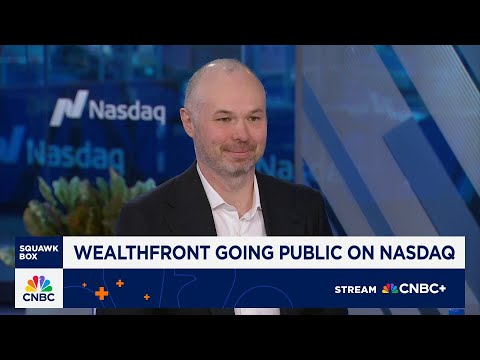
Wealthfront CEO David Fortunato on going public on Nasdaq, state of investing and growth outlook
CNBC Television· 2025-12-12 13:20
Fintech platform Wealthfront going public on the NASDAQ today under the ticker symbol WLTH. It priced its IPO at $14 per share. That was the top end of the expected range.Joining us now first on CNBC is Wealthfront CEO David Fortonado. David, good to see you. >> Thanks for having me.>> Big day uh for you. And you know, I was saying we kind of remember this industry as we used to call it the robo advisor industry, the sort of automated investment services from 15 years ago. Well, at the time it seemed like, ...
Quant who said passive era is ‘worse than Marxism’ doubles down
Fortune· 2025-12-06 14:22
Core Argument - The rise of passive investing, particularly through index funds, is distorting market dynamics and concentrating power among a few large technology companies, leading to diminished competition and potential risks for investors [2][5][10]. Group 1: Impact of Passive Investing - Trillions of dollars flowing into index funds are not merely tracking markets but are distorting them, favoring large incumbents like Apple, Microsoft, and Nvidia [2][4]. - A "dystopian symbiosis" exists between index funds and major platform companies, creating a feedback loop that concentrates power and stifles competition [3][5]. - The current market is characterized by automatic flows into passive investments, which are indifferent to risk, contrasting with previous cycles driven by fundamentals [3][4]. Group 2: Market Concentration - Just 10 companies now represent over a third of the S&P 500's value, with technology firms significantly contributing to market gains [4]. - The concentration of capital in a few large firms raises concerns about the effectiveness of capitalism and competition, suggesting a need for policy intervention similar to historical antitrust actions [5][6]. Group 3: Critiques and Counterarguments - Other active managers have echoed concerns about passive investing, citing hidden costs such as increased volatility and reduced liquidity [8]. - However, some studies argue that fundamentals remain a key driver of stock valuations, and active managers have a more significant influence on stock performance than passive funds [9][10]. Group 4: ETF Market Dynamics - The popularity of index-tracking ETFs has surged, with $842 billion inflows this year compared to $438 billion for actively managed funds, indicating a strong preference for passive investment vehicles [10]. - Of the over $13 trillion in ETFs, $11.8 trillion is in passive funds, highlighting the dominance of low-cost index funds in the market [10].


THEY SURRENDERED!! Wall Street Giant Just Flipped On Crypto!
Coin Bureau· 2025-12-03 17:51
For years, they were the fortress of traditional finance. The gatekeepers who looked at Bitcoin and sneered. While Black Rockck, Fidelity, and practically everyone else on Wall Street was scrambling to build crypto products, this 11 trillion giant stood firm.They blocked you from buying Bitcoin ETFs. They told you crypto had quote no intrinsic value. They effectively told 50 million clients that if they wanted digital assets, they could go take a hike.Well, guess what. They just blinked. In a move that has ...

T. Rowe Price Leaders Talk TTEQ OpenAI Pickup
Etftrends· 2025-11-21 13:05
Core Insights - Active ETFs are gaining traction, with TTEQ representing a shift from passive to active management in sector investing, particularly in technology [1][2] - TTEQ's recent investment in OpenAI exemplifies its active management strategy, aiming to capture performance within the tech sector [2][4] - The flexibility of active management allows TTEQ to navigate across sectors and geographies, providing a competitive edge over passive funds [3][6] TTEQ Overview - TTEQ, managed by Dominic Rizzo, launched over a year ago and focuses on technology investments, including private companies [1][2] - The fund has achieved a year-to-date return of 26.9% and 27.3% over the past year, outperforming the Invesco QQQ Trust [7] - TTEQ charges a fee of 63 basis points for its active investment strategy, primarily targeting large-cap growth tech firms [7] Investment Strategy - TTEQ's approach includes the ability to invest in private companies, which is a unique advantage over passive ETFs [2][3] - The fund is currently in an "AI-on" mode, focusing on companies benefiting from the AI revolution, but may shift to a more defensive stance in the future [7] - Rizzo emphasizes that TTEQ is not solely an AI ETF but a broader technology ETF that adapts to market conditions [7] OpenAI Investment - The investment in OpenAI aligns with TTEQ's strategy of identifying potential aggregators in the tech space, leveraging the concept of "Aggregation Theory" [4][5] - OpenAI's extensive user base and diverse revenue streams position it as a significant player in the tech sector, with potential for rapid growth [6][5] - The fund's ability to access deal flow through private investments enhances its capacity to capitalize on emerging trends in technology [3][2]