TOD模式

Search documents
既能乘车又能玩!广州南站功能升级,商业综合体明年建成
Nan Fang Du Shi Bao· 2025-05-08 14:48
Group 1 - Guangzhou South Station is undergoing a transformation with the construction of the Guangzhou International Trade Center (ICC), which is expected to be completed next year, enhancing its functionality beyond just transportation [1] - The ICC project covers a total construction area of approximately 177,500 square meters and includes a 179.85-meter high office building along with commercial, residential, and public service facilities [1][3] - The project is being developed by Hong Kong Sun Hung Kai Properties and constructed by China State Construction Engineering Corporation (CSCEC), which has reported smooth progress since construction began in December 2023 [1][2] Group 2 - The ICC project employs advanced construction technologies, including cloud-based construction factories and engineering robots, achieving a 30% increase in construction efficiency and a 10% reduction in project duration [2] - The construction site has been transformed into a factory-like environment, improving working conditions and reducing labor intensity for workers [2] - The project utilizes a digital construction management platform for real-time monitoring of construction progress, resource utilization, and quality control, enhancing overall project management efficiency [2] Group 3 - The vision for the Guangzhou South Station area is to evolve from a single-function transportation hub to a comprehensive urban center that integrates various business and residential functions, aligning with the Greater Bay Area's development goals [3] - In April 2021, Sun Hung Kai Properties acquired the core area of Guangzhou South Station for 7.082 billion RMB, with plans to develop a mixed-use TOD that includes shopping malls, hotels, office buildings, and residential units [3]

2024年物业利润涨近4倍,港铁要变身大地产商?
Zheng Quan Shi Bao Wang· 2025-03-14 06:39
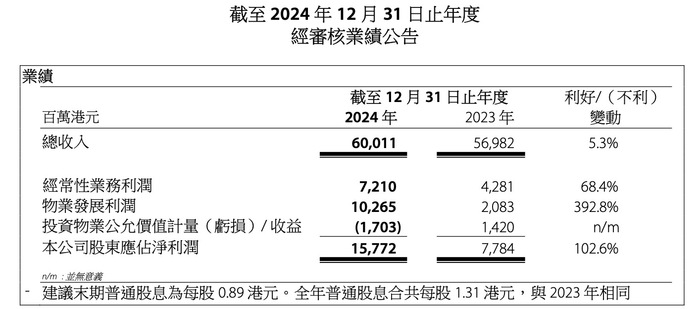
Core Insights - Hong Kong MTR Corporation (MTR) reported a significant increase in property profits, rising by 392.8%, amidst losses faced by domestic rail companies [1] - For the fiscal year 2024, MTR's total revenue reached HKD 60.011 billion, a slight increase of 5.3% from 2023, with net profit soaring by 102.6% to HKD 15.8 billion [1] - The property development segment emerged as the main driver of MTR's financial health, with profits reaching HKD 10.265 billion, nearly quadrupling year-on-year [1][2] Revenue Structure - MTR's "rail + property" model allows the company to develop land along railway lines, paying for land at pre-construction prices and reaping the benefits post-construction [2] - The property segment now accounts for 65% of total profits, significantly surpassing traditional revenue sources such as passenger services and station businesses [2] - Property leasing income increased by 5.9% to HKD 5.076 billion, bolstered by the opening of new shopping centers [3] Market Dynamics - The recovery of the Hong Kong property market post-policy changes has provided crucial support for MTR's residential projects [5] - Following the government's removal of property cooling measures, the market saw a 17.1% increase in property transaction volume, reaching 67,979 contracts in 2024 [6] - MTR launched several projects shortly after the policy changes, achieving high sales rates for new developments [7] Future Prospects - MTR has a land reserve of 890,000 square meters, with significant residential supply expected in the next 12 months [4] - The company anticipates that property income will not only fund railway construction but also support long-term asset maintenance [4] - Despite the positive outlook, there are concerns about potential market fluctuations affecting profit margins in the property development sector [8][9] Industry Trends - The "rail + property" model is gaining traction in mainland China's rail transit sector, with several companies reporting substantial growth in real estate development revenues [10] - In 2024, 22 cities in China are expected to release 45 parcels of TOD land, indicating a continued push for integrated transport and property development [11] - MTR's operational model differs from mainland counterparts, as it does not directly engage in real estate development but collaborates with developers [12][13]