Diversification

Search documents
The simple math showing the stock market’s ‘asymmetric upside’
Yahoo Finance· 2025-10-19 14:31
Core Insights - The article emphasizes the mathematical relationship between investment losses and the required gains to return to breakeven, illustrating that a 20% loss necessitates a 25% gain to recover [1][2] - Historical data shows that while the stock market can be volatile, it has a strong tendency to recover from losses, with significant gains often following bear markets [3][4] Historical Performance - The 2022 bear market resulted in a 24% decline, requiring a 32% gain to break even, but the market achieved a total return of 78% before the subsequent downturn [6] - The 2020 pandemic crash saw a 34% drop in the S&P 500, necessitating a 52% return to recover, which was surpassed with a 120% return [6] - The global financial crisis starting in 2007 led to a 55% decline, requiring a 122% return to break even, yet the market experienced an 11-year bull run with a total return of 527% [6] - On average, bear markets see a decline of 31%, requiring a 45% return to recover, while bull markets have historically provided an average return of 254% before the next bear market [6]
3 Reasons the Vanguard S&P 500 ETF Could Be Your Best Investment Right Now
The Motley Fool· 2025-10-18 07:55
Core Insights - The article emphasizes that investing in the Vanguard S&P 500 ETF (VOO) is a straightforward and effective way to gain exposure to the U.S. stock market, particularly for those who prefer a passive investment strategy [1][4]. Investment Performance - The S&P 500 has delivered an average annual return of approximately 10% since its inception in 1957, with a $10,000 investment in the original Vanguard S&P 500 Index Fund growing to $2.23 million today [2]. - The Vanguard S&P 500 ETF, launched in 2010, has seen a $10,000 investment grow to $79,400 with reinvested dividends [3]. Advantages of VOO - **Instant Diversification**: VOO provides exposure to the 500 largest U.S. companies, with top holdings including Nvidia (7.95%), Microsoft (6.73%), Apple (6.60%), and Amazon (3.72%). Information technology stocks represent 34.8% of the index [5][6]. - **Low Fees**: VOO has a low expense ratio of 0.03%, significantly lower than the average expense ratio of 0.74% for similar ETFs and 1.5% for hedge funds [7][8]. - **Dollar Cost Averaging**: The S&P 500 has historically rebounded from recessions, and dollar-cost averaging can help mitigate the impact of market volatility by spreading investments over time [9][10][11].
Markets close higher after volatile week, Ferrari unveils 296 GTS Hybrid
Youtube· 2025-10-17 21:25
Market Overview - Major indices showed positive performance this week, with the Dow up 1.5%, NASDAQ up over 2%, and S&P 500 up 1.7% [1][2] - The Russell 2000 experienced a slight decline, contrasting with gains in other sectors [2][3] Sector Performance - Consumer staples reached a record high with Johnson & Johnson leading, while the XLP index rose 1.3% [2][3] - Other strong sectors included consumer discretionary and financials, while materials and utilities saw nominal declines [2] Company Highlights - American Express recorded a significant increase of 7% in one day and 16-17% year-to-date [3] - Gilead Sciences saw a 4% increase, while major tech stocks like Apple and Tesla also rose nearly 2% [3] Regional Banks - Recent earnings reports from regional banks showed optimism, easing credit fears that had previously led to a selloff [25][26] - Investors reacted positively to the strong credit results from several banks, despite earlier concerns stemming from credit issues linked to fraud allegations [25][28] Gold Market - Gold reached an all-time high, driven primarily by institutional buying rather than retail frenzy, indicating a shift in investor behavior [7][9] - Central banks are diversifying their reserves, contributing to gold's price increase, although potential risks exist if central banks alter their buying patterns [10][12] Technology Sector - The "Magnificent 7" tech companies account for about one-third of overall S&P 500 capital expenditures, raising concerns about their influence on the market [38] - Free cash flow growth for these companies has shifted from over 60% positive to slight negative territory, indicating a potential slowdown [40] Economic Indicators - The upcoming Consumer Price Index (CPI) report is anticipated to show an acceleration to 3.1% compared to August, providing insights ahead of the Federal Reserve's meeting [55][56] - Tesla's third-quarter earnings report is highly anticipated, with expectations of strong profits due to increased demand before the expiration of the EV tax credit [57]



Here’s the Minimum Net Worth To Be Considered Upper Class in Your 40s
Yahoo Finance· 2025-10-17 15:40
Core Insights - The article discusses the financial benchmarks that define "upper class" status in the United States, particularly focusing on net worth and income levels. Income and Class Definition - A household income of $117,000 to $150,000 qualifies as upper-middle-class in most U.S. cities [1] - The distinction between upper class and upper-middle class is often based on net worth rather than just income [2] Net Worth Criteria - A net worth of at least $1.5 million is commonly considered necessary to be classified as upper class in one's 40s, with some experts suggesting a figure of $2.5 million [3] - This level of wealth provides financial resilience against significant setbacks, such as job loss or market downturns [3] Asset Management - Simply reaching the net worth threshold is not sufficient; the structure of assets for protection and growth is crucial [4] - Diversification beyond traditional stocks and bonds is emphasized, with tangible assets like precious metals being recommended as a defensive strategy [5] Tax Considerations - Wealth management becomes more complex with increased income, necessitating a focus on tax efficiency to minimize liabilities and enhance wealth growth [6] Liquidity - Having accessible cash is highlighted as an important aspect of wealth management [7]
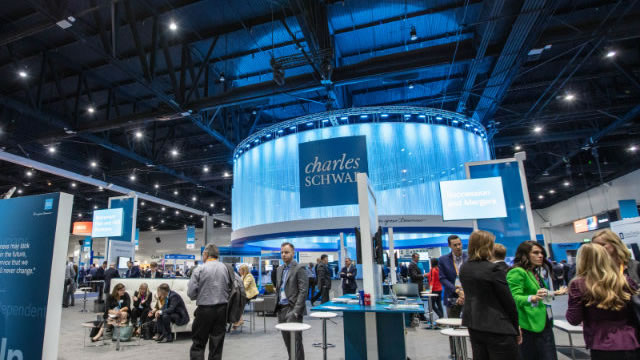
Charles Schwab CEO Rick Wurster on Q3 results: We continue to deliver for our clients
CNBC Television· 2025-10-17 13:17
Financial Performance - Charles Schwab reported record third quarter profits of $236 billion [1] - Revenue jumped 27% to $614 billion, an all-time high [1] - Total client assets up 17% year-over-year to a record $1159 trillion [3] - Dollar daily average trades up 30% year-over-year [4] Client Acquisition and Engagement - Schwab gained over 1 million new brokerage accounts for the fourth consecutive quarter [4] - One third of new to firm households are Gen Zers under the age of 28 [10] - Client crypto site visits went up 90% in the last year [17] Competitive Landscape and Strategy - Schwab is the number one in retail trading with 74 million daily average trades [7] - Schwab differentiates itself by offering a broad experience, including access to trading professionals and live trading coaching [8] - Schwab offers crypto ETFs, Bitcoin futures, and closed-end funds, with clients owning 20% of all crypto exchange traded products in the country [16] Risk Management and Diversification - Schwab emphasizes diversification, particularly given the concentration of the S&P 500 [14] - Schwab's bank lends only to clients against their assets and invests in government-backed securities, minimizing credit risk [20][21]


Charles Schwab CEO Rick Wurster on Q3 results: We continue to deliver for our clients
Youtube· 2025-10-17 13:17
Core Insights - Charles Schwab reported record third quarter profits of $2.36 billion, with revenue increasing by 27% to $6.14 billion, marking an all-time high for the company [1] - Total client assets rose by 17% year-over-year to a record $11.59 trillion [3] - The company experienced a significant increase in daily average trades, which were up 30% year-over-year [4] Client Engagement and Growth - Schwab added over one million new brokerage accounts for the fourth consecutive quarter, indicating strong client acquisition [4] - The company attributes its growth to delivering value to clients through a combination of digital services and personal support, including 7 million client calls in the last quarter [5][6] - A notable demographic shift is observed, with one-third of new households being Gen Zers under the age of 28, who seek engagement and guidance in their financial lives [10] Competitive Landscape - Schwab leads the retail trading market with 7.4 million daily average trades, significantly outpacing competitors like Robinhood and Morgan Stanley [7] - The company emphasizes its commitment to client service and the provision of a comprehensive trading experience, including live coaching and a robust trading platform [8][9] Market Trends and Client Behavior - Active traders are engaging in strategies such as buying dips and selling rips, while long-term investors are advised on diversification and market timing [13] - The concentration of the S&P 500 index is at a historical high, with the top 10 stocks comprising 38% of the index, prompting discussions on the importance of diversification [14] Investment Opportunities - Schwab is expanding its offerings to include crypto ETFs and private investments, responding to client interest in alternative assets [16][18] - The company reports a 90% increase in visits to its crypto site over the past year, indicating high engagement in this area [17] Credit and Economic Outlook - Schwab's banking operations are designed to lend only against client assets, mitigating credit risk, and the company has not experienced credit issues historically [20][21] - Current economic indicators suggest that there are no systemic credit issues, with low unemployment rates contributing to a stable outlook [22]
Harmony (HMY) Acquires MAC Copper for AU$1.08B to Diversify Into Copper
Yahoo Finance· 2025-10-16 20:19
Core Viewpoint - Harmony Gold Mining Company Limited is positioning itself as a strong investment opportunity as gold prices rise, particularly following its acquisition of MAC Copper Limited to diversify into copper mining [1][3]. Group 1: Acquisition Details - Harmony Gold acquired MAC Copper Limited for approximately AU$1.08 billion, which represents a 20% premium over MAC's recent share price [1][2]. - The acquisition involves purchasing 100% of MAC Copper's issued share capital at AU$12.25 per share in cash [1]. Group 2: Strategic Importance - The principal asset of MAC Copper is the CSA Copper Mine in New South Wales, Australia, known for its high-grade copper production, yielding about 41,000 metric tons in 2024 [2]. - This acquisition marks a significant step in Harmony's strategy to diversify away from gold, as copper is increasingly essential for global electrification, renewable energy, and decarbonization efforts [3]. Group 3: Management Perspective - Harmony's CEO, Beyers Nel, emphasized that copper provides counter-cyclical diversification to the company's portfolio, acknowledging the cyclical nature of gold [3].

Capital Clean Energy Carriers: Superb Visibility At Excellent Rates, But A Long-Duration Trade
Seeking Alpha· 2025-10-16 13:00
Core Insights - Diversification in the shipping industry is a common strategy, as demonstrated by Danaos (DAC) entering the dry bulk sector through direct vessel investments and a stake in Eagle Bulk [1] Group 1 - Danaos has expanded its operations by investing in dry bulk vessels, indicating a strategic move to diversify its portfolio [1] - The company has previously invested in Eagle Bulk, showcasing its commitment to growth in the shipping sector [1]


Can Dividends Alone Beat Inflation? What Singapore Investors Should Know
The Smart Investor· 2025-10-16 03:30
Core Insights - The cost of living crisis and inflation in Singapore have heightened the importance of dividends as a source of income for households [1][2] - The article examines four dividend-paying companies on the Singapore Exchange to assess their ability to provide sustainable dividends amid inflation [1] Group 1: CapitaLand Integrated Commercial Trust (CICT) - CICT, the largest retail and office REIT in Singapore, reported a 3.5% year-over-year increase in distribution per unit (DPU) to S$0.562 for 1H2025, with a portfolio occupancy rate of 96.3% [4] - The REIT's retail properties and Grade A office buildings provide stable rental income, supported by redevelopment plans for long-term growth [5] - Potential risks include rising interest rates affecting financing costs and the long-term impact of e-commerce on physical retail [5] Group 2: DBS Group - DBS Group has benefited from elevated interest rates, achieving distributions between 5% to 6% since 2022, with a quarterly dividend of S$0.60 and special dividends totaling S$3 per share for a yield of approximately 5.7% [7][8] - The bank's diversified revenue streams and strong capital position support its dividend capacity, although future earnings may be impacted as interest rates decline [7][8] - Management anticipates annual dividend increases of S$0.24, contingent on maintaining a return on equity of 15% to 17% [9] Group 3: OCBC - OCBC has shown steady earnings growth, driven by wealth management and insurance, and plans to return S$2.5 billion through special dividends and share buybacks, with a payout ratio near 60% [10] - Historical dividends have increased from S$0.82 in 2023 to S$1.01 per share in 2024, with an interim dividend of S$0.41 for 1H2025 [11] - The bank's earnings are sensitive to interest rate cycles and economic conditions in Greater China [11] Group 4: Parkway Life REIT - Parkway Life REIT generates stable revenues through long master lease agreements indexed to inflation, with a DPU yield of around 3.6% [12] - For 1H2025, the DPU was S$0.0765, reflecting a 1.5% increase from the previous year, supported by a solid financial position with a gearing ratio of 35.4% [13] - The REIT's revenue has grown at a compound annual growth rate (CAGR) of approximately 4.2% over the past decade, making it an attractive defensive investment [13] Group 5: Investment Strategy - Diversification is essential for offsetting inflation, combining dividend stocks with different drivers such as property markets, interest rates, and inflation indexation [14][15] - CICT offers exposure to the property market, while DBS and OCBC provide higher yields but are sensitive to interest rate changes [14] - Parkway Life REIT offers inflation protection through indexed leases, albeit at lower yields [14]

Analyzing Apple's (AAPL) New M5 Chip, MacBook Pro & iPhone 17
Youtube· 2025-10-15 18:01
Core Insights - Apple is positioning the M5 chip as a platform that spans across multiple products, indicating a shift from introducing devices with chips to having a chip that supports various devices [2][3] - The new MacBook, particularly the 14-inch model, is aimed at premium users, focusing on enhanced performance and battery life, while also supporting AI architecture [4] - The iPhone 17 emphasizes battery life and camera capabilities, with the latter being a significant driver for consumer upgrades, especially in the Chinese market [6][9] Product Diversification - Apple is diversifying its product family beyond just the iPhone, with significant developments in the Mac, iPad, and Vision Pro, indicating a broader strategy for future growth [10][11] - The company is rumored to be securing F1 rights for the US, showcasing its intent to expand its services portfolio [10] - The diversification strategy is crucial for Apple, as it aims to align with market expectations and consumer needs [12] Market Presence - The iPhone 17 is well-positioned to meet the upgrade demands of consumers in China, which is a critical market for Apple [8][9] - Apple's historical relationship with China and its ability to respond to technical and design upgrades are seen as advantageous in navigating current geopolitical tensions [8]