
Monetary Policy

Search documents
2026 前瞻_大宗商品展望-Year Ahead 2026_ Commodity Outlook
2025-12-01 00:49
Commodity Outlook Summary Industry Overview - The report focuses on the commodities sector, highlighting trends and forecasts for various commodities including precious metals, industrial metals, energy, and agricultural products [1][2][3][10]. Key Themes and Forecasts 1. **Strong Performance Expected in 2026** - Commodities are projected to have another strong performance year, with the ICE MLCX TR index up 6% year-to-date, driven by gains in precious and industrial metals [1]. - Global GDP is forecasted to expand by 3.3% in 2026, with inflation expected to remain sticky at 2.9% [1][10]. 2. **Gold and Silver Outlook** - Gold prices could potentially reach $5,000/oz due to central bank and investor buying, supported by fiscal and monetary policy uncertainty [6][10]. - Silver demand may face headwinds from solar PV technology, but overall, both metals are expected to benefit from geopolitical risks and inflation expectations [2][10]. 3. **Industrial Metals Demand** - Industrial metals are expected to remain tight, with copper and aluminum likely to benefit from supply disruptions and stockpiling [2][10]. - The report anticipates a deficit in copper due to limited mine projects and outages at major mines [41]. 4. **Energy Sector Dynamics** - Oil prices are expected to average $60/bbl for Brent and $57/bbl for WTI in 2026, with a surplus in the oil market due to excess supply from OPEC+ [10]. - Geopolitical risks, particularly from Venezuela and the Russia-Ukraine conflict, could tighten the oil market despite the overall bearish outlook [2][10]. 5. **Agricultural Commodities** - A bearish outlook is maintained for wheat and soybean meal, while soybean oil is expected to see substantial upside due to strong demand [2][10]. - Agricultural commodities are influenced by robust supply growth and subdued demand, particularly in the context of ongoing geopolitical tensions [2][10]. Additional Insights - **Strategic Inventory Accumulation** - Strategic inventory accumulation, particularly by China, is expected to continue, supporting both energy and metals markets despite overall demand and balance conditions [52][53]. - The report notes that stockpiling has been influenced more by trade policy than geopolitical strategy in the metals sector [53]. - **Diversification and Inflation Hedging** - Commodities are increasingly viewed as essential for diversification and inflation hedging in investment portfolios, especially under current macroeconomic conditions [3][10]. - The report suggests that commodities could provide a unique hedge to traditional 60/40 portfolios amid rising inflation and geopolitical risks [3][10]. - **Market Risks and Opportunities** - Upside risks for commodities include potential geopolitical shocks and renewed demand from sectors like AI and defense spending, which could support industrial metals [41][10]. - Conversely, downside risks stem from excess supply in energy markets and potential economic slowdowns affecting demand [2][10]. Conclusion - The commodities sector is poised for a strong performance in 2026, driven by various macroeconomic factors, strategic inventory accumulation, and ongoing geopolitical uncertainties. Investors are encouraged to consider commodities for diversification and as a hedge against inflation.
Fed's in tough bind now after latest comments, says former vice chairman Roger Ferguson
Youtube· 2025-11-28 13:19
Core Viewpoint - The market's recent shift in sentiment was influenced by comments from Fed officials, particularly John Williams, which raised questions about the Fed's future monetary policy direction [2][4]. Group 1: Market Reaction - The market initially reacted negatively to a series of hawkish statements from Fed officials, but a shift occurred after John Williams used the term "near-term," leading to a turnaround in market sentiment [2][4]. - There is concern that a single speech shouldn't drastically alter market outlooks, indicating a potential overreaction by the market [3][4]. Group 2: Inflation Concerns - Inflation is currently running above the target, estimated at around 2.9% to 3%, which raises questions about the Fed's approach to managing inflation [5][8]. - The labor market's weakness does not strongly justify the need for monetary policy assistance, suggesting a cautious approach to any potential rate changes [6][8]. Group 3: Data and Decision-Making - There is a lack of reliable inflation data, complicating the Fed's decision-making process regarding interest rates [7][9]. - The importance of maintaining short-term credibility around inflation targets is emphasized, with concerns that the actual target may be perceived as lower than intended [8][9]. Group 4: Future Meetings and Data Dependency - The Fed should avoid delaying meetings based on awaiting new data, as this could lead to indecision and undermine the original meeting schedule [10][11].


Fed's in tough bind now after latest comments, says former vice chairman Roger Ferguson
CNBC Television· 2025-11-28 13:19
Fed Policy & Market Reaction - The market reacted strongly to comments from a Fed president, interpreting them as a signal of a potential shift in monetary policy [2] - The market's interpretation puts the Fed in a difficult position, risking market disappointment if it doesn't follow through [4] - A former Fed vice chair expresses concern that one speech significantly altered market expectations [3] Inflation Concerns - Inflation has been running significantly above the 2% target, around 2.9% to 3% [5] - There's a risk that the market may perceive the Fed's actual inflation target to be higher than 2%, potentially around 2.5% to 3% [8] - Maintaining short-term credibility regarding inflation should be a priority [8] - In the absence of clear inflation data, caution is advised to avoid difficulty in controlling inflation later [9] Monetary Policy Stance - A former Fed vice chair aligns with those advocating for a more cautious approach regarding potential policy easing in December [6] - The argument for needing monetary policy assistance due to a weak labor market is not considered strong [6] - Delaying a meeting to wait for more data is not recommended, as it could create uncertainty and questions about the meeting schedule [10][11][12]
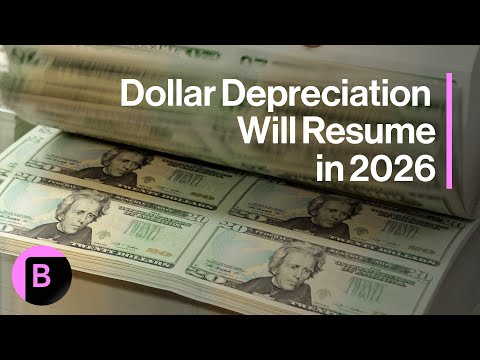
Dollar Depreciation Will Resume in 2026: 3-Minutes MLIV
Bloomberg Television· 2025-11-28 10:29
Mark the dollar. I think we will resume the structural depreciation trend next year. I think there are potentially a number of factors, right, in that the most important is because of the Trump administration's pressure on the Fed.We know that the setting for monetary policy, wherever it's at, will be easier than Orthodox or Orthodox economics would recommend. And that is at a point when the rest of the world is coming, generally coming to the end of their easing cycles. I still think that the trade dynamic ...
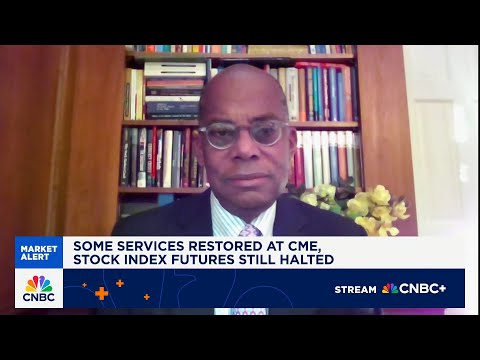
Market Movers: JPMorgan Adjusts Deutsche Telekom Target, Japan Bond Yields Tick Up, CME Futures Halted
Stock Market News· 2025-11-28 04:08
Group 1: Deutsche Telekom - JPMorgan has lowered its price target for Deutsche Telekom shares to €39 from €43.5, indicating a more cautious near-term outlook for the company [3][4][9] - The adjustment reflects evolving market conditions, competitive pressures, or changes in anticipated growth trajectories for Deutsche Telekom [4] Group 2: Japanese Government Bonds - The yield on Japan's 30-year government bond has increased by 3 basis points, reaching 2.845%, indicating continued upward pressure in the Japanese bond market [5][9] - This rise in yields is influenced by global interest rate dynamics, domestic inflation expectations, and the Bank of Japan's monetary policy stance [6] Group 3: CME Group - CME Group has temporarily halted commodities futures trading due to technical issues affecting its Globex electronic trading system, impacting a range of products including cryptocurrencies [7][8][9] - The halt affects futures and options contracts across various asset classes, with gold and silver futures experiencing heightened attention prior to the disruption [8][9]



X @Bloomberg
Bloomberg· 2025-11-27 18:52
Formal job creation collapsed in October, a sign that Brazil’s tight monetary policy is finally reaching some of the labor market’s most resilient pockets https://t.co/duGMWpa2WF ...
2026 年全球固定收益市场展望:多主题交织的交易-利差、跨市场宏观风险与前端估值-Global Fixed Income Markets 2026 Outlook_ Trading a mixed bag of themes_ carry, cross-market macro risks and front-end valuations
2025-11-27 05:43
Summary of J.P. Morgan Global Fixed Income Markets 2026 Outlook Industry Overview - **Industry**: Global Fixed Income Markets - **Company**: J.P. Morgan Securities plc Key Themes and Core Views - **Baseline Macro View**: Growth is expected to run at or above potential across most developed markets (DM), with inflation declining but remaining sticky above target in several jurisdictions [8][18] - **Central Bank Actions**: - Most DM central banks are expected to either maintain current rates or conclude easing cycles in the first half of 2026. - The Federal Reserve (Fed) is anticipated to cut rates by 50 basis points (bp) and the Bank of England (BoE) by 75 bp, while the Bank of Japan (BoJ) is expected to hike by 50 bp by the third quarter of 2026 [8][18] - **Yield Forecasts**: - 10-Year U.S. Treasuries (UST) forecasted at 4.35%, 10-Year Bunds at 2.75%, and 10-Year Gilts at 4.75% by the fourth quarter of 2026 [8][18][21] - **Market Risks**: The U.S. presents the widest risk distribution due to personnel and fiscal dominance issues, adding uncertainty to the Fed's outlook [8][18] Trading Recommendations - **Treasuries Strategy**: - A recommendation for a 50:50 weighted 2s/5s/10s belly-cheapening fly, anticipating cheapening in the 5-Year sector as the Fed goes on hold in the second half of 2026 [8][18] - **Cross-Market Divergences**: - Suggested buying payers on 5-Year SOFR rates funded by selling payers on 5-Year EUR rates and buying calls on June 2026 SONIA vs SOFR [8][18] - **Euro Area Strategy**: - Expectation for 10-Year Bund yields to remain range-bound, with a forecast of 2.65% by mid-2026 and 2.75% by year-end [9][19] - **UK Strategy**: - Anticipation of the BoE easing by 25 bp in December and two more cuts in the first half of 2026, targeting a Bank Rate of 3.25% [10][18] - **Scandinavian Markets**: - Both Riksbank and Norges Bank expected to stay on hold, with a recommendation for Jun26/Dec26 SEK FRA curve flattener as a carry trade [11][18] - **U.S. Market Dynamics**: - Expectation for yields to remain range-bound initially, with a rebound anticipated once the Fed goes on hold in spring 2026 [13][18] Additional Insights - **Inflation and Economic Resilience**: Despite inflation being stickier than expected, DM growth has shown surprising resilience, with recent data indicating disconnects between consumer sentiment and capital expenditure [22][18] - **Market Volatility**: Increased volatility is expected in the second half of 2026, particularly in France as the 2027 presidential election approaches [19][18] - **Interest Rate Forecasts**: - Detailed interest rate forecasts for various countries, including the U.S., UK, Euro area, Japan, and Australia, with specific rates and changes outlined for 2026 [16][21] This summary encapsulates the key points from the J.P. Morgan Global Fixed Income Markets 2026 Outlook, highlighting the anticipated economic conditions, central bank actions, trading strategies, and potential risks in the market.
Bank of Korea Holds Steady as It Flags Higher Growth, Inflation
WSJ· 2025-11-27 01:10
Core Viewpoint - South Korea's central bank has decided to maintain its policy rate at 2.50% for the fourth consecutive meeting while simultaneously raising its growth and inflation forecasts [1] Group 1 - The central bank's decision to keep the policy rate unchanged indicates a cautious approach amid changing economic conditions [1] - The bank's revised growth and inflation forecasts suggest an optimistic outlook for the South Korean economy [1]
CNBC Daily Open: An early Thanksgiving celebration in U.S. markets
CNBC· 2025-11-27 01:00
Market Performance - The S&P 500, Dow Jones Industrial Average, and Nasdaq Composite all recorded a fourth consecutive day of gains, indicating a positive market sentiment leading into Thanksgiving [1] Company Insights - Oracle shares advanced approximately 4% following a recommendation from Deutsche Bank, which suggested that the recent price pullback offers an attractive entry point for investors [2] - Other technology and AI-related stocks, including Nvidia and Microsoft, also experienced gains in response to Oracle's performance [2] Economic Outlook - Thanksgiving week is typically strong for the markets, with positive investor sentiment noted [3] - The futures market indicates an 85% probability that the U.S. Federal Reserve will cut interest rates by a quarter percentage point in December, which could impact market performance if expectations are not met [3][4] - If the Federal Reserve does not meet expectations, a potential sell-off could occur, although some analysts believe this is unlikely [4] Future Projections - Optimistic targets for the S&P 500 by the end of 2026 have been suggested, with estimates ranging from 7,400 by CFRA Chief Investment Strategist Sam Stovall to as high as 8,000 by JPMorgan [5] - The expectation of looser monetary policy is believed to support stock prices, contributing to a positive outlook for investors in 2025 and beyond [5]

X @Bloomberg
Bloomberg· 2025-11-26 12:17
Brazil’s mid-month inflation slowed to the target range earlier in November for the first time since January as tight monetary policy cools demand https://t.co/xblNpbHGMb ...