Autonomous Delivery

Search documents
DoorDash launches delivery robot in latest push into autonomous technology
CNBC· 2025-09-30 13:00
Core Insights - DoorDash has introduced a new autonomous delivery robot named Dot, marking its first significant move into autonomous vehicle technology [1][2] - The robot is designed to handle complex delivery scenarios and aims to assist local merchants by providing an efficient delivery solution [2][3] Group 1: Technology and Features - Dot can navigate busy streets, parking lots, and sidewalks, reaching speeds of up to 20 miles per hour and carrying up to six pizza boxes or 30 pounds of items [2][3] - The robot is equipped with eight cameras and three lidar sensors to navigate various road scenarios, including crowded parking lots and blocked bike lanes [4] - An internal camera ensures food quality, and a smart scale feature weighs orders to detect missing items, reportedly reducing missing item complaints by up to 30% [4] Group 2: Market Context and Expansion - The trend of autonomous delivery is gaining traction, with competitors like Uber also exploring partnerships with drone startups for food delivery [3] - DoorDash has been testing Dot in Phoenix and plans to expand its use to other metropolitan areas, integrating it into a new autonomous delivery platform that includes drone delivery where applicable [3]


Serve Robotics Expands to Chicago, Bringing Autonomous Deliveries to the Windy City with Uber Eats
Globenewswire· 2025-09-30 11:30
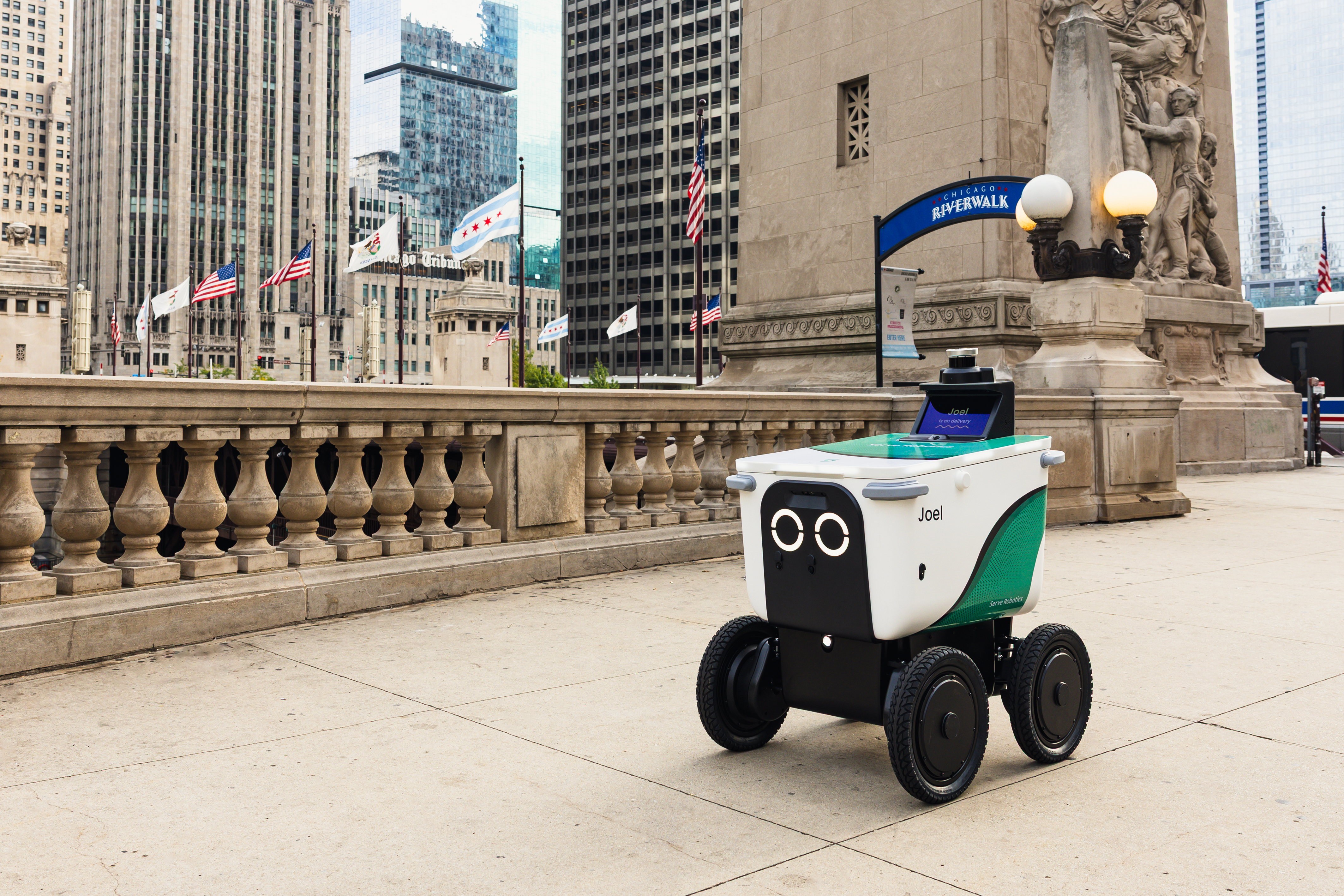
Core Insights - Serve Robotics Inc. has launched its autonomous sidewalk delivery service in the Chicago metro area, marking its first expansion into the Midwest [1][3] - The service will operate across 14 neighborhoods in Chicago, providing contact-free delivery from over 100 restaurants to hundreds of thousands of households [3][4] - The company aims to deploy 2,000 AI-powered delivery robots across the U.S. by the end of 2025 [5] Company Overview - Serve Robotics develops AI-powered, low-emissions sidewalk delivery robots, focusing on sustainable and economical delivery solutions [7] - The company was spun off from Uber in 2021 and has completed tens of thousands of deliveries for partners like Uber Eats and 7-Eleven [7] - Serve has multi-year contracts, including a signed agreement to deploy up to 2,000 delivery robots on the Uber Eats platform across multiple U.S. markets [7]

Serve Robotics Expands to Chicago, Bringing Autonomous Deliveries to the Windy City with Uber Eats
Globenewswire· 2025-09-30 11:30
Core Insights - Serve Robotics Inc. has launched its autonomous sidewalk delivery service in the Chicago metro area, marking its first expansion into the Midwest [1][5] - The service will operate across 14 neighborhoods in Chicago, providing contact-free delivery from over 100 restaurants to hundreds of thousands of households [3][4] Company Overview - Serve Robotics develops AI-powered, low-emissions sidewalk delivery robots aimed at making delivery sustainable and economical [7] - The company was spun off from Uber in 2021 and has completed tens of thousands of deliveries for partners like Uber Eats and 7-Eleven [7] - Serve has contracts to deploy up to 2,000 delivery robots on the Uber Eats platform across multiple U.S. markets by the end of 2025 [5][7] Strategic Partnerships - The ongoing collaboration with Uber Eats is central to Serve's expansion strategy, enhancing the customer delivery experience [4] - The partnership aims to redefine delivery convenience by integrating autonomous delivery into more neighborhoods [4]


Uber Invests in Drone Delivery With Flytrex Partnership
PYMNTS.com· 2025-09-18 14:04
Core Insights - Uber has initiated a partnership with Flytrex for autonomous drone food delivery, marking its first investment in this area [2][3] - The service is set to launch in Uber Eats pilot markets in the U.S. by the end of the year, leveraging Flytrex's drone technology and Uber's logistics capabilities [2][3] - Flytrex has successfully delivered over 200,000 meals in the past three years, highlighting the potential of drone delivery in suburban areas [3] Company Developments - The collaboration combines Flytrex's FAA-authorized drone delivery system with Uber's established logistics network [2] - Uber has prior experience in autonomous delivery, having previously launched robotic delivery operations in the U.S. and Japan [3][4] - The company has partnered with Avirde to utilize sidewalk robots for food delivery in select U.S. cities [5] Industry Trends - The future of delivery is expected to expand beyond food, with potential applications for medications, parcels, and groceries [6] - Robots are anticipated to play a role in reverse logistics, facilitating product returns and local commerce [6][7] - The use of delivery robots is projected to significantly reduce last-mile delivery costs [7]
Uber Technologies ($UBER) | IonQ ($IONQ) | Lyft ($LYFT) | Ballard Power Systems ($BLDP)
Youtube· 2025-09-18 13:30
Group 1 - Uber Technologies is partnering with Flightrex to launch autonomous drone deliveries for Uber Eats in the US by year end, integrating Flightrex's FAA certified drones and 200,000 delivery track record with Uber's global logistics platform [1] - The deal aims to cut delivery times, costs, and emissions while expanding its multimodal network beyond cars, bikes, and sidewalk robots [2] - Lyft and Whimo will launch a fully autonomous ride-hailing service in Nashville in 2026, with rides available first through the Whimo app and later integrated into Lyft's network [3] Group 2 - Lyft's Flex Drive unit will handle end-to-end fleet management, including a new AV facility to maximize vehicle uptime and provide a seamless experience for riders on both platforms [3] - Ballard Power Systems will debut its SC Move SC fuel cell module in October, offering 30% more end-of-life power, higher power density, and improved durability for city buses [3] - The 75 kW system simplifies vehicle integration, cuts life cycle costs, and is designed for a 25,000-hour service life to rival diesel performance [4]



Analysts See Autonomous Delivery Boosting DoorDash (DASH) Adoption Despite Market Competition
Yahoo Finance· 2025-09-10 03:55
Group 1 - DoorDash, Inc. (NASDAQ:DASH) is considered one of the most active stocks to buy, with a price target of $335 and a Market Outperform rating reaffirmed by Citizens JMP [1][2] - The potential impact of autonomous delivery technologies is highlighted, suggesting that it could significantly lower delivery costs and accelerate adoption for DoorDash [2] - The European Union is set to review DoorDash's $3.9 billion acquisition of Deliveroo, which is valued at approximately 2.9 billion pounds, marking a significant milestone in the meal delivery industry [2][3] Group 2 - DoorDash operates a delivery platform based in San Francisco and categorizes its business into five segments: platform services, advertising, non-restaurant services, international restaurants, and US restaurants [3]
X @TechCrunch
TechCrunch· 2025-08-25 15:04
Robomart's RM5 autonomous delivery robot can carry up to 50 pounds and deliver multiple customer orders at once. https://t.co/RAwJGNm1iw ...
DoorDash(DASH) - 2025 Q2 - Earnings Call Transcript
2025-08-06 22:00
Financial Data and Key Metrics Changes - The company reported an annualized advertising revenue run rate exceeding $1 billion, marking a rapid growth trajectory in this segment [8][12][15] - The net revenue margin expanded as anticipated, with the take rate in Q2 aligning with expectations, driven by seasonal Dasher costs and improvements in product quality [57][60] Business Line Data and Key Metrics Changes - New verticals experienced strong growth, outpacing the core restaurant business, with expectations to become volume share leaders within the next year [28][31] - DashPass membership growth contributed significantly to order frequency, with more users ordering from new verticals [32][40] Market Data and Key Metrics Changes - The international business saw all-time high monthly active users (MAUs), driven by product improvements and the introduction of new categories [75][78] - The U.S. market continues to show resilience, with new customer cohorts growing and existing cohorts engaging more frequently [49][55] Company Strategy and Development Direction - The company is focused on enhancing product quality and user experience, which is seen as essential for long-term growth [11][50] - The acquisition of Symbiosis is aimed at scaling advertising opportunities while maintaining a best-in-class consumer experience [12][14] Management's Comments on Operating Environment and Future Outlook - Management expressed confidence in the ongoing strength of new customer cohorts and the potential for further market expansion [49][52] - The company is committed to leveraging AI to improve operational efficiencies and user experience in the coming months [20][24] Other Important Information - The company is investing in automation and efficiency improvements across various business functions to drive long-term profitability [68][70] - The integration of Seven Rooms is expected to enhance the company's B2B offerings, although its immediate financial impact will be minimal [90][92] Q&A Session Summary Question: What drove the strength in DashPass membership growth? - Management highlighted that improvements in product quality and user experience have been key drivers of DashPass growth, with more users engaging with the platform [40][41] Question: How is the advertising revenue scaling post-Symbiosis acquisition? - Management noted that the advertising business is progressing healthily, with a focus on consumer experience and effective return on ad spend [12][15] Question: What role will AI play in future operations? - Management discussed plans to leverage AI for enhancing user experience and operational efficiencies, particularly in coding and repetitive tasks [20][24] Question: How are new verticals contributing to customer growth? - New verticals are growing rapidly, with increased engagement from both new and existing cohorts, indicating strong underlying demand [28][30] Question: What is the outlook for the retail business? - Management indicated that the retail segment is still in its early stages but is growing rapidly, with significant potential for future development [113][114]
Serve Robotics and Little Caesars Launch Autonomous Robot Delivery Via Uber Eats
Globenewswire· 2025-08-05 20:15
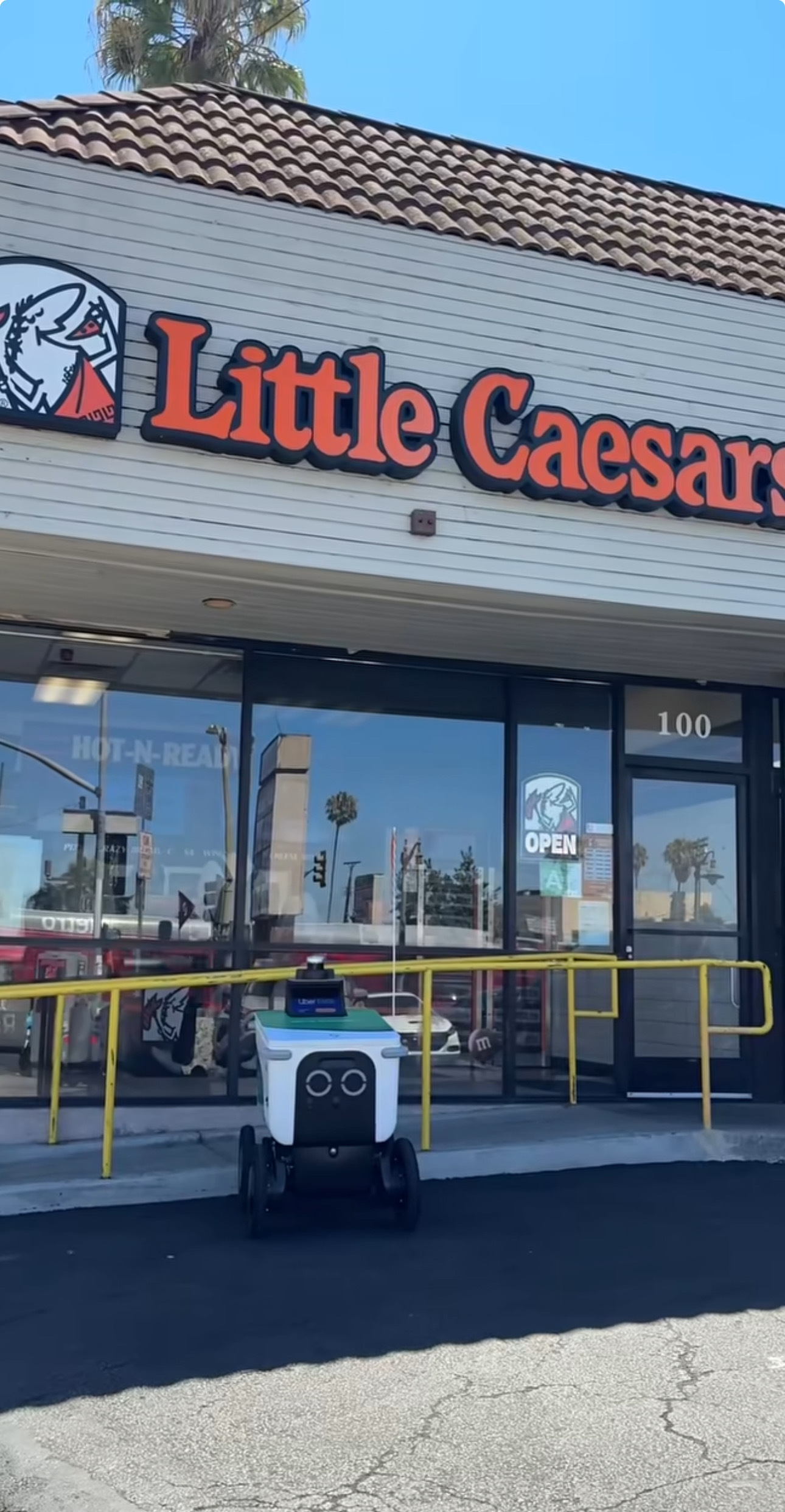
Core Insights - Serve Robotics and Little Caesars have partnered to deliver pizzas using autonomous delivery robots in Los Angeles via Uber Eats [1][2][4] - Serve's third-generation robots can carry up to four large 16-inch pizzas along with additional items while maintaining food quality [3] - The partnership aims to enhance customer delivery experience and align with Little Caesars' commitment to innovation and sustainability [4] Company Overview - Little Caesars is the third-largest pizza chain globally, founded in 1959, with a presence in all 50 U.S. states and 30 countries [5][7] - The brand is known for its HOT-N-READY® pizza and innovative services like the Pizza Portal® pickup [6] - Little Caesars emphasizes quality ingredients and aims to reduce its environmental footprint through technology [4][6] Industry Context - The partnership with Serve Robotics is part of a broader trend in the $150 billion global pizza industry towards automation and enhanced delivery solutions [7][9] - Serve Robotics, spun off from Uber in 2021, focuses on sustainable and economical delivery solutions, having completed tens of thousands of deliveries [9]
Serve Robotics' Top Line Gains Traction: Can It Sustain the Momentum?
ZACKS· 2025-07-09 14:01
Core Insights - Serve Robotics Inc. is experiencing early revenue traction with its autonomous delivery model, posting revenues of $440,000 in Q1 2025, a 150% sequential increase [1][10] - The company has deployed 250 Gen 3 delivery robots in new markets like Miami and Dallas, leading to a 75% increase in delivery volume and a 50% rise in its restaurant partner network to over 1,500 [2][10] Revenue Breakdown - In Q1 2025, software services contributed $229,000, while fleet revenues (including delivery and branding) accounted for $212,000, reflecting a 20% quarter-over-quarter increase [3] - Gross margins improved by 40% quarter over quarter, although costs increased by $1 million due to fleet operations and market launches [4] Future Projections - Serve Robotics anticipates Q2 2025 revenues between $600,000 and $700,000, indicating a growth of 35%-60% quarter over quarter [5] - The company aims for an annualized run rate of $60 million to $80 million once its fleet of 2,000 robots is fully deployed, expected by 2026 [5] Competitive Positioning - Serve Robotics is drawing strategic inspiration from industry leaders like Uber and Amazon, employing similar growth tactics [6][7] - The company is focusing on regional scaling, fleet efficiency, and digital monetization, akin to Amazon's cost-optimized infrastructure strategy [8] Stock Performance and Valuation - Serve Robotics shares have surged 97.2% over the past three months, outperforming the industry growth of 16.1% [9] - The company trades at a forward price-to-sales ratio of 24.76, significantly higher than the industry average of 19.49 [12]