Capital Allocation Strategy

Search documents
Talos Energy Announces Credit Facility Borrowing Base Reaffirmation and Maturity Extension
Prnewswire· 2026-01-21 11:45
Core Viewpoint - Talos Energy Inc. has successfully entered into an Amended and Restated Credit Agreement, reaffirming its borrowing base at $700 million and extending the maturity date to January 20, 2030, which reflects the company's commitment to financial flexibility and strategic investment [1][2]. Financial Position - The reaffirmation of the borrowing base and the maturity extension demonstrate the quality of Talos's asset base and its disciplined capital allocation strategy [2]. - The company aims to maintain a resilient balance sheet to navigate commodity price cycles and invest in high-return projects [1]. Strategic Focus - Talos Energy is focused on maximizing long-term value through its Exploration & Production business in the United States Gulf of America and offshore Mexico [3]. - The company leverages decades of technical and operational expertise to acquire, explore, and produce assets while emphasizing safe and efficient operations, environmental responsibility, and community impact [3].



Healthpeak Announces Transaction Activity Amounting $925 Million
ZACKS· 2026-01-14 16:26
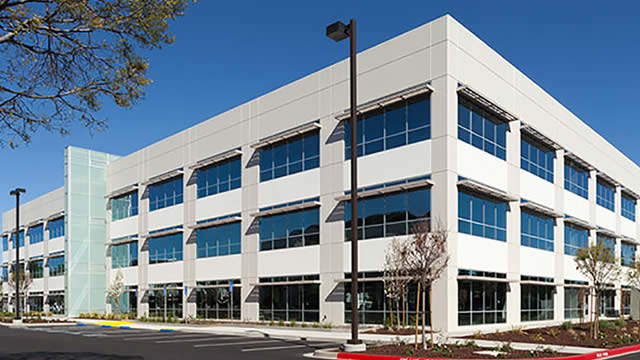
Core Insights - Healthpeak Properties, Inc. announced transaction activity totaling approximately $925 million, highlighting progress in its capital allocation strategy [1][8] Acquisition Details - In December 2025 and January 2026, Healthpeak acquired a 1.4-million square-foot campus on Gateway Boulevard in South San Francisco for $600 million, which is currently about 60% occupied and has significant density potential [2][8] - This acquisition expands Healthpeak's footprint in South San Francisco to roughly 6.5 million square feet across 210 acres, reinforcing its leadership in the biotechnology submarket [2] Dispositions and Future Transactions - During Q4 2025, Healthpeak completed outpatient medical dispositions totaling about $325 million, covering approximately 834,000 square feet of fully stabilized assets [3][8] - The company is in various stages of negotiations for additional outpatient medical sales, recapitalizations, and loan repayments, which could yield proceeds of about $700 million or more [4] Strategic Focus - Healthpeak's strategy involves capitalizing on strong demand for outpatient medical real estate by selling fully stabilized assets at low-6% cap rates and reinvesting in strategic life science assets with low-6% going-in yields [4] - This approach allows the company to acquire irreplaceable assets at a significant discount to replacement cost while enhancing its submarket positioning [4]


Prestige Consumer Healthcare (NYSE:PBH) FY Conference Transcript
2026-01-13 15:32
Prestige Consumer Healthcare (NYSE:PBH) FY Conference Summary Company Overview - **Company**: Prestige Consumer Healthcare - **Date**: January 13, 2026 - **Key Speakers**: CEO Ron Lombardi, CFO Chris Sacco, VP of IR and Treasury Phil Terpolilli Industry Context - The year 2025 was marked by significant external events including a new administration, tariffs, and government shutdowns, impacting consumer behavior and purchasing decisions [2][2] - The healthcare products industry remains resilient as consumers prioritize health-related purchases regardless of economic conditions [2][2] Core Business Insights - **Product Portfolio**: Prestige Consumer Healthcare offers a diverse range of health products, which are essential for treating illnesses, positioning the company well during economic fluctuations [2][2] - **Brand Strategy**: The company focuses on building and growing product categories through innovation rather than merely competing for market share [4][4] - **Innovation Examples**: The introduction of non-drowsy Dramamine and ginger chews for nausea exemplifies the company's strategy to expand product offerings and cater to consumer needs [6][7] Financial Performance - **Gross Margin Impact**: The company faced challenges with gross margins due to tariffs and disruptions in the eye care business, with tariffs costing approximately $5 million in fiscal 2026 [19][19] - **EBITDA Margin**: The company maintains a strong EBITDA margin of 33%-34%, indicating robust profitability despite margin pressures [21][21] Distribution Channels - The company has a broad distribution strategy, successfully adapting to consumer shopping preferences, particularly with growth in mass retail and e-commerce channels [13][14] - The Amazon business continues to grow at double-digit rates, while traditional drug and regional grocery channels are experiencing declines [14][14] M&A and Capital Allocation Strategy - **M&A Focus**: The company is actively seeking acquisition opportunities in the fragmented consumer healthcare market, with a disciplined approach to evaluating potential brands [25][29] - **Capital Allocation**: The company plans to balance M&A, share repurchases, and cash build, expecting to generate $1 billion in free cash flow over the next four years [26][26] International Business - The international segment has been performing well, contributing over 10% of total revenue, with brands like Hydralite and FESS showing strong growth [32][32] Private Label Competition - The company acknowledges the presence of private label products but emphasizes its focus on niche brands with strong consumer trust, which helps mitigate the impact of private label competition [37][38] Women's Health Segment - Brands like Monistat and Summer's Eve are positioned for growth, with Monistat achieving a market share of approximately 55% [41][41][42] Conclusion - Prestige Consumer Healthcare is well-positioned for future growth through a diversified product portfolio, strong brand strategies, and a proactive approach to market changes and consumer needs. The company remains focused on innovation and strategic acquisitions to enhance its market presence and profitability.

Berkshire Hathaway is a Scrooge Stock. Will It Have a Change of Heart and Start Paying Dividends in 2026?
Yahoo Finance· 2025-12-18 18:50
Core Viewpoint - Berkshire Hathaway has been selling more stocks than it has been buying, leading to a significant cash position of $381.7 billion, and is considering initiating dividend payments as Warren Buffett prepares to step down in 2026 [1][5][8]. Investment Strategy - Berkshire Hathaway has historically focused on acquiring companies and making stock investments, achieving a remarkable 6 million percent return since 1965, significantly outperforming the S&P 500's 46,000% return [2]. - The company has not paid dividends since 1967, preferring to reinvest earnings to generate higher returns for shareholders [3][5]. Recent Financial Performance - In the third quarter, Berkshire generated an operating profit of $13.5 billion, up from $10 billion year-over-year, and net income increased from $26.3 billion to $30.8 billion [9][10]. - The company holds approximately $360 billion in T-bills, benefiting from higher interest rates, although falling rates may impact future income generation [7]. Potential Changes in Capital Allocation - With Buffett's retirement approaching, there is speculation that Berkshire may alter its capital allocation strategy, potentially initiating dividend payments to provide shareholders with income [4][8][12]. - The company could afford to pay over $20 billion in dividends annually, which would be less than a quarter of its operating profit, allowing it to maintain its cash reserves for future investments [10][11].
Wendel (OTCPK:WNDL.F) 2025 Earnings Call Presentation
2025-12-12 13:30
Wendel's Strategic Transformation - Wendel operates two complementary value-creation engines: Wendel Investment Managers (WIM) and Wendel Principal Investments (WPI)[17] - WIM has >€46 billion in Assets under Management (AuM) and >€200 million in FRE (Fee Related Earnings) expected in 2026, with organic growth potential of approximately 15% per year[18] - WPI has €5.3 billion of Net Asset Value as of September 2025, targeting 12–16% annual Net Asset Value growth[19] - Wendel generated €3.6 billion through portfolio rotation over the past three years and reinvested €2.7 billion[21, 22] Capital Allocation and Shareholder Returns - Wendel plans to generate >€7 billion in cash by 2030 through active WPI portfolio rotation and WIM revenue and FRE growth[36, 39] - The company intends to return >€1.6 billion to shareholders by 2030, which is more than €35 per share[42, 45] - A share buyback program of approximately €300 million, representing up to 9% of the share capital, will be implemented[54, 55] - Approximately 90% of FRE (post tax) will be redistributed to shareholders, plus additional flows from PRE (Performance Related Earnings), along with 2.5% of WPI NAV distributed to shareholders[52] Scalian's Overview - Wendel invested €648 million in Scalian, holding an 81.5% equity stake[153, 154] - Scalian's pro forma revenue for FY25 is €523 million, with >20% CAGR from 2015 to 2025, including 12% organic growth[163] - Scalian aims to achieve >€0.7 billion in revenue organically by 2030, with 50% of revenue generated outside France[163, 195] Crisis Prevention Institute (CPI) - Wendel invested $569 million in CPI, holding a 97.6% equity stake[227] - CPI has distributed $134 million in dividends to Wendel since acquisition[227] - CPI's revenue for LTM June 2025 was $153 million, with an EBITDA margin of 50%[250, 252]
Maple Leaf Foods Announces Special Dividend
Prnewswire· 2025-12-08 11:00
Core Insights - Maple Leaf Foods has declared a special cash dividend of $0.60 per common share, totaling approximately $75 million, reflecting strong operating performance and disciplined capital management [1][2] - The company is transitioning from deleveraging to a balanced capital allocation strategy that enhances shareholder returns while investing in growth [2] - The capital allocation strategy focuses on three priorities: investing in growth and operational efficiency, maintaining a resilient balance sheet, and returning excess capital to shareholders [2][4] Financial Performance - Since 2022, Maple Leaf Foods has returned approximately $500 million to shareholders, including about $400 million in dividends and $100 million in share buybacks [4] - Following the special dividend, leverage is expected to remain within the company's investment-grade target range [4] Future Outlook - Further details regarding the company's long-term growth strategy, 2026 guidance, and capital allocation priorities will be shared in the first quarter of 2026 [5] - Regular dividends and the existing normal course issuer bid (NCIB) program will continue alongside the special dividend [3] Dividend Details - The special dividend will be considered an eligible dividend for the "Enhanced Dividend Tax Credit System" and will not be eligible for participation in the Dividend Reinvestment Plan (DRIP) [6]

Stella-Jones Unveils 2026-2028 Financial Objectives and Outlines its Future Growth Plans
Globenewswire· 2025-11-20 11:00
Core Viewpoint - Stella-Jones Inc. is set to unveil its financial objectives and capital allocation priorities for the 2026-2028 period, emphasizing a growth strategy focused on operational excellence and value creation for stakeholders [1][2]. Financial Objectives - The company has introduced a three-year financial objective framework, starting with the Q4 2026 financial reports, to maintain a three-year outlook [3]. - Key financial targets for 2026-2028 include: - Annual Sales: Targeting approximately $4,000 million by 2028, up from approximately $3,500 million [4]. - Annual Organic Sales Growth: Aiming for a compound annual growth rate (CAGR) of 4-5%, compared to 4.5% CAGR for 2023-2025 [4]. - EBITDA Margin: Targeting 17.5-18.5%, slightly below the 17.9% margin achieved in 2023-2025 [4]. - Earnings Per Share (EPS): Aiming for greater than 10% CAGR, a new metric introduced for better alignment with growth strategy [4]. Capital Allocation Strategy - The company expects to maintain an EBITDA-to-free cash flow conversion rate of approximately 50% [5]. - Key priorities in the capital allocation strategy include: - Broadening its vision to be the supplier of choice for utilities and railroads [5]. - Targeting annual sales of approximately $4 billion by 2028, supported by the current asset base [5]. - Maintaining an elevated EBITDA margin of 17.5-18.5% [5]. - Introducing an EPS growth target of greater than 10% to align with strategic objectives [5]. - Shifting to an opportunistic share repurchase strategy in line with growth priorities [5]. Maintenance and Growth Capital Expenditures - The company plans to invest approximately 2.5% of sales annually in maintenance capital expenditures, translating to $85 to $95 million per year [6]. - Strategic growth opportunities will involve investments in capital expenditures and value-accretive acquisitions [6]. Commitment to Financial Health - Stella-Jones is committed to maintaining an investment-grade credit rating and a net debt-to-EBITDA ratio within the range of 2.0x-2.5x, with some flexibility for working capital and strategic investments [7]. Key Assumptions - The financial targets for 2026-2028 are based on several assumptions, including organic sales growth in wood utility poles and railway ties, and the impact of recent acquisitions [13].


Block to Outline Multi-Year Outlook and Stock Repurchase Plan at Investor Day
Businesswire· 2025-11-19 13:55
Core Insights - Block, Inc. is hosting its 2025 Investor Day on November 19, 2025, at 9:00 a.m. Pacific Time in San Francisco [1] - The company will present full-year 2026 financial guidance and a three-year financial outlook during the event [1] - Block, Inc. is increasing its stock repurchase program by $5 billion as part of its broader capital allocation strategy [1] Financial Guidance - Full-year 2026 financial guidance will be provided during the Investor Day [1] - A three-year financial outlook will also be discussed [1] Capital Allocation Strategy - The company is increasing its stock repurchase program by $5 billion [1]


Medexus Announces US$51.0 million in New Credit Facilities and Intention to Commence Normal Course Issuer Bid, or NCIB, for its Common Shares
Newsfile· 2025-11-17 13:30
Core Viewpoint - Medexus Pharmaceuticals has announced a new senior secured credit agreement totaling US$51.0 million, which includes a US$21.0 million term loan and a US$5.0 million revolving loan facility, alongside plans to initiate a normal course issuer bid (NCIB) for its common shares [1][2][3]. Group 1: Credit Facilities - The new credit agreement includes a US$21.0 million term loan facility and a US$5.0 million revolving loan facility, with an additional US$10.0 million delayed draw feature for future licensing and acquisition transactions [1]. - The term loan facility has a maturity date of November 17, 2029, and the weighted average interest rate will initially be 6.74%, which is lower than the previous rate of 6.95% [2]. Group 2: Normal Course Issuer Bid (NCIB) - Medexus intends to commence an NCIB for its common shares, subject to approval from the Toronto Stock Exchange (TSX), allowing the company to purchase up to 10% of its public float over the next 12 months [3]. - The actual number of shares purchased under the NCIB will depend on market conditions and the company's discretion, with the aim of stabilizing the market for its common shares [4]. Group 3: Financial and Operational Outlook - The CFO of Medexus highlighted the significance of the new financing as a non-dilutive option that reflects the company's improving financial and operational profile since the launch of GRAFAPEX™ in February 2025 [2]. - The company is focused on capital allocation strategies that may include share repurchases if the market price is deemed undervalued, which could benefit both the company and its investors [4]. Group 4: Company Overview - Medexus is a leading specialty pharmaceutical company with a strong North American commercial platform, focusing on innovative treatments in hematology, hematology-oncology, rheumatology, and allergy [4].

Drilling Tools International (DTI) - 2025 Q3 - Earnings Call Presentation
2025-11-07 15:00
Financial Performance & Outlook - DTI's Q3 2025 revenue reached $38.8 million, reflecting a broad scope and scale[13] - Q3 2025 Adjusted Free Cash Flow was $5.6 million, demonstrating resilience in a lower rig count environment[13] - The company anticipates revenue between $145 million and $165 million for FY 2025[94] - Adjusted EBITDA for FY 2025 is projected to be between $32 million and $42 million, with an Adjusted Free Cash Flow between $14 million and $19 million[94] Geographic Expansion - Western Hemisphere accounted for 85% of Q3 2025 revenue, supported by 15 service and support facilities[13] - Eastern Hemisphere contributed 15% to Q3 2025 revenue, facilitated by 11 service and support facilities[13] - The company expects to double revenue contribution from the Eastern Hemisphere in FY 2025[95] Customer Base & Tool Rental - E&P Operators make up 47% of DTI's customers, Oilfield Service Companies account for 48%, and Other customers represent 5%[24] Strategic Acquisitions & Synergies - DTI achieved 100% of the $45 million in previously announced SDPI synergies by August 2025[56]