
Monetary Policy

Search documents
X @Bloomberg
Bloomberg· 2025-11-12 01:38
Market Trends - Australian home loans surged beyond expectations to a record high in Q3 [1] - Easier monetary policy has reignited credit growth and property demand [1] Monetary Policy Implications - The surge in home loans gives the Reserve Bank another reason to stay on the sidelines [1]
CICC's Miao on China's Bull Market
Bloomberg Television· 2025-11-11 16:20
What's the next step. The title report. The next step for China's bull markets, where they'll look for the next step.Yeah, I think, you know, for next year we still remain bullish. To me, I think the big change is really the global monetary order reconstruction from a, you know, strong dollar to a weak dollar and then from China us constantly in the trade negotiations to a G-2 framework. And then probably more importantly is the deep sea moment, not just in Asia but many other industries where there is a ma ...


Judy Shelton: It's a mistake for the Fed to deliberately restrict capital access through high rates
CNBC Television· 2025-11-11 14:22
Monetary Policy & Inflation - The Fed's 2% inflation target is considered by some to be above the original dual mandate, with a zero percent target preferred for pure price stability [2] - The Fed aims for stable inflation, but its track record in achieving this is questionable [3] - A little bit of deflation is considered a natural part of economic development due to technological and productivity improvements [6] - Current inflation measures, such as the Consumer Price Index (CPI) and the Personal Consumption Expenditures (PCE) indicator, may not accurately reflect the price inflation experienced by average American families [8] - The Fed's deliberate debasement of purchasing power necessitates inflation adjustments, creating confusion [9] Interest Rates & Economic Impact - The Fed's method of curbing inflation by restricting growth is questioned, particularly its reliance on Keynesian models that ignore the impact of lower taxes and less regulation on increasing supply [12][13] - High interest rates restrict access to capital, hindering real prosperity gained through the production of goods and services [15][21] - The Fed's actions empower the government at the expense of the private sector, especially small and medium-sized businesses [14] - Lowering rates is suggested to stimulate small business hiring by improving access to capital [21] Fiscal Policy & Government - Perpetual deficit spending is viewed as immoral and corrupt, creating purchasing power based on future, unproduced goods and services [16] - A balanced budget is crucial, and the inability to manage government finances is demoralizing [22][23] Alternative Monetary Solutions - A proposal suggests Treasury should issue a gold-backed long-term bond to compensate for losses in purchasing power, potentially competing with assets like Bitcoin [17] - Relinking the dollar to gold could be a cost-effective way for the government to borrow and signal a move towards sound finances [19][20]
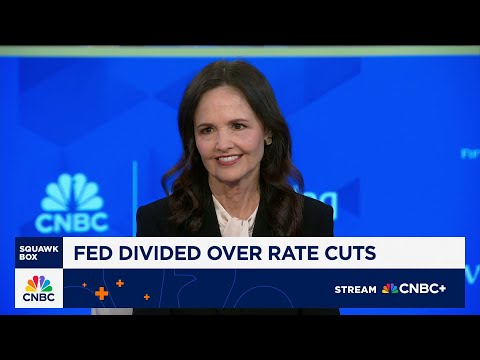
Fed's Musalem: We Have Limited Room to Cut Rates
Bloomberg Television· 2025-11-10 21:28
Economic Outlook - The economy has been resilient, with growth around 18% [2] - The labor market is near full employment but cooling, with both demand and supply decreasing [2][13] - Inflation is closer to 3% than the 2% target [2] - Consumption remains resilient, driven by wealth effects for higher-income households and increased debt for lower-income households [6][7] Consumer Finances - Consumer balance sheets are generally okay, but there was an increase in subprime loan and credit card defaults over the past year, which has since stabilized [8][9] - Lower-income consumers are increasingly using credit card debt to maintain consumption [7] - Many people are having more month than money, with increased visits to food pantries and requests for utility assistance [27] Company Concerns - Companies report that uncertainty has plateaued, allowing them to operate with a higher level of uncertainty [11] - Companies are experiencing higher costs, including those related to tariffs and insurance [11] - Companies closer to the consumer are having difficulty passing on costs due to pushback from buyers [12][13] - Companies are more concerned about non-interest costs, such as raw material and insurance costs, than interest costs [21] Labor Market - The labor market is cooling in an orderly way, with both supply and demand decreasing [13] - Compensation growth is reported to be between 35% and 4% [6] - Layoff announcements have been made, but weekly claims remain stable [13][14] Monetary Policy - Monetary policy is somewhere between modestly restrictive and neutral, closer to neutral [26] - The real federal funds rate is around 1%, which is the long-run neutral rate [26] - In the past year, the real federal funds rate has declined by 250 basis points, with 150 basis points from nominal interest rate reductions and 100 basis points from rising expected inflation due to tariffs [19] - There is limited room to ease policy further without it becoming overly accommodative [24][25] - It is important to bring inflation back towards 2% to allow households to catch up with their real incomes [28] Asset Prices - Financial conditions are very accommodative, and asset valuations are notable [29] - House prices and stock prices seem elevated relative to historical standards [30]

Fed's Musalem Sees Labor Market Cooling, Urges Caution on Rates
Bloomberg Television· 2025-11-10 15:36
Economic Outlook - The economy has been resilient, with growth around 18% annually, despite uncertainty [2] - The labor market has been near full employment but is cooling, with both demand and supply decreasing [2] - Inflation is closer to 3% than the 2% target [2] - Companies report resilient consumption, with growth being fine, and the labor market softening slightly [5] Consumer Finance - Higher-income households are consuming due to wealth effects from the stock market and home prices [7] - Lower-income households are taking on more credit card debt to maintain consumption [7] - Consumer balance sheets are generally okay, but there was an increase in subprime loan and credit card defaults over the past year, which have since stabilized [8][9] Business Concerns - Companies indicate uncertainty has plateaued, allowing them to operate with a higher level of uncertainty [11] - Some companies are passing on higher costs related to terrorism, insurance, and upstream production [11][12] - Companies closer to the consumer are facing difficulty passing on costs due to pushback from final buyers [12][13] Labor Market - The labor market is cooling in an orderly way, with both supply and demand decreasing [13] - Layoff announcements have been noted, but weekly claims remain stable [13][14] Monetary Policy - Monetary policy should consider both cyclical/demand-side factors and structural transitions in the economy [15][16] - The real federal funds rate has declined by 250 basis points in the past year, with 150 basis points from nominal interest rate reductions and 100 basis points from rising expected inflation due to tariffs [18][19] - Companies are more concerned about non-interest costs, such as raw material and insurance costs, than interest costs [20][21] - There is limited room to ease policy further without it becoming overly accommodative, with the real federal funds rate around 1%, which is the long-run neutral rate [25] Inflation and Household Impact - It's important to bring inflation back towards 2% to allow households to catch up with their real incomes [21][26][27] - People are increasingly experiencing "more month than money," going to food pantries, and requesting utility assistance [26][27] Asset Prices - Financial conditions are very accommodative, and asset valuations are notable, with house and stock prices appearing elevated [28][29]
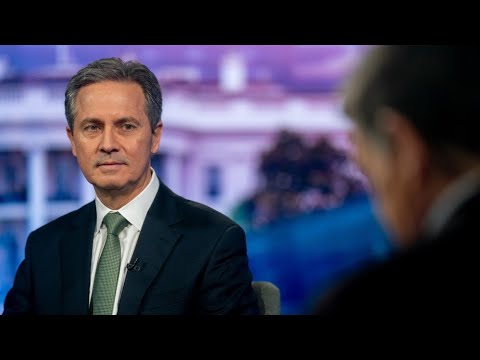
Fed’s Daly Warns Against Keeping Rates Too High for Too Long
Bloomberg Television· 2025-11-10 15:17
Inflation & Productivity Assessment - Inflation has been relatively contained in goods prices directly affected by tariffs [1] - Other inflation components show no significant surge, and inflation expectations remain well-anchored [1][16] - Productivity and GDP growth are increasing, while the labor market is slowing, indicating firms are seeking efficiency [2] - A 50 basis point adjustment has supported the labor market while maintaining restrictive policies to exert downward pressure on inflation [3] - The Fed aims to bring inflation back down to 2% to restore price stability [8] AI Impact & Business Outlook - Companies are reporting encouraging early signs of AI's positive impact on their bottom line and productivity [4] - AI is seen as potentially transformative, similar to electricity or the steam engine, with the potential to boost productivity and growth [25][26] - Businesses across various sectors are using AI to improve productivity [13] Labor Market Dynamics - Wage growth is moderating, reducing pressure from the cost side of labor [17] - A significant decrease in payroll growth is observed, with the underlying cause being debated [18] - Wage growth is slowing even in sectors heavily reliant on immigration, suggesting a demand shock [20][21] - The economy is currently in a low firing, low hiring period [22] Monetary Policy & Economic Outlook - The Fed is in a good position to evaluate information before making further decisions [6] - Policy adjustments have led to lower mortgage interest rates and increased activity in the housing and borrowing markets [29][30] - Monetary policy acts with a lag, influencing decisions for the next six months to a year [30][31] - The Fed relies on government data, private sector surveys, and direct engagement with businesses and consumers [32][33][34]

Fed's Daly Warns Against Keeping Rates Too High for Too Long
Youtube· 2025-11-10 15:17
Inflation and Productivity - Inflation remains contained in goods prices, with inflation expectations well anchored [1][16] - Productivity is rising alongside GDP growth, while the labor market is slowing, indicating firms are trying to do more with less [2][10] - The adjustment of 50 basis points has supported the labor market while maintaining a restrictive policy to exert downward pressure on inflation [3][8] Labor Market Dynamics - There is a significant slowdown in payroll growth, with wage growth moderating, indicating a negative demand shock [18][21] - The labor market is characterized by low hiring and firing rates, necessitating close monitoring of firms' actions [22][34] - Employers are exploring AI to improve productivity, but it is still early to assess its full impact [4][13] Monetary Policy Considerations - The Federal Reserve is focused on balancing inflation control with productivity gains, aiming to restore price stability to around 2% [8][14] - Financial market conditions are one of many inputs into decision-making, with a focus on achieving price stability and full employment [24][25] - Monetary policy acts with a lag, and decisions are made with a long-term perspective [30][31] Economic Indicators and Consumer Behavior - Observations of consumer behavior, such as retail activity and attendance at events, indicate a slower economy but continued participation [35][36] - The Fed relies on both government data and private sector surveys to inform its decisions, emphasizing the importance of on-the-ground insights [32][34] Committee Dynamics - The Federal Open Market Committee (FOMC) exhibits healthy differences of opinion, which is seen as a strength in policy-making during uncertain times [38][39] - Historical comparisons to the 1970s and 1990s are used to inform current policy discussions and decisions [7][11]

Fed’s Daly Cautions on Rate Duration Amid Economic Shifts; Wegovy Reveals Broader Liver Benefits
Stock Market News· 2025-11-10 14:08
Economic Insights - Federal Reserve Bank of San Francisco President Mary Daly emphasized the Fed's careful approach to interest rates, stating that the Federal Open Market Committee (FOMC) is currently in a "good place" following recent policy adjustments [2][9] - Daly warned against maintaining high interest rates for too long, noting that the labor market is experiencing slowing wage growth, which indicates a "negative demand shock" [3][9] Pharmaceutical Developments - Novo Nordisk announced significant findings regarding its drug Wegovy® (semaglutide 2.4 mg), revealing liver health-related benefits in adult patients with metabolic dysfunction-associated steatohepatitis (MASH) and liver scarring, independent of weight loss [4][9] Trade Relations - Arrow China Electronics Trading and its affiliates were removed from the U.S. Commerce Department's Entity List, allowing Arrow Electronics to resume normal transactions after previous trade restrictions were lifted [5][9] Cryptocurrency Market - Coinbase launched a new platform for digital token offerings, enabling individual investors to purchase digital tokens before they are officially listed on the exchange, with blockchain startup Monad being the first project to utilize this service [6][9] Geopolitical Discussions - An Israeli government spokesperson confirmed discussions between Prime Minister Netanyahu and Jared Kushner regarding post-conflict plans for Gaza, focusing on disarming Hamas and demilitarizing the region [7][9]




This Warren Buffett Stock Was Just Downgraded by a Wall Street Analyst. Here's What Investors Should Know Before Selling.
The Motley Fool· 2025-11-10 09:50
Core Viewpoint - Berkshire Hathaway has been downgraded to underperform by analyst Meyer Shields, indicating potential challenges ahead for the company [2][3]. Group 1: Analyst Concerns - Meyer Shields highlights that a significant portion of Berkshire's portfolio is concentrated in insurance, particularly with GEICO, which operates in a commoditized auto insurance market [4][5]. - GEICO's strategy of slowing down rate increases could negatively impact Berkshire's profitability margins [5]. - The Federal Reserve's anticipated loosening of monetary policy may lead to lower yields on Berkshire's substantial cash and short-term U.S. Treasury holdings, currently valued at $382 billion [7]. - Changes in energy policies under the Trump administration could phase out green energy tax credits, affecting the profitability of Berkshire's energy subsidiaries [8]. - Declining railroad activity, attributed to trade tensions with China, poses a risk to Berkshire's infrastructure investments [9]. Group 2: Historical Performance and Valuation - Despite current concerns, Berkshire Hathaway has demonstrated resilience over the long term, with a stock return of 5,502,284% from 1965 to 2024, significantly outperforming the S&P 500 [10][12]. - The company's price-to-book (P/B) ratio of 1.5 is only slightly above its 10-year average, suggesting that the stock is reasonably valued [13][15]. - The S&P 500 Shiller CAPE ratio is around 40, indicating that overall market valuations may be stretched, which could lead to corrections [18]. - Berkshire's strategy of maintaining a cash-rich balance sheet with Treasuries is viewed as a calculated move, positioning the company defensively in a volatile market [19].

Inflation Flip Gives Emerging Markets Edge Over Rich Nations
Yahoo Finance· 2025-11-10 08:45
Core Insights - Emerging-market bonds are experiencing a rally driven by a rare slowdown in global inflation trends, with some markets like Hungary, Brazil, and Egypt seeing gains exceeding 20% [1][5] - Investment managers, including Morgan Stanley Investment Management and Ninety One Plc, are positioning for further gains in local-currency debt, anticipating that central banks in emerging markets will have more room to cut interest rates compared to developed nations [2] - The average annual inflation in emerging markets has decreased to 2.47% in the July-September quarter, the lowest since early 2021, contrasting with a rise in inflation to 3.32% in developed economies [6] Group 1: Inflation Trends - A significant slowdown in inflation in emerging markets has been noted, with consumer prices growing more slowly than in developed nations for two consecutive quarters, a trend not seen for over 35 years [3] - The latest inflation data supports expectations for deeper and faster monetary easing in emerging markets, which could benefit the bond market [6] Group 2: Monetary Policy and Rate Cuts - Many emerging-market countries are already in a rate-cutting phase, with Mexico and Poland recently easing their policies, while others like Thailand, South Korea, Turkey, and India are expected to follow suit by year-end [7] - Despite the easing, most central banks are proceeding cautiously, maintaining rates above inflation levels, as seen in Brazil where the real rate is around 10% [7][8]