Monetary Policy

Search documents
Fed Chair Powell Says December Interest Rate Cut Is ‘Far From’ Guaranteed
Yahoo Finance· 2025-10-29 19:45
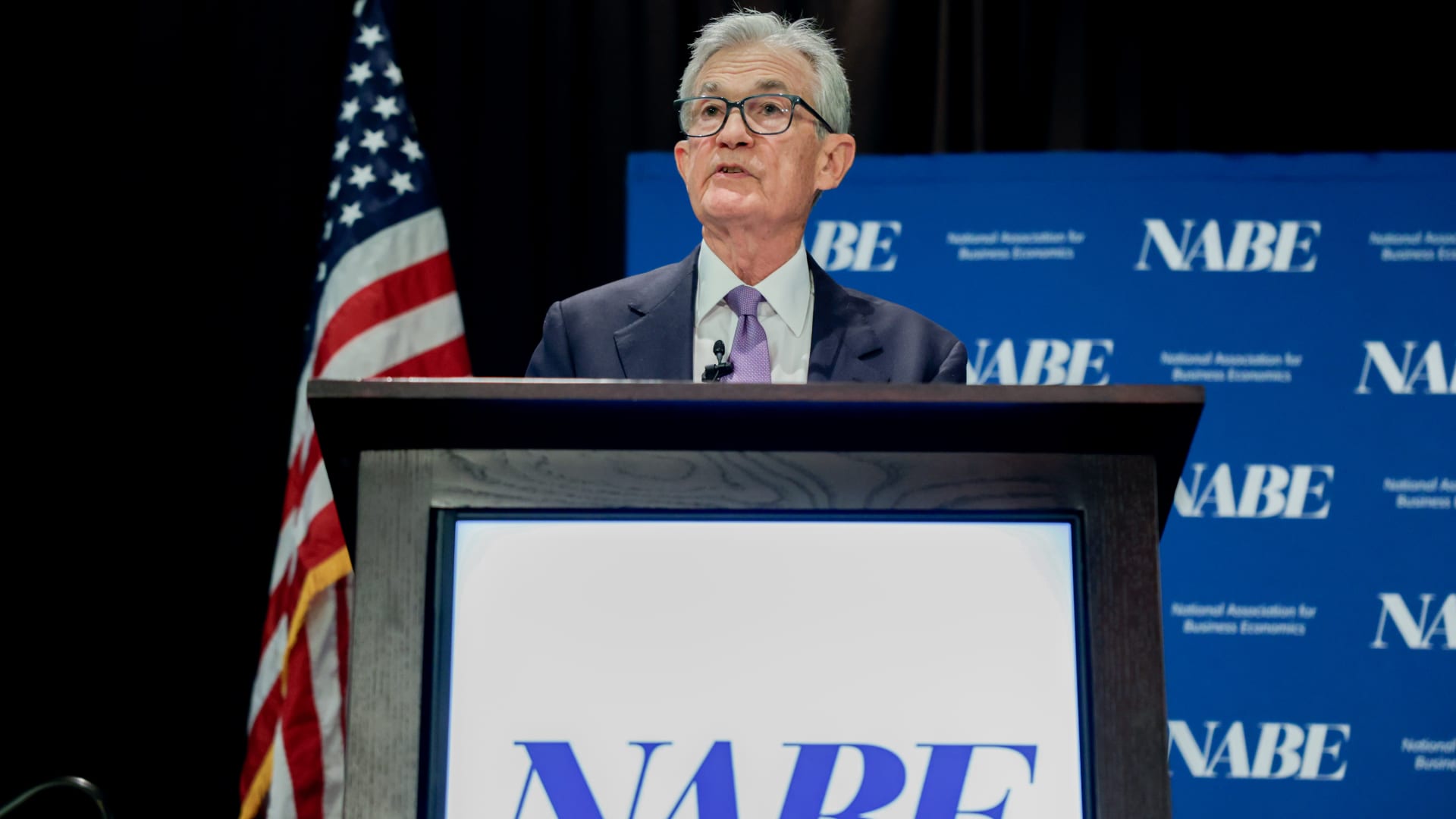
Alex Wong / Getty Images Fed Chair Jerome Powell said that a rate cut in December wasn't a done-deal. Key Takeaways Federal Reserve Chair Jerome Powell said it was "not a foregone conclusion" that the Fed will cut interest rates in December. Before Powell's press conference, financial markets had priced in a 90% chance of a December rate cut, which fell below 60% Wednesdsay afternoon. The Federal Reserve's policy committee won't necessarily cut interest rates in December, contrary to what financial ...
Powell Says December Fed Rate Cut 'Far From' Foregone Conclusion
Youtube· 2025-10-29 19:08
Group 1 - The near-term risks to inflation are tilted to the upside, while risks to employment are tilted to the downside, indicating a challenging situation for policy [1] - The framework emphasizes a balanced approach to promote both sides of the dual mandate, with increased downside risks to employment noted in recent months [2] - The decision-making process remains flexible, with the appropriate stance of monetary policy being determined by incoming data and evolving outlooks [3] Group 2 - There were strongly differing views on the approach for the December meeting, indicating that a further reduction in the policy rate is not guaranteed [4] - The policy direction is not on a pre-set course, highlighting the uncertainty in future monetary policy decisions [4]


Powell Says December Fed Rate Cut 'Far From' Foregone Conclusion
Bloomberg Television· 2025-10-29 19:08
Inflation & Employment Risks - Near-term inflation risks are tilted to the upside, while employment risks lean towards the downside [1] - Navigating the tension between employment and inflation goals presents a challenging situation with no risk-free policy path [1] Monetary Policy Stance - The framework emphasizes a balanced approach in promoting both sides of the dual mandate [2] - Downside risks to employment have increased in recent months, shifting the balance of risks [2] - The company judged it appropriate to take another step toward a more neutral policy stance [2] - The company remains well-positioned to respond in a timely way to potential economic developments [3] - The appropriate stance of monetary policy will be determined based on incoming data, the evolving outlook, and the balance of risks [3] - The committee continues to face two-sided risks in its discussions [3] Future Policy Decisions - Strongly differing views exist about how to proceed in December [4] - A further reduction in the policy rate at the December meeting is not a foregone conclusion [4] - Policy is not on a pre-set course [4]
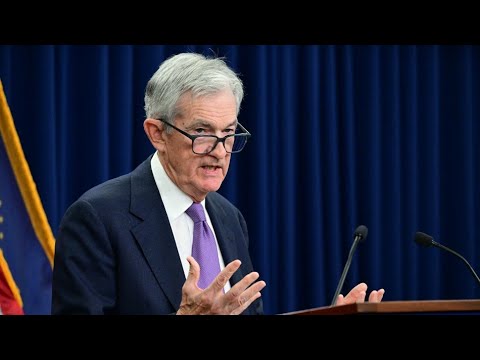
Fed cuts rates by a quarter percentage point to a range of 3.75% - 4%
CNBC Television· 2025-10-29 19:02
In support of our goals and in light of the balance of risks to employment and inflation, today the Federal Open Market Committee decided to lower our policy interest rate by a quarter percentage point. We also decided to conclude the reduction of our aggregate securities holdings as of December 1. I will have more to say about monetary policy after briefly reviewing economic developments.Available indicators suggest that economic activity has been expanding at a moderate pace. GDP rose at a 1.6% pace in th ...
Federal Reserve issues FOMC statement_20251030
FOMC· 2025-10-29 19:00
Core Points - Economic activity is expanding at a moderate pace, with job gains slowing and a slight increase in the unemployment rate, although it remains low [1] - Inflation has risen and remains somewhat elevated, with the Federal Reserve aiming for a long-term inflation rate of 2 percent [2] - The Federal Reserve has decided to lower the target range for the federal funds rate by 0.25 percentage points to 3.75% to 4% [3] Economic Indicators - Job gains have slowed this year, and the unemployment rate has edged up but remains low through August [1] - Recent indicators are consistent with the developments in job gains and unemployment [1] - Inflation has moved up since earlier in the year and remains somewhat elevated [1] Monetary Policy Decisions - The Federal Open Market Committee (FOMC) has lowered the interest rate paid on reserve balances to 3.90%, effective October 30, 2025 [8] - The FOMC will conduct open market operations to maintain the federal funds rate within the target range of 3.75% to 4% [8] - The FOMC has approved a 0.25 percentage point decrease in the primary credit rate to 4.0%, effective October 30, 2025 [8] Committee Actions - The FOMC is committed to supporting maximum employment and returning inflation to its 2% objective [3] - The Committee will continue to monitor incoming information and adjust monetary policy as necessary [4][5] - Voting members included Jerome H. Powell and others, with dissenting votes from Stephen I. Miran and Jeffrey R. Schmid [6]
Fed Chair Powell: Downside risks to employment have risen in recent months
CNBC Television· 2025-10-29 18:57
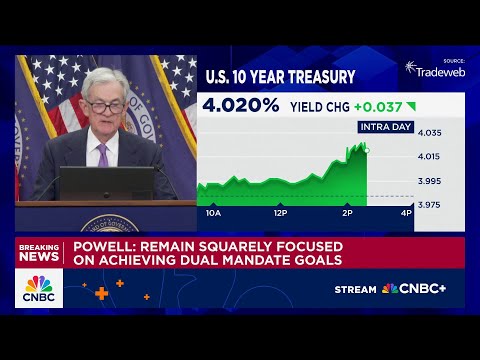
Good afternoon. Um, my colleagues and I remain squarely focused on our achieving our dualmandate goals of maximum employment and stable prices for the benefit of the American people. Although some important federal government data have been delayed due to the shutdown, the public and private sector data that have remained available suggest that the outlook for employment and inflation has not changed much since our meeting in September.Conditions in the labor market appear to be gradually cooling and inflat ...
The Bank of Canada signaled it has emptied its toolbox to help an economy hurting from the trade row with the U.S.
WSJ· 2025-10-29 18:44
Core Insights - The central bank has indicated that it has exhausted its monetary policy tools to support an economy affected by the ongoing trade dispute with the U.S. [1] Economic Impact - The economy is currently facing challenges due to the trade row, which has led to a need for intervention from the central bank [1]

Stocks Tumble as Powell Cites 'Strongly Differing' Views About December Meeting
Barrons· 2025-10-29 18:41
Core Viewpoint - The stock market experienced a decline following comments from Federal Reserve Chair Jerome Powell, indicating "strongly differing views" among officials regarding the monetary policy direction for December [1]. Market Performance - The S&P 500 index fell nearly 0.4%, while the Dow Jones Industrial Average decreased by 0.3%. The Nasdaq Composite remained slightly positive, with an increase of less than 0.1% [2].
Bank of America reconsiders gold forecast after tumble
Yahoo Finance· 2025-10-29 18:15
Economic Overview - The U.S. economy is showing signs of weakness, with real GDP growth at 1.6% in the first half of 2025, down from 2.8% in 2024, indicating potential underlying issues despite positive top-line numbers [3] - Unemployment rose to 4.3% in August, the highest since 2021, with nearly 1 million layoffs reported through September, a 55% increase compared to the same period in 2024 [2] Inflation and Consumer Behavior - Inflation has increased by 3% year over year as of September, up from 2.3% in April, largely influenced by tariffs affecting corporate supply chains [1] - Companies are reporting a decline in visits from lower-income customers, with McDonald's and O'Reilly Auto Parts noting reduced spending on dining and auto repairs, respectively [6] Gold Market Dynamics - Gold prices have recently experienced volatility, dropping 3.5% after a significant 6% decline on October 21, with prices falling below $4,000 per ounce, raising concerns among investors [5] - Bank of America has revised its gold forecast, predicting a bearish target of $3,800 per ounce for Q4 2025, but sees potential for prices to rise to $5,000 per ounce in 2026 due to structural drivers remaining in place [11][16] Investment Strategies - Analysts suggest that long-term holders of gold will need to continue supporting demand through exchange-traded funds, while central banks are expected to diversify away from the U.S. Dollar [4] - Historical analysis indicates that adding a 5% gold allocation to traditional investment portfolios could yield higher returns, suggesting a shift towards a 60:20:20 portfolio structure [17]

Fed cuts rates for the second time this year, will end balance sheet run-off in December
CNBC· 2025-10-29 18:02
Core Viewpoint - The Federal Reserve has approved its second consecutive interest rate cut, lowering the benchmark overnight borrowing rate to a range of 3.75%-4%, despite limited visibility on the economy due to a government shutdown [2][3] Interest Rate Decision - The Federal Open Market Committee (FOMC) voted 10-2 to implement the rate cut, with dissenting opinions regarding the pace of the cut [2][3] - The decision to end quantitative tightening (QT) will take effect on December 1, 2025, marking a shift in the Fed's monetary policy approach [2][7] Economic Indicators - The Fed acknowledged uncertainty in economic conditions due to the suspension of key data collection, including nonfarm payrolls and retail sales [4] - Available indicators suggest moderate economic expansion, with job gains slowing and the unemployment rate remaining low [5][6] - Inflation remains elevated at an annual rate of 3%, influenced by higher energy costs and tariffs [6] Labor Market Concerns - The Fed expressed concerns over rising downside risks to employment, noting a flattening pace of hiring despite contained layoffs [6][7] - The balance between full employment and stable prices is becoming increasingly challenging for policymakers [7] Balance Sheet Management - The Fed's balance sheet, which expanded from over $4 trillion to nearly $9 trillion during the Covid crisis, will not return to pre-pandemic levels [10] - The end of QT has resulted in a reduction of approximately $2.3 trillion from the Fed's portfolio of Treasurys and mortgage-backed securities [8][10] Market Reactions - Markets had anticipated the end of QT either in October or by year-end, with major averages experiencing volatility but reaching record highs, particularly in Big Tech stocks [11][12] - Historical trends indicate that markets tend to rise following Fed rate cuts, although this could lead to higher inflation risks [12]