Interest Rate Cuts

Search documents
What Makes Trump's Fed Chair Pick "Puzzling" & Case Against Rate Cuts
Youtube· 2026-01-30 17:01
Core Viewpoint - The appointment of Kevin Walsh to the Fed raises questions about his potential stance on interest rates, given his hawkish history during his previous tenure from 2006 to 2011, which contrasts with the current administration's preference for lower rates [2][3][4]. Market Reaction - Following the announcement of Walsh's appointment, there was an initial rise in yields and a sell-off in risk assets, indicating market confusion and uncertainty regarding his future policies [7][8]. - The market is currently pricing in an increased expectation for rate cuts this year, despite strong economic indicators such as GDP growth and elevated inflation [10][12][14]. Economic Indicators - The economy is reportedly running at a nominal GDP growth of 3.5% to 4%, with fiscal stimulus and easy financial conditions contributing to this growth [12]. - Recent PPI data suggests inflation remains elevated, which could impact future PCE readings and complicate the case for rate cuts [12][13].


Interest Rate Changes Could Be on the Way Under Trump's Pick For Fed Chair
Investopedia· 2026-01-30 17:00
Core Viewpoint - The nomination of Kevin Warsh as the next Federal Reserve Chair could lead to a more cautious approach to interest rate cuts compared to other candidates [1][9]. Group 1: Nomination and Background - President Donald Trump announced Kevin Warsh as his nominee for the Federal Reserve Chair, set to take over in May when Jerome Powell's term ends [1][2]. - Warsh served as a Fed governor from 2006 to 2011 and was selected over other finalists, including Trump Economic Advisor Kevin Hassett and BlackRock Executive Rick Rieder [2]. Group 2: Monetary Policy Implications - Warsh's selection may significantly influence the Federal Reserve's monetary policy and the fed funds rate, affecting borrowing costs across various loans [3]. - While Warsh has advocated for lower interest rates, he may not be as "dovish" as other candidates, indicating a more measured approach to rate cuts [4][9]. Group 3: Economic Context - The Federal Open Market Committee (FOMC) is currently divided on whether to cut rates to support a slowing job market or maintain higher rates to combat inflation above the 2% target [6]. - The new Fed Chair will inherit the challenge of balancing these conflicting economic pressures, as the job market has slowed while inflation remains high [7]. Group 4: Political Dynamics - Warsh's ability to implement rate cuts may be constrained by political pressures, including Trump's demands for significant cuts and ongoing investigations into committee members [8][10]. - There are concerns that if the Fed is pressured to cut rates sharply, it could undermine public confidence in its ability to control inflation, potentially leading to a self-fulfilling prophecy [10][11].

The Making Of A New Fed Chair
Seeking Alpha· 2026-01-30 12:00
Group 1: Market Trends - Volatility has returned to the market, with stocks and gold potentially moving in tandem rather than inversely [3] - Crude oil prices have reached their highest levels since summer, driven by increasing bets on strikes in Iran [8] - The tech sector is facing challenges, with Microsoft leading a decline in software stocks [8] Group 2: Corporate Developments - Wells Fargo has increased CEO Charlie Scharf's compensation by 28% to $40 million, raising comparisons with other major banks like JPMorgan and Goldman Sachs [4] - Apple reported a slight increase in stock price following record iPhone sales [8] - Sandisk has surged by 20% after a remarkable 130% year-to-date rally [9] Group 3: Federal Reserve and Economic Policy - President Trump is expected to announce his pick for the next Federal Reserve chair, with Kevin Warsh being a leading candidate [5] - Current Fed chair Jerome Powell has faced criticism from Trump for not cutting interest rates, despite claims that inflation is no longer a threat [7] - The Federal Reserve Board is currently full, but an opening will arise with the expiration of Fed Governor Stephen Miran's term [7]

Hong Kong’s luxury housing market sees rising interest with renewed city buzz
The Economic Times· 2026-01-30 06:20
Market Recovery - Hong Kong's housing market is showing signs of recovery, with home prices rising 3.25% in 2025, marking the first annual increase in four years [15] - The revival is supported by expectations for a strong fundraising year in the stock market, with international firms planning to open new branches in the city [15][1] - Mainland Chinese homebuyers have significantly contributed to clearing housing inventory, spending a record HK$138 billion in 2025, particularly in the luxury market [7][15] Residential Market Dynamics - Interest rate cuts have boosted mortgage demand and rising rents are encouraging residents to purchase homes [2][15] - Developers are regaining pricing power due to improved supply and demand dynamics, with some builders already planning to increase prices for existing projects [4][5] - Banks and property services firms anticipate residential price growth this year, with projections ranging from a 5% to a 10% increase [6][15] Commercial Real Estate Challenges - The commercial real estate market remains weak, with a vacancy rate for Grade A offices rising to 17.5% and rents falling by about 5.8% [9][15] - Investors are primarily focused on trophy assets in key business districts, while other areas struggle to attract tenants [9][10] - Commercial real estate transactions above HK$100 million increased by over 12% in 2025, the first rise since 2021, but international funds are largely absent from the market [11][12] Economic Influences - The Hong Kong Monetary Authority's interest rate cuts have alleviated loan payment pressures for builders and homebuyers, stabilizing overall asset prices [6][15] - The influx of over 230,000 new arrivals due to the government's talent program has driven residential rents to record highs, making home ownership more attractive [14][16] - The ongoing geopolitical tensions between China and the US may pose risks to the recovery, with limited catalysts for a major rebound in the property market without improvements in economic relations [8][15]

Best money market account rates today, January 29, 2026 (earn up to 4.1% APY)
Yahoo Finance· 2026-01-29 11:00
Core Insights - The article discusses the current state of money market accounts (MMAs) and highlights the importance of earning competitive interest rates as the Federal Reserve has recently cut rates [1][4][5]. Group 1: Current Interest Rates - The national average interest rate for money market accounts is 0.56%, but top rates can exceed 4% APY, comparable to high-yield savings accounts [3][9]. - Some banks are offering MMA rates above 4.5%, although such rates are becoming less common [9]. Group 2: Federal Reserve Rate Changes - The Federal Reserve maintained a target range for the federal funds rate of 5.25%–5.50% from July 2023 to September 2024, but has since made three rate cuts, bringing the current rate to 3.50%–3.75% [4][5]. - The decline in deposit account rates suggests that savers may have limited time to take advantage of higher MMA rates [5]. Group 3: Considerations for Savers - Money market accounts provide liquidity and safety, making them suitable for those with short-term savings goals or emergency funds [8]. - For conservative savers, MMAs are appealing due to FDIC insurance and the preservation of principal, while riskier investments may be necessary for long-term savings goals [8].
Powell hints rate cuts may be over as Fed sees stronger US economy
BusinessLine· 2026-01-29 01:01
Core Viewpoint - Jerome Powell, the Federal Reserve chair, has two remaining opportunities to adjust interest rates before his term ends, but he may not need to make any changes due to a positive economic outlook [1][2]. Economic Outlook - The Federal Reserve decided to maintain borrowing costs, with Powell noting a "clear improvement" in the US economic outlook and signs of stabilization in the job market [2][4]. - The Federal Open Market Committee voted 10-2 to keep the benchmark federal funds rate in a range of 3.5%-3.75%, with dissenting votes advocating for a quarter-point reduction [4]. - Recent data indicates accelerating growth, cooling inflation, and steady employment, contributing to a more optimistic economic assessment [5][6]. Political Context - Powell's term will end before June, potentially leading to a new phase in President Trump's campaign for lower rates, which has influenced the Fed's decisions over the past year [3]. - The only officials voting for a rate cut were closely associated with Trump, indicating political pressures on the Fed [3]. Market Reactions - Financial markets showed little reaction to the Fed's decisions, with bond yields remaining stable and the S&P 500 showing minimal changes [7]. Inflation Insights - Powell described the inflation situation as "modestly positive," although he projected that the Fed's preferred inflation gauge would end 2025 at 3%, exceeding the target by one percentage point [8]. Central Bank Independence - Powell emphasized the importance of central bank independence amidst political pressures, including a Department of Justice investigation into the Fed [9][10][11].
The Fed didn’t cut interest rates. Here are 5 things to watch next.
Yahoo Finance· 2026-01-28 20:44
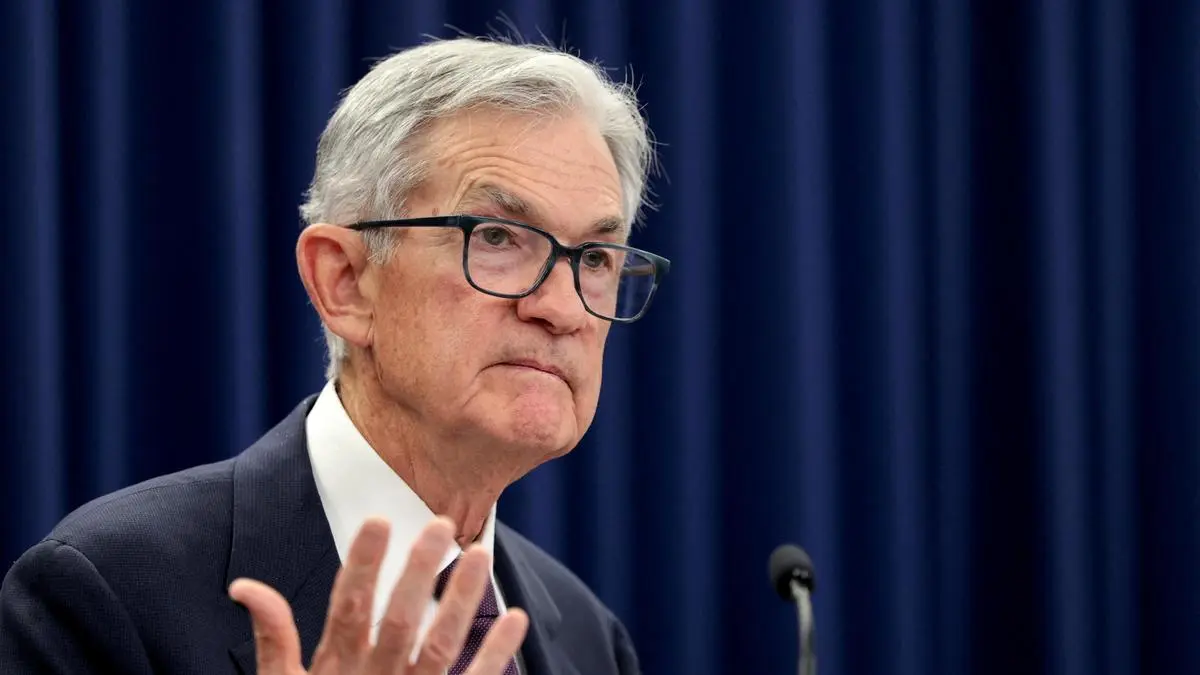
Core Viewpoint - The Federal Reserve is currently holding interest rates steady amid various economic pressures and uncertainties, with expectations of potential rate cuts in 2026, but the timing and extent of these cuts remain uncertain due to mixed economic signals and political influences [1][2][5]. Economic Conditions - The job market is showing signs of weakness, with hiring at its lowest since 2013, despite a current unemployment rate of 4.4% [3][19]. - Inflation remains above the Fed's target of 2%, complicating the decision-making process for rate cuts [5][21]. - The Fed is expected to maintain a restrictive policy to help bring inflation down, with policymakers looking for clear evidence of economic improvement before making any cuts [4][21]. Interest Rate Forecast - Bankrate's annual forecast predicts three cuts totaling 0.75 percentage points in 2026, while investors anticipate two cuts starting in June 2026 [1][10]. - Mortgage rates are projected to fluctuate between 5.7% and 6.5% in 2026, with current averages at 6.25% for 30-year fixed mortgages [9][10]. Labor Market Insights - The labor market is not as robust as desired, with only 584,000 jobs added last year, the lowest since 2003 outside of a recession [19][20]. - Economists predict the unemployment rate may rise to 4.5% by the end of 2026, with an average of 64,500 jobs added monthly [20]. Market Reactions - The stock market is experiencing a rally, with the S&P 500 reaching record highs, but volatility remains a concern for long-term investors [16][17]. - The Fed's decisions on interest rates are closely watched as they impact borrowing costs and overall economic sentiment [5][18].
Ares Capital Slips 10.4% in 6 Months: Should You Still Buy the Stock?
ZACKS· 2026-01-28 18:11
Core Viewpoint - Ares Capital Corporation (ARCC) has underperformed in the stock market, with a 10.4% decline over the past six months, compared to a broader industry decline of 11.6% and the S&P 500 Index's growth of 11.5% [1][7]. Performance Analysis - ARCC's stock has lagged behind its peers, Amalgamated Financial Corp. (AMAL) and Hercules Capital, Inc. (HTGC), with AMAL increasing by 27.8% and HTGC decreasing by 2.2% in the same period [1]. - The decline in ARCC's share price is primarily attributed to interest rate cuts, which have compressed yields on floating-rate loans, negatively impacting investor sentiment [3][7]. Financial Metrics - In 2024, Ares Capital originated $15.08 billion in gross investment commitments, a significant increase from $6 billion in 2023 and $9.9 billion in 2022 [8]. - The fair value of Ares Capital's portfolio investments was reported at $28.7 billion as of September 30, 2025, with a net asset value of $20.01 per share [10]. - Total investment income has shown a five-year compound annual growth rate (CAGR) of 14.4% from 2019 to 2024, continuing to rise in the first nine months of 2025 [11]. Revenue Projections - The Zacks Consensus Estimate for ARCC's revenues in 2025 and 2026 is $3.06 billion and $3.20 billion, respectively, indicating year-over-year growth rates of 2.3% and 4.7% [12]. - Current quarter and next quarter revenue estimates are $795.35 million and $784.24 million, respectively, with year-over-year growth estimates of 4.79% and 7.14% [13]. Capital Management - Ares Capital has a solid balance sheet with $15.6 billion in debt and $1.3 billion in cash and cash equivalents, along with a revolving credit facility of up to $5.5 million [14]. - The company distributes approximately 90% of its taxable income as dividends, having announced multiple dividend hikes since 2021 [14][15]. Investor Sentiment - Analysts have shown cautious sentiment regarding Ares Capital's earnings growth prospects, with no changes in the Zacks Consensus Estimate for 2025 and 2026 earnings [16]. - The estimated earnings for 2025 and 2026 imply year-over-year declines of 14.2% and 2.2%, respectively [17]. Valuation - Ares Capital's price-to-book (P/B) ratio stands at 1.02X, higher than the industry's 0.87X, indicating that the stock is trading at a premium [22].


Stock Market Today, Jan. 27: Banco Bradesco Rises Ahead of Brazilian Central Bank Meeting
Yahoo Finance· 2026-01-28 17:13
Core Insights - Banco Bradesco's stock rose by 4.28% to $4.14, likely driven by expectations of interest rate cuts in Brazil, with current rates near 15% and a central bank meeting scheduled for January 28th [1][3] - The trading volume for Banco Bradesco reached 60.8 million shares, significantly above its three-month average of 34.5 million shares, indicating strong investor interest [1] - The bank's share price has increased by approximately 115% year-on-year, and it plans to strengthen its fixed income team to capture more market share [4] Market Performance - The S&P 500 index rose by 0.41% to close at 6,978.60, while the Nasdaq Composite increased by 0.91% to 23,817.10, reflecting overall market strength [2] - Other Brazilian banks also saw gains, with Itaú Unibanco up 4.65% to $8.78 and Banco Santander rising 4.57% to $7.10, indicating a positive trend across the banking sector [2] Economic Context - Brazil's inflation data for January was slightly below expectations, leading economists to predict a reduction in the Selic rate from 15% to 12.25% by the end of the year, with easing expected to begin in March [3]

Dollar at a 4-Year Low? ETFs That You Could Play
ZACKS· 2026-01-28 16:55
Core Viewpoint - The U.S. dollar has reached a four-year low, influenced by various factors including expectations of further Federal Reserve rate cuts, tariff-related uncertainties, and concerns regarding Fed independence, which have collectively diminished investor confidence in the U.S. macroeconomic outlook [1]. Economic Indicators - The U.S. Dollar Index (DXY) has decreased by 1.94% over the past month and 10.74% over the past year, with an all-time decline of 19.81% [2]. Interest Rate Expectations - Anticipations of further interest rate cuts by the Federal Reserve in 2026 are contributing to the dollar's decline, as lower rates make the dollar less appealing to foreign investors [3][4]. Geopolitical Factors - Geopolitical tensions and renewed tariff frictions have heightened market volatility, leading to a decrease in investor appetite for U.S. assets and a rotation of capital away from the United States, which further pressures the dollar [5][6]. Capital Flows - A significant outflow of capital from U.S. equity funds was noted, with investors withdrawing a net $5.26 billion in the week ending January 21, indicating reduced demand for the dollar [7]. Investment Strategies - In light of the weakening dollar, portfolio diversification and hedging are becoming increasingly important for investors. Funds such as the WisdomTree Emerging Currency Strategy Fund (CEW) provide exposure to various emerging currencies and have seen a positive performance, gaining 1.24% over the past month and 13.94% over the past year [9][10]. Precious Metals - The weakening dollar has led to increased interest in precious metals, with commodity funds attracting a net inflow of $1.96 billion in the week ending January 21, marking a trend of net purchases over 10 out of the last 11 weeks [12]. Emerging Market Opportunities - The decline of the dollar is also driving interest in global equity funds, particularly emerging market ETFs, which may offer higher returns for investors willing to take on additional risk [14][15].