Interest rate

Search documents
Unemployment, Supreme Court surprises may shake stocks Friday
Yahoo Finance· 2026-01-08 20:13
Market Sentiment - Markets are sensitive to uncertainty, performing best when trends are clear and outcomes are understood [1] - A recent reversal in market gains indicates potential buyer exhaustion, often driven by institutional sellers [2][3] Economic Indicators - Upcoming events include the Bureau of Labor Statistics Employment Situation Summary and a Supreme Court ruling on tariffs, both of which could significantly impact market perceptions [2][4] - The Federal Reserve is closely monitoring unemployment figures, which could influence future interest rate decisions [4] Unemployment and Inflation - Unemployment rose to 4.6% in November, up from 4% in January, while layoffs surged by 54% to over 1.1 million [5] - Inflation, as measured by the Consumer Price Index, increased from 2.3% in April to 3% in September before decreasing to 2.7% in November [4] Federal Reserve Actions - The Federal Open Market Committee cut interest rates by a quarter percentage point at the last three meetings of 2025 due to rising unemployment concerns [5] - Future rate cuts may depend on the unemployment rate's movement in December, with a hawkish tilt observed from Fed Chairman Jerome Powell [6]
8 best places to keep your cash in 2026
Yahoo Finance· 2026-01-07 23:06
Core Insights - The current economic landscape in the U.S. shows high prices but a slowdown in inflation, leading to three rate cuts by the Fed in 2025, alongside a cooling job market and rising unemployment [1] Cash Management Options - High-yield savings accounts (HYSAs) offer competitive interest rates, often up to 4% APY, and high liquidity, making them an attractive option for cash storage [3][4] - Money market accounts (MMAs) combine features of savings and checking accounts, providing higher interest rates than traditional savings accounts, but may have higher minimum balance requirements and withdrawal limits [5][6] - Short-term certificates of deposit (CDs) allow locking in interest rates for terms of one year or less, offering competitive rates without long-term commitment [7][8] - Treasury bills are low-risk, short-term debt securities issued by the U.S. government, with current rates comparable to HYSAs and some CDs, providing liquidity and safety [8][9] - Series I bonds offer a fixed and inflation-adjusted return, currently just above 4%, with tax advantages but investment limits of $10,000 per year [10][11] - Money market funds are low-risk mutual funds that invest in short-term debt securities, providing liquidity and safety, though they are not insured [12][13] - High-yield checking accounts offer interest earnings similar to HYSAs but with typical checking features and no withdrawal limits, though they may require certain conditions to qualify for the highest rates [14][15] - Cash management accounts (CMAs) combine features of savings and checking accounts, often linked to investment accounts, providing higher FDIC coverage and convenience for managing cash and investments [16] Factors Influencing Cash Management Decisions - Risk tolerance, liquidity, and returns are key factors in deciding where to keep cash, with options varying in terms of risk and accessibility [19][20] - Utilizing hybrid accounts that earn interest on both checking and savings balances can optimize cash management [20] - Implementing micro-savings tools and automatic transfers can enhance savings growth and financial management [20]
Best high-yield savings interest rates today, January 7, 2026 (Earn up to 4% APY)
Yahoo Finance· 2026-01-07 11:00
Core Insights - The Federal Reserve has cut the federal funds rate three times in late 2024 and three times in 2025, leading to a decline in deposit rates, making it crucial for consumers to seek high-yield savings accounts to maximize interest earnings [1][5]. Group 1: High-Yield Savings Accounts - High-yield savings accounts offer significantly higher interest rates compared to traditional savings accounts, with rates reaching as high as 4% APY [2][3]. - The average savings account rate is only 0.39%, while the best rates for high-yield accounts are around 4% to 4.5% APY [3]. - As of January 7, 2026, the highest savings account rate available is 4% APY, offered by SoFi [3]. Group 2: Interest Rate Trends - Deposit account rates, including savings rates, are directly linked to the federal funds rate set by the Federal Reserve; when the Fed lowers its rate, deposit rates typically decrease [4]. - Following multiple interest rate hikes due to inflation, the Federal Reserve's recent cuts have resulted in a continued downward trend in deposit rates [5][6]. - Experts predict that further rate cuts may occur, suggesting that savings account rates will likely continue to decline [6]. Group 3: Considerations for Savings Accounts - High-yield savings accounts are recommended for short-term savings goals, providing a secure place to earn interest while maintaining accessibility [7]. - While high-yield savings accounts offer competitive rates, they may not match the long-term growth potential of stock market investments, making them less suitable for long-term goals like retirement [7]. - Savings accounts are generally insured by the FDIC, providing a low-risk option for consumers [8].
Majority of Fed banks voted against December change to discount rate
Reuters· 2026-01-06 19:37
Core Viewpoint - Directors at two-thirds of the Federal Reserve's regional banks voted to maintain the interest rate for emergency loans to commercial banks unchanged prior to last month's Fed meeting [1] Summary by Relevant Sections - **Federal Reserve Actions** - Two-thirds of the Federal Reserve's regional banks' directors voted to keep the interest rate for emergency loans unchanged [1]


Best money market account rates today, January 6, 2026 (Earn up to 4.1% APY)
Yahoo Finance· 2026-01-06 11:00
Core Insights - Money market accounts (MMAs) offer higher interest rates compared to traditional savings accounts, providing liquidity and flexibility for long-term savings [1] - The national average interest rate for MMAs is currently 0.39%, while the best rates exceed 4% APY, similar to high-yield savings accounts [3][13] - Historical trends show that MMA rates have fluctuated significantly due to changes in the Federal Reserve's target interest rate, with rates dropping to as low as 0.10% to 0.50% during economic downturns [4][5][6] Interest Rate Trends - Following the 2008 financial crisis, MMA rates were kept low to stimulate the economy, but began to rise gradually as the economy improved [5][6] - The COVID-19 pandemic caused another decline in rates, but aggressive interest rate hikes by the Fed starting in 2022 led to historically high MMA rates, with many accounts offering 4.00% or higher by late 2023 [6][7] - Rates remain high by historical standards but have been trending downward following Fed rate cuts in late 2024 and 2025 [8] Choosing a Money Market Account - When selecting an MMA, factors beyond interest rates should be considered, such as minimum balance requirements, fees, and withdrawal limits [9] - Some MMAs require a high minimum balance to earn the highest advertised rates, while others may charge monthly maintenance fees [10] - It is crucial to ensure that the chosen account is insured by the FDIC or NCUA, which guarantees deposits up to $250,000 per institution [11] Earnings Potential - The amount earned in an MMA depends on the APY and the duration of the deposit; for example, a $10,000 deposit at 4% APY could yield $407.44 in interest after one year [14]
What is the APR on a personal loan?
Yahoo Finance· 2026-01-05 20:24
Core Concept - The primary distinction between APR and interest rate is that APR encompasses all costs associated with a loan, while the interest rate solely reflects the monthly percentage charged on the borrowed amount [1][5]. Group 1: Understanding APR - APR reflects the total cost of borrowing, combining the interest rate with additional fees such as origination fees [5][6]. - A significant difference between the quoted interest rate and APR may indicate high fees from the lender [4][6]. - Many lenders provide APRs online, facilitating easier comparisons before applying for loans [5][10]. Group 2: Calculating APR - To calculate APR, lenders start with the offered interest rate and add relevant finance charges, including origination and administrative fees [3][6]. - The calculation involves expressing the interest rate as a decimal, multiplying by the loan term in years, and adjusting for the number of days in the loan term [2][18]. Group 3: Factors Influencing APR - Factors impacting a loan's APR include credit score, income, debt-to-income ratio, loan term, and lender policies [20][21]. - Borrowers with higher credit scores typically secure lower APRs, while those with poor credit may face rates as high as 36% [14][15]. - Shorter repayment terms generally result in lower APRs, although monthly payments may be higher [20][21]. Group 4: Average and Good APRs - The average APR for personal loans is reported to be 12.21%, with rates ranging from approximately 7% to 36% [13]. - A good APR is typically below the national average, often requiring a credit score above 670 [10][19].
【笔记20260105— 股市开门披红绸,债市开门系绷带】
债券笔记· 2026-01-05 13:36
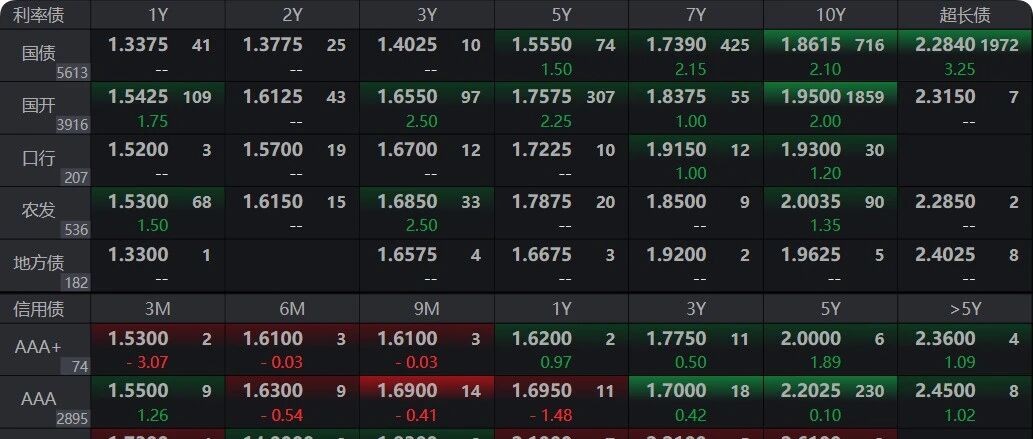
Market Overview - The stock market opened strong, returning to 4000 points, while the bond market showed signs of stress with rising yields [6][7] - The central bank conducted a 135 billion yuan reverse repurchase operation, with a net withdrawal of 4688 billion yuan due to 4823 billion yuan of reverse repos maturing [4][6] Interest Rates and Bond Yields - The 10-year government bond yield rose to 1.8615%, reflecting a significant upward trend [6][7] - The interbank funding rates remained stable, with DR001 around 1.26% and DR007 at approximately 1.43% [4][6] Redemption Regulations - New redemption regulations were officially released, easing previous restrictions for individuals to 7 days and institutions to 30 days, which is a notable change from the draft [6][7] Trading Volume and Market Sentiment - The trading volume for various repo codes showed significant activity, with RO01 at 65977.61 million yuan and R007 at 7306.10 million yuan, indicating a robust trading environment despite the bond market's challenges [5][6]
HELOC and home equity loan rates Saturday, January 3, 2026: Lower rates are in your favor
Yahoo Finance· 2026-01-03 11:00
Core Insights - National average HELOC and home equity loan rates are currently around 7.5%, making it a favorable time for homeowners looking to upgrade their homes or reduce high-interest debt [1][11] - The Federal Reserve estimates that homeowners have approximately $36 trillion in equity locked in their homes, which may lead to frustration for those unable to access this value due to stagnant mortgage rates [3] HELOC and Home Equity Loan Rates - As of January 3, 2026, the average monthly HELOC rate is 7.44%, while the national average for home equity loans is 7.59% [2][11] - Rates are based on applicants with a minimum credit score of 780 and a maximum combined loan-to-value ratio of less than 70% [2] Interest Rate Structure - Home equity interest rates differ from primary mortgage rates, with second mortgage rates typically based on an index rate plus a margin, often the prime rate, which is currently at 6.75% [4] - A HELOC rate could be around 7.50% if a lender adds a margin of 0.75% [4] Lender Flexibility and Shopping - Lenders have flexibility in pricing second mortgage products, making it beneficial for borrowers to shop around [5] - Average national HELOC rates may include introductory rates that last for a limited time, after which the rate becomes adjustable [5] Introductory Rates and Offers - Some lenders, like FourLeaf Credit Union, are offering HELOCs with introductory rates as low as 5.99% for the first 12 months on lines up to $500,000 [8] - It is important for borrowers to be aware of both the initial and subsequent rates when shopping for lenders [8] Home Equity Loan Characteristics - Home equity loans typically have fixed rates that last for the entire repayment period, making them easier to manage compared to HELOCs [9] - Borrowers receive a lump sum with home equity loans, eliminating concerns about draw minimums [9] Current Market Conditions - For homeowners with low primary mortgage rates and significant equity, now is considered one of the best times to obtain a HELOC or home equity loan [12] - The national average for HELOCs is 7.44% and for home equity loans is 7.59%, with rates varying significantly based on creditworthiness [11]
Why RBI floating rate bond with 8.05% interest is still one of the best investment options for most investors?
The Economic Times· 2025-12-31 14:35
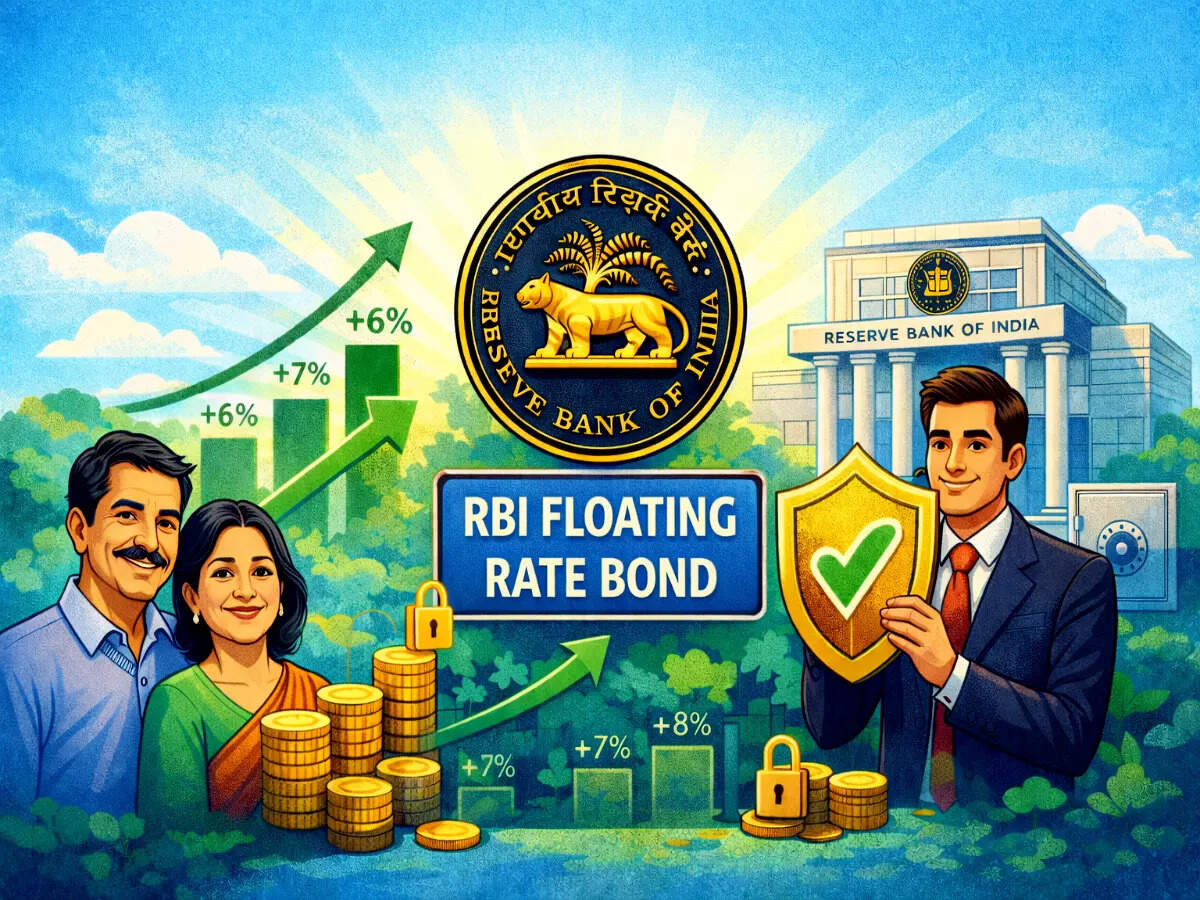
Core Insights - The RBI floating rate bond offers a higher interest rate than many fixed deposits (FDs) and allows unlimited investment, making it an attractive option for investors [1][13] - The bond's interest rate is linked to the National Savings Certificate (NSC) rate plus a fixed spread of 0.35%, with a current rate of 8.05% per annum [7][13] - Unlike fixed deposits, the interest rate on RBI bonds adjusts with market rates, providing better protection against interest rate fluctuations [6][10] Investment Comparison - Current FD rates from large banks range from 6% to 7%, which are fixed at the time of investment, while RBI bonds offer a floating rate that adjusts over time [2][13] - Among small savings schemes, the highest interest rate is 8.2% in the Senior Citizen Savings Scheme (SCSS) and Sukanya Samriddhi Account (SSY), but both have investment limits, unlike the RBI bond [8][14] Safety and Risk - The RBI bond is issued by the Reserve Bank of India on behalf of the government, carrying no default risk, making it safer than corporate bonds or bank FDs [5][13] - The floating mechanism of the bond protects against erosion of returns in a rising rate environment, making it suitable for conservative investors [6][11] Investment Strategy - Investors are advised to consider RBI floating rate bonds for low-risk portions of their portfolios, particularly for long-term goals or retirement income planning [10][14] - The bonds provide semi-annual payouts, creating a consistent income stream, which is beneficial for retirees seeking periodic income [11][14] - It is suggested that conservative investors incorporate RBI bonds as a core holding in their debt allocation for stability, potentially pairing them with equities for growth [12][14]
Stock Market Today: S&P 500, Dow Jones Futures Down As Santa Rally Hopes Fade—Investors Await Initial Jobless Claims Report
Benzinga· 2025-12-31 09:09
Market Overview - U.S. stock futures are down on New Year's Eve, with the Dow Jones, S&P 500, Nasdaq 100, and Russell 2000 all showing negative changes of -0.13%, -0.26%, -0.41%, and -0.42% respectively [4] - The SPDR S&P 500 ETF Trust (NYSE:SPY) is down 0.28% at $685.10, while the Invesco QQQ Trust ETF (NASDAQ:QQQ) has declined 0.41% to $616.89 [4] Economic Indicators - The 10-year Treasury bond yield is at 4.12%, and the two-year bond yield is at 3.44% [3] - The CME Group's FedWatch tool indicates an 82.8% probability that the Federal Reserve will keep interest rates unchanged in January [3] Company Performance - iSpecimen Inc. (NASDAQ:ISPC) shares are up 36.95% pre-market after announcing a $5.5 million private placement [6] - Anghami Inc. (NASDAQ:ANGH) shares have surged 56% pre-market following a report of a 97% year-over-year increase in revenue [6] - Urgent.ly Inc. (NASDAQ:ULY) shares increased by 52.49% on Tuesday and another 26.81% pre-market after adjourning its annual stockholder meeting [6] - Vanda Pharmaceuticals Inc. (NASDAQ:VNDA) shares are up 19.06% pre-market after receiving FDA approval for its new drug NEREUS [13] - Core AI Holdings Inc. (NASDAQ:CHAI) shares rose 2.78% after announcing a definitive agreement to divest Siyata Mobile [13] Sector Performance - Consumer discretionary, materials, and financials sectors experienced the largest losses on Tuesday, while energy, real estate, and utilities sectors ended the day positively [7]