
法治建设

Search documents
55万市场主体纳入“无事不扰”清单
Xin Lang Cai Jing· 2025-12-24 18:49
昨天,市政府新闻办召开首都"十四五"规划高质量收官系列主题新闻发布会。北京市委依法治市办主 任,市司法局党委书记、局长崔杨全面介绍了五年来法治建设成效。北京青年报记者从发布会上了解 到,北京"司法程序质量指数"在世界银行营商环境评估中连续两年取得全球最佳。 同时,北京市33家律师事务所在39个国家设立112个分支机构;北京市律师协会发布共建"一带一路"法 律服务伙伴计划,首批30个国家的38家律师事务所加入该计划;北京市24家公证机构全部实现办理涉外 公证业务,9家公证机构实现"涉外公证+领事认证"一体联办,涉外法治保障和服务成效有力彰显。 此外,北京还设立北京国际商事法庭,建立全国首个国际商事纠纷一站式多元解纷中心并引入外籍调解 员,提供涉外司法服务和保障;推动司法机关与行政执法机关统一涉外执法司法理念,提升涉外执法司 法整体效能。崔杨透露,北京的"司法程序质量指数"在世界银行营商环境评估中连续两年取得全球最 佳。 两次修订优化营商环境条例 月均入企检查量较同期下降74.6% 崔杨透露,北京市司法局紧扣"四个中心"功能建设、城市副中心建设、京津冀协同发展战略和"两区"建 设等高质量发展实际,围绕养老、就业等 ...
四子王旗财政局举办普法宣传活动
Xin Lang Cai Jing· 2025-12-24 09:52
(来源:乌兰察布财政) (来源:乌兰察布财政) 四子王旗财政局举办普法宣传活动 深入贯彻落实我国法治建设精神,提高财政系统干部和人民群众的法治意识,四子王旗财政局于12月4 日在神州广场组织了普法宣传活动。此次活动旨在普及法律知识,增强全民法治观念。 通过普法宣传提高了财政系统干部的法治意识。财政系统干部对法律知识有了更加全面的了解,有助于 他们在工作中更好地依法行政。通过普法宣传增强了居民的法治观念。活动让居民认识到法治对日常生 活的重要性。此次活动是四子王旗财政局积极参与法治建设的重要举措,有助于提升全旗法治建设水 平。 党员干部纷纷表示,此次培训及时深化了对全会精神的理解,作为财政干部,必须将全会精神内化于 心、外化于行,在预算管理、风险防控工作中主动担当,为"十五五"开好局贡献财政力量。 四子王旗财政局举办普法宣传活动 深入贯彻落实我国法治建设精神,提高财政系统干部和人民群众的法治意识,四子王旗财政局于12月4 日在神州广场组织了普法宣传活动。此次活动旨在普及法律知识,增强全民法治观念。 通过普法宣传提高了财政系统干部的法治意识。财政系统干部对法律知识有了更加全面的了解,有助于 他们在工作中更好地依法 ...


为建设更高水平的平安上海作贡献 市政协召开市检察院工作报告征求意见通报会
Jie Fang Ri Bao· 2025-12-24 01:42
Group 1 - The core viewpoint of the news is the emphasis on the role of the municipal procuratorate in supporting high-quality economic and social development, reflecting legal responsibility and enhancing legal effectiveness through reforms [1][2] - The municipal procuratorate has made new progress and achievements in various areas, including intellectual property protection, case handling quality, and the management of new types of cases related to artificial intelligence [1] - Suggestions from committee members include enhancing the quality of case handling, optimizing the management of AI-related cases, and strengthening the selection and training of foreign-related procuratorial talents [1] Group 2 - The municipal leadership stresses the importance of integrating legal construction with the goals of Shanghai's modernization and the implementation of the "14th Five-Year Plan," focusing on enhancing the contribution of procuratorial work [2] - There is a call for practical measures to reflect people's interests in specific cases, resolve conflicts, and enhance public perception of legal benefits [2] - The need for reform and innovation in legal supervision is highlighted, with an emphasis on strengthening the procuratorial investigation mechanism and professional development [2]
乌海市司法局多措并举推进法治建设
Xin Lang Cai Jing· 2025-12-23 19:08
今年以来,内蒙古自治区乌海市司法局采取多项措施,扎实推进法治乌海建设。一是打造"法润堂"文化 阵地,开展"送法上门"等活动,提高普法工作的针对性和实效性;利用新媒体平台开展"行政复议在身 边"主题直播活动,将法律知识转化为群众听得懂、用得上的维权指南。二是建立市、区、镇(街 道)、村(社区)四级公共法律服务网络,打造"一刻钟"公共法律服务圈。三是推动基层司法所所长列 席镇(街道)党政工作会议,为基层决策提供法律支持;发动镇(街道)政法委员、乡贤等多方力量, 将法律服务送到群众"家门口"。白雪梅 转自:法治日报 (来源:法治日报) ...
带头绷紧“法治弦”(人民时评)
Ren Min Ri Bao· 2025-12-15 22:52
就拿营商环境来说,一个尊崇法治的政府能给经营主体吃下"定心丸"。上海通过"检查码"让行政执 法"阳光化";广东深圳对公职人员在履行职务、社会交往、直系亲属从业等10个方面的行为划出"警戒 线";浙江杭州精简企业办事流程,有企业家感慨"没吃过一顿饭,没喝过一顿酒,没送过一根烟"…… 规规矩矩的办事流程、明明白白的权利义务,就是企业放心做业务、安心谋发展的底气。领导干部善于 运用法治思维和法治方式推进工作,对优化营商环境至关重要。 权由法定、权依法使,这是基本的法治观念。提升公职人员的法治素养,必须从其踏入干部队伍的那一 天起就开始抓,使其心中高悬法律的明镜,手中紧握法律的戒尺,知晓为官做事的尺度。真正把权力运 行的规矩立起来、讲起来、守起来,严格做到法定职责必须为、法无授权不可为,才能有效减少权力滥 用、以权谋私等违法违纪行为的出现。 法律的权威在于实施。全链条构建国家工作人员学法用法制度,人民群众看在眼里、记在心上,也会在 行动中效仿 将法律知识纳入国家工作人员录用考试内容,将法治教育纳入国家工作人员教育培训规划、计划,领导 干部学法用法情况应当按照规定列入年度述职内容……不久前正式施行的法治宣传教育法,将法 ...
三十年来广州办理法律援助案件近40万件
Zhong Guo Xin Wen Wang· 2025-12-09 04:58
Group 1 - The legal aid system in Guangzhou has handled nearly 400,000 cases over the past 30 years, providing legal consultations to over 1.1 million people and recovering more than 4.21 billion yuan in economic losses for disadvantaged citizens [1] - Guangzhou's legal aid model, characterized by government leadership, financial support, fixed locations, dedicated lawyers, unified standards, and full-process supervision, has been promoted nationwide as a significant example for the development of legal aid in China [1] - The economic hardship standard for legal aid in Guangzhou has increased from 2,846 yuan per month to 3,477 yuan over the past five years, more than doubling from 1,025 yuan a decade ago, ensuring more disadvantaged individuals are included in the service scope [1] Group 2 - Guangzhou has prioritized legal construction as a core element of service development and harmony, especially in response to the labor rights protection issues faced by flexible employment workers such as ride-hailing drivers and delivery personnel [2] - In 2021, Guangzhou became the first city in the country to implement simultaneous online and offline legal aid services, addressing the specific needs of flexible employment and new economy workers by providing assistance with labor relationship recognition, work injury compensation, and wage recovery [2] Group 3 - The number of lawyers in Guangzhou has surpassed 29,000 [3]
苏州市公布“十四五”时期法治建设“成绩单” 群众法治建设满意度超九成
Su Zhou Ri Bao· 2025-12-05 00:34
为总结五年来法治建设经验、发挥典型引领作用,市委依法治市办组织开展了"十四五"时期苏州 市"十大优秀法治人物"与"十大法治建设典型案例"宣传推选活动。经组织推荐、公众投票、专家评审等 环节,姜彦等10人入选"十大优秀法治人物","AI赋能机动车排放检验非现场监管"等10个案例入选"十 大法治建设典型案例"。 苏州市第八个"宪法宣传周"于12月1日启动,将持续至7日,其间将组织开展宪法宣誓、全民普法40 周年成就展、首届"甪端杯"法治书画摄影展、"宪法六进"等十二项主题活动,推动宪法精神深入人心。 昨天(12月4日),苏州市公布"十四五"时期法治建设"成绩单"。数据显示,群众对法治建设的满 意度超过九成,苏州成功获评全国首批法治政府建设示范市。当天,苏州市"十大优秀法治人物"与"十 大法治建设典型案例"名单揭晓。 五年来,苏州深入贯彻落实习近平法治思想,制定并实施法治建设"一规划两方案",一体推进法治 苏州、法治政府、法治社会建设,高质量完成法治建设的各项指标任务:地方立法机制不断健全,制定 优化营商环境条例等29部地方性法规;依法行政不断巩固推进,基层法制审核机构人员实现全覆盖,行 政检查频次压降50%以上; ...
“八五”普法亮点扫描 | 广东广州局:“普法+治理”推动“依法办成事,依法办好事”
Zhong Guo Zi Ran Zi Yuan Bao· 2025-12-04 06:38
Core Viewpoint - The Guangzhou Planning and Natural Resources Bureau is actively constructing a "legal education + governance" integration system, focusing on the core practice of "doing things legally and doing them well" to address key challenges in aligning institutional supply with public demand and balancing legal rigidity with governance flexibility [1][21]. Group 1: Legal Education and Governance Integration - The bureau emphasizes internalizing the spirit of the rule of law into governance consciousness, enhancing the legal literacy of officials and the legal awareness of the public [1]. - A new model of "village collective land acquisition" was proposed to address challenges in the relocation of residents during urban village renovations, which has been incorporated into local legislation [4]. - The bureau has developed a "1+1+N" legal education promotion model, combining one regulation, one set of illustrations, and multiple case studies to improve public understanding of legal provisions [4]. Group 2: Legislative and Practical Integration - Legislative research is integrated with legal education, ensuring that public opinions are considered in drafting important laws, thereby enhancing consensus [4]. - The bureau has implemented a "1234" governance method to streamline administrative case handling, achieving a 100% appearance rate of system leaders in court and a reduction in litigation and review cases over three consecutive years [8][22]. - The focus on practical legal education through community engagement has led to innovative programs, such as the "community designer" initiative, which has been recognized as a model for volunteer service [10]. Group 3: Public Participation and Legal Awareness - The shift from "one-way dissemination" to "participatory legislation and enforcement" has transformed the public from passive recipients of laws to active co-builders of the legal system [23]. - The bureau's initiatives aim to enhance public legal literacy and address the "last mile" challenge in legal education, contributing to a higher level of legal society [23]. - The integration of legal education into daily work and life promotes a legal culture where compliance is seen as beneficial, fostering a community that understands and utilizes the law effectively [9].
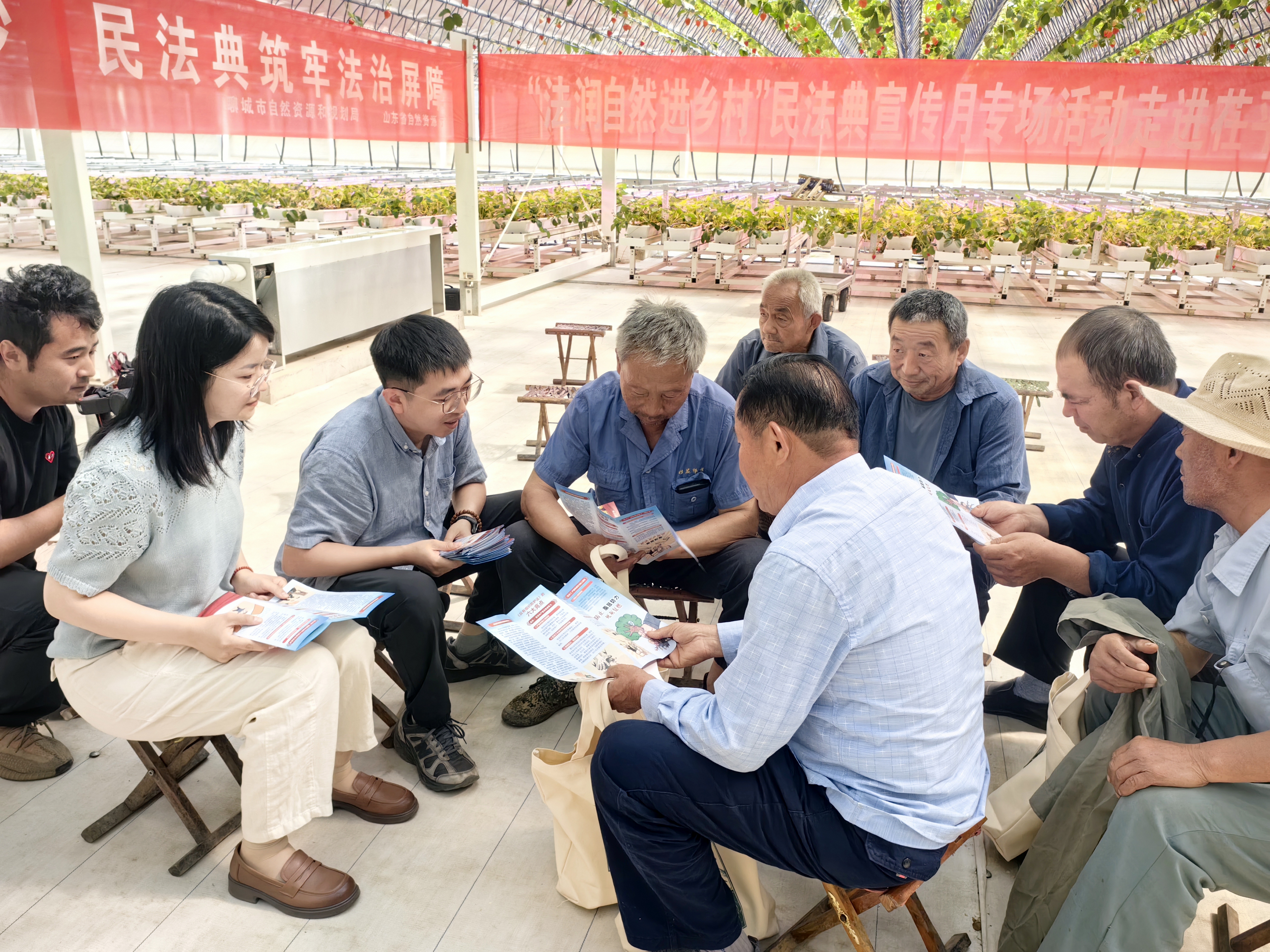
普法创新实践案例|山东省自然资源厅 深入推进“双基”法治建设 持续擦亮“法润自然”品牌
Zhong Guo Zi Ran Zi Yuan Bao· 2025-12-03 03:17
Core Viewpoint - The Shandong Provincial Natural Resources Department is implementing Xi Jinping's ecological civilization and rule of law thoughts, focusing on grassroots and foundational construction to enhance the legal governance capabilities of its staff, thereby providing strong legal support for the high-quality development of natural resources in the province [1]. Group 1: Legal Culture Development - The department aims to create the "Law Enriches Nature" legal culture brand over the next three to five years, establishing it as a recognizable symbol for legal education in the natural resources sector across Shandong [9]. - Key measures include unifying the branding of legal education activities, launching two platforms for legal education, and establishing various teams and bases for promoting legal knowledge [9]. Group 2: Practical Legal Education - The department has initiated several campaigns such as "Legal Education Year" and "Legal Culture Enhancement Year," focusing on integrating legal education with major national and provincial strategies [10]. - Collaborative efforts with media outlets have led to the creation of short video campaigns and legal education programs, significantly increasing public engagement and awareness [10]. Group 3: Brand Influence and Community Engagement - Local units are encouraged to develop sub-brands under the "Law Enriches Nature" umbrella, creating a diverse legal culture brand matrix that serves as a model for national legal culture development [10]. - The department has successfully utilized social media platforms to disseminate legal knowledge, with significant viewership and engagement metrics reported [10]. Group 4: Insights and Mechanisms - The establishment of a quantifiable legal construction indicator system is a key innovation, transforming soft tasks into hard constraints for better governance [11]. - The department emphasizes targeted legal education strategies, ensuring that legal information is tailored to different audiences, thereby enhancing the effectiveness of legal outreach [11].
海南省2025年“宪法宣传周”系列活动启动
Hai Nan Ri Bao· 2025-12-03 02:22
Group 1 - The core event marks the launch of Hainan Province's 2025 "Constitution Promotion Week" series of activities, aimed at promoting legal knowledge and creating a favorable legal environment for the Hainan Free Trade Port's operations [1][2] - The event is part of a national initiative, included in the Ministry of Central Propaganda, Ministry of Justice, and National Legal Promotion Office's coordinated projects, highlighting the importance of constitutional spirit and legal education [1] - Various interactive zones were established at the event, including a quiz area, legal consultation services, and artistic performances that integrated legal knowledge, enhancing public engagement and awareness [2] Group 2 - The upcoming week will see a series of diverse legal promotion activities across the province, focusing on the theme of "Learning, Promoting, and Implementing Xi Jinping's Rule of Law Thought," aiming to embed constitutional law into daily life [2] - The activities are designed to support the high-level opening and quality development of the Hainan Free Trade Port by establishing a solid legal foundation and fostering a strong social atmosphere [2]