
司法责任制

Search documents
陕西省高级人民法院工作报告(摘要)
Shan Xi Ri Bao· 2026-02-14 00:20
Core Viewpoint - The provincial courts are committed to high-quality development by adhering to the principles of justice for the people, maintaining party leadership, and innovating judicial practices, as guided by Xi Jinping's thoughts and the directives from the 20th National Congress of the Communist Party of China [1] Group 1: Judicial Performance and Case Management - The provincial courts handled a total of 1.1423 million cases and concluded 998,500 cases in the past year [1] - The number of appeals, petitions for retrials, and cases involving litigation-related petitions decreased by 17.02%, 5.92%, and 14.45% respectively [1] - A total of 26 cases were selected for inclusion in the People's Court Case Database or recognized as typical cases by national courts [1] Group 2: Support for Economic Development - The courts introduced measures to better implement economic policies, resulting in the adjudication of 12,000 intellectual property cases [2] - A total of 191,000 enterprise-related cases were concluded, and 1,094 bankruptcy cases were adjudicated [2] - The courts processed 318,200 commercial cases with a total amount in dispute reaching 110.774 billion yuan [2] Group 3: Public Safety and Social Order - The courts concluded 6,614 cases related to crimes endangering public safety and 4,537 cases related to crimes disrupting social order [3] - A total of 977 cases involving crimes that undermine market economic order were adjudicated, alongside actions against illegal fundraising [3] Group 4: Protection of Citizens' Rights - The courts adjudicated 2,734 cases involving violations of personal rights and 6,517 cases related to infringement of personality rights [4] - A total of 17,500 cases concerning property rights and disputes were resolved, including 728 cases of telecom fraud [4] - The courts helped recover 867 million yuan for 24,800 workers in labor disputes [4] Group 5: Environmental and Cultural Protection - The courts adjudicated 267 cases related to the destruction of wildlife resources and 266 cases concerning illegal sand mining affecting the Yellow River [5] - Measures were introduced to strengthen the judicial protection of cultural heritage [5] Group 6: Judicial Transparency and Accountability - The courts completed 15 representative suggestions and 21 proposals from the Political Consultative Conference, enhancing the supervision of judicial processes [6] - The participation rate of people's assessors in trial cases reached 72.74% [6] - A total of 90 typical cases were published, and 10 legal micro-films won national awards [6] Group 7: Judicial Reform and Capacity Building - The courts are implementing a plan for judicial system reform and enhancing the transparency of criminal trials, with a second-instance hearing rate of 45.29% [7] - The satisfaction rate for case filing increased by 20.82% due to the promotion of user-friendly civil trial processes [7] - The courts are focusing on building a clean and responsible judicial team, with a talent development plan for 2026-2030 [7]
深入落实“一案三查”夯实案件质量管理根基
Xin Lang Cai Jing· 2026-01-17 23:53
Core Viewpoint - The establishment of a scientific and reasonable case quality inspection mechanism is essential for enhancing the quality of judicial cases, emphasizing the responsibility of prosecutors in ensuring case quality and the need for a systematic approach to case management [2][3][4]. Group 1: Case Quality Inspection Mechanism - A scientific case quality inspection mechanism should be established, detailing operational standards to guide prosecutors in fulfilling their inspection responsibilities [3][4]. - The implementation of a self-inspection standard aims to achieve "every case must be inspected," starting with major case categories and gradually extending to others [3][4]. - Standardized online inspections will be prioritized, with self-inspection reports required within ten working days after case closure [3][4]. Group 2: Quality Assessment and Scoring - A quantitative scoring system will be adopted for case quality assessments, rewarding well-handled cases and penalizing those with issues [4][5]. - Clear classification standards for issues will be established, with mechanisms for addressing both minor and severe flaws in case handling [4][5]. Group 3: Case Quality Verification - A case quality verification mechanism is crucial for ensuring the substantive implementation of quality inspections, with a focus on objective and comprehensive evaluations [6][7]. - Specific cases, such as those under review by higher courts or involving significant procedural violations, will be prioritized for verification [6][7]. Group 4: Evaluation and Feedback Mechanism - The evaluation process will shift from quantity to quality, integrating case management methods to enhance overall case handling effectiveness [8][9]. - A closed-loop management system will be established to ensure that evaluation results lead to corrective actions and training [9][10]. Group 5: Long-term Management and Collaboration - A collaborative mechanism for case quality management will be developed to address common issues and enhance the overall quality of case handling [11][12]. - Continuous improvement and long-term mechanisms will be established to address recurring issues and ensure compliance with legal standards [12].


甘肃:检委会为案件评查质量把关
Xin Lang Cai Jing· 2026-01-03 23:22
Group 1 - The Gansu Provincial Procuratorate held an expanded committee meeting to review and assess cases, utilizing a combination of "intelligent review + manual cross-review" and discussions among prosecutors [1] - The meeting emphasized the importance of case quality checks as a means to implement the "three managements" and ensure high-quality handling of each case, which is crucial for upholding judicial responsibility and fairness [2] Group 2 - The review identified issues such as insufficient evidence analysis skills, challenges in handling cases that intertwine criminal and civil matters, and inadequate oversight at various levels, prompting a call for reflection and improvement in basic legal knowledge [2] - The meeting highlighted the need for regular case reviews, layered and graded assessments, and accountability measures to enhance the quality and efficiency of case handling, ensuring that every case withstands legal, historical, and public scrutiny [2]
为建设更高水平的平安上海作贡献 市政协召开市检察院工作报告征求意见通报会
Jie Fang Ri Bao· 2025-12-24 01:42
Group 1 - The core viewpoint of the news is the emphasis on the role of the municipal procuratorate in supporting high-quality economic and social development, reflecting legal responsibility and enhancing legal effectiveness through reforms [1][2] - The municipal procuratorate has made new progress and achievements in various areas, including intellectual property protection, case handling quality, and the management of new types of cases related to artificial intelligence [1] - Suggestions from committee members include enhancing the quality of case handling, optimizing the management of AI-related cases, and strengthening the selection and training of foreign-related procuratorial talents [1] Group 2 - The municipal leadership stresses the importance of integrating legal construction with the goals of Shanghai's modernization and the implementation of the "14th Five-Year Plan," focusing on enhancing the contribution of procuratorial work [2] - There is a call for practical measures to reflect people's interests in specific cases, resolve conflicts, and enhance public perception of legal benefits [2] - The need for reform and innovation in legal supervision is highlighted, with an emphasis on strengthening the procuratorial investigation mechanism and professional development [2]
做优法律监督主责主业,更好服务全面依法治国
Xin Lang Cai Jing· 2025-12-19 23:34
Core Viewpoint - The article discusses the implementation of the spirit of the 20th National Congress of the Communist Party of China by the Jiangxi Provincial Procuratorate, emphasizing the importance of high-quality legal services to support economic and social development in the region [2][3]. Group 1: Implementation of Party's 20th National Congress Spirit - Jiangxi Provincial Procuratorate has made the study and implementation of the 20th National Congress spirit a major political task, conducting comprehensive political training and discussions to ensure all personnel understand the core essence and significance of the Congress [2]. - The procuratorate aims to integrate the spirit of the Congress with the legacy of the revolutionary tradition, organizing activities that promote red culture and guiding local procuratorates to serve the overall situation and the people [2]. Group 2: Service to Economic Development - The Jiangxi Provincial Procuratorate plans to align its work with the central tasks of the Party and the state, ensuring that its services follow the direction of the 20th National Congress and the important speeches of General Secretary Xi Jinping [3]. - The focus will be on enhancing the business environment, protecting various business entities, and implementing judicial supervision against illegal practices, particularly in strategic resource sectors like rare earths and lithium [4]. Group 3: Social Justice and Public Welfare - The procuratorate emphasizes its commitment to serving and improving people's livelihoods, addressing issues in food safety, education, and healthcare, and ensuring that judicial actions meet the urgent needs of the public [4]. - It aims to strengthen public interest litigation, focusing on ecological protection and environmental governance, while also enhancing the effectiveness of its public interest litigation practices [6]. Group 4: Strengthening Internal Governance - The Jiangxi Provincial Procuratorate is committed to enhancing its internal governance and ensuring that judicial actions are conducted fairly and justly, with a focus on accountability and supervision of judicial personnel [5]. - There is a strong emphasis on training and capacity building for staff, promoting a culture of integrity and professionalism within the organization [6].
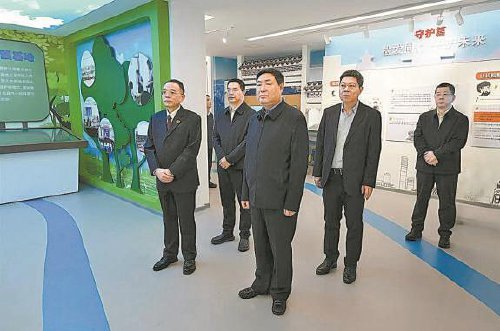
中央政法委:深化审判权和执行权分离改革,破解执行难
Xin Jing Bao· 2025-09-12 04:56
Core Viewpoint - The article discusses the ongoing efforts and future plans for advancing the rule of law in China, highlighting key reforms and initiatives being proposed by various governmental bodies [1] Group 1: Legal System Reforms - The Central Political and Legal Affairs Commission is drafting a new round of plans for the construction of a rule-of-law China, focusing on major tasks and measures for future legal development [1] - Key reforms include deepening the administrative law enforcement system, improving the comprehensive law enforcement mechanism at the grassroots level, and establishing a dual-link system between administrative and criminal penalties to ensure strict, standardized, and fair law enforcement [1] Group 2: Judicial System Enhancements - Reforms will also focus on the operation mechanism of judicial power, ensuring that all judicial processes operate under effective supervision and constraints [1] - The separation of trial and execution powers will be deepened, and a national execution system will be established to address execution difficulties [1] - The judicial responsibility system will be improved, including mechanisms for pre-examination, in-process supervision, and post-correction of compulsory measures to ensure fairness and justice in every judicial case [1] Group 3: Public Legal Services and International Cooperation - A comprehensive public legal service system covering urban and rural areas will be established, along with the implementation of the ninth five-year plan for legal publicity and education [1] - A work mechanism will be developed to promote foreign-related legislation, law enforcement, judicial processes, compliance, legal services, and legal talent cultivation [1] - International cooperation in law enforcement and judiciary will be deepened, and improvements will be made to foreign-related judicial trial systems, international commercial arbitration, and mediation systems to better safeguard national sovereignty, security, and development interests [1]