Autonomous Vehicles

Search documents
Prediction: Tesla's Joyride Will Come to a Screeching Halt in 2026 (Spoiler Alert: Elon Broke Another Promise)
The Motley Fool· 2025-12-20 02:00
Core Viewpoint - Tesla's future heavily relies on artificial intelligence, particularly its robotaxi initiative, which has generated significant investor interest and driven stock prices to near all-time highs [1][2]. Company Developments - Tesla's CEO Elon Musk has consistently promised advancements in AI to transform the mobility market, aiming to create a fleet of fully autonomous vehicles [2]. - Recent updates on the robotaxi project have been positively received, contributing to a surge in Tesla's stock price [2][9]. - As of mid-December, Tesla has launched limited robotaxi services in Austin and the San Francisco Bay area, but these services still require human safety drivers [9][10]. Historical Context - Tesla has a history of missed deadlines and overpromises, including the failure to deliver fully autonomous driving capabilities and delays in the production of the Tesla Semi and Roadster 2.0 [5][11]. - Musk's past predictions, such as having 1 million robotaxis operational by 2020, have not materialized, raising skepticism about future timelines [11]. Financial Metrics - Tesla's current market capitalization stands at $1.6 trillion, with a price-to-sales ratio of 17.6 and a price-to-earnings ratio of nearly 320, indicating an unusually high valuation for an automobile company [4][13]. - Despite the high valuation, Tesla's core electric vehicle business is reportedly in decline, with no significant financial contribution from the robotaxi initiative yet [15]. Investment Outlook - The stock's performance appears driven more by narratives and hype rather than actual business performance, suggesting caution for potential investors until tangible progress is made in the robotaxi project [16].


Recent Market Movers: Top Gainers Across Industries
Financial Modeling Prep· 2025-12-20 00:00
Core Insights - Several companies have emerged as top gainers in recent market movements, showcasing significant price changes and trading volumes, indicating investor confidence and potential for future growth [1][6] Company Summaries - **Luminar Technologies, Inc. (LAZR)**: Stock price increased by 108.23% to $0.45 with trading volume over 618 million shares, driven by advancements in sensor technologies for autonomous vehicles; however, the company faced bankruptcy [2][7] - **Mint Incorporation Limited (MIMI)**: Stock price rose by 75.63% to $0.48, with trading volume around 69 million shares, supported by focus on 3D technical drawing and design services in Hong Kong; voluntary lock-up agreements with shareholders until March 31, 2026 were announced [3][7] - **Autozi Internet Technology (Global) Ltd. (AZI)**: Stock price climbed by 59.01% to $2.41, with trading volume exceeding 76 million shares; a $90 million initial investment from strategic investor CDIB at $3.50 per share boosted investor confidence [4][7] - **Syntec Optics Holdings, Inc. (OPTXW)**: Stock price increased by 52.75% to $0.21, with trading volume around 264,000 shares; the company's contributions to biomedical and defense sectors enhanced its market presence [5][7]



Why Rivian Automotive Stock Keeps Going Up
The Motley Fool· 2025-12-19 19:40
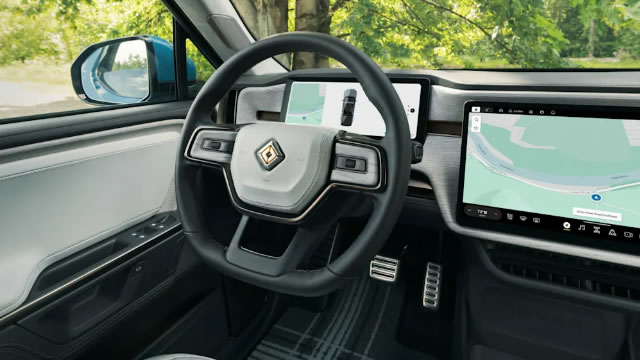
Core Viewpoint - Rivian Automotive has seen a significant increase in stock price following a raised price target by analysts, driven by the anticipation of the new R2 electric SUV and advancements in technology [3][4]. Group 1: Sales Performance - Rivian reported strong sales growth in Q3, attributed to a consumer rush to purchase EVs before the expiration of the federal EV tax credit [7]. - The sales surge in Q3 may have pulled demand forward from Q4 and into 2026, making it challenging to sustain this momentum [7]. Group 2: Analyst Insights - Baird analyst Ben Kallo raised Rivian's price target from $14 to $25, citing the upcoming R2 electric SUV as a key factor [3]. - Wedbush analyst Daniel Ives supports this view, highlighting Rivian's development of a new AI chip and efforts to enhance vehicle autonomy as additional revenue opportunities [4]. Group 3: Financial Metrics - Rivian's current market capitalization is approximately $25 billion [9]. - The stock has experienced a daily price range of $20.35 to $22.64, with a 52-week range of $10.36 to $22.64 [6]. - Rivian's gross margin stands at -159.38%, indicating significant financial challenges [6].

Should You Buy UBER Stock Following Its AV Expansion in the UAE?
ZACKS· 2025-12-19 16:16
Core Insights - Uber Technologies has launched robotaxi passenger rides in Dubai in partnership with WeRide, marking a significant step in the autonomous vehicle market in the Middle East [1][4] - The robotaxi service is available through the Uber app in popular tourist areas, following a successful pilot program [2][3] - Uber's strategy focuses on partnerships to minimize R&D costs while expanding its autonomous vehicle capabilities [5] Business Performance - Uber's gross bookings grew by 21% year over year to $48.7 billion in the third quarter of 2025, driven by strong performance in both Mobility and Delivery segments [9][10] - The Mobility segment saw a revenue increase of 20% year over year, reaching $7.68 billion, while gross bookings rose 19% to $25.1 billion [7][8] - The Delivery segment also performed well, with revenues growing 27% year over year and gross bookings increasing 24% to $23.3 billion [9] Market Position and Strategy - The launches in Dubai and Abu Dhabi enhance Uber's position as a leader in the global autonomous transportation market [4][10] - Uber's partnership-driven approach allows it to leverage technology from other leaders in the AV space, avoiding heavy in-house development costs [5] - The global autonomous vehicle market is projected to grow from approximately $106 billion in 2021 to over $2.3 trillion by 2030, indicating significant growth potential for Uber [5] Expansion Efforts - Uber is diversifying its services beyond ridesharing, including food delivery and freight, to mitigate risks and enhance growth [10][11] - Recent partnerships, such as with ALDI, expand Uber Eats offerings, allowing grocery deliveries from over 2,500 stores [12] Valuation - Uber's stock is currently undervalued, trading at a price-to-sales multiple of 2.76, significantly lower than the industry average of 7.22 [13]


Kodiak AI and Verizon Business transform trucking with autonomous technology and IoT connectivity
Globenewswire· 2025-12-18 14:00
Core Insights - Kodiak AI has developed a 24/7 autonomous driver as a service capability utilizing AI-powered virtual drivers for long-haul trucking, industrial trucking, and defense applications [1][9] - Verizon has partnered with Kodiak AI to provide 5G connectivity and IoT data capabilities, enhancing Kodiak's autonomous trucking solutions [1][4] Group 1: Technology and Capabilities - The Kodiak Driver incorporates Assisted Autonomy technology, allowing human remote assistance in specific low-speed scenarios [2] - Verizon's connectivity enables real-time communication between Kodiak's driverless vehicles and command centers, ensuring low latency over long distances [3][11] - The collaboration utilizes Verizon's 5G and LTE networks, facilitating over-the-air software updates and remote fleet management [4][11] Group 2: Business Model and Market Position - Kodiak AI's business model relies on reliable, low-latency communications to support various data transport and management needs [5] - The partnership with Verizon positions Kodiak to deliver next-generation driverless solutions, including continuous hauling for industrial clients and long-haul freight [7] - Kodiak aims to become a leader in autonomous ground transportation, addressing supply chain challenges through its driverless technology [9]

Fed increasingly divided on rate cuts in 2026, plus Big Banks' lofty forecasts for the coming year
Youtube· 2025-12-17 22:30
Market Overview - The stock market is experiencing weakness, particularly in the tech sector, with the NASDAQ down 1.43% and the S&P 500 down almost 1% [1] - The Dow is down about 0.25%, while small caps, represented by the Russell 2000, are also showing similar trends [1] - The US dollar index is up about 0.25%, indicating a mixed performance across different sectors [1] Economic Outlook - The GDP growth forecast for 2026 is projected at 1.5%, with the labor market being a significant factor influencing this estimate [2] - Weak labor demand is noted, with online job postings and associated salaries at four-and-a-half-year lows, suggesting a potential decline in wages and consumption [2] - The consumer outlook is cautious, with expectations of pullbacks in spending due to wage pressures, particularly among middle and lower-income households [2] Federal Reserve Insights - Federal Reserve Governor Chris Waller anticipates further interest rate cuts next year, suggesting a base case of four cuts, which is more than current market pricing [4][5] - Waller acknowledges that inflation remains above the Fed's target but expects it to decrease in the coming months as tariffs impact the economy [5] - Atlanta Fed President Raphael Bostik expresses concerns about sticky inflation and does not foresee rate cuts at this time, indicating a divergence in Fed perspectives [7][8] Investment Strategies - There is a focus on identifying investment opportunities beyond mainstream AI winners, particularly in sectors utilizing AI for operational improvements, such as credit card companies and big box retailers [2] - The sentiment around tech valuations is mixed, with unprofitable tech stocks still outperforming profitable ones, but this trend is not expected to continue [2] - International equities are viewed cautiously, with a preference for selective investments in regions like Japan while being underweight in China due to trade tensions [2] Company-Specific Developments - GE Vernova is highlighted as a strong investment opportunity, with significant growth in orders for natural gas turbines and a bullish outlook for the electrification and power sectors [14][16] - Procter & Gamble is receiving attention for its potential to innovate and drive growth, despite facing a promotional environment that has led to market share losses [3] - Gap Inc. is undergoing a turnaround, with upgrades from analysts indicating improving results and margin expectations, although challenges remain with certain brands [3] IPO Market - The Medline IPO is noted as a significant event, with expectations for a strong start to the next year as companies push back IPO plans due to the recent government shutdown [60][62]





1 Prediction for Nvidia in 2026
Yahoo Finance· 2025-12-17 17:41
Core Viewpoint - Nvidia is a leading player in the artificial intelligence sector, particularly in accelerated computing, with its chips being a significant factor in its success [1]. Group 1: Financial Performance - Nvidia's revenue reached a record $57 billion in the fiscal third quarter, marking a 62% year-over-year increase [4]. - Some investors express skepticism about the sustainability of this growth, but there are predictions for a new phase of sustainable growth starting in 2026 [4]. Group 2: Future Growth Drivers - Nvidia's CEO, Jensen Huang, anticipates a long growth runway over the next decade, particularly in autonomous vehicles, robotics, and autonomous machines [5]. - The company is positioned to supply both hardware and software for these emerging technologies, including its Drive ADX platform for self-driving technology [5]. - Nvidia's Jetson platform is highlighted as ideal for robotics and generative AI, further driving hardware sales [6]. Group 3: Market Sentiment and Investment Considerations - Investors are advised to monitor data center growth as a key indicator of Nvidia's business health, while also keeping an eye on developments in robotics and autonomous vehicles for future sales growth [7]. - There is a growing skepticism among investors regarding the continuation of Nvidia's remarkable growth, but the CEO's insights suggest potential for future expansion [8].
Robotaxis in 2025: Waymo plots global expansion as Zoox, Tesla roll to the starting line
CNBC· 2025-12-16 12:00
Core Insights - The robotaxi market has seen significant advancements in 2025, with companies like Waymo, Tesla, and Baidu's Apollo Go leading the charge in the U.S. and China [2][4][38] Company Developments - Waymo has expanded its service to five markets, up from three at the end of 2024, and aims for aggressive scaling [8][9] - In 2025, Waymo achieved 14 million trips, with an estimated 450,000 weekly paid rides, and plans to reach over 20 million trips by year-end [9][10] - Zoox, owned by Amazon, began public rides in Las Vegas and San Francisco, with plans to charge for rides in 2026 pending regulatory approvals [20][21] - Tesla launched a pilot robotaxi service in Austin and the San Francisco Bay Area, with plans to operate in Nevada, Florida, and Arizona by year-end [27][29] Market Competition - Waymo faces increasing competition from Baidu's Apollo Go, which reported over 250,000 weekly driverless rides and plans to expand internationally [38][39] - Other Chinese companies like Pony.ai and WeRide are also making strides in the robotaxi space, with services in various cities and plans for further expansion [41][42] Financial Performance - Waymo's "Other Bets" segment reported revenue of $344 million in Q3, down from $388 million the previous year, with losses increasing from $1.12 billion to $1.43 billion [14] Regulatory and Safety Challenges - Waymo has faced community pushback and safety concerns, including incidents involving its vehicles, leading to a software recall for illegal maneuvers [15][16] - Tesla's robotaxi service has drawn scrutiny due to safety incidents, including a driver monitor being caught asleep while on duty [30][33]


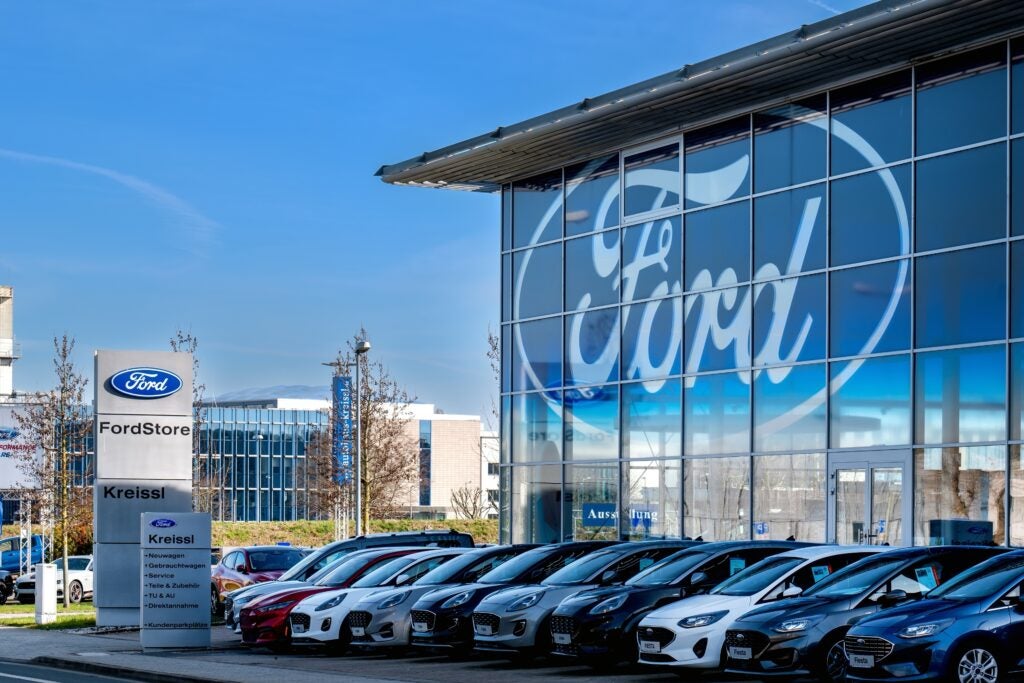
Gene Munster Says Ford's EV Pullback Could Be Beneficial For Tesla — Gary Black Says 'Ford Can't Make Money...' - Ford Motor (NYSE:F)
Benzinga· 2025-12-16 05:52
Core Viewpoint - Ford Motor Co. is experiencing a significant pullback in its electric vehicle (EV) strategy, which may have implications for competitors like Tesla Inc. [2][4] Group 1: Investor Insights - Gene Munster believes Ford's retreat from EVs could be advantageous for Tesla, suggesting that Ford's challenges in developing autonomous vehicles from hybrid powertrains may leave it behind in the autonomous vehicle sector [2] - Gary Black argues that Ford's shift towards hybrids signifies an acknowledgment that the company cannot profit from merely extending its EV brand with existing popular models like the F-150 Lightning [3] Group 2: Production Changes - Ford has announced the cessation of production for the F-150 Lightning EV Pickup truck, which was previously the best-selling EV pickup in the U.S., and is pivoting to an Extended Range Electric Vehicle (EREV) that offers up to 700 miles of range [4] Group 3: Regulatory Context - The pullback in Ford's EV strategy coincides with President Donald Trump's announcement of relaxed Corporate Average Fuel Economy (CAFE) Standards, which Ford CEO Jim Farley has praised as beneficial for producing American-made products [5] - Farley had previously predicted that EV adoption in the U.S. would reach only 5% [5] Group 4: Market Performance - Ford's stock declined by 0.80% to $13.65 at market close but rebounded by 1.11% to $13.80 in after-hours trading, indicating some market volatility [6]

Why Did Uber Stock Drop 10%?
Forbes· 2025-12-15 12:21
Core Viewpoint - Uber Technologies has experienced a 10% decline in stock price over the past month, attributed more to market sentiment than its strong fundamentals, despite reporting robust Q3 results [2][3] Financial Performance - Uber reported high-teens revenue growth and adjusted EBITDA exceeding $1.2 billion in Q3, with double-digit growth in gross bookings and increased monthly active users [3] - The stock price fell post-earnings, indicating investor concerns about future growth rather than the strong quarterly performance [3] Market Context - The broader tech sector has also faced declines, with high-growth companies experiencing drops between 8% and 15% [2] - Regulatory challenges, particularly in Europe, pose significant risks that could impact costs and margins in the upcoming year [3] Growth Opportunities - Uber has substantial long-term growth drivers, particularly in underpenetrated suburban U.S. markets, which could generate billions in additional annual bookings [4] - Delivery operations are expanding, supported by increasing order frequency and new service categories, alongside long-term initiatives in autonomous vehicles and AI-enhanced routing [4] Valuation and Investment Outlook - Currently priced around $84, Uber's stock trades at more reasonable cash-flow and earnings multiples compared to similar growth companies [5] - The stock may experience volatility due to regulatory news and tech sector fluctuations, but for long-term investors, the current decline makes Uber more appealing as fundamentals strengthen [5]