Decarbonisation

Search documents
X @The Economist
The Economist· 2025-11-08 15:20
If China’s renewables boom is to turn into a decarbonisation success, those renewables need make deep cuts in the amount of coal-fired power on the grid, rather than just to supplement it https://t.co/LN3e0sqqMZ ...
X @The Economist
The Economist· 2025-11-06 12:10
The world’s biggest manufacturer now has an interest in the world decarbonising https://t.co/g6pte3BxwS ...
X @The Economist
The Economist· 2025-11-03 18:31
China’s green-industrial complex makes deep decarbonisation possible, but far from inevitable https://t.co/dVZWQBJC4S ...
Oil and gas contractors supporting industry players in meeting net-zero goals
Yahoo Finance· 2025-10-31 15:27
Core Insights - Contractors play a crucial role in the oil and gas industry by enabling decarbonisation through their technical expertise and skilled workforce [1] - They are involved in various stages of operations, from advisory to technical execution, and are essential for fostering innovation and efficiency [2] - The market for low-carbon technologies is expanding, with contractors diversifying their offerings to include carbon capture and other emission reduction technologies [2][3] Industry Dynamics - Many contractors are focusing on specialized engineering and construction for low-carbon initiatives, which significantly impacts project viability and market speed [3] - Industrial gas producers are also entering the low-carbon space, providing comprehensive services for carbon capture and low-carbon hydrogen production [3] - Recent challenges in low-carbon energy developments, including inflation and regulatory issues, have led to project delays and cancellations, affecting contracting activity [4]
Svitzer and Cochin Shipyard Ltd. sign Letter of Intent to advance electric TRAnsverse tugs manufacturing in India
Globenewswire· 2025-10-31 15:01
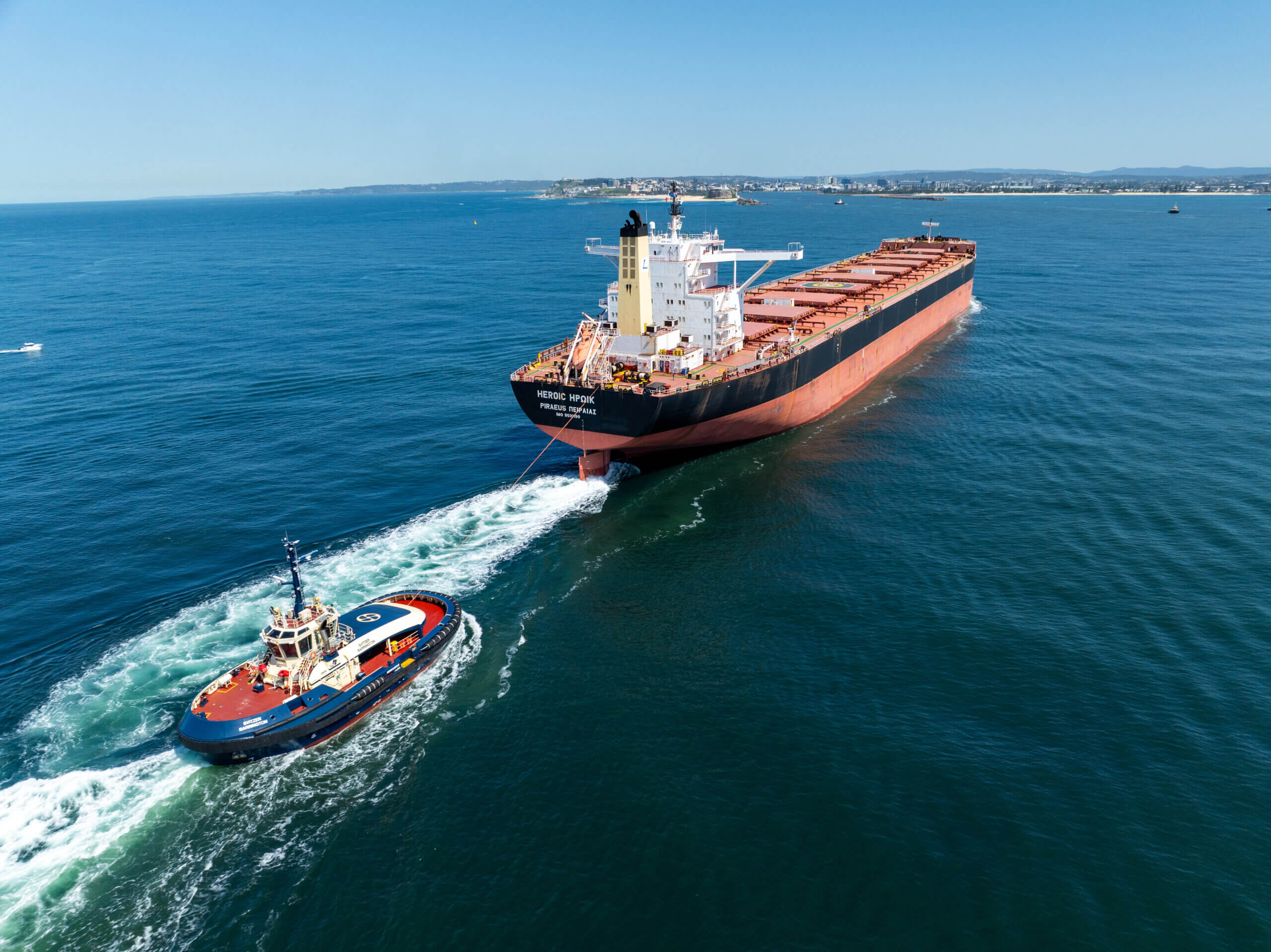
Core Viewpoint - Svitzer has signed a Letter of Intent with Cochin Shipyard Limited to construct electric TRAnsverse tugs in India, marking a significant step in Svitzer's electrification strategy and enhancing India's position in global maritime manufacturing [1][4]. Group 1: Collaboration and Expertise - The partnership will leverage Svitzer's global expertise in sustainable towage and CSL's shipbuilding capabilities, along with India's engineering talent and innovation ecosystem [2]. - The TRAnsverse tug design is central to this collaboration, known for its exceptional maneuverability and efficiency, which enhances safety and operational performance while reducing energy consumption and emissions [2]. Group 2: Market and Operational Impact - These electric tugs are intended for Svitzer's global fleet renewal and will also be deployed in Indian port operations, showcasing a locally built, world-class design [3]. - The collaboration aims to decarbonize towage and advance India's maritime industry towards a low-carbon future, enhancing the sustainability of port operations [4]. Group 3: Strategic Alignment - Svitzer's CEO emphasized the alignment with the Government of India's Maritime India Vision 2030 and Maritime Amrit Kaal Vision 2047, aiming to deliver cleaner and more efficient harbor operations [5]. - The Chairman of Cochin Shipyard Limited expressed optimism about showcasing CSL's capabilities and accelerating the availability of green, high-performance tugboats for both domestic and international ports [6].

Close Brothers expands asset finance offering to include hydrogen projects
Yahoo Finance· 2025-10-31 13:59
Core Viewpoint - Close Brothers Asset Finance has expanded its sustainability funding to include hydrogen projects, positioning itself as a leading lender in the hydrogen sector, which is crucial for decarbonisation in hard-to-electrify industries like heavy industry and transport [1][3]. Group 1: Funding and Offerings - The firm is providing funding across the hydrogen supply chain, including electrolysers, multi-element gas containers (MEGC), and Hydrogen Power Units (HPU), applicable in various sectors such as construction and film production [2]. - Close Brothers aims to support small to medium-sized enterprises and mid-size corporates, which are often underserved in the energy transition market [3]. Group 2: Strategic Insights - The decision to support hydrogen was based on extensive research into the hydrogen value chain, focusing on new-to-market assets that contribute to the emerging European green hydrogen market [3]. - The company offers multiple forms of finance from different security bases to adapt to market conditions in nascent markets, providing a comprehensive solution from production to end use [3].
Truckmakers urge EU to weaken CO₂ rules: T&E
Yahoo Finance· 2025-10-31 13:43
Core Viewpoint - Six major truck manufacturers have requested a revision of the EU's truck CO₂ Regulation, which could significantly impact the market for zero-emission trucks [1][2]. Group 1: Manufacturers' Request - The manufacturers, including Scania, MAN, Volvo Trucks, Daimler, IVECO, and Ford, are seeking an amendment to allow emissions credits, which would change how emissions reduction targets are calculated [1][2]. - This proposed change could lead to a reduction of approximately 27% in the number of zero-emission trucks sold by 2030 [2]. Group 2: Impact on Regulations - Transport & Environment (T&E) argues that the proposal would undermine the ambition of the current regulation and could delay the transition to zero-emission vehicles [3]. - T&E's freight and fleet director stated that the truckmakers' proposal, framed as a minor adjustment, would actually represent a significant rollback of Europe's decarbonization efforts [3]. Group 3: Investment Uncertainty - Altering the targets could create uncertainty for companies investing in charging infrastructure and grid capacity, as the trucking industry cites lack of infrastructure as a key bottleneck [4]. - The modeling by T&E suggests that manufacturers may use credits banked in previous years to ease compliance in 2030 and beyond, potentially affecting investment decisions [4]. Group 4: Competitive Pressure - Any delay in the transition to zero-emission trucks could increase competitive pressure from Chinese manufacturers, who are heavily investing in electric truck production [5].

ENGIE signs PPA with Meta for Swenson Ranch solar project in Texas
Yahoo Finance· 2025-10-28 11:11
Core Insights - ENGIE has signed a power purchase agreement (PPA) with Meta for the Swenson Ranch solar farm, which will be ENGIE's largest asset in the US upon commissioning in 2027 [1] - The project will have a capacity of 600MW and will contribute significantly to local economies, creating 350 skilled jobs and generating approximately $160 million in local tax revenues [2] Group 1: Project Details - The Swenson Ranch solar farm is set to deliver 600MW of electricity, becoming ENGIE's largest asset in the US [1] - The project will be operational by 2027 and will increase the total capacity of renewable PPAs between ENGIE and Meta to over 1.3GW across four major projects in Texas [2] Group 2: Economic Impact - The construction of the solar farm is expected to create 350 skilled jobs for the local community [2] - The project will contribute approximately $160 million in local tax revenues throughout its operational lifespan [2] Group 3: Strategic Importance - ENGIE's partnership with Meta reflects a shared commitment to promoting a sustainable energy model [3] - The project illustrates ENGIE's capability to design and deliver large-scale renewable projects while efficiently mobilizing the local value chain [4] Group 4: Market Position - ENGIE aims to secure 4.3GW of renewable PPAs by 2024, reinforcing its position in the global market, particularly in the US, where demand for renewable energy is increasing [5]

I Squared and LCI enter clean power partnership with Google
Yahoo Finance· 2025-10-24 10:54
Core Insights - I Squared Capital and Low Carbon Infrastructure have partnered with Google to develop Broadwing Energy, a cogeneration power plant with over 400MW capacity, featuring integrated carbon capture and sequestration (CCS) technology [1][3] Project Overview - The Broadwing Energy project aims to capture and permanently store more than 90% of its CO₂ emissions while generating 400MW of clean energy [2] - Mitsubishi Power will supply the M501JAC gas turbine for the project [2] Strategic Importance - The partnership highlights the convergence of private investment, technological innovation, and corporate energy demand to deliver scalable climate solutions [3] - The project is positioned as a commercially viable example of carbon capture technology [3] Development Details - The power plant will be located in Decatur, Illinois, on a site operated by Archer Daniels Midland (ADM), which has a decade-long record of safe CO₂ sequestration [3] - The captured CO₂ will be stored in ADM's EPA Class VI approved wells [4] Economic Impact - The construction phase will create 650 union craft labor positions and 100 roles in construction management and support staff over four years, with additional permanent jobs post-completion [5] - The project is part of a broader strategy to expand clean generation capacity in North America and support the decarbonization of heavy industry [5] Future Outlook - Project financing is expected to reach a final investment decision by Q2 2026, with commercial operations targeted for 2030 [4] - Google aims to support the scaling of clean, firm power through this partnership [6]
India-German ties: Piyush Goyal meets top business leaders in Berlin; strengthening trade on agenda
The Times Of India· 2025-10-24 06:03
Group 1 - Piyush Goyal's official visit to Berlin from October 23 aims to deepen India's economic engagement with Germany [2][5] - Discussions with Klaus Rosenfeld, CEO of Schaeffler AG, focused on collaborations in the automotive, AI, and advanced manufacturing sectors [2][5] - Meetings with Martin Herrenknecht, CEO of Herrenknecht AG, revolved around the company's growth plans in India and infrastructure development through local operations and technology partnerships [3][5] - Engagements with Tobias Bischof-Niemz from ENERTRAG addressed India's clean energy transition and sustainable development goals [3][5] - Investment opportunities in India's defense industry were explored with Michael Masur, CEO of RENK GmbH, focusing on engineering, digitization, and intelligence solutions [3][5] - Cooperation in the semiconductor and decarbonization fields was discussed with Jochen Hanebeck, CEO of Infineon Technologies AG [4][5] - The meeting with Ola Kallenius, CEO of Mercedes-Benz Group, centered on growth strategies and innovation in the automotive sector [4][6] Group 2 - Goyal's discussions with Luxembourg's Deputy Prime Minister, Xavier Bettel, aimed at enhancing trade relations between India and Luxembourg [4][6] - The visit coincides with the 25th anniversary of the India-Germany Strategic Partnership, marking a significant milestone in bilateral relations [4][6] - The series of meetings are intended to facilitate high-impact dialogue with industry leaders and government officials from both nations [4][6]