
Edge AI

Search documents
Ambarella Q4 Earnings and Revenues Surpass Estimates, Increase Y/Y
ZACKS· 2026-02-27 13:50
Core Insights - Ambarella, Inc. (AMBA) reported stronger-than-expected fourth-quarter fiscal 2026 results with non-GAAP earnings of 13 cents per share, exceeding the Zacks Consensus Estimate of 10 cents and reflecting an 18.2% increase from the previous year's earnings of 11 cents [1][11] - The company's fourth-quarter revenues reached $100.9 million, a 20.1% year-over-year increase, surpassing the Zacks Consensus Estimate of $100.3 million and falling within management's guidance range of $97-$103 million [2][11] Revenue Performance - The strong revenue growth was primarily driven by significant increases in the Internet of Things (IoT) and automotive segments, with IoT revenues growing nearly 50% year over year due to the rising adoption of edge AI, while automotive revenues rose in the high single digits [3][11] - A key customer, WT Microelectronics, contributed 73.1% of the company's fourth-quarter revenues, highlighting the importance of this partnership [4] Financial Metrics - The non-GAAP gross margin for the fourth quarter was 59.8%, aligning with management's guidance range of 59-60.5%, although it contracted by 220 basis points compared to the previous year [6] - Non-GAAP operating expenses were reported at $56.5 million, consistent with prior guidance [6] Cash Flow and Balance Sheet - At the end of the fourth quarter, Ambarella had cash, cash equivalents, and marketable debt securities totaling $312.6 million, an increase from $295.3 million at the end of the third quarter [7] - The company generated operating cash flow of $81.9 million and free cash flow of $15 million during the fourth quarter [7] Future Guidance - For the first quarter of fiscal 2027, Ambarella forecasts revenues between $97 million and $103 million, with expectations of sequential growth in automotive revenues, while IoT revenues are projected to decline quarter-over-quarter [8][11] - The consensus estimate for first-quarter revenues is $96.2 million, indicating a year-over-year increase of approximately 12% [8][11] - Non-GAAP gross margin for the first quarter is anticipated to be in the range of 59-60.5%, with operating expenses projected between $55-$58 million [9]


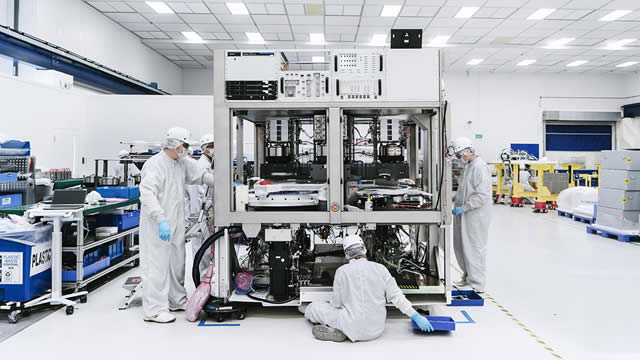
Clearfield AGM: Shareholders OK Directors, Say-on-Pay; CEO Reaffirms $160M-$170M FY26 Outlook
Yahoo Finance· 2026-02-27 09:30
Core Viewpoint - Clearfield held its 2026 annual meeting of shareholders online, where key management reaffirmed the company's revenue outlook for fiscal 2026 and discussed strategic initiatives aimed at enhancing shareholder value through a focus on fiber connectivity and new product offerings [5][6][14]. Shareholder Meeting Highlights - The meeting included the election of eight directors, with nominees such as Cheri Beranek and Walter Jones, Jr. [3] - Shareholders voted on three proposals: the election of directors, an advisory vote on executive compensation, and the ratification of the independent auditor, with the board recommending votes in favor of all [4][6]. Fiscal 2025 and 2026 Outlook - Management described fiscal 2025 as a "transformational year," emphasizing strategic focus and investments in sales and marketing [7][8]. - The company expects fiscal 2026 revenue to be between $160 million and $170 million, with potential for raising guidance in subsequent years [6][14]. Strategic Focus and Product Development - Clearfield is concentrating on fiber connectivity "at the edge," targeting community broadband and edge AI/data center opportunities with its new NOVA product line [6][9]. - The NOVA product line is characterized as high-density and modular, designed to reduce deployment complexity and support AI-driven architectures [10][11]. Market Positioning and Customer Base - Clearfield aims to position itself in the data center market without directly competing with larger players, focusing instead on community broadband providers [12][13]. - The company serves a diverse customer base, including cable and internet service providers, telecommunications operators, and municipalities [15][16].

Ambarella Q4 Earnings Call Highlights
Yahoo Finance· 2026-02-27 02:22
Core Insights - Ambarella reported significant design wins across various sectors, including IoT, enterprise security, and automotive markets, showcasing the versatility of its edge AI system-on-chips (SoCs) and software platform [3][5][6] Financial Performance - For fiscal 2026, Ambarella's revenue increased by 37.2% to $390.7 million, with a non-GAAP gross margin of 60.7% and cash and marketable securities totaling $312.6 million after generating $58 million in free cash flow [4][12][13] - In fiscal Q4, revenue was $100.9 million, reflecting a 20.1% year-over-year increase but a 7% sequential decline [14][15] - Guidance for fiscal Q1 2027 revenue is set between $97 million and $103 million, with expectations of sequential growth in automotive revenue [4][17] Product Developments - Ambarella's technology is being utilized in various new products, including security cameras from IDIS and Dallmeier, and high-end web cameras from Insta360 and QSC, all leveraging its CV72 and CV25 SoCs [1][2][5] - The company highlighted advancements in automotive safety and telematics, with products like Ford's DealerFit Truck Bed Camera and Thinkware's QXD2 digital video recorder utilizing Ambarella's AI capabilities [5][10] Market Opportunities - Ambarella identified robotics, automotive, and edge infrastructure as key long-term growth areas, with a projected automotive opportunity pipeline of approximately $13 billion from fiscal 2027 to fiscal 2032 [7][10] - The company is seeing early signs of growth in edge AI applications across diverse sectors, including factory automation and e-commerce warehouse robotics [8][9] Shareholder Returns - The board extended the share repurchase program, with approximately $48 million remaining under authorization, although no shares were repurchased in Q4 [16]
Data I/O (DAIO) - 2025 Q4 - Earnings Call Transcript
2026-02-26 23:02
Financial Data and Key Metrics Changes - Net sales in Q4 2025 were $4 million, down from $5.2 million in Q4 2024, while full-year net sales were $21.5 million compared to $21.8 million in the prior year [15] - Q4 bookings were $3.1 million, down 25% from $4.1 million in the prior year, and full-year bookings were $18.6 million, down 17% from $22.5 million in 2024 [15] - Gross margins for Q4 were 43%, compared to 52.2% in Q4 2024, and full-year gross margin was 49.3% for 2025 compared to 53.3% in the prior year [17][19] - Net loss for Q4 was $2.5 million or $0.27 per share, compared to a net loss of $1.2 million or $0.13 per share in Q4 2024; full-year net loss was $5 million or $0.53 per share, compared to a net loss of $3.1 million or $0.34 per share in 2024 [19] Business Line Data and Key Metrics Changes - Consumables, adapters, and services represented 58% of total revenue for 2025, while capital equipment sales accounted for 42% [16] - Sales to the automotive electronics sector represented 52% of 2025 bookings, down from 59% in 2024 [17] Market Data and Key Metrics Changes - Bookings and revenues were strongest in Asia, while North America demand remained consistent with the prior year, and Europe experienced a decline [16] - Overall backlog as of December 31, 2025, was $2.3 million, down from $2.7 million at the end of September [17] Company Strategy and Development Direction - The company is transforming to shift from a traditional programming CapEx market to a broader data provisioning market, which is a significantly larger opportunity [9] - The strategy includes modernizing the go-to-market approach, investing in the core platform, strengthening customer relationships, optimizing business operations, and deploying AI company-wide [6][8] - The company is expanding its addressable market by leveraging partnerships, such as the recent collaboration with IAR, to enhance security provisioning capabilities [10][100] Management's Comments on Operating Environment and Future Outlook - Management expressed confidence in being ahead of schedule in the transformation plan, with expectations for organic revenue growth in 2026 supported by early demand signals from edge AI infrastructure [14][22] - The company anticipates improved gross margins as revenue increases and cost discipline is maintained, targeting positive operating cash flow by the end of 2026 [22] Other Important Information - The company faced challenges in 2025, including a cyber attack, but managed to recover quickly and continue its transformation efforts [7] - Operating expenses for Q4 were $4.2 million, including one-time expenses related to SEC filings and restructuring, compared to $4 million in Q4 2024 [18] Q&A Session Summary Question: Impact of semiconductor manufacturing reshoring on revenue opportunity - Management noted that while reshoring creates jobs and growth, it does not directly impact revenue; however, there is increased activity and conversations with clients regarding production needs [25][27] Question: AI-assisted software development - Management highlighted advancements in AI that have significantly reduced costs and improved efficiency in software development processes, enabling faster product releases [32][34] Question: Update on M&A pipeline - Management confirmed an active M&A pipeline with several opportunities being explored, emphasizing a disciplined approach to acquisitions [55][60] Question: Customer activity in Q4 - Management indicated that while Q4 had some customer conversations, many were looking to finalize plans in Q1 and Q2, with a significant portion of the pipeline consisting of new opportunities [66][68] Question: Activity in the electric vehicle market - Management affirmed that the automotive sector remains a strong market, with ongoing discussions and new solutions being developed for existing clients [92][94]

Data I/O (DAIO) - 2025 Q4 - Earnings Call Transcript
2026-02-26 23:02
Financial Data and Key Metrics Changes - Net sales in Q4 2025 were $4 million, down from $5.2 million in Q4 2024. For the full year, net sales were $21.5 million compared to $21.8 million in the prior year [15] - Q4 bookings were $3.1 million, down 25% from $4.1 million in the prior year, while full year bookings were $18.6 million, down 17% from $22.5 million in 2024 [15] - Gross margins for Q4 were 43%, compared to 52.2% in Q4 2024, and full year gross margin was 49.3% for 2025 compared to 53.3% in the prior year [17] - Net loss for Q4 was $2.5 million or $0.27 per share, compared to a net loss of $1.2 million or $0.13 per share in Q4 2024. For the full year, net loss was $5 million or $0.53 per share, compared to a net loss of $3.1 million or $0.34 per share in 2024 [19] Business Line Data and Key Metrics Changes - Consumables, adapters, and services represented 58% of total revenue for 2025, while capital equipment sales accounted for 42% [16] - Sales to the automotive electronics sector represented 52% of 2025 bookings, down from 59% in 2024 [17] Market Data and Key Metrics Changes - Bookings and revenues were strongest in Asia, while North America demand remained consistent with the prior year, and Europe experienced a decline [16] - Overall backlog as of December 31, 2025, was $2.3 million, down from $2.7 million at the end of September [17] Company Strategy and Development Direction - The company is transforming to shift from a traditional programming CapEx market to a broader data provisioning market, which is a significantly larger opportunity [9] - The strategy includes modernizing the go-to-market approach, investing in the core platform, strengthening customer relationships, optimizing business operations, and deploying AI company-wide [6][8] - The company is actively pursuing M&A opportunities to fill strategic gaps and enhance growth [55][62] Management's Comments on Operating Environment and Future Outlook - Management expressed confidence in being ahead of schedule in the transformation plan, with expectations for organic revenue growth in 2026 supported by early demand signals from Edge AI infrastructure [14][22] - The company anticipates improved gross margins as revenue increases and cost discipline is maintained [22] - Management noted that the build-out of Edge AI is expected to create new revenue opportunities and align with customer demand [13][68] Other Important Information - The company has no debt on the balance sheet and maintains a solid liquidity position with cash at $7.9 million at the end of Q4 2025 [20][21] - Operating expenses for Q4 included one-time expenses related to SEC filings and restructuring, totaling approximately $312,000 [18] Q&A Session Summary Question: Impact of semiconductor manufacturing reshoring on revenue opportunity - Management indicated that while reshoring creates jobs and growth, it does not directly impact revenue. The focus remains on AI build-out and automation [25][26] Question: AI-assisted software development - Management discussed advancements in AI that have significantly reduced costs and improved efficiency in software development processes [29][34] Question: Balance sheet comfort level - Management expressed comfort with the balance sheet, noting a focus on controlling costs and targeting $1 million in run rate reductions [46][48] Question: M&A pipeline update - Management confirmed an active M&A pipeline with several opportunities being explored, emphasizing a disciplined approach to acquisitions [55][62] Question: Customer activity in Q4 - Management noted that while Q4 had some customer conversations, many were looking to finalize plans in Q1 and Q2, with a significant portion of the pipeline being new opportunities [66][68] Question: Activity in the electric vehicle market - Management confirmed that the automotive sector remains a strong market, with ongoing efforts to provide new solutions to existing customers [92][94] Question: Potential for additional partnerships - Management expressed interest in forming more partnerships similar to the agreement with IAR, which is expected to enhance growth opportunities [100][101]
Data I/O (DAIO) - 2025 Q4 - Earnings Call Transcript
2026-02-26 23:00
Financial Data and Key Metrics Changes - Net sales in Q4 2025 were $4 million, down from $5.2 million in Q4 2024, while full-year net sales were $21.5 million compared to $21.8 million in the prior year [16][17] - Q4 bookings were $3.1 million, a 25% decrease from $4.1 million in the prior year, and full-year bookings were $18.6 million, down 17% from $22.5 million in 2024 [17] - Gross margins for Q4 were 43%, down from 52.2% in Q4 2024, and full-year gross margin was 49.3%, compared to 53.3% in the prior year [19][20] - Net loss for Q4 was $2.5 million or $0.27 per share, compared to a net loss of $1.2 million or $0.13 per share in Q4 2024; full-year net loss was $5 million or $0.53 per share, compared to a net loss of $3.1 million or $0.34 per share in 2024 [21][22] Business Line Data and Key Metrics Changes - Consumables, adapters, and services accounted for 58% of total revenue in 2025, while capital equipment sales represented 42% [18] - Sales to the automotive electronics sector represented 52% of 2025 bookings, down from 59% in 2024 [19] Market Data and Key Metrics Changes - Bookings and revenues were strongest in Asia, while North America demand remained consistent, and Europe saw a decline [18] - The automotive electronics sector continues to be a significant market, with ongoing interest from customers despite some reassessment of EV capacity [19][96] Company Strategy and Development Direction - The company is transforming to focus on long-term growth, shifting from a traditional programming CapEx market to a broader data provisioning market [10][11] - The strategy includes modernizing go-to-market efforts, investing in core platforms, strengthening customer relationships, and optimizing operations [6][10] - Partnerships, such as the recent agreement with IAR, are seen as crucial for expanding capabilities and market reach [11][102] Management's Comments on Operating Environment and Future Outlook - Management acknowledges headwinds from tariffs and economic conditions but remains confident in the transformation and growth strategy [5][6] - There is optimism about the demand for products related to edge AI and the potential for a multi-year growth cycle in the semiconductor industry [14][15] - The company expects organic revenue growth in 2026, supported by early demand signals and a strong recurring revenue base [23][24] Other Important Information - The company has made significant investments in technology and infrastructure, including a transition to a new ERP system and enhancements in cybersecurity [20][21] - Cash at the end of Q4 was $7.9 million, down from $10.3 million at the end of 2024, reflecting one-time expenses and investments [22][23] Q&A Session Summary Question: Impact of reshoring semiconductor manufacturing on revenue opportunity - Management noted that while reshoring creates jobs and growth, it does not directly impact revenue; however, there is increased activity and conversations with clients regarding production needs [28][29] Question: AI-assisted software development implications - AI advancements are significantly improving efficiency in software development, reducing costs, and enabling faster product releases [34][36] Question: Update on M&A pipeline - The company has an active M&A pipeline with several opportunities being explored, emphasizing disciplined acquisition strategies [58][63] Question: Customer activity in Q4 and outlook - Customer conversations were positive, with many new opportunities emerging, particularly related to edge AI and data provisioning [69][70] Question: Automotive market activity - The automotive sector remains a strong market, with ongoing interest from clients and new solutions being developed to meet their needs [96][97]
Ambarella(AMBA) - 2026 Q4 - Earnings Call Transcript
2026-02-26 22:32
Financial Data and Key Metrics Changes - Fiscal year 2026 revenue increased by 37.2% to $390.7 million, with automotive revenue growing in the high single digits and IoT revenue increasing almost 50% year-over-year [10][11] - Non-GAAP gross margin for fiscal year 2026 was 60.7%, down from 62.7% in fiscal year 2025 [10] - For fiscal Q4, revenue was $100.9 million, down 7% from the prior quarter but up 20.1% year-over-year [11][12] - Non-GAAP gross margin for fiscal Q4 was 59.8%, at the midpoint of prior guidance [12] Business Line Data and Key Metrics Changes - Automotive revenue led by telematics increased in the high single digits, while IoT revenue surged almost 50% year-over-year, driven by portable video and strong growth in physical security [10] - Non-GAAP operating expenses increased by 12.9% for the year, driven by higher costs related to employees and SoC development projects [11] Market Data and Key Metrics Changes - The automotive opportunities pipeline is approximately $13 billion, with a healthy design win momentum despite a weak automotive market in 2025 [7][22] - The edge AI market is seeing early customer opportunities with two different design architectures: physical AI and digital AI [8] Company Strategy and Development Direction - The company is focusing on building partnerships with ISVs and distributors, aiming for at least 1,000 ISVs committed to their platform by the end of the year [31] - The company is committed to its edge AI strategy and driving earnings growth, with significant long-term growth opportunities in robotics, automotive, and edge infrastructure markets [5][9] Management's Comments on Operating Environment and Future Outlook - Management expressed confidence in continuing growth momentum, with expectations for both IoT and automotive sectors to grow in fiscal 2027 [35] - The company is monitoring the impact of component cost inflation but does not expect a significant direct impact on its business [53] Other Important Information - Cash and marketable securities totaled $312.6 million, up from $250.3 million at the end of the prior year, driven by free cash flow of $58 million for the year [11][12] - The company has extended its share repurchase program for an additional 12 months, ending June 30, 2026 [14] Q&A Session Summary Question: Details on e-commerce warehouse robotics win - The project is in low volume production and is expected to grow, indicating significant potential for automation in warehouses [18][19] Question: Update on the auto pipeline - The total automotive opportunities pipeline is $13 billion, showing growth compared to last year despite a flat business in one segment [20][21][22] Question: Channel strategy and semi-custom ASIC business - The new go-to-market strategy focuses on building partnerships with ISVs and distributors, with expectations for revenue ramp-up in the following year [31][32] Question: Competitive landscape in the drone market - DJI continues to build its own silicon but also uses external solutions, while most other companies prefer to use external silicon [39] Question: Long-term gross margin outlook - The company expects to maintain a long-term gross margin of 59%-62%, with potential adjustments as the semi-custom chip business matures [46][47] Question: Impact of recent restrictions on a Chinese competitor - Current design wins are not impacted, but future opportunities may be affected depending on regulatory reviews [51][52] Question: Demand environment from component cost inflation - There is concern among customers about price increases, but the company does not expect a significant impact on its business [53][54] Question: Seasonality related to CV7 launch - Initial revenue from CV7 is not expected this year, but there is significant interest and design wins anticipated [57][58]
Ambarella(AMBA) - 2026 Q4 - Earnings Call Transcript
2026-02-26 22:32
Financial Data and Key Metrics Changes - Fiscal year 2026 revenue increased by 37.2% to $390.7 million, with automotive revenue growing in the high single digits and IoT revenue increasing almost 50% year-over-year [11][12] - Non-GAAP gross margin for fiscal year 2026 was 60.7%, down from 62.7% in fiscal year 2025 [11] - For fiscal Q4, revenue was $100.9 million, down 7% from the prior quarter but up 20.1% year-over-year [12][13] - Non-GAAP gross margin for fiscal Q4 was 59.8%, at the midpoint of prior guidance [13] Business Line Data and Key Metrics Changes - Automotive revenue was primarily driven by telematics, while IoT revenue was led by portable video and strong growth in physical security [11] - Non-GAAP operating expenses increased by 12.9% for the year, driven by higher costs related to employees and SoC development projects [12] Market Data and Key Metrics Changes - The automotive opportunities pipeline is approximately $13 billion, with a healthy design win momentum despite a weak automotive market in 2025 [8][22] - The edge AI market is seeing early customer opportunities with two different design architectures: physical AI and digital AI [9][10] Company Strategy and Development Direction - The company is focusing on building partnerships with ISVs and distributors, aiming to have at least 1,000 ISVs committed to its platform by the end of the year [32] - The company is committed to its edge AI strategy and driving earnings growth, with significant long-term growth opportunities in robotics, automotive, and edge infrastructure markets [6][10] Management's Comments on Operating Environment and Future Outlook - Management expressed confidence in continuing growth momentum, driven by new product ramp-ups and strong customer demand [36] - The company is monitoring the impact of component cost inflation, particularly DRAM prices, but does not expect a significant direct impact on its business [55] Other Important Information - Cash and marketable securities totaled $312.6 million, up from $250.3 million at the end of the prior year, driven by free cash flow of $58 million for the year [12][14] - The company did not repurchase shares in Q4 but has approximately $48 million available under its repurchase authorization [15][16] Q&A Session Summary Question: Details on e-commerce warehouse robotics win - The project is in low volume production, with expectations for growth as it expands to more warehouses [20] Question: Update on the auto pipeline - The total automotive opportunities pipeline is $13 billion, showing growth compared to last year [22][26] Question: Channel strategy and semi-custom ASIC business - The new go-to-market strategy focuses on building partnerships with ISVs and distributors, with expectations for revenue ramp-up in the following year [32][33] Question: Competitive landscape in the drone market - DJI continues to build its own silicon but also uses external solutions; most other companies in the drone market are expected to use external silicon [40] Question: Long-term gross margin outlook - The company expects to maintain a long-term gross margin within the range of 59%-62% [48] Question: Impact of Chinese competitor restrictions - Current design wins are not impacted, but future opportunities may be affected depending on regulatory outcomes [52][53] Question: Impact of component cost inflation - Customers are more concerned about price increases rather than shortages, with low-margin products being the most affected [55] Question: Seasonality related to CV7 launch - Initial revenue from CV7 is not expected this year, but significant interest and design wins are anticipated [58][59] Question: IoT business breakdown - The IoT business is roughly 50% industrial and 50% consumer-driven [67]
Ambarella(AMBA) - 2026 Q4 - Earnings Call Transcript
2026-02-26 22:30
Financial Data and Key Metrics Changes - Fiscal year 2026 revenue increased by 37.2% to $390.7 million, with automotive revenue growing in the high single digits and IoT revenue increasing almost 50% year-over-year [8][89] - Non-GAAP gross margin for fiscal year 2026 was 60.7%, down from 62.7% in fiscal year 2025 [9][90] - Ending cash and marketable securities totaled $312.6 million, up from $250.3 million at the end of the prior year, driven by free cash flow of $58 million for the year, or 14.8% of revenue [9][10] Business Line Data and Key Metrics Changes - Automotive revenue, led by telematics, increased in the high single digits, while IoT revenue increased almost 50% year-over-year, driven by portable video and strong growth in physical security [8][89] - For fiscal Q4, revenue was $100.9 million, down 7% from the prior quarter but up 20.1% year-over-year [10][89] - Non-GAAP operating expenses increased by 12.9% for the year, driven by higher costs related to employees and SoC development projects [9][90] Market Data and Key Metrics Changes - The automotive opportunities pipeline is approximately $13 billion, with a similar proportion of won opportunities compared to the previous year [5][86] - The edge infrastructure market is seeing early customer opportunities with two different design architectures: physical AI and digital AI [6][87] Company Strategy and Development Direction - The company is focusing on building an indirect sales channel with independent software developers, distributors, and system integrators to enhance its market presence [76][78] - The establishment of a semi-custom/custom ASIC business is a strategic development, with strong interest from various companies [77][78] - The company aims to leverage its deep intellectual property and advanced capabilities in edge AI to support a variety of applications and use cases [78][79] Management's Comments on Operating Environment and Future Outlook - The company anticipates total revenue growth in the range of 10%-15% for fiscal year 2027, with non-GAAP gross margin expected to remain within the long-term model of 59%-62% [74][89] - Management expressed confidence in continuing to ride the momentum from new product ramp-ups and strong customer demand for higher AI performance [34][74] Other Important Information - The company reported a free cash flow of over $58 million for the year, marking its seventeenth consecutive year of positive free cash flow [75][89] - The Cooper development platform is continuously enhanced to support a wide range of edge AI applications and customer implementations [79][88] Q&A Session Summary Question: Can you provide more detail on the e-commerce warehouse robotics win? - The project is in low volume production, with expectations for growth as it expands to more warehouses, indicating significant potential for automation in warehouse operations [16][17] Question: What is the current status of the automotive pipeline? - The automotive opportunities pipeline stands at $13 billion, showing growth compared to the previous year, despite a flat proportion of won opportunities [18][19][22] Question: How is the channel strategy progressing? - The company is focusing on building partnerships with independent software developers and distributors, aiming for at least 1,000 ISVs committed to their platform by year-end [28][29] Question: What is the competitive landscape in the drone market? - DJI continues to build its own silicon but also uses external solutions, while most other companies in the drone market are expected to rely on external silicon [37][38] Question: Are there any impacts from recent restrictions on a Chinese competitor in the drone market? - Current design wins are not impacted, but future opportunities may depend on regulatory reviews, with significant markets outside the U.S. still available [48][49] Question: How is the company addressing component cost inflation? - While there is no direct impact, customers are concerned about price increases, particularly in low-margin products, but the company does not expect significant effects on its operations [49][50] Question: How will the ASIC business impact the P&L? - It is too early to discuss the business model for the new go-to-market strategy, but the ASIC business will involve non-recurring engineering (NRE) costs, which are essential for project viability [57][58][60] Question: What is the breakdown of the IoT business between industrial and consumer? - The IoT business is roughly 50/50 between industrial and consumer-driven segments, with a mix of enterprise and consumer applications [62][64]
Ambarella(AMBA) - 2026 Q4 - Earnings Call Transcript
2026-02-26 22:30
Financial Data and Key Metrics Changes - Fiscal year 2026 revenue increased by 37.2% year-over-year to $390.7 million, establishing a new revenue record for the company [6][20] - Non-GAAP gross margin for fiscal year 2026 was 60.7%, down from 62.7% in fiscal year 2025 [20] - Free cash flow for the year was $58 million, representing 15% of revenue, marking the 17th consecutive year of positive free cash flow [8] Business Line Data and Key Metrics Changes - Edge AI revenue grew by 50% year-over-year, accounting for about 80% of full-year fiscal 2026 revenue [6][8] - Automotive revenue increased in the high single digits, while IoT revenue surged nearly 50% year-over-year, driven by portable video and strong growth in physical security [20] - Fourth quarter revenue was $100.9 million, down 7% sequentially but up 20.1% year-over-year [21] Market Data and Key Metrics Changes - The automotive opportunities pipeline is approximately $13 billion, with a healthy design win momentum despite a weak automotive market in 2025 [16][30] - The company shipped over 25 million units across more than 15 SoCs, demonstrating resilience amid industry-wide supply chain constraints [8] Company Strategy and Development Direction - The company is enhancing its direct-to-customer go-to-market strategy and building an indirect sales channel, targeting independent software developers and system integrators [9] - A semi-custom ASIC business is being established, with strong interest from various companies, indicating a strategic shift towards custom solutions [9][41] - The company aims to leverage its deep intellectual property and advanced capabilities in Edge AI to capture emerging market opportunities [10] Management's Comments on Operating Environment and Future Outlook - Management anticipates total revenue growth in the range of 10%-15% for fiscal 2027, driven by new product cycles and increased average selling prices [7][43] - The company remains confident in its Edge AI strategy and expects to continue benefiting from strong customer demand for higher AI performance applications [66] - Management noted that while component cost inflation is a concern for customers, it does not expect a significant direct impact on its operations [61] Other Important Information - The company has a logistics partner, WT Microelectronics, which accounted for 73.1% of revenue in the fourth quarter [24] - The first quarter of fiscal year 2027 is expected to see revenue in the range of $97 million to $103 million, with automotive revenue anticipated to increase [25] Q&A Session Summary Question: Details on e-commerce warehouse robotics win - The project is in low volume production and is expected to grow significantly as it expands to more warehouses [27][28] Question: Update on the automotive pipeline - The total automotive opportunity is $13 billion, with growth observed despite a flat year-over-year comparison in one business segment [30][32] Question: Channel strategy and semi-custom ASIC business - The company is focusing on building partnerships with ISVs and system integrators, aiming for at least 1,000 commitments by year-end [40] - Interest in semi-custom ASICs is strong, with expectations for new design wins in the IoT space [41][42] Question: Competitive landscape in the drone market - The company is well-positioned as most competitors do not plan to build their own silicon, relying instead on external solutions [49] Question: Impact of Chinese competitor restrictions - Current design wins are not impacted, but future opportunities may be affected depending on regulatory outcomes [60] Question: Demand environment and component cost inflation - While customers are concerned about price increases, the company does not expect a significant direct impact on its operations [61] Question: Validity of CV7 launch and ASP uplift - The CV7 is expected to generate significant interest, with a premium ASP anticipated compared to the current CV5 [66]