Ethics

Search documents
Exploring the Shades of Grey in Morality | Alejandra Garcia | TEDxYouth@TashkentIntlSchool
TEDx Talks· 2025-07-25 14:58
Core Argument - The report questions the objective nature of right and wrong, suggesting that morality is subjective and influenced by circumstances [16][17] - It challenges the audience to consider the nuances and "shades of gray" in moral dilemmas rather than adhering to rigid definitions [17] Examples Challenging Societal Norms - Murder: The report presents Julia Tfana, who killed over 600 men, as potentially a hero for helping women escape abusive marriages [6] - Murder: It also mentions Luji Majon, accused of killing the CEO of United Healthcare, arguing it was an action against unfair healthcare practices [7] - Theft: The Citizens Commission to Investigate the FBI, who stole classified documents exposing illegal projects, were honored despite their crime [8][11] - Theft: The Isabella Stewart Gardner Museum heist, involving $500 million in stolen art, is presented as potentially reclaiming stolen art and disrupting wealth concentration [9][10] - Vandalism and Destruction: The report highlights Banksy's graffiti as a form of social and political commentary, questioning whether it's justified despite being illegal [12][13] - Vandalism and Destruction: It also references the women's suffrage movement's destructive protests as a means to achieve equality [13] Key Considerations - The report emphasizes that events and real-life experiences can alter perceptions of morality and challenge previously established norms [3] - It suggests that questioning established rules is crucial, rather than blindly accepting them [16]


Biased AI is Already Deciding Your Future | Chioma Onyekpere | TEDxWinnipeg
TEDx Talks· 2025-07-24 15:31
AI Bias & Fairness - AI systems mimic human intelligence, learning from data to make classifications and predictions [6][8] - Bias in AI arises from non-diverse or incomplete data, leading to unfair or discriminatory outcomes [3][4] - AI amplifies existing inequalities by reflecting and perpetuating biases present in the data it's trained on [18] - Assumptions about identity are not valid data, yet AI learns from these assumptions if they are included in the training data [3][4] Examples of AI Bias - Applicant tracking systems can penalize resumes based on gendered language due to biased training data [12][13] - Facial recognition systems misidentify African and Asian faces more frequently than white faces [14] - Voice assistants misunderstand non-white speakers nearly twice as often as white speakers, with error rates up to 35% [16] - Insurance algorithms may charge higher premiums to certain demographics based on biased risk models [16][17] Addressing AI Bias - It is crucial to question the data used to train AI, ensuring it represents the entire population [19] - Building diverse teams can help recognize and identify biases that others might miss [19] - Organizations should set ethical guidelines and audit AI systems for bias, making fairness a performance metric [19][20] - Transparency in AI systems is essential, with models providing citations and reasoning for their decisions [21]

'Can't fake her way through this': Fmr. DOJ atty on Pam Bondi amid Epstein files fallout
MSNBC· 2025-07-15 04:08
former federal prosecutor and senior writer for political magazine on Kushkadori and Liz Oyer a former justice department pardon attorney. You could say this is all mega drama and it's happening over there and it's a sideshow except for the fact that the mega drama is happening inside the department of justice which means that it has implications for all Americans. What do you see as the stakes of what's going on right now.You know, I think all of this is bad enough within its four corners. you know, either ...

Evidence Over Obedience | Ellie Sun | TEDxYouth@YCYWShanghai
TEDx Talks· 2025-07-08 15:28
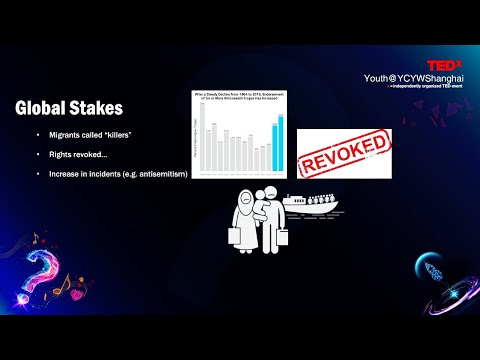
Ethical Considerations & Compliance - The presentation highlights the disturbing statistic that 65% of people were willing to administer electric shocks to a stranger in the Milgram experiment, emphasizing the tendency to blindly follow orders [1] - Studies suggest that asking about the ethical cost of an action can reduce blind compliance by 52% [7] - The presentation introduces a three-step toolkit: challenge (ask why), verify (use global data), and act (speak, refuse, vote) to promote ethical behavior [7][8] Critical Thinking & Decision Making - The presentation emphasizes the importance of challenging authority and demanding evidence as a duty of every ethical citizen [10] - The presentation advocates for critical thinking skills to uphold moral rigor in a turbulent world [10][11] - The presentation suggests that questioning authority is not about rebellion but about upholding moral rigor [10] Social Responsibility & Impact - The presentation connects blind compliance to historical events like the Holocaust, where ordinary citizens committed atrocities [3] - The presentation highlights contemporary issues like the spread of false claims, discrimination against migrants, and anti-semitism [6] - The presentation encourages individuals to act ethically to make the world a better place [11]
Empowering Next Generation of Healthcare innovators | Dr. Rasha Msallam | TEDxPristinePrivateSchool
TEDx Talks· 2025-07-03 16:25
Innovation & Talent - The healthcare industry emphasizes the importance of talent and innovators in overcoming obstacles and meeting unmet needs [6] - The industry encourages curiosity and questioning of established facts to stay informed [7][8] - A learning journey is crucial, with no time frame, age, or limits, especially with the accessibility of information [9][10] Translational Impact & Collaboration - Healthcare innovation should focus on translating ideas into real-world impact, exemplified by simple solutions addressing complex needs [13][14] - Collaboration across borders, disciplines, and perspectives is essential for avoiding failures and advancing healthcare [18] - Decentralizing healthcare, including clinical trials, is a growing trend, requiring integration of telemedicine and other non-medical components [19][20][21] Ethics & Equity - Ethics should be a primary consideration in healthcare innovation, especially with advancements like at-home DNA tests [21][22] - The industry should work towards health equity, drawing inspiration from examples like the unpatented polio vaccine [24][25] - Innovators should be translators, communicating ideas plainly and considering societal needs for relevance [27] Leadership & Purpose - Ego should be avoided, and innovators should focus on the purpose of helping patients and communities [28][29] - Supporting and encouraging the next generation of scientists and innovators is crucial for the future of healthcare [30][31] - Femtech, innovations targeting women's health, is an example of addressing specific healthcare needs [30]

Veg vs non-veg: beyond the plate | Muhammad Shaff | TEDxMyddelton College Jinhua Youth
TEDx Talks· 2025-07-03 15:04
Health Implications - Vegetarian diets are associated with a 16% lower risk of coronary disease due to high fiber, antioxidants, and plant-based nutrients [3] - 100 grams of chicken breast provides 31 grams of high-quality protein, essential for muscle building [4] - Processed meat is classified as a Group 1 carcinogen by the World Health Organization, with regular consumption potentially leading to cancer [4] Environmental Impact - Livestock production accounts for 145% of global greenhouse gas emissions [5] - Producing one pound of meat requires 1,800 gallons of water, while one pound of wheat requires only 25 gallons [6] - Vegan diets produce 75% less greenhouse gas emissions compared to meat-inclusive diets [6] - Deforestation occurs annually in areas like the Amazon River basin for cattle ranching [6] Ethical Considerations - Concerns exist regarding the confinement of chickens in small cages and pigs in small stalls [7] - Governments worldwide are attempting to improve animal welfare standards in farming practices [7] - Ensuring animals are raised well can lead to better quality protein and meat for consumers [8]

Ethics in Maritime Business | Zarir S. Irani | TEDxSGGSCC
TEDx Talks· 2025-07-02 16:16
To educate a man in mind and not in morals is to educate a menace to society. A ship is meant to be out at sea, but she's the safest in a harbor. Ethical conduct is the compass that guides us when we set sail into uncertain waters.Welcome everyone. My name is Captain Zar Irani. I've been out at sea for 14 years, done my time as they say, and have been involved in the maritime business for 20 34 years and counting.Today we're going to talk about the ethical compass of a marine business for that matter. These ...

Rewriting AI’s Future for All | Shana Feggins | TEDxRoxbury
TEDx Talks· 2025-06-16 15:10
AI Ethics and Bias - AI systems are currently making decisions that impact lives, potentially closing doors to opportunities like grocery stores, healthcare, and home loans [2] - Facial recognition technology can fail to identify certain groups up to 35% more often than others, highlighting bias in AI [3] - The AI field lacks diversity, with only 25% of AI engineers identifying as a minority and 22% as women, and these numbers are decreasing [4] - AI trained on inequitable data reproduces and scales existing biases, impacting hiring, medical diagnostics, and criminal justice [6][7] - Ethical AI should be fit, fair, inclusive, and transparent, actively working to eliminate discrimination and ensuring accountability [8][9] Social Mobility and Economic Impact - AI has the potential to widen the wealth gap by $43 billion if not managed properly [11] - AI-driven automation is estimated to displace 85 million jobs but create 97 million new ones, resulting in a net increase of 12 million jobs globally [11] - Communities risk missing out on the future of work, wealth, and leadership if they are not involved in AI innovation [12] - Education, funding for tech founders, and policies that prioritize people over profit are needed to ensure equitable participation in the AI economy [12] Agentic AI and Human Oversight - Agentic AI systems, which operate with autonomy, require human-defined goals to ensure they align with human values [15] - Human oversight is crucial throughout the AI lifecycle to train, monitor, and correct AI decisions, especially when they impact real lives [16][17] - AI should center on human values and maintain human involvement to ensure context, compassion, and ethical judgment are considered [16][17]