Geopolitical Risk

Search documents
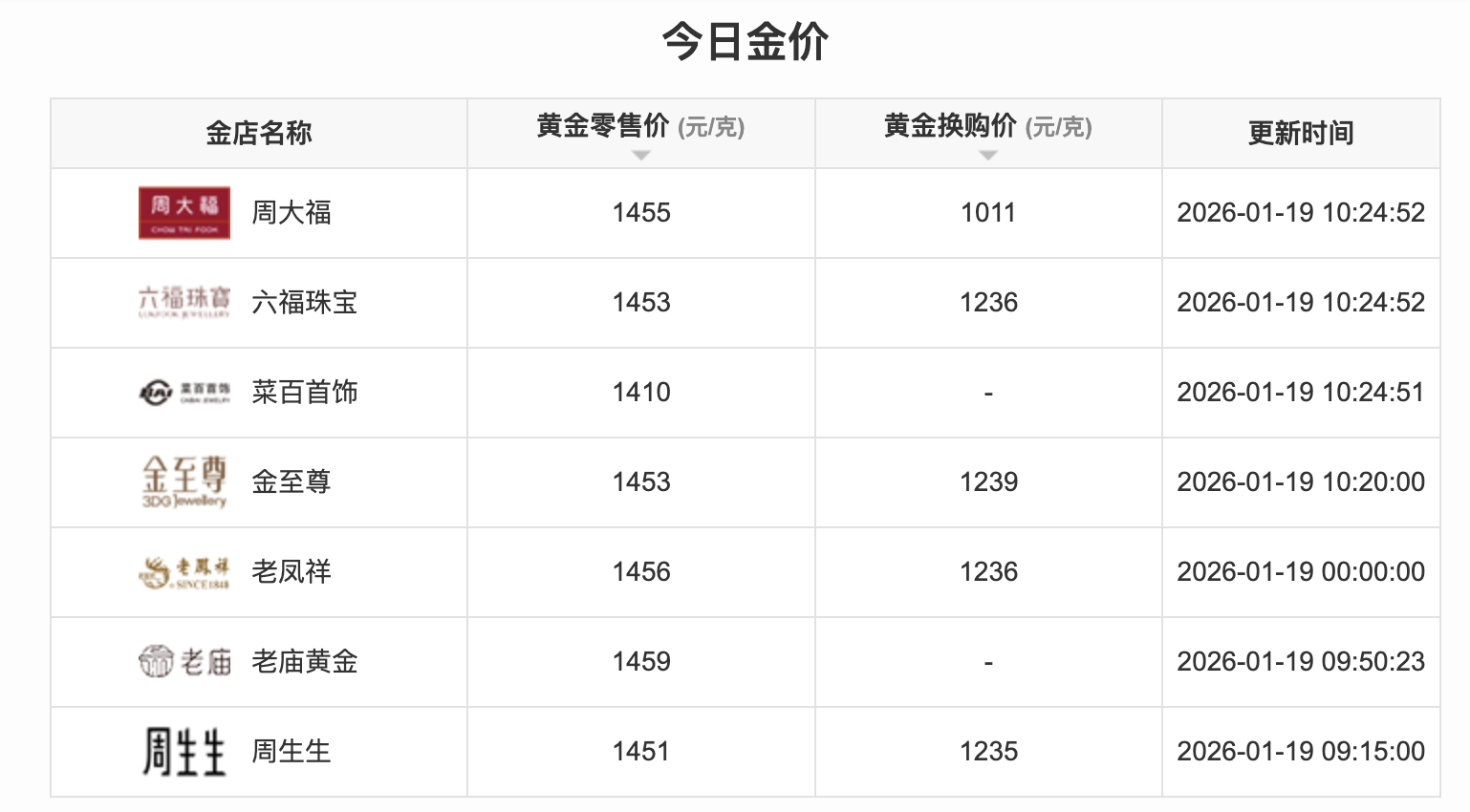
金价再创历史新高!金饰克价日涨24元,最高报1459元
2 1 Shi Ji Jing Ji Bao Dao· 2026-01-19 02:51
Group 1 - The international gold market experienced a significant surge on January 19, with spot gold reaching a historical high of $4,690 per ounce, marking a daily increase of over 2% [1] - COMEX gold futures also rose sharply, peaking at $4,698 per ounce, just shy of the $4,700 mark [1] - Domestic gold jewelry brands in China reported prices at historical highs, with notable increases such as Lao Miao gold at 1,459 yuan per gram, up 24 yuan from the previous day [1] Group 2 - The recent surge in gold prices is attributed to a combination of short-term geopolitical risks and long-term macroeconomic expectations [3] - Reports indicate that former U.S. President Trump announced plans to impose tariffs on eight European countries starting February 1, which may heighten geopolitical tensions and influence precious metal market volatility [3] - Analysts suggest that the core driving logic in the gold market is the interplay between delayed policy easing expectations and persistent inflation realities, with central banks, particularly the Federal Reserve, expected to consider rate cuts by 2026 [3]

地缘政治风险-信号、资金流与关键数据:跨资产监测、数据、动向及情绪 资金流 持仓模型的周度汇总
2026-01-15 06:33
Summary of Key Points from the Conference Call Industry Overview - The report focuses on the global financial markets, particularly the performance of various asset classes including equities, fixed income, currencies, and commodities. Core Insights and Arguments - **Oil Market Dynamics**: Oil prices increased due to supply disruption concerns from Venezuela and Iran, with expectations that near-term risks may be offset by potential higher output if political conditions stabilize [7][8]. - **DXY Index Movement**: The DXY index rose by 0.7% amid geopolitical uncertainties and a weaker unemployment report, indicating a test of the USD's safe-haven status [7][10]. - **Federal Reserve Rate Cuts**: The market-implied probability of Fed rate cuts decreased following a decline in the unemployment rate, suggesting less immediate need for rate cuts to stabilize the labor market [7][11]. - **Equity Market Forecasts**: Morgan Stanley provided forecasts for various equity indices for Q4 2026, with the S&P 500 expected to return between -18.5% (bear case) and 30.3% (bull case) [3]. - **Global Economic Indicators**: UK construction PMI showed a downside surprise, leading to a bull-flattening of UK gilts, indicating that growth is crucial for near-term Bank of England actions [7][16]. Additional Important Insights - **ETF Fund Flows**: The report tracks daily fund flows across approximately 5,000 ETFs globally, covering around $7 trillion in assets, providing insights into cross-asset sentiment and positioning [19]. - **Market Sentiment Indicator (MSI)**: The MSI aggregates survey positioning, volatility, and momentum data to quantify market stress and sentiment, indicating a mixed sentiment environment [57]. - **COVA Framework**: The correlation-valuation (COVA) scorecard identifies good portfolio diversifiers at reasonable prices, rewarding assets with negative correlation to equities and stable correlations [62][64]. Performance Metrics - **Equity Returns**: The report outlines expected returns for various global equity indices, with the S&P 500 forecasted to have a base case return of 13.1% [3]. - **Commodity Performance**: Silver outperformed the Bloomberg Commodity Spot Index (BCOMSP) with an increase of 11.7% [68]. - **Bond Market Trends**: US High Yield (HY) and EUR HY tightened by 11 basis points and 13 basis points, respectively, indicating a positive trend in the bond market [68]. This summary encapsulates the key points from the conference call, highlighting the current state of the financial markets, forecasts, and significant trends that could impact investment decisions.

观点:拉锯战-顺周期韧性 vs 地缘政治压力0The J.P. Morgan View_ Tug of War_ Procyclical Strength vs. Geopolitical Strains
2026-01-15 06:33
Summary of Key Points from J.P. Morgan's Global Markets Strategy Industry Overview - The report discusses the **global financial markets** with a focus on the **U.S. economy**, **oil supply dynamics**, and **metals market** trends, particularly in relation to geopolitical risks and macroeconomic indicators. Core Insights and Arguments 1. **Geopolitical Risks vs. Financial Market Resilience** - There is a growing disconnect between calm financial markets and rising geopolitical risks, particularly highlighted by events in **Venezuela** and **Greenland** [5][15] - The U.S. Economic Policy Uncertainty Index remains elevated, while the VIX indicates a contained risk environment, suggesting a procyclical, risk-on market sentiment [11][15] 2. **U.S. Economic Outlook** - The U.S. labor market shows resilience with a December report indicating +50k nonfarm payrolls and an unemployment rate decrease to **4.4%** [16] - The expectation is that the Federal Reserve will maintain policy rates without cuts for the remainder of the year, despite market pricing in potential cuts [17] 3. **Oil Supply Dynamics** - Following political changes in Venezuela, there is potential for oil production to rebound to **1.2 million barrels per day (mbd)** from current levels of **0.8 mbd**, with further increases possible in the coming years [18] - Venezuela's oil reserves are significant, holding **303 billion barrels**, which could shift global energy market dynamics [18] 4. **Metals Market Trends** - The report maintains a bullish outlook on **gold** and **copper**, with expectations for gold prices to rise towards **$5,000/oz** by Q4 2026 [23] - Silver prices have surged but are expected to face downward pressure due to upcoming rebalancing, with a noted **44% increase** since early December [22] 5. **Investment Recommendations** - The report recommends a focus on **procyclical assets** and **high-beta currencies** such as **AUD**, **GBP**, and **EUR** [7] - In equities, a preference for sectors like **Technology**, **Communication Services**, and **Utilities** is noted, while **Energy** and **Materials** are underweighted [12][33] Additional Important Content - **Risks Identified**: Key risks include a higher Fed terminal rate, spillover risks from fiscal concerns in Japan, and geopolitical escalations beyond Venezuela [6][29] - **Market Sentiment**: The report indicates that the resilient macro outlook is widely held among clients, with concerns about potential corrections if the Fed's easing is slower than expected [29] - **Commodities Forecast**: The forecast for oil prices remains stable despite potential increases in Venezuelan supply, with expectations for a decline in the forward curve beyond three years [8] This summary encapsulates the critical insights and recommendations from J.P. Morgan's analysis, providing a comprehensive overview of the current market landscape and future expectations.
Geopolitical Risk Pushes Crude Oil Prices Higher
Yahoo Finance· 2026-01-14 20:19
Core Insights - Crude oil and gasoline prices are experiencing a significant rally, with crude reaching a 2.5-month high and gasoline a 5-week high, driven by geopolitical tensions in Iran that threaten crude supplies [2][3] - A bearish EIA inventory report indicated an increase in crude and gasoline supplies, which caused a slight pullback in crude prices from their peak levels [2] Geopolitical Factors - Unrest in Iran, fueled by protests against government policies leading to economic collapse, is contributing to rising crude prices, with potential disruptions to Iran's production of over 3 million bpd if the situation escalates [3] - The U.S. has advised some personnel to leave the Al Udeid Air base in Qatar due to concerns over Iranian retaliatory actions, which could further impact oil supply dynamics [3] Supply Chain Disruptions - Drone attacks on oil tankers near the Caspian Pipeline Consortium terminal have reduced crude loadings by nearly half to around 900,000 bpd, providing additional support for crude prices [4] - Crude oil stored on stationary tankers has decreased by 0.3% week-over-week, indicating a tightening supply situation [4] Demand Dynamics - Chinese crude demand is strengthening, with December imports projected to rise by 10% month-over-month to a record 12.2 million bpd as the country rebuilds its crude inventories [5] OPEC+ Production Strategy - OPEC+ has decided to maintain its pause on production increases in Q1 of 2026, following a previous announcement to raise production by 137,000 bpd in December [6] - The International Energy Agency (IEA) forecasts a record global oil surplus of 4.0 million bpd for 2026, while OPEC+ aims to restore 2.2 million bpd of production cuts made in early 2024, with 1.2 million bpd still to be restored [6] - OPEC's crude production increased by 40,000 bpd to 29.03 million bpd in December [6]
Silver is getting more expensive to trade, but it could still hit $100. Here’s how.
Yahoo Finance· 2026-01-14 17:26
Core Viewpoint - Silver prices are reaching record highs, with expectations that they could surpass $100 an ounce soon, despite increased trading costs due to higher margin requirements set by CME Group [1][2]. Group 1: Margin Requirements and Trading Costs - CME Group has raised the margin requirement for silver futures contracts to 9% from approximately 7.2% in mid-December, indicating a tightening of trading conditions [2]. - Higher margins have not deterred investors, who continue to drive silver prices upward, reflecting strong demand and market confidence [3][7]. - CME describes margin as a risk-management tool intended to protect market participants and does not aim to influence market direction [4]. Group 2: Market Dynamics and Price Trends - The price of silver has surged to $91.44 an ounce, marking a 30% increase year-to-date, while gold is also approaching record highs at $4,627.30 [6]. - Geopolitical risks, particularly surrounding Venezuela and Iran, are contributing to the rising prices of precious metals, with silver keeping pace with other metals [5]. - Investors have accumulated significant equity in their margin accounts due to the dramatic gains in silver prices, making it easier to meet higher margin requirements [7]. Group 3: CME's Justification for Margin Adjustments - CME's adjustments to margin levels are a response to the high volatility and price appreciation observed in the metals markets since the end of 2025 [8].

Aether Holdings, Inc. (NASDAQ:ATHR) Is Building the AI-Fueled Investor Toolbox
Accessnewswire· 2026-01-13 12:00
Core Insights - Global markets are entering 2026 with mixed macroeconomic signals, indicating uncertainty in economic conditions [1] - There is a shifting investor sentiment, reflecting changes in how investors perceive market conditions and opportunities [1] - Ongoing debates around inflation, labor strength, and geopolitical risk are influencing market dynamics [1] - The velocity of information is increasing, leading to quicker market narratives and a focus on data interpretation rather than sheer data volume [1]

Oil Hoarding Becoming a More Dominant Theme, Currie Says
Yahoo Finance· 2026-01-13 10:59
Core Viewpoint - The oil market is currently facing heightened geopolitical risks, particularly due to recent events in Iran and Venezuela, which could lead to a significant spike in prices [1] Group 1: Market Conditions - The oil market is described as being "record short," indicating a low supply relative to demand [1] - Demand for oil is not slowing down; instead, it is increasing [1] Group 2: Geopolitical Risks - Geopolitical risk is at an all-time high, contributing to the volatility in oil prices [1]
跨资产聚焦:地缘政治风险-Cross-Asset Spotlight-Geopolitical Risk
2026-01-13 02:11
Summary of Key Points from the Conference Call Industry Overview - The report focuses on the **cross-asset market**, highlighting trends in commodities, equities, and fixed income, with particular attention to geopolitical risks affecting oil prices and currency fluctuations. Core Insights and Arguments - **Oil Prices**: Oil prices ended the week higher due to supply disruption concerns from Venezuela and Iran. However, there are expectations that near-term production disruptions may be offset by potential increases in output if political conditions stabilize [7][8] - **DXY Index**: The DXY index increased by 0.7% amid geopolitical uncertainty and a soft unemployment report, indicating a test of the USD's status as a safe haven [7][10] - **UK Gilts**: UK gilts experienced a bull-flattening trend following a downside surprise in the UK construction PMI, suggesting that growth will be crucial for the Bank of England's near-term actions [7][16] - **Federal Reserve Rate Cuts**: The market-implied probability of Fed rate cuts decreased after a decline in the unemployment rate, with US economists suggesting less need for immediate cuts due to improved economic momentum [7][11] Financial Forecasts - **Morgan Stanley Forecasts for Q4 2026**: - **Gold**: Expected total return of 23.6% with a volatility of -12.5% [3] - **Copper**: Expected total return of 6.9% with a volatility of -27.2% [3] - **Brent Crude**: Expected total return of 94.3% with a volatility of -19.0% [3] - **US High Yield (HY)**: Expected total return of 2.4% with a volatility of -3.9% [3] Important but Overlooked Content - **ETF Flows**: The report tracks daily fund flows across approximately 5,000 ETFs globally, covering around $7 trillion in assets, which provides insights into cross-asset sentiment and positioning [19] - **Market Sentiment Indicator (MSI)**: The MSI aggregates survey positioning, volatility, and momentum data to quantify market stress and sentiment, indicating a shift towards risk-on or risk-off signals [57] - **COVA Framework**: The correlation-valuation (COVA) scorecard identifies good portfolio diversifiers at reasonable prices, rewarding assets with negative correlation to equities and stable correlations [62][64] Conclusion - The report provides a comprehensive overview of the current state of the cross-asset market, highlighting key trends, forecasts, and sentiment indicators that could influence investment decisions in the near future.
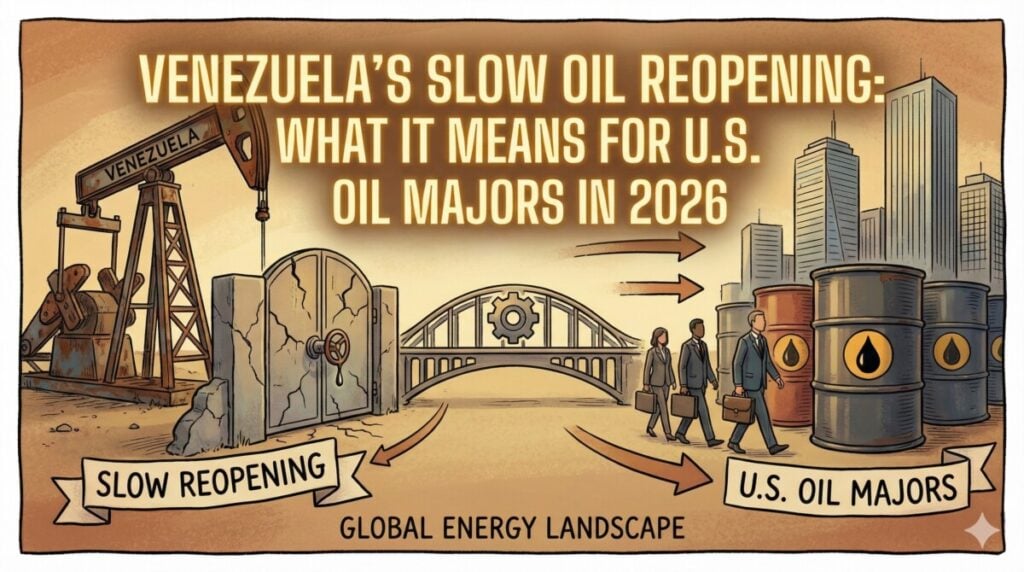
Venezuela's Slow Oil Reopening And What It Means For U.S. Oil Majors In 2026 - ConocoPhillips (NYSE:COP), Chevron (NYSE:CVX)
Benzinga· 2026-01-12 17:55
Core Insights - Venezuela's oil sector is experiencing a cautious regulatory thaw rather than a significant increase in production or supply [3][19] - The U.S. Treasury has granted limited licenses for companies like Chevron to resume restricted operations, focusing on maintenance and incremental exports rather than full commercial activity [5][10] - Venezuela's oil production remains well below historical levels due to years of underinvestment and infrastructure decay, making a rapid recovery unlikely [4][6] Regulatory Changes - The White House's limited licenses signal a controlled engagement with Venezuela, which is crucial for U.S. oil producers facing geopolitical risks [3][5] - Current licenses allow Chevron to operate limited activities and export some crude, but do not represent a full return to pre-sanction operations [9][10] Production Capacity - Venezuela holds significant proven oil reserves, but its production capacity is constrained by structural issues rather than political factors [4][6] - The International Energy Agency indicates that substantial investment is needed to restore Venezuela's oil infrastructure, which could take years [16] Investment Implications - For U.S. oil majors, Venezuela's situation provides long-term optionality without immediate earnings impact, with Chevron being the most exposed [8][19] - Other majors like Exxon and ConocoPhillips benefit indirectly from supply tightness and market structure [14][19] Monitoring Indicators - Investors should focus on U.S. Treasury license renewals, capital spending commitments from companies, and actual export data to gauge the situation accurately [18]


European Firms Seek Sovereign Clouds for Compliance, Resilience
Businesswire· 2026-01-09 09:00
Group 1 - European firms are increasingly adopting sovereign clouds to comply with stricter regulations [1] - The shift towards sovereign clouds is driven by geopolitical risks and the need for enhanced data transparency [1] - ISG highlights that these trends reflect a broader industry movement towards localized data management solutions [1]