Stock Buyback

Search documents
Silvercrest Asset Management Group(SAMG) - 2025 Q1 - Earnings Call Transcript
2025-05-09 13:30
Financial Data and Key Metrics Changes - The company experienced strong new client organic flows of $400 million in Q1 2025, following $1.4 billion in Q4 2024, totaling $1.8 billion over the past two quarters [4] - Total Assets under Management (AUM) was $34.3 billion, with discretionary AUM at $22.7 billion, remaining flat year over year [5][8] - Revenue for the quarter was $31.4 million, an increase of $1.1 million or 3.7% year over year, primarily driven by market appreciation [8] - Reported net income for the quarter was approximately $3.9 million, translating to $0.26 per Class A share [10] - Total assets decreased from $194.4 million at the end of 2024 to approximately $159.9 million as of March 31, 2025 [11] Business Line Data and Key Metrics Changes - The company noted a robust new business pipeline, particularly in Global Value strategies, with significant potential for future growth [19] - The OCIO pipeline has slowed, but there is optimism for future flows as the company builds relationships with consultants [19][20] Market Data and Key Metrics Changes - The company is expanding its presence in Europe and Southeast Asia, with a focus on building relationships and establishing a proactive marketing strategy [36][39] - The firm is working on obtaining a European license to market its services more effectively [36] Company Strategy and Development Direction - The company plans to continue investing in talent and initiatives to enhance its presence in institutional and wealth markets [5] - A $12 million stock repurchase program was completed, indicating a commitment to returning capital to shareholders while investing in growth [6][28] Management's Comments on Operating Environment and Future Outlook - Management expressed optimism about securing more significant organic flows throughout 2025 despite short-term market volatility affecting results [5][21] - The company is navigating a period of hesitation in the search environment due to global macroeconomic uncertainties, but remains confident in long-term growth prospects [22][63] Other Important Information - A quarterly dividend of $0.20 per share was declared, to be paid on or about June 20, 2025 [7] - The company is focused on maintaining a healthy balance sheet to support ongoing capital returns and growth initiatives [6] Q&A Session Summary Question: Could you comment on the pipeline and what you're seeing for OCI as well as Global going forward? - Management noted that the nature of searches has changed, focusing on cultivating consultant relationships rather than traditional RFPs, and expressed confidence in the pipeline for Global Value strategies [15][16] Question: How are things in Europe and Singapore regarding AUM? - Management highlighted strong relationships in Europe and ongoing efforts to establish a proactive marketing presence, with a focus on regulatory compliance [34][36] Question: Can you share any color on potentially a new buyback? - Management indicated that they are seriously considering another buyback, emphasizing the importance of returning capital to shareholders while investing in growth [42][43] Question: How do you view the operating leverage and timing of revenue versus expenses? - Management acknowledged the challenges of achieving operating leverage in the current environment but expressed optimism about long-term growth and increasing margins [56][58] Question: Is the trend of international investors pulling capital from the U.S. a concern for Silvercrest? - Management stated that the majority of their assets are U.S.-based and expressed confidence in their global strategies to mitigate any potential impacts [65][67]

Apple, Alphabet Lead $262B Buyback Binge On Wall Street
Benzinga· 2025-05-08 16:18
Core Viewpoint - U.S. corporate share buybacks have surged significantly, indicating a strong preference for repurchasing shares over dividend payments, with a total of $262 billion in buyback announcements since April 1 [2][9]. Group 1: Buyback Trends - April marked the strongest monthly pace for corporate share buybacks in years, acting as a stabilizing force in volatile markets [1][3]. - The trend of increasing buybacks following market corrections was observed during the Silicon Valley Bank crisis and the early stages of the Ukraine war [3]. - Companies are utilizing buybacks to boost earnings per share (EPS), signal confidence, and fend off activist investors, leading to a notable increase in share prices [9]. Group 2: Major Corporate Buybacks - Apple Inc. announced a staggering $100 billion buyback, reinforcing its long-standing practice of repurchasing shares [4]. - Alphabet Inc. followed with a $70 billion share repurchase, while Wells Fargo & Co. committed $40 billion to its own stock [5]. - Other notable buybacks include KLA Corp at $5 billion, Dick's Sporting Goods at $3 billion, and Shell PLC at $3.5 billion, showcasing a broad interest across various sectors [6]. Group 3: Sector-Specific Buybacks - The technology sector is particularly active, with Broadcom Inc. and Applied Materials Inc. each announcing $10 billion buyback plans [7]. - Consumer and industrial companies are also participating, with Graphic Packaging Holding Co., Ingersoll Rand Inc., and Cirrus Logic Inc. committing between $500 million and $1.5 billion, and MGM Resorts International announcing a $2 billion buyback [8].




Monster Beverage Stock: Short Report Risks vs Upside Potential
MarketBeat· 2025-05-05 16:59
Core Viewpoint - Monster Beverage's stock faces challenges from a short report, but analysts and institutional trends indicate a bullish outlook despite concerns raised [4][7][10]. Group 1: Short Report and Market Response - Spruce Point's short report highlights increased competition, regulatory hurdles, and unsustainable international growth as concerns [4]. - The report is perceived more as a deterrent to investment rather than a strong argument for declining stock prices, with other market forces showing disagreement [4][10]. - Analysts have raised price targets, with over 50% rating the stock as a Moderate Buy or better, indicating a bullish bias [7]. Group 2: Price Targets and Institutional Activity - Fresh price targets range from $50 to $71, with a consensus suggesting a 5% gain in early May [8]. - Institutional ownership exceeds 70%, with buying activity outpacing selling at a rate of more than two to one in early Q2 [8]. Group 3: Financial Performance and Capital Returns - Monster Beverage's Q4 2024 results showed mixed performance, with revenue growing at a mid-single-digit pace and earnings nearly doubling [10]. - The company has a strong capital return strategy, focusing on share buybacks, which reduced share count by 4.2% in 2024 [11]. - The company maintains a healthy balance sheet with a net cash position and long-term debt leverage of less than 0.1x equity [11]. Group 4: Stock Trends and Future Outlook - The stock price has been range-bound for two years but is on track to set new highs, with early May price action nearing all-time highs [13]. - Potential risks include Q1 results and guidance updates, which could affect the stock's trajectory if business headwinds intensify [13].


Matthews International: SGK Sale Will Fund Buyback
Seeking Alpha· 2025-05-02 10:21
Group 1 - Matthews International (NASDAQ: MATW) has reported earnings and is planning a substantial stock buyback [2] - The company's enterprise value (EV) is approximately $1.4 billion, following the sale of SGK [2] - The Value Lab offers a portfolio with real-time updates, 24/7 chat support, global market news, feedback on stock ideas, and monthly new trades [2] Group 2 - The Valkyrie Trading Society consists of analysts focusing on high conviction and obscure developed market ideas that are expected to yield non-correlated and outsized returns [3]


UBER vs. LYFT: Which Ride-Hailing Stock is a Stronger Play Now?
ZACKS· 2025-04-29 17:01
Core Insights - Uber is the dominant player in the North American ride-sharing market and has diversified into food delivery and freight, while Lyft focuses primarily on ride-sharing in the U.S. [4][5][22] - Uber's growth strategies include international expansion, acquisitions, and a strong buyback program, indicating confidence in its business model [6][7][22] - Lyft is also pursuing opportunities in the autonomous vehicle market but has faced challenges and is more vulnerable to economic downturns compared to Uber [9][23] Group 1: Uber's Performance and Strategy - Uber's gross bookings from the Mobility segment are expected to grow 15.6% year-over-year, while the Delivery segment is projected to grow 15.1% [6] - The company generated a record $6.9 billion in free cash flow in 2024 and announced a $1.5 billion accelerated stock buyback program [7] - Uber's market capitalization stands at $163.85 billion, positioning it well to navigate economic challenges [22] Group 2: Lyft's Position and Challenges - Lyft's sales estimates for 2025 and 2026 imply year-over-year increases of 12.6% and 12.2%, respectively, but its EPS estimates have been trending downward [15] - The company has introduced a Price Lock feature to attract more riders, which has shown better-than-expected performance [12][13] - Lyft's market capitalization is significantly smaller at $5.12 billion, making it less resilient in uncertain economic conditions [23] Group 3: Comparative Analysis - Uber has outperformed Lyft in stock market performance, with a year-to-date gain of 29.9% compared to Lyft's decline of 4.9% [18] - Lyft's forward sales multiple is 0.76, below its five-year median, while Uber's is 3.10, indicating a premium for its market position [21] - Overall, Uber is viewed as a better investment option compared to Lyft, despite both companies currently holding a Zacks Rank 3 (Hold) [24]


3 Ridiculously Cheap Stocks That Just Got Even Cheaper
The Motley Fool· 2025-04-10 09:52
With an S&P 500 bear market underway, there are plenty of "discounted" stocks to be found. President Donald Trump's tariff strategy could cause inflation to surge, and many experts see the chances of a U.S. recession in 2025 as much higher than they were a few months ago. The general uncertainty of the situation has caused the sharpest market downturn since the 2008 financial crisis.However, there are some excellent businesses that were already trading at attractive valuations before 2025's downturn. Here a ...



Energy Stocks Are Soaring. 3 High-Yield Oil Stocks to Buy Now.
The Motley Fool· 2025-04-05 22:05
Core Viewpoint - The energy sector is currently the best-performing stock market sector, with a year-to-date increase of 7.9%, contrasting with a 5.1% decline in the S&P 500, driven by leading oil and gas companies that provide safety amid economic uncertainty and trade tensions [1] Group 1: Company Performance and Cash Flow - ExxonMobil, Chevron, and ConocoPhillips are highlighted as strong dividend stocks due to their ability to generate significant free cash flow (FCF) even at current oil prices [2][3] - ExxonMobil aims to break even at $30 per barrel Brent by 2030 and projects $110 billion in surplus cash through 2030, even if Brent averages $55 per barrel [4] - Chevron expects to generate $5 billion in FCF at $70 Brent in 2025 and $6 billion in 2026, with 75% of its oil investments breaking even below $50 per barrel Brent [5] - ConocoPhillips is investing in long-term projects expected to yield $6 billion in incremental FCF, supported by its acquisition of Marathon Oil [6] Group 2: Capital Return Programs - All three companies are returning substantial amounts to shareholders, with ExxonMobil returning $36 billion in 2024, Chevron over $75 billion between 2022 and 2024, and ConocoPhillips planning to return $10 billion in 2025 [7][8][9] - Despite high yields, these companies spent more on buybacks than dividends in 2024, indicating strong FCF generation and providing a cushion against falling oil prices [10] Group 3: Financial Health and Valuation - ExxonMobil, Chevron, and ConocoPhillips maintain strong balance sheets with debt-to-capital ratios near 10-year lows, allowing them to support operations and capital expenditures with FCF [12][13] - The companies exhibit reasonable valuations with low price-to-earnings and price-to-FCF ratios, suggesting they are good investment values [14] - Valuation metrics are based on trailing-12-month results, and while margins may decrease with lower oil prices in 2025, acquisitions and expansions could still drive earnings and FCF growth [15][16][17] Group 4: Investment Appeal - ExxonMobil, Chevron, and ConocoPhillips are positioned to grow cash flows and return profits to shareholders, offering yields significantly higher than the S&P 500 average of 1.3%, making them attractive for passive income investors [18] - Although energy is not typically viewed as a safe sector, these high-quality companies are considered safe stocks due to their strong balance sheets and manageable payouts [19]



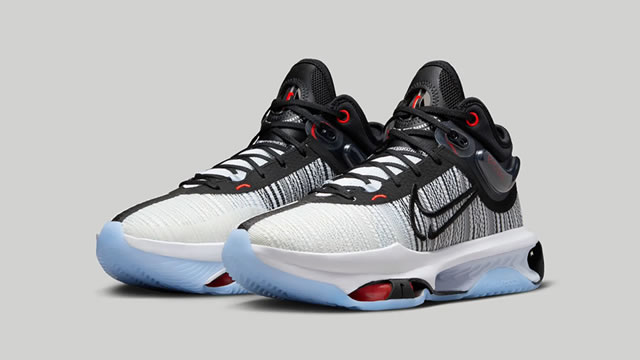
Here's Why Nike's Unexpected Ace in the Hole Makes the Dividend Stock a Buy Now
The Motley Fool· 2025-03-28 09:15
Core Viewpoint - Nike's stock has declined significantly from its all-time high in 2021, now trading at multiyear lows, raising concerns about its recovery potential amid various market challenges [1][2]. Group 1: Company Performance and Strategy - Leadership changes and a new corporate strategy focusing on product innovation and key markets in China and North America may aid in Nike's recovery [2]. - Despite challenges such as trade tensions, weak consumer spending, and high interest rates, there are reasons for optimism regarding Nike's near-term performance [3]. - Nike has become a balanced capital allocator, utilizing buybacks and dividends to return value to shareholders, moving away from a heavy reliance on organic growth [5]. Group 2: Dividend and Buyback Programs - Nike has increased its dividend for 23 consecutive years, resulting in a yield of 2.3%, which is higher than the S&P 500 average of 1.3% [6]. - The company is currently offering its highest yield in over 15 years, making it an attractive option for passive income [7]. - In June 2022, Nike's board approved an $18 billion buyback program, with $499 million in stock repurchased in the most recent quarter, totaling 119.3 million shares repurchased for $11.8 billion [9]. Group 3: Financial Health and Future Outlook - Despite slowing growth, Nike's strong cash flow supports its ability to continue raising dividends and buying back stock, indicating financial resilience [10][11]. - The ongoing buyback program suggests management's confidence in the stock's undervaluation, providing a margin for error in capital allocation [12]. - Nike is viewed as an intriguing buy for value investors, although the stock may remain under pressure until there is clear evidence of sales and operating margin improvement [13].

Small-Caps, Big Buybacks: 3 Stocks With Large Buyback Capacity
MarketBeat· 2025-03-25 11:46
Core Viewpoint - Small-cap companies, defined as those with market capitalizations between $250 million and $2 billion, are increasingly engaging in share buybacks, which can significantly impact their earnings per share and share prices, despite the smaller scale compared to large-cap companies [1][2]. Group 1: Buyback Announcements - Fresh Del Monte Produce announced a share buyback authorization of $150 million, representing over 11% of its $1.42 billion market capitalization, with no set end date for the program [4][5]. - Axcelis Technologies revealed a buyback authorization of $100 million, bringing its total buyback capacity to $215 million, which is 12% of its $1.8 billion market cap [6][8]. - Fiverr International announced a second $100 million buyback program, equal to just under 11% of its $922 million market capitalization, following the full utilization of its first buyback authorization in 2024 [9][10]. Group 2: Company Performance and Financials - Fresh Del Monte's revenue is heavily driven by bananas, which accounted for 34% of total revenue in 2024, and the company has averaged $48 million in annual share repurchases over the past decade [4][5]. - Axcelis Technologies experienced a 10% revenue drop in 2024, but had previously seen revenue growth of over 23% from 2021 to 2023, with 41% of its revenue in 2024 coming from silicon carbide-based wafers [7][8]. - Fiverr International has seen a 365% increase in revenue since its IPO in 2019, although its annual revenue growth rate has significantly decreased from 77% during the COVID peak to just 8% in 2024 [10].


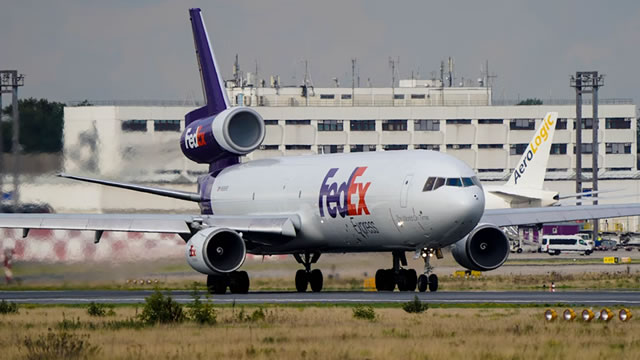
FedEx Cut Its Outlook Again. Should Investors Worry?
The Motley Fool· 2025-03-23 07:21
Core Viewpoint - FedEx has revised its full-year profit and revenue guidance downward, indicating ongoing struggles in its recovery and raising concerns for both the company and the broader U.S. economy [1][3]. Financial Performance - FedEx now expects adjusted earnings per share for fiscal 2025 to be between $18 and $18.60, down from a previous range of $19 to $20 and significantly below the original target of $20 to $22 [2]. - Revenue for the year ending in May is expected to be flat or slightly down year over year, a downgrade from earlier forecasts that anticipated flat revenue [2][10]. - In the fiscal third quarter, adjusted earnings were reported at $4.51 per share, an increase from $3.86 in the same quarter last year, although it fell slightly below analysts' expectations [8]. Economic Context - The company is facing challenges due to continued weakness in the U.S. industrial economy, which is impacting demand for its business-to-business services [4][10]. - The industrial economy is crucial for FedEx's high-volume shipments, but it has been struggling while e-commerce demand, which is lower-margin, continues to dominate [5][10]. - External factors such as proposed tariffs and fears of a trade war are adding to the uncertainty, potentially affecting U.S. manufacturers and shipping demand [7][10]. Strategic Initiatives - FedEx is actively pursuing a stock buyback program, having repurchased $500 million worth of shares in the latest quarter, bringing the year-to-date total to $2.5 billion, signaling management's confidence in its long-term transformation plan [9]. - The company aims to achieve permanent cost reductions of $2.2 billion in fiscal 2025 to bolster profitability in the coming years [10]. Market Implications - FedEx's struggles may serve as a bellwether for the overall U.S. economy, with its performance potentially indicating broader economic trends [11].