
Tariffs

Search documents
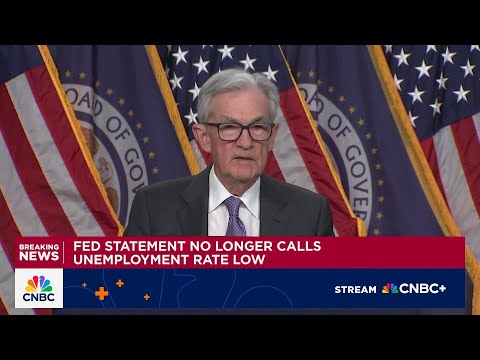
Powell: Inflation for goods picked up, reflecting effects of tariffs
CNBC Television· 2025-12-10 19:58
Economic Outlook - The economy is expanding at a moderate pace, with solid consumer spending and business fixed investment [3] - The temporary government shutdown likely weighed on economic activity in the current quarter, but these effects should be mostly offset by higher growth next quarter [4] - Real GDP is projected to rise 17% this year and 23% next year, somewhat stronger than projected in September [4] Labor Market - Labor market conditions appear to be gradually cooling [1] - Layoffs and hiring remain low, and perceptions of job availability and hiring difficulty have declined [5] - The unemployment rate reached 44% in September, and job gains have slowed significantly [5] - The median projection of the unemployment rate is 45% at the end of this year and edges down thereafter [6] Inflation - Inflation has eased significantly from its highs in mid-2022, but remains somewhat elevated relative to the 2% longerrun goal [7] - Total PCE prices rose 28% over the 12 months ending in September, and core PCE prices also rose 28% [7] - Near-term measures of inflation expectations have declined from their peaks earlier in the year [8] - The median projection for total PCE inflation is 29% this year and 24% next year, a bit lower than the median projection in September, thereafter, the median falls to 2% [9] Monetary Policy - The Federal Open Market Committee decided to lower the policy interest rate by a quarter percentage point (025%) [2] - The Committee also decided to initiate purchases of shorterterm Treasury securities solely for the purpose of maintaining an ample supply of reserves [2]

X @Bloomberg
Bloomberg· 2025-12-10 19:15
RT Bloomberg Opinion (@opinion)@Claudia_Sahm @AllisonSchrager “Part of the reason that we didn’t make any progress this year [on inflation] is because the tariffs were rolled out,” @Claudia_Sahm says.Tune in here 🎥 https://t.co/UP7Z2ybT22 ...
Fed cuts interest rates by a quarter point amid apparent split over US economy
The Guardian· 2025-12-10 19:10
Core Viewpoint - The US Federal Reserve has cut interest rates by a quarter point for the third time this year, reflecting internal divisions on how to manage the economy amid rising inflation and unemployment [1][4]. Group 1: Interest Rate Decisions - The Federal Open Market Committee (FOMC) voted nine to three to lower rates to a range of 3.5% to 3.75%, indicating a split among committee members who usually vote unanimously [1]. - New projections suggest hesitance to cut rates further next year, which may create tensions between the Fed and the White House [2]. Group 2: Economic Conditions - Recent economic data shows inflation increased from 2.3% in April to 3% in September, and unemployment rose from 4% in January to 4.4% in September, complicating the Fed's decision-making [4]. - The Fed is facing challenges due to a lack of comprehensive price and labor market data, exacerbated by the government shutdown [3]. Group 3: Political Influence - President Trump and his allies have publicly criticized Fed officials for not lowering interest rates, despite rising inflation, attributing price increases to factors from the previous administration [6]. - Trump has suggested Kevin Hassett as a potential nominee to replace Fed Chair Jerome Powell, whose term ends in May [10].

Why former CEA chair Jason Furman says he would vote against a rate cut
Youtube· 2025-12-10 18:47
Core Viewpoint - The market anticipates a third quarter point cut in the last Federal Reserve meeting of the year, with odds at 91%, but there is a belief that this easing is a mistake due to inflation remaining above target [1]. Group 1: Inflation and Fiscal Policy - Inflation was largely driven by fiscal policies in 2021 and 2022, and it continues to be influenced by ongoing large budget deficits [3][7]. - The budget deficit is expected to increase over the next year, necessitating the Fed to counteract expansionary demand policies more aggressively than it did in 2021 [4]. - The current inflation rate is a percentage point above the target, while the unemployment rate is only slightly above its target, indicating a need for the Fed to maintain focus on inflation [7][8]. Group 2: Interest Rates and Economic Conditions - There is a call for higher long-term interest rates to counteract inflation and the AI bubble, which would require a shift in market expectations regarding short-term rate cuts [4][5]. - The government must reduce its budget deficit to facilitate lower interest rates for consumers and small businesses [6]. - Expansionary fiscal policy combined with rising asset prices creates a demand-heavy environment, complicating the inflation situation [7]. Group 3: Consumer Sentiment and Government Actions - Despite lower gas prices, consumer sentiment remains poor, highlighting a disconnect between economic indicators and public perception [9]. - The President has made claims about combating inflation and improving affordability, but there are suggestions that reducing tariffs could be a more effective tool for making goods more affordable [10][11]. - The current trade attitude is viewed as detrimental, with calls for the government to reverse tariffs that contribute to rising goods prices [12].

GOP ‘desperate for the president to wake up’ ahead of midterms next year: Analyst
MSNBC· 2025-12-10 18:22
I want to bring in Brendan Buck, MS Now political analyst as well as a former press secretary to Republican House Speakers John Boehner and Paul Ryan. Michael Hardaway served as communications director for Democratic minority leader Hakee Jeff and is publisher of the Hardaway Wire and Ron Insana, CNBC contributor and publisher of the message of the markets on Substack. Gentlemen, thanks for being with us.So Brendan, the president has given himself an A+ plus plus plus on the economies doubling down. your th ...
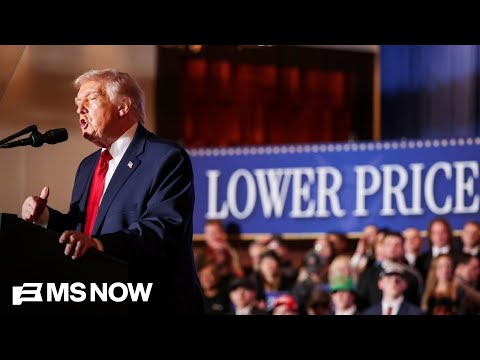
'There's a lot of pain': Economist reacts to Trump calling affordability crisis a 'hoax'
MSNBC· 2025-12-10 16:34
Economic Concerns & Political Implications - The discussion revolves around the US economy, focusing on affordability, inflation, and wages, with concerns that rising prices are impacting how Americans feel about the economy [2][7][8] - The President's message on the economy is being scrutinized, particularly claims about prices falling and inflation being crushed, with experts pointing out the reality of rising prices [7][8] - Affordability is highlighted as a key political issue, potentially influencing elections, similar to how healthcare impacted the 2018 elections [11][12][13] - Republicans are concerned about the President's messaging discipline, as the public's financial well-being significantly impacts their political fate [13] Trade & Manufacturing - The President defends tariffs, claiming they are reviving Pennsylvania manufacturing and steel production [13][14] - There's debate on whether tariffs are beneficial, with arguments that while raw steel production might be up, the increased cost of steel inputs negatively impacts overall manufacturing [17][18][21] - Economic data from Pennsylvania suggests a mixed picture, with flattened hiring, decreased home sales, and weakened factory activity [19] Policy Impacts & Fed Decisions - The President's policies, including tariffs, immigration policies, and changes to Obamacare, are being blamed for contributing to the affordability crisis [21][22][23] - Small businesses have reportedly shed approximately 250,000 jobs since April, potentially linked to the implementation of tariffs [24] - The Federal Reserve is expected to lower interest rates by a quarter of a percentage point (25 basis points), bringing the total decline this year to three-quarters of a percentage point (75 basis points), but tariff-related inflation may limit further rate cuts [26] - The President is considering candidates for the next Fed chair, with a focus on loyalty and a desire for lower interest rates [28][29][30]

X @Bloomberg
Bloomberg· 2025-12-10 16:14
Switzerland’s agreement last month to get the US to lower tariffs on the country will be backdated to take effect on the day the deal was announced. https://t.co/FnwEI8llaA ...
Fed rate cut announcement today: probability, live stream, date, time, and how to watch
Yahoo Finance· 2025-12-10 13:21
Group 1 - The economy is experiencing volatility due to persistent inflation, tariff unpredictability, and concerns over a potential AI-fueled stock market bubble impacting consumer spending power [1] - The Federal Reserve's interest rate cut announcement is anticipated to provide certainty to the economy and broader markets [1][2] - The Federal Open Market Committee (FOMC), led by Jerome Powell, is responsible for setting interest rates based on various economic data [2][3] Group 2 - A Fed rate cut lowers borrowing costs, encouraging consumers to take out loans for mortgages, car purchases, and increased credit card spending [4] - Businesses are likely to borrow more due to cheaper loans, which can lead to expansion, increased hiring, and acquisition of necessary equipment [4] - Lower interest rates can inject more money into the economy, increasing overall spending and potentially boosting stock and cryptocurrency markets as investors seek higher returns [5]
Manufacturing sees 329K separations in October, 6K job cuts in September
Yahoo Finance· 2025-12-10 12:40
Core Insights - The manufacturing industry experienced 329,000 job separations in October, marking a 0.6% increase from September's 327,000 separations [1] - Job openings rose by 6.5% month-over-month to 410,000, but decreased by about 10% year-over-year from 455,000 [2] - Manufacturing unemployment increased by 18.7% year-over-year to 571,000 individuals, with job losses of 6,000 in September [3] Sector-Specific Trends - The beverage, tobacco, and leather manufacturing sectors gained approximately 3,300 jobs, while nonmetallic mineral products and machinery added 1,500 and 1,300 jobs, respectively [4] - The plastics and rubber products sector faced significant job cuts, losing around 3,500 jobs [4] - The semiconductor and electronic components sector lost about 2,500 workers, and transportation equipment cut 2,400 employees, with half of those from the motor vehicle segment [5] Future Outlook - Job cuts in the transportation equipment sector are anticipated to continue into 2026 due to declining electric vehicle sales, rising costs, and tariffs on materials like aluminum and steel [6] - General Motors is expected to lay off thousands of workers and pause production at its Ultium Cells battery sites starting in January [6] - Tariffs are reportedly discouraging manufacturers from relocating production back to the U.S., particularly in the transportation equipment sector [7]

Trump gives his economy an "A+++++" but do voters agree?
MSNBC· 2025-12-10 11:40
Well, in a new interview with Politico, the president was asked to self-evaluate his economic policy. And rather than paraphrase, I'll give it to you straight. Here's what he said.>> I do want to talk about the economy, sir, here at home. And and I I wonder what grade you would give. >> A+ A+ plus >> A+ plus.But the actual grade that matters is less about being self-reflective and the one voters give. And according to the Real Clear polling average over the last month, 56% of Americans are disapproving of h ...
