
Monetary Policy

Search documents
ZFX山海证券:黄金大幅回调
Sou Hu Cai Jing· 2026-02-02 11:32
Group 1 - The core viewpoint is that global gold and silver prices have experienced a significant decline after a historic rise, with gold dropping nearly 10% and silver falling 16%, erasing all gains made since the beginning of the year [1][4] - The recent sell-off was triggered by the nomination of Kevin Walsh as the new Federal Reserve Chair, which strengthened the dollar and reduced the appeal of dollar-denominated precious metals [7] - Despite the short-term price corrections, the fundamental support for gold remains strong, and the long-term investment theme for gold is still positive, indicating that the market has not entered a phase of sustained decline [7] Group 2 - The precious metals market has been driven by multiple factors since the beginning of the year, including geopolitical tensions, currency devaluation risks, and uncertainties regarding the independence of the Federal Reserve [4] - The active trading by Chinese investors in the domestic market provides some support for prices, with retail demand and physical purchases potentially being released during price corrections [8] - Investors are advised to remain rational and focus on global macroeconomic trends, monetary policy movements, and geopolitical risks to navigate market volatility and seek potential investment opportunities [8]


U.S. Markets Face Premarket Pressure Amid Fed Nominee Jitters and Tech Sell-Off
Stock Market News· 2026-02-02 11:07
Market Overview - U.S. stock futures are indicating a lower opening as investors react to global manufacturing concerns, uncertainty regarding the Federal Reserve's leadership, and a sell-off in precious metals and cryptocurrencies [1][2] - Major indexes are poised for declines following a weak close on Wall Street last Friday, with E-mini S&P 500 futures down approximately 0.7% and Nasdaq 100 futures falling roughly 1% [2] Current Performance of Major Market Indexes - The S&P 500 slipped 0.4% to 6,930.03, the Dow Jones Industrial Average fell 0.4% to 48,892.47, and the Nasdaq Composite dropped 0.9% to 23,461.82 [3] - The US500 index fell to 6,871 points, losing 0.99% from the previous session, while the Russell 2000 index declined 2.0% last week [3] Upcoming Market Events - Key economic data releases this week include the U.S. non-farm payrolls report, Manufacturing and Services PMI readings, ADP employment change, and weekly jobless claims [4] - The ISM manufacturing PMI has remained in contractionary territory since March 2025, heightening focus on these indicators [4] Corporate Earnings - Major tech companies reporting this week include Advanced Micro Devices, Amazon, Alphabet, Qualcomm, PayPal, and Super Micro Computer, with Palantir Technologies and The Walt Disney Company reporting today [5] - Analysts project moderate revenue growth for Disney, but there are risks of earnings per share slipping [12] Central Bank Decisions - The Reserve Bank of Australia, European Central Bank, and Bank of England are expected to set new policy rates, while the Federal Reserve recently left its benchmark interest rate unchanged at a range of 3.5% to 3.75% [6] Major Stock News - President Trump's nomination of Kevin Warsh as the next Federal Reserve Chair has introduced uncertainty into monetary policy expectations, impacting precious metals and strengthening the U.S. dollar [7] - Apple reported a record-breaking fiscal Q1 2026 with revenue of $143.8 billion, up 16% year-over-year, driven by iPhone sales and services growth [12] - Tesla shares fell 3.2% despite beating earnings estimates, facing pressure from competition and planning to double AI capital expenditures to $20 billion [12] - The healthcare insurance sector is under pressure due to a proposed minimal increase in Medicare payment rates for 2027, leading to significant declines in shares of UnitedHealth Group, Humana, and CVS Health Corporation [12] - Goldman Sachs saw a surprising 56% surge in 2025, benefiting from its trading desks and exiting consumer banking [12] - Nvidia slipped 2% in premarket trading amid broader tech sector pressure, with other tech companies like Samsung Electronics and SK Hynix also experiencing sell-offs [12]



Fed chair nominee Warsh may want smaller Fed holdings, but that's not easy to do
Yahoo Finance· 2026-02-02 11:01
Core Viewpoint - Kevin Warsh, nominated to be the next Federal Reserve chair, aims to significantly reduce the central bank's multi-trillion-dollar balance sheet, but experts believe this will be challenging and slow to achieve, if possible at all [1]. Group 1: Federal Reserve's Balance Sheet Management - The Fed's current holdings and the management regime for interest rates in a cash-rich environment make it difficult to unwind the balance sheet while maintaining market stability and achieving monetary policy goals [2]. - Warsh has previously argued that the large Fed holdings distort financial conditions and should be significantly reduced, with the proceeds used to lower interest rates to support households and small businesses [3]. - The Fed's balance sheet expanded to a peak of $9 trillion during the COVID-19 pandemic due to crisis buying, and a contraction process known as quantitative tightening (QT) has since reduced it to $6.6 trillion by late 2025 [4]. Group 2: Challenges in Reducing the Balance Sheet - The use of the balance sheet as a monetary policy tool has become standard, especially with the likelihood of short-term rates being cut to near-zero levels during economic troubles [5]. - Experts indicate that while Warsh may desire a smaller balance sheet and reduced Fed presence in financial markets, actually achieving this reduction is unlikely, as banks prefer the current level of reserves [6].
IBM exec says Trump's Fed pick will 'overhaul' central bank policies while bringing crisis expertise
Fox Business· 2026-02-02 03:31
Core Viewpoint - The nomination of Kevin Warsh by President Trump to lead the Federal Reserve is seen as a strategic move to return the central bank to traditional monetary policies and regulatory norms, especially in light of his experience during the 2008 financial crisis [1][5][10]. Group 1: Warsh's Qualifications and Experience - Gary Cohn highlighted Warsh's instrumental role during the 2008 financial crisis, stating that he was the point person at the Fed during critical discussions involving bank stress and asset movements [4]. - Warsh's background includes serving as the youngest Fed governor in history at age 35, appointed by President George W. Bush, and he has held various roles in the private sector and academia since leaving the Fed in 2011 [13][14]. Group 2: Expected Policy Changes - Cohn expressed confidence that Warsh would focus the Federal Reserve on its core economic mission, steering it away from non-financial issues and potentially implementing one to two interest rate cuts this year [7]. - Warsh is expected to reverse the Fed's large balance sheet policies, which involved significant purchases of securities, aligning with traditionalist views on regulation that support market growth while ensuring consumer access to capital [7]. Group 3: Political Context and Confirmation - Trump's announcement of Warsh's nomination ended months of speculation and reflects his long-standing relationship with Warsh, whom he believes will be among the most successful Fed chairmen in history [10][11]. - Warsh's confirmation by the Senate is required before he can assume the influential role in U.S. economic policymaking [12].

金价银价创纪录暴跌,深圳水贝挤满“抄底客”!五大行紧急出手
Huan Qiu Wang· 2026-02-02 03:07
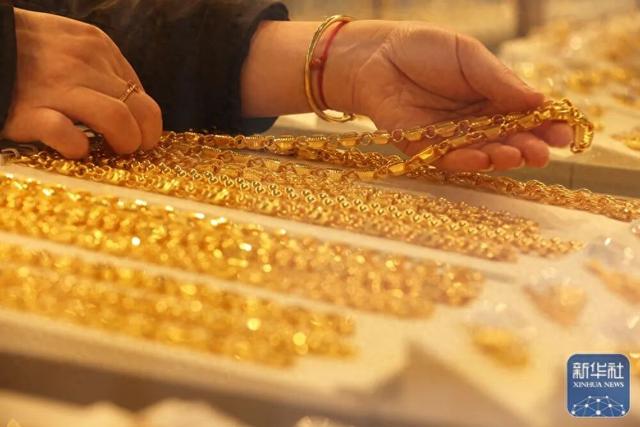
Market Overview - The precious metals market experienced extreme volatility, with international gold prices plummeting from historical highs, leading to significant impacts on domestic futures, stocks, funds, and consumer markets [1] - On January 30, international gold prices fell sharply, losing over 11% in a single day, while silver prices dropped by 31.37%, marking the worst single-day performance since March 1980 [1] - Weekly performance showed a cumulative decline of 4.71% for gold and 22.50% for silver [1] Price Movements - Domestic gold prices also saw a significant drop, with the Shanghai Gold Exchange spot gold price falling to 1070.01 RMB per gram, a decrease of around 10% [3] - Major brands adjusted their gold jewelry prices from over 1700 RMB per gram to between 1500-1600 RMB per gram [3][4] - For instance, Chow Sang Sang reported a drop in the price of its gold jewelry from 1708 RMB to 1618 RMB per gram within two days [3] Consumer Behavior - Following the price drop, there was a surge in consumer interest in purchasing gold, particularly in Shenzhen's Shui Bei market, where prices fell below 1200 RMB per gram [6] - Many consumers expressed that buying gold now is significantly cheaper compared to previous days [6] Investor Reactions - Investors are increasingly concerned about further declines in precious metal prices, leading many to sell gold and silver items to cash out [10] - Reports indicated that some businesses experienced a rapid decline in gold buyback prices, with a drop from 1142 RMB to 1081 RMB per gram in just one day [10] - The volatility in gold prices has led to a cautious approach among investors, with many hesitating to sell due to fears of missing potential price recoveries [10] Market Supply Dynamics - Some suppliers in Shenzhen's Shui Bei market reported shortages of gold bars, attributing this to the recent price drop and the reluctance of suppliers to sell at lower prices [12] - Suppliers indicated that they are not willing to sell gold bars during such volatile conditions, leading to a decrease in available inventory [12] Banking Sector Adjustments - Several major banks, including ICBC, ABC, and CCB, have adjusted their gold investment services in response to the market volatility, issuing risk warnings to investors [14][16] - ICBC announced changes to its gold accumulation business, including limits on transactions during non-trading days [15] - CCB raised the minimum amount for personal gold accumulation to 1500 RMB, reflecting the increased market risks [16][19]



美国利率策略:沃什执掌美联储后的美国国债走向-US Rates Strategy-A Kevin Warsh-led Federal Reserve and US Treasuries
2026-02-02 02:22
Summary of Key Points from the Conference Call Industry and Company Overview - The discussion centers around the Federal Reserve's monetary policy under the leadership of Kevin Warsh and its implications for US Treasuries and interest rates. Core Insights and Arguments - A Federal Reserve led by Kevin Warsh is expected to result in a steeper yield curve over time, contingent on adherence to his previously expressed communication and balance sheet policies [6][10] - The potential for increased monetary policy surprises and reduced consensus among investors regarding future Fed actions may lead to heightened realized volatility in the markets [6][10] - Warsh's approach may involve a smaller balance sheet footprint, which could steepen the yield curve through a bear steepening of the term premium curve, while the rate expectations curve may counter this by bull steepening [10][11] - Investor speculation regarding the Fed's balance sheet intentions could influence the shape of the yield curve and swap spread curve until clear communication is established [11][12] - Historical insights from FOMC meeting transcripts (2006-2011) reveal Warsh's focus on CEO confidence, M&A activity, and corporate profit growth as indicators of economic health [24][25] Additional Important Insights - Warsh's views on inflation include a focus on TIPS breakevens, commodity prices, and the US dollar, with a preference for using the PCE deflator as a target metric for price stability [29][31] - He expressed concerns about the implications of high debt-to-GDP ratios, particularly if off-balance-sheet liabilities were considered [50][51] - Warsh advocated for a cautious approach to asset sales and emphasized the importance of communication strategies surrounding such actions to avoid market misinterpretations [54][56] - He believed that the Fed's credibility is more critical than its ability to cut rates, and he preferred a market-driven approach to economic assessments rather than a reliance on Fed guidance [33][36] Conclusion - The insights from the conference call highlight the potential shifts in monetary policy under Kevin Warsh's leadership, emphasizing the importance of communication, market dynamics, and economic indicators in shaping investor expectations and market behavior.
投机降温黄金回落 监管收紧碳酸锂下调
2 1 Shi Ji Jing Ji Bao Dao· 2026-02-01 23:35
南方财经记者 翁榕涛 实习生 胡剑铭 周内(1月26日至1月30日),大宗商品市场分化加剧。基本金属板块涨跌不一,贵金属板块冲高回 落。 具体来看,能源化工板块,燃油周上涨6.70%、原油上涨6.54%;黑色系板块,焦煤周下跌0.13%、 焦炭下跌0.03%、铁矿石下跌0.44%;基本金属板块,碳酸锂周下跌18.36%、沪锌上涨5.08%、沪镍下跌 5.63%;贵金属板块,沪金周上涨4.10%、沪银上涨11.92%;农产品板块,鸡蛋周下跌1.44%、生猪下跌 2.98%。 交易行情热点 热点一:投机情绪降温,黄金冲高后大幅回落 本周黄金期货市场经历剧烈波动,前期受地缘避险情绪推动创下历史新高后,因美联储政策预期生 变大幅回调。截至1月30日,沪金主力2604合约报1161.42元/克,周涨4.10%;伦敦金收于4880美元/盎 司,周跌2.07%,日内最大跌幅达9.29%,创40年来最大单日跌幅。 供给上,全球黄金供应保持稳定,矿山产量与回收量稳步释放,未出现明显缺口。2025年全球黄金 总需求达5002吨创历史新高,但供应端未出现大幅波动,供需格局相对均衡。央行售金规模有限,新兴 国家央行延续购金态势,进一 ...
Wall Street Has a Federal Reserve Problem, With a Perfect Storm Brewing in 2026
Yahoo Finance· 2026-02-01 09:26
For much of the last seven years, optimists have ruled the roost on Wall Street. The benchmark S&P 500 (SNPINDEX: ^GSPC) has had only three periods since 1928 where it's rallied at least 16% annually for three consecutive years, and two of these three periods have occurred over the last seven years (2019-2021 and 2023-2025). The Dow Jones Industrial Average (DJINDICES: ^DJI) and Nasdaq Composite (NASDAQINDEX: ^IXIC) have followed suit by climbing to several record-closing highs. Where to invest $1,000 ri ...
Trump’s Market Maelstrom: IndyCars, Fed Chairs, and Bombardier’s 9% Dive
Stock Market News· 2026-01-31 18:00
Market Reactions - The announcement of Kevin Warsh as the next Federal Reserve Chair led to initial market volatility, with the Dow Jones Industrial Average (DJIA) dropping 139.16 points (0.28%) before recovering to close up 55.96 points (0.1%) at 49,071.56 [3][11] - The S&P 500 (SPX) experienced fluctuations, closing down 0.4% at 6,939.03 after earlier dipping as much as 1.1% [3][11] - The NASDAQ Composite (IXIC) ended the day down 0.7% at 23,685.12, marking a mixed market response overall [3][11] Commodity and Bond Market Impact - Gold prices fell over 4% to $5,115.60, while silver dropped nearly 13%, indicating a shift in investor sentiment [4] - The 10-year Treasury yield increased to 4.25% from 4.24%, reflecting changing bond market dynamics [4] Trade Policy Developments - President Trump's executive order on January 30, 2026, imposed tariffs on nations supplying oil to Cuba, causing immediate fuel shortages in Havana and raising concerns about a humanitarian crisis [7][8] - The price of WTI Crude Oil saw a slight decrease of 0.29% to $65.27, with potential long-term risk premiums of 8-15% anticipated due to supply constraints [8] Aviation Sector Reactions - The threat of a 50% tariff on Canadian-made aircraft, particularly affecting Bombardier, led to a 9% drop in Bombardier shares on January 30, 2026 [10] - The aviation sector reacted negatively to the announcement, with experts expressing skepticism about the tariffs' implementation but acknowledging the significant financial implications [10] Overall Market Trends - Despite the tumultuous events, the DJIA recorded its ninth consecutive month of gains, while the SPX ended January with its eighth positive month in nine [11] - The IXIC, however, closed lower for the month, breaking a seven-month winning streak, indicating varied performance across indices [11] - Trading volume on January 29, 2026, was notably high at 23.36 billion shares, suggesting active investor engagement amid policy uncertainty [12]

Did Fed Chair Jerome Powell Just Throw President Donald Trump Under the Bus Concerning Inflation?
Yahoo Finance· 2026-01-31 12:26
Market Performance - The Dow Jones Industrial Average, S&P 500, and Nasdaq Composite experienced significant gains in 2025, rising by 13%, 16%, and 20% respectively, marking the S&P 500's third consecutive year of gains of at least 16% [1] Federal Reserve's Monetary Policy - The Federal Reserve's ongoing rate-easing cycle is considered a crucial factor in the market rally, alongside technology trends such as artificial intelligence and quantum computing [2] - The Federal Open Market Committee decided to keep the federal funds target rate unchanged in its recent meeting, following three prior meetings where it reduced the rate by 25 basis points each [3] - Lowering the federal funds rate reduces borrowing costs for consumers and businesses, which can stimulate lending, hiring, acquisition activity, and innovation, positively impacting the U.S. economy and stock market [4] Inflation Concerns - Despite the positive market performance, inflation remains elevated relative to the Federal Reserve's long-term goal of 2%, with Fed Chair Jerome Powell attributing this to President Trump's tariffs [5] - Powell noted that the current inflation rate is largely influenced by the goods sector, which has been affected by tariffs, while disinflation is observed in the services sector [6] - There is an expectation that tariff-related inflation will peak in the middle quarters of the year [7]