Supply Chains

Search documents
X @Bloomberg
Bloomberg· 2025-07-10 06:18
Trade Relations - Singapore's trade talks with the US will focus on pharmaceutical supply chains [1] - The talks occur as Singapore navigates President Trump's global trade war [1]
Trade War Scorecard: What's Changing, Who's Winning, What's Next — With Ryan Petersen
Alex Kantrowitz· 2025-07-07 20:37
Global Trade Dynamics - Tariffs and trade-war maneuvers are rewiring supply chains worldwide [1] - Discussion includes 145% "Liberation Day" duties and $5,000 per container costs [1] - The death of the de minimis loophole impacts Amazon, Temu, and Shein [1] - The Panama Canal drought is affecting global trade [1] Technology & Automation - AI robocalls 400,000 truckers [1] - Warehouse-robot reality checks are being discussed [1] Legal & Compliance - Customs fraud is now the DOJ's No 2 white-collar priority [1]

X @Bloomberg
Bloomberg· 2025-07-02 10:42
The trade truce between Washington and Beijing may be holding for now, but China is increasingly wary about what’s happening elsewhere: US efforts to forge deals that could isolate Chinese firms from global supply chains. https://t.co/QPKJuMsRCR ...
India Should Seek 'Big, Beautiful Trade Deal' with Trump, Says Ex-UN Envoy
Bloomberg Television· 2025-07-01 07:21
You said before that nothing riles Indians more than the idea that the Indian government is getting bullied by a foreign leader or a foreign government. How are you analyzing the dynamics in these trade talks between the US and India. So first of all, thank you very much for having me on your show.That said, you know, India was initially amongst the first countries to set off on a trade deal. They have a rather ambitious agreement between Trump and Prime Minister Modi, about 500 million by 2030 in terms of ...

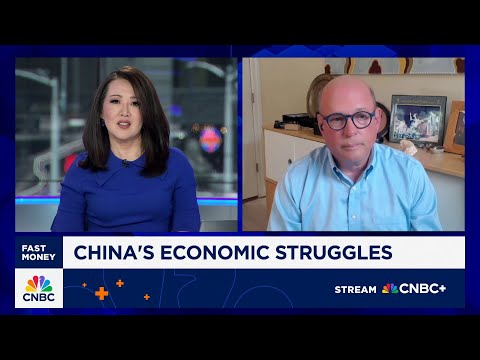
China 'walking tight rope' with factory activity during U.S. uncertainty, says David Riedel
CNBC Television· 2025-06-30 22:18
also pave the way for combination Covid and flu shot. Meanwhile, China's manufacturing sector contracting for the third straight month as deflation fears ripped through the world's second largest economy. Inventory and employment data also declining.For more on China and ongoing trade tensions, let's bring in retail research founder and president David Riedel. David, great to have you with us. >> Thank you.>> We've got a few more economic readings under our belt, so to speak, since the China US trade war re ...
X @The Economist
The Economist· 2025-06-30 21:38
Supply Chain Evolution - Manufacturing supply chain evolution will determine new job creation across Europe [1] Key Deciding Factors - Supply chain evolution is not the only deciding factor for job creation [1]
X @The Economist
The Economist· 2025-06-29 18:44
Supply Chain Evolution - Manufacturing supply chain evolution will determine new job creation across Europe [1] Key Deciding Factor - Supply chain evolution is not the only deciding factor [1]
Can Japan hold on to its 'indispensable' companies? | FT #shorts
Financial Times· 2025-06-26 04:11
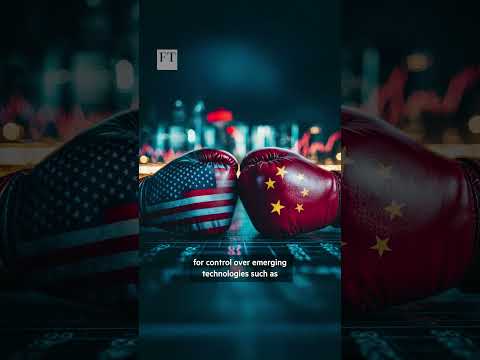
M&A and Corporate Governance - Japan views M&A as a way to encourage consolidation in fragmented industries, shake up complacent boardrooms, and improve corporate governance [1] - Hostile bids pose both a threat and an opportunity for Japan's government [1] Geopolitical and Technological Concerns - Japanese companies are central to the geopolitical tussle between the US and China for control over emerging technologies such as artificial intelligence, semiconductors, humanoid robots, and facial recognition [2] - Japanese materials and equipment suppliers are indispensable cogs in the semiconductor supply chain [2] - Some Japanese officials are rushing to prevent the nation losing control over its most advanced and sensitive technologies [1] - The Japanese government is shoring up measures to prevent takeovers by possible front companies, economic espionage, or the accidental transfer of intellectual property to rival nations [2] Regulatory Response - Japan plans to introduce a new investment screening law next year [3] - The new investment screening law needs to be balanced with the drive to consolidate Japanese industry [3]
The Geopolitics of AI Infrastructure - Dylan Patel, SemiAnalysis
AI Engineer· 2025-06-18 00:55
As AI reshapes the global balance of power, the infrastructure behind it—chips, data centers, power, and supply chains—has become a new arena for geopolitical competition. This talk explores how nations are racing to secure critical AI hardware, control compute capacity, and assert influence over the technologies and talent that define the future. About Dylan Patel Dylan is the founder, CEO, and Chief Analyst for SemiAnalysis, the preeminent authority on all things AI and semiconductors. Through Dylan’s unw ...
China's Has 'All The Leverage' Says Nikhahtar
Bloomberg Television· 2025-06-09 11:18
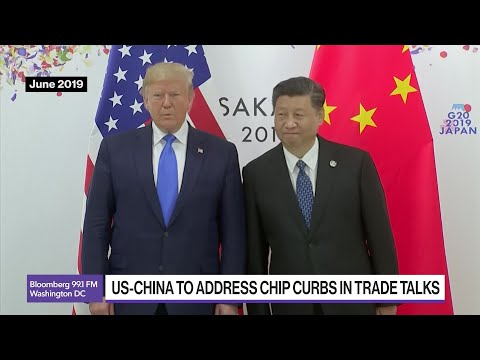
National Security Concerns & Trade Negotiations - Dependence on critical minerals and permanent magnets from China poses national security risks, especially regarding dual-use items like air chips and aerospace engine technologies [1] - The US faces a dilemma where import vulnerabilities from China's supply chains could force concessions on national security concerns [2][4] - China seeks tariff reductions, relaxation of export controls, and potentially concessions related to Taiwan [3] - The US administration may consider loosening export controls on semiconductors to maintain revenue for American companies heavily reliant on the Chinese market [12] - Technology transfer to China is a significant concern, as it can lead to China's long-term technological advancement and potential disruption of supply chains for critical goods like magnets and pharmaceuticals [6][15] Supply Chain & Manufacturing - China has a strong hold on the supply chain for rare earths and permanent magnets, impacting the defense and commercial sectors [4] - The US has domestic magnet supply chains growing, including light rare earths in California and heavy rare earths in Canada, and can reuse magnets from existing products [9][10] - Building domestic supply chains takes time, but the ability to reuse magnets provides leverage in negotiations with China [10] Trade War & Tariffs - The Trump administration aimed to maintain tariffs to pressure China, but this also adversely impacted American industries [2][21] - Reducing export controls on certain technologies like chips and commercial aircraft engines may be part of a potential deal with China [18] - China may offer increased access to its magnet market but restrict supply to the US military sector [18] - The likelihood of a lasting, reliable deal with China is questionable, given China's history of not adhering to agreements [18] - High tariffs had a significant negative impact on the Chinese economy [21]