Inflation

Search documents
PICK: Downgrading Global Miners ETF On Surging Price And Valuation
Seeking Alpha· 2026-01-21 16:39
Group 1 - The iShares MSCI Global Metals & Mining Producers ETF (BATS: PICK) has seen renewed interest due to rising inflation and increasing metal prices, reversing a previous trend of decreased attractiveness for miners and commodity producers [1] - The CEF/ETF Income Laboratory manages portfolios targeting safe and reliable yields of approximately 8%, focusing on high-yield opportunities in closed-end funds and exchange-traded funds [1] - The majority of holdings in the CEF/ETF Income Laboratory are monthly-payers, which facilitates faster compounding and provides steady income streams for investors [1]


Expert: Here’s What Lies Ahead for Inflation and Affordability in 2026
Yahoo Finance· 2026-01-21 15:10
Core Insights - Inflation is expected to remain high throughout 2026, driven by healthy economic activity and tariff pass-through to consumers [2][3] - Lower-income households will be disproportionately affected by elevated prices of everyday goods and utility costs [3] - Government intervention aimed at affordability is anticipated, especially ahead of midterm elections [4][5] Inflation Outlook - The December 2025 Consumer Price Index indicated a month-over-month price increase of 0.3% and a year-over-year increase of 2.7% [1] - Mukherjee predicts that inflation will not significantly ease in 2026, maintaining pressure on consumers [2] Impact on Consumers - Lower-income consumers are expected to become more cautious with discretionary spending due to a challenging hiring environment [3] - Early-year tax refunds may provide temporary financial relief for these households [3] Government and Policy Interventions - Anticipated tariff rate stabilization and potential reductions could lead to lower prices for imported goods [5] - The Federal Reserve is expected to cut rates by 25 to 50 basis points, which may lower mortgage rates and improve housing affordability [5][6] Housing Market - A more affordable housing market is projected as mortgage rates decrease, potentially boosting refinancing and sales [6]
3 Reasons Why Capital Preservation Matters More Today Than It Has In a Long Time
Yahoo Finance· 2026-01-21 14:05
Core Insights - Investors today are facing challenges such as structurally high inflation, which has not been seen for approximately four decades [1] - Current market conditions reflect historically high valuations, with housing prices exceeding levels seen during the 2008 financial crisis and bond yields at their highest in some time [2] - A strategic focus on capital preservation is recommended for investors nearing retirement and younger investors due to rising inflation and geopolitical risks [3] Inflation Trends - Following the Great Financial Crisis, inflation remained low, typically at or below 2%, and even turned negative during certain periods [5][6] - The current inflation environment is significantly different, with inflation no longer being a minor concern for investors [4] Market Conditions - Stock valuations are currently comparable to levels seen during the dot-com bubble, while housing prices have surpassed peaks from the 2008 financial crisis [8] - The traditional 60/40 portfolio strategy may be less effective due to higher inflation impacting investor returns, leading to a potential shift towards higher-growth assets [7][8] Investment Strategies - Investors who remained in the market during previous downturns often saw better returns compared to those who exited, highlighting the importance of staying invested [6] - The correlation between bonds and equities has changed, with both asset classes moving in tandem recently, which is atypical [8]
Morrisons’ losses hit £381m after steep debt costs
Yahoo Finance· 2026-01-21 13:33
Core Viewpoint - Morrisons reported a £381 million loss for the last year, primarily due to high borrowing costs and reduced consumer spending [1][2]. Financial Performance - The company's debt interest bill reached £281 million in 2025, hindering profitability efforts [2]. - Net debt decreased to £3.1 billion from £3.5 billion over the summer, marking a £33 million improvement year-on-year [3]. - Adjusted earnings, excluding interest costs and tax, amounted to £835 million [3]. - Yearly revenues increased by 3.2% to £15.8 billion, although like-for-like sales fell by 2.4% in the last three months of the financial year [7]. Market Position and Competition - Morrisons is facing challenges from competitors, with Lidl gaining market share, holding 8.1% compared to Morrisons' 8.3% as of November [11]. - The company is at risk of losing its position as the fifth largest supermarket in Britain [11]. Consumer Trends - The customer base is shifting, with more pensioners and less affluent shoppers, making them more sensitive to price changes [8]. - The overall grocery market has been declining towards the end of the financial year, influenced by inflation and budget uncertainties [7]. Management Commentary - The CEO described the period as "challenging" and urged the government to avoid imposing additional costs on retailers to help maintain lower prices [6][9][10]. - The company is focusing on addressing pricing, promotions, loyalty, and availability to improve its market position [12].
Futures Slide To Session Low As Bounce Fizzles With All Eyes On Trump In Davos
ZeroHedge· 2026-01-21 13:29
Market Overview - Futures have reversed modest overnight gains, with S&P futures down 0.1% and Nasdaq futures down 0.3% as small caps outperform for a record 12th day in a row [1] - The market mood remains shaky, with a significant drop in liquidity as top of book collapsed 60% overnight [4] - Gold continues to hit new highs, approaching $4,900 per ounce, while bond yields are 1-2 basis points lower [1][8] Corporate News - Biohaven (BHVN) rises 3% after an upgrade to outperform by RBC due to supportive data [5] - Halliburton (HAL) climbs 2% after reporting fourth-quarter adjusted earnings per share that beat analyst estimates [5] - Kraft Heinz (KHC) declines 5% as Berkshire Hathaway may sell some or all of its stake in the company [5] - Nathan's Famous (NATH) rises 8% after Smithfield Foods agreed to buy the company for $102 per share [5] - Netflix (NFLX) falls 7% after forecasting first-quarter earnings below analyst estimates and pausing share buybacks [5] Economic Indicators - The US economic calendar includes October construction spending and December pending home sales, with expectations of a 0.1% increase and a 0.25% decrease respectively [18][38] - Inflation in the UK rose to 3.4% in December, slightly above expectations, driven by higher tobacco prices and airfares [27] Geopolitical Developments - President Trump's speech at the World Economic Forum is anticipated to address various topics, including trade and tariffs, amid ongoing tensions regarding Greenland [6][30] - The Supreme Court is set to hear arguments regarding Trump's ability to fire Federal Reserve Governor Lisa Cook, coinciding with a criminal investigation into Fed Chair Jerome Powell [11][25] Sector Performance - European stocks drifted lower, with the Stoxx 600 down 0.6%, weighed down by financials and tech, while materials and luxury names outperformed [13][26] - The Russell 2000 is outperforming the Magnificent Seven by more than 10% year-to-date, indicating a rotation in market leadership [9]

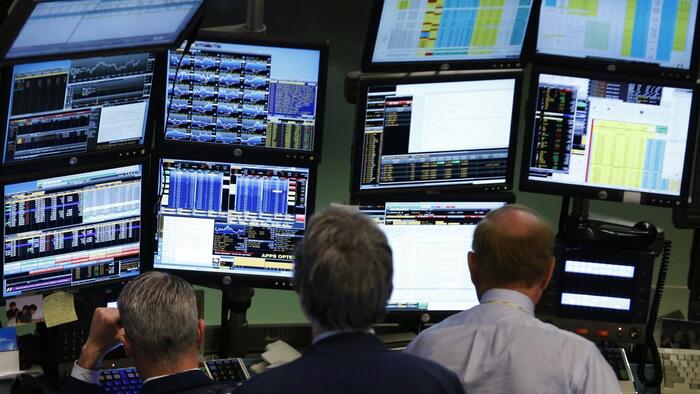
Fed to hold rates through March, and possibly through Powell's tenure, on strong growth: Reuters poll
Yahoo Finance· 2026-01-21 12:07
Core Viewpoint - The U.S. Federal Reserve is expected to maintain its key interest rate through the current quarter and possibly until Chair Jerome Powell's term ends in May, a shift from previous expectations of rate cuts by March [1][4]. Economic Outlook - The U.S. economy is projected to continue growing strongly, with a growth rate of 4.3% in the third quarter and an expected expansion of 2.3% this year, up from 2.2% last year [8]. - Inflation remains above the Fed's target of 2%, which argues against near-term rate cuts, although economists anticipate at least two reductions later in the year [2]. Federal Reserve Policy - A majority of economists (58%) expect the Fed to keep rates at 3.50%-3.75% during the January meeting, contrasting with last month's expectations for at least one reduction [4]. - There is a divided outlook among Fed policymakers, with a slight majority (55 out of 100) expecting rate cuts to resume after Powell's term ends in May [6]. Political Influence - President Trump has criticized Powell for not lowering rates aggressively and has initiated criminal charges against him related to Fed headquarters renovations, which may impact the Fed's independence [3][7]. - The selection of the next Fed chair is anticipated to face significant pushback due to ongoing investigations, potentially affecting future interest rate decisions [7].
Will the market crash in 2026? Billionaire investor says it feels ‘exactly like 1999.’ Catch the run-up before the fall
Yahoo Finance· 2026-01-21 12:03
Economic Context - The U.S. deficit decreased by 15% year-over-year in 2025 but is projected to increase again due to President Trump's One Big Beautiful Bill Act [1] - The Federal Reserve implemented three rate cuts in 2025, contrasting with the rate hikes in 1999 when the government had a budget surplus [1] Market Sentiment - Investor sentiment is reminiscent of the late 1990s, with expectations of a significant market run-up driven by central bank policies and government spending [2] - Late-cycle rallies are noted for delivering substantial gains, with the greatest price appreciation typically occurring in the 12 months before market peaks [2] Asset Performance - Gold has shown a remarkable return of approximately 71% over the past 12 months, reaching a high spot price of about $4,756 per ounce [6][8] - Bitcoin, described as "digital gold," has experienced a powerful rally, with its supply capped at 21 million coins, contributing to its appeal as a scarce asset [12] Investment Strategies - A diversified investment approach is recommended, including traditional assets like gold and cryptocurrencies, as well as exposure to tech stocks, particularly in the Nasdaq [5][15] - The Nasdaq Composite has surged roughly 52% since its low in April, driven by significant investments in artificial intelligence [15][16] Alternative Assets - Art is highlighted as an alternative asset with low correlation to the stock market, offering unique opportunities for portfolio diversification [20] - Platforms like Masterworks allow investors to buy fractional shares in high-value artworks, yielding notable returns [21]
Jim Cramer Warns Housing Market's Comeback Could Collapse If Mortgage Rates 'Go Sky High' Again
Yahoo Finance· 2026-01-21 12:01
Core Viewpoint - A sharp rise in mortgage rates could reverse the U.S. housing market's recovery, which has recently begun to show signs of improvement due to lower borrowing costs [1][2]. Group 1: Mortgage Rate Trends - The average 30-year fixed-rate mortgage fell to 6.06% for the week ending January 15, 2026, marking the lowest level since late 2022 [2]. - The 15-year fixed rate dropped to 5.38%, leading to a noticeable increase in purchase applications and refinance volume [3]. Group 2: Policy Interventions - President Donald Trump's directive for Fannie Mae and Freddie Mac to purchase $200 billion in mortgage-backed securities (MBS) contributed to the decline in mortgage rates [3]. - This intervention increased demand for MBS and narrowed the spread to Treasuries, briefly pushing some daily quoted rates to 5.99% [4]. Group 3: Economic Concerns and Criticism - The policy has drawn criticism from economists who warn that diverting funds from Treasury purchases could lead to higher long-term yields and rekindle inflation [5]. - Critics like Peter Schiff and Mohamed El-Erian have labeled the strategy as a misallocation of credit and highlighted the risks of political interference in markets [6]. Group 4: Market Outlook - Industry observers believe the housing market is poised for a solid spring sales season if mortgage rates remain favorable [4]. - Cramer's concerns emphasize the fragility of the current market thaw, suggesting that any rebound in rates could re-lock homeowners and stall market momentum [6].
Japan's top labour union group urges government to stabilise forex
Yahoo Finance· 2026-01-21 05:55
Core Viewpoint - The chief of Japan's largest trade union umbrella group, Rengo, is urging the government to implement economic policies aimed at stabilizing foreign exchange rates, as the weak yen is contributing to rising inflation through increased import costs [1][2]. Group 1: Economic Impact - The yen has depreciated significantly against major currencies, reaching an 18-month low of 159.45 per U.S. dollar, the weakest level since July 2024 when Japan last intervened to support the currency [2]. - Rengo's chief, Tomoko Yoshino, emphasized that the current depreciation of the yen is exacerbating inflation due to higher import costs [2]. Group 2: Inflation and Wage Negotiations - Prices in Japan continue to exceed the government's 2% inflation target, prompting Rengo to call for macroeconomic management that stabilizes both prices and exchange rates [3]. - Rengo, representing 7 million members, has set a target for wage increases of 5% or more for the upcoming 2026 spring pay talks, following an average wage hike of 5.25% achieved last year, marking the largest increase in 34 years [3].
Treasury Yields Soared on Tuesday. Why That Could Be a Big Problem
Investopedia· 2026-01-20 21:56
Core Insights - The bond market is reacting negatively to renewed trade tensions and policy uncertainty, leading to higher borrowing costs [2][10] - The yield on the 10-year U.S. Treasury note has risen to approximately 4.29%, its highest level since August, driven by concerns over tariffs and inflation [3][10] - Investors are worried that escalating trade tensions, particularly a potential 200% tariff on French wine and champagne, could lead to broader economic instability [3][10] Bond Market Dynamics - Rising bond yields directly increase mortgage, loan, and business financing costs, potentially slowing economic activity and straining household budgets [4][10] - A "broader tone of bearishness" in global bond markets is evident, as investors sell government bonds due to perceived policy-related risks, which in turn drives up interest rates [5][10] - Recent U.S. economic data has been solid, reducing the likelihood of the Federal Reserve cutting interest rates, which may keep yields elevated [9] Global Influences - Concerns over Japan's fiscal path are affecting U.S. bond markets, highlighting the interconnectedness of global bond markets [8] - European investors hold significant amounts of U.S. Treasuries, totaling around $8 trillion, and may consider reducing their holdings in response to U.S. policy pressures [15][16] Investor Sentiment - The potential for a "sell America" trend is emerging, as European officials may retaliate against U.S. tariffs by selling U.S. government debt [12][14] - AkademikerPension, a Danish pension fund, has begun selling U.S. Treasuries, citing rising U.S. debt levels and political pressures as concerns [15] Policy Implications - Treasury Secretary Scott Bessent has urged against escalating tensions, emphasizing the need for calm and patience in the face of market reactions to U.S. policies [17]