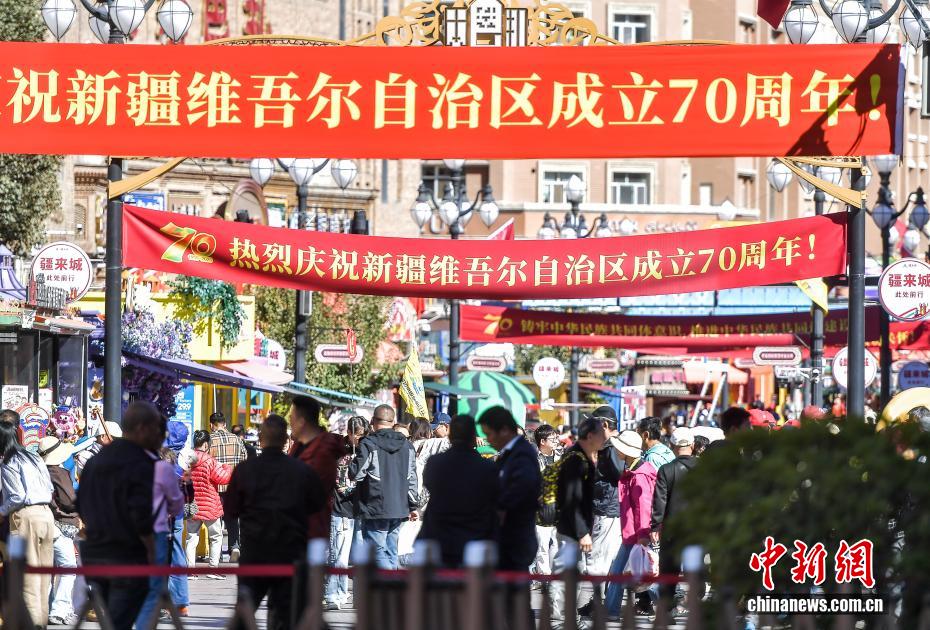
新时代党的治疆方略

Search documents
习近平听取新疆维吾尔自治区党委和政府工作汇报
中国基金报· 2025-09-24 11:43
习近平在听取新疆维吾尔自治区党委和政府工作汇报时强调 完整准确全面贯彻新时代党的治疆方略 努力建设团结和谐、繁荣富裕、文明进步、安居乐业、生态良好的社会主义现代化新疆 王沪宁蔡奇参加汇报会 率中央代表团出席新疆维吾尔自治区成立70周年庆祝活动的中共中央总书记、国家主席、中央军委主席 习近平,24日听取新疆维吾尔自治区党委和政府工作汇报。他强调,新疆要完整准确全面贯彻新时代党 的治疆方略,坚持稳中求进工作总基调,统筹发展和安全,牢牢扭住社会稳定和长治久安工作总目标, 紧紧围绕铸牢中华民族共同体意识、推进中华民族共同体建设,锚定中央赋予的"五大战略定位",凝心 聚力、久久为功,努力建设团结和谐、繁荣富裕、文明进步、安居乐业、生态良好的社会主义现代化新 疆。 新疆维吾尔自治区党委书记陈小江汇报了自治区党委和政府的工作。自治区人民政府主席艾尔肯·吐尼 亚孜、自治区人大常委会主任祖木热提·吾布力、自治区政协主席努尔兰·阿不都满金、新疆生产建设兵 团政委何忠友参加汇报会。 王沪宁、蔡奇、李干杰、何立峰、王小洪、雪克来提·扎克尔、谌贻琴、王东峰和刘振立,中央和国家 机关有关部门负责同志,中央代表团全体成员,新疆维吾尔自治区 ...


习近平听取新疆维吾尔自治区党委和政府工作汇报
中国能源报· 2025-09-24 11:35
习近平在听取新疆维吾尔自治区党委和政府工作汇报时强调 完整准确全面贯彻新时代党的治疆方略 努力建设团结和谐、繁荣富裕、文明进步、安居乐业、生态良好的社会主义现代化新疆 王沪宁蔡奇参加汇报会 率中央代表团出席新疆维吾尔自治区成立70周年庆祝活动的中共中央总书记、国家主 席 、 中 央 军 委 主 席 习 近 平 , 24 日 听 取 新 疆 维 吾 尔 自 治 区 党 委 和 政 府 工 作 汇 报 。 他 强 调,新疆要完整准确全面贯彻新时代党的治疆方略,坚持稳中求进工作总基调,统筹发 展和安全,牢牢扭住社会稳定和长治久安工作总目标,紧紧围绕铸牢中华民族共同体意 识、推进中华民族共同体建设,锚定中央赋予的"五大战略定位",凝心聚力、久久为 功,努力建设团结和谐、繁荣富裕、文明进步、安居乐业、生态良好的社会主义现代化 新疆。 习近平指出,新疆维吾尔自治区成立70年来,在党中央坚强领导和全国人民大力支持 下,自治区党委和政府团结带领全区各族干部群众坚定维护国家统一、民族团结、社会 稳定,持续推动经济社会发展,新疆面貌发生翻天覆地的变化,同全国各地一道如期全 面建成小康社会、迈上全面建设社会主义现代化国家新征程。他 ...
习近平在听取新疆维吾尔自治区党委和政府工作汇报时强调:完整准确全面贯彻新时代党的治疆方略 努力建设团结和谐、繁荣富裕、文明进步、安居乐业、生态良好的社会主义现代化新疆
Xin Hua She· 2025-09-24 11:04
Core Points - Xi Jinping emphasized the need for Xinjiang to fully implement the Party's governance strategy, focusing on social stability and long-term peace, while promoting a modern socialist Xinjiang that is harmonious, prosperous, and ecologically sound [1][2] - Over the past 70 years, Xinjiang has seen significant changes and development, achieving a well-off society alongside the rest of the country, thanks to the strong leadership of the Party and support from the people [2] - The focus should be on high-quality development tailored to Xinjiang's unique characteristics, including the development of competitive industrial clusters and the integration of cultural and tourism sectors [2][3] Development Strategies - Emphasis on resource endowment and industrial foundation to explore high-quality development paths [2] - Strengthening technological and industrial innovation, promoting green transformation, and enhancing the Silk Road Economic Belt's core area [2] - Prioritizing the improvement of people's livelihoods and consolidating poverty alleviation achievements [2] Social Stability and Governance - The importance of maintaining social stability through grassroots efforts and building a strong foundation for counter-terrorism and stability maintenance [3] - Promoting the awareness of the Chinese national community and enhancing cultural integration [3] - Strengthening the Party's leadership and building robust grassroots organizations to ensure effective governance [3] Strategic Importance of the Xinjiang Production and Construction Corps - The Corps is recognized as a vital strategic force in achieving the Party's overall goals for Xinjiang [3]
习近平参观新疆维吾尔自治区成立70周年主题成就展
证监会发布· 2025-09-24 08:46
Core Viewpoint - The 70th anniversary exhibition of the Xinjiang Uyghur Autonomous Region showcases the significant changes and achievements over the past seven decades, reflecting the historical process of the great rejuvenation of the Chinese nation, emphasizing the correctness of the ethnic regional autonomy system and the effectiveness of the Party's governance strategy in the region [3][4]. Summary by Sections - The exhibition is divided into three parts: "A New Sky with Joyful Sounds," "Tides Surge in Tianshan," and "Beautiful Xinjiang Creates Glory," highlighting the achievements made under the strong leadership of the Communist Party of China and the support from across the country [3]. - Historical videos, production scenes from the first tractor factory, before-and-after photos of poverty alleviation efforts, and educational displays promoting the awareness of the Chinese national community were featured, demonstrating the region's development [4]. - Xi Jinping emphasized the exhibition's positive energy and encouraged the organization of visits to further unite people and inspire the local population to strengthen their sense of community and work towards common prosperity [4].

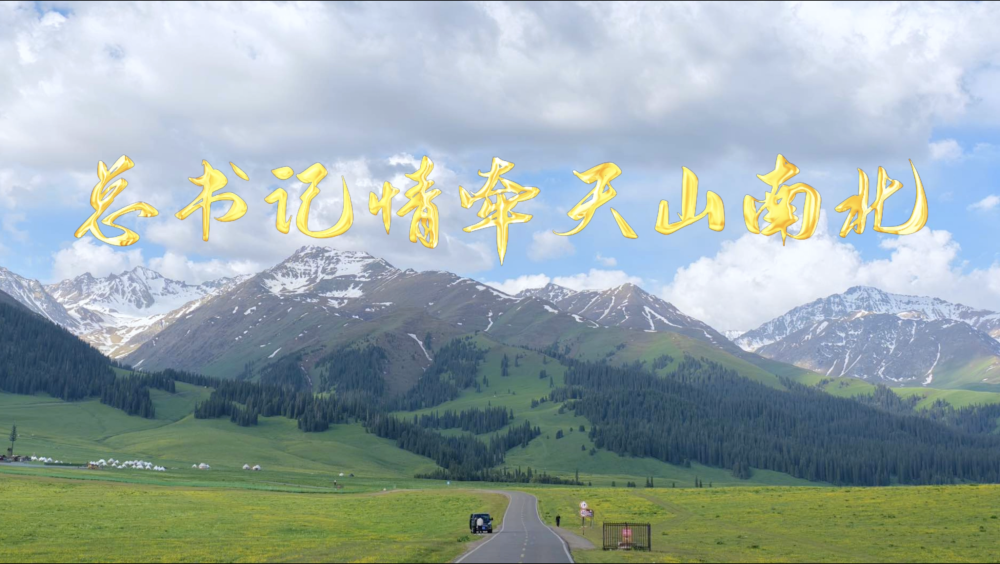
微视频|总书记情牵天山南北
Xin Hua She· 2025-09-24 08:28
Group 1 - The core message emphasizes the importance of national unity in Xinjiang, as highlighted by President Xi Jinping, who compares it to cherishing one's own life and eyesight [1] - Since the 18th National Congress of the Communist Party, President Xi has made significant visits to Xinjiang, providing guidance and strategic direction for the region's development [2] - The article discusses the flourishing of cultural and ethnic integration in Xinjiang, with a focus on building a shared spiritual home for the Chinese nation [2] Group 2 - The narrative illustrates the historical transformation of Xinjiang, showcasing the vibrant interactions among various ethnic groups, which have led to unprecedented vitality in the region [2]
第一观察|习近平总书记率中央代表团来到新疆
Xin Hua She· 2025-09-24 00:41
Core Points - Xi Jinping, General Secretary of the Communist Party, led a central delegation to Xinjiang to attend the 70th anniversary celebration of the Xinjiang Uyghur Autonomous Region, marking a significant event in the history of the Party and the nation [3] - The visit underscores the Party's high regard for Xinjiang's work and its care for the local ethnic groups, reflecting a long-standing commitment to the region [3][4] - The central government's strategy for Xinjiang emphasizes the importance of stability and development, aiming for a modernized approach to governance in border areas [4] Summary by Sections Historical Context - Xi Jinping's previous engagements with Xinjiang include visits during his tenure in Zhejiang, where he promoted economic cooperation between the two regions [3] - The central government has consistently highlighted the strategic importance of Xinjiang in the broader context of national development since the 18th National Congress [4] Current Developments - Xinjiang is experiencing its best development period in history, with projections indicating that the region's GDP will exceed 2 trillion yuan in 2024 and tourist numbers will surpass 300 million [4] - The leadership aims to leverage historical opportunities for rapid development while ensuring social stability and long-term peace [4] Cultural and Social Aspects - The atmosphere during Xi Jinping's visit was celebratory, with local ethnic groups expressing their gratitude and support through cultural performances [5] - The unity and collective effort of various ethnic groups are emphasized as essential for the unstoppable progress towards the great rejuvenation of the Chinese nation [6]
苏成:谱写中国式现代化新疆实践新篇章
Jing Ji Ri Bao· 2025-09-24 00:06
Group 1 - The establishment of the Xinjiang Uygur Autonomous Region in 1955 marked the beginning of a significant phase in China's ethnic autonomy and governance [1] - Since the 18th National Congress of the Communist Party of China, Xinjiang has achieved unprecedented economic and social development, enhancing the sense of gain, happiness, and security among its diverse population [1][2] - The strategic importance of Xinjiang is emphasized, as it plays a crucial role in China's modernization and is a key area for national security and economic development [2][3] Group 2 - The economic growth in Xinjiang has been remarkable, with GDP increasing from 749.947 billion yuan in 2012 to 2,053.408 billion yuan in 2024, marking a significant milestone [4] - The per capita GDP also saw substantial growth, rising from 33,495 yuan in 2012 to 78,660 yuan in 2024, reflecting a 1.3 times increase [4] - The region has established itself as a national energy resource base and a supplier of high-quality agricultural products, contributing significantly to the national economy [3][4] Group 3 - Xinjiang's trade has expanded, with total imports and exports increasing from 158.96 billion yuan in 2012 to 434.16 billion yuan in 2024, showcasing the region's growing role in international trade [5] - The establishment of the China (Xinjiang) Free Trade Pilot Zone in October 2023 is expected to enhance trade facilitation and attract more enterprises [5] - Employment has also increased, with the total number of employed persons rising from 12.46 million in 2012 to 13.91 million in 2024, a growth of 11.64% [6] Group 4 - Education in Xinjiang has improved significantly, with the gross enrollment rate for preschool education reaching 102.72% and the nine-year compulsory education consolidation rate exceeding 99% by 2024 [6] - The region has made notable progress in ecological civilization, with air quality improvement and a forest coverage increase from 4.24% in 2012 to 5.07% in 2024 [6] - The development of a modern industrial system is being prioritized, focusing on resource advantages and promoting strategic emerging industries [8] Group 5 - The South Xinjiang region, which occupies two-thirds of Xinjiang's area, is identified as a key area for development, with plans to enhance infrastructure and promote local industries [9] - Efforts are being made to address the challenges in South Xinjiang, including optimizing industrial layout and improving urbanization through education and job creation [9] - The overall strategy emphasizes the integration of development and security, aiming for sustainable growth and improved living standards for the population [7][9]
谱写中国式现代化新疆实践新篇章
Jing Ji Ri Bao· 2025-09-23 22:18
Core Viewpoint - The article emphasizes the historical achievements and ongoing development in Xinjiang, highlighting the importance of the region in China's modernization efforts and the need for continued adherence to the Party's governance strategies [1][2][3]. Group 1: Strategic Importance of Xinjiang - Xinjiang has been an integral part of China and serves as a crucial gateway for opening up to the world, impacting the overall modernization of the country [2][3]. - The region is recognized for its strategic significance in national security and as a core area of the Silk Road Economic Belt, facilitating trade and cultural exchange [3][4]. Group 2: Economic Development Achievements - Xinjiang's GDP has increased from 749.947 billion yuan in 2012 to 2,053.408 billion yuan in 2024, marking a significant growth [4]. - Per capita GDP rose from 33,495 yuan in 2012 to 78,660 yuan in 2024, reflecting a 1.3 times increase [4]. - The region has established itself as a national base for high-quality agricultural products and energy resources, with ongoing development in various industries [4][5]. Group 3: Infrastructure and Trade Expansion - Xinjiang has accelerated its infrastructure development, with 19 open ports and 119 international road transport routes established [5]. - The total import and export volume increased from 158.96 billion yuan in 2012 to 434.16 billion yuan in 2024, showcasing a robust trade growth [5]. Group 4: Social Welfare and Quality of Life - The region has successfully eliminated absolute poverty and improved employment rates, with the total number of employed persons rising from 12.46 million in 2012 to 13.91 million in 2024, an increase of 11.64% [6]. - Urban and rural residents' disposable income has also seen significant growth, with urban residents' income reaching 42,820 yuan and rural residents' income at 19,427 yuan in 2024 [6]. Group 5: Environmental and Ecological Progress - Xinjiang has made notable advancements in ecological conservation, with air quality improvement and a forest coverage increase from 4.24% in 2012 to 5.07% in 2024 [6]. - The region is actively pursuing carbon neutrality goals, with a continuous decline in carbon emissions per unit of GDP [6][7]. Group 6: Future Development Strategies - The focus is on high-quality development, emphasizing technological innovation, urbanization, and green development to enhance the quality of life for residents [7][8]. - There is a strategic push to develop the southern region of Xinjiang, addressing existing challenges and leveraging its potential for growth [9].
第一观察丨习近平总书记率中央代表团来到新疆
Xin Hua She· 2025-09-23 13:57
Core Points - Xi Jinping, General Secretary of the Communist Party, led a central delegation to Xinjiang to attend the 70th anniversary celebration of the Xinjiang Uyghur Autonomous Region, marking a significant event in the history of the Party and the nation [3] - The visit underscores the Party's high regard for Xinjiang's work and its commitment to the well-being of the region's diverse ethnic groups [3][4] - The central government's strategy for Xinjiang emphasizes the importance of stability and development, aiming for a modernized and prosperous region [4] Summary by Sections Historical Context - Xi Jinping's previous engagements with Xinjiang date back to his tenure in Zhejiang, where he promoted economic cooperation between the two regions [3] - The central government's focus on Xinjiang has been consistent, with Xi participating in various significant meetings and inspections since the 18th National Congress [3] Current Developments - Xinjiang is experiencing its best development period in history, with projections indicating that its GDP will exceed 2 trillion yuan in 2024 and tourist numbers will surpass 300 million [4] - The Party's strategy has led to a focus on social stability and long-term peace, which are seen as essential for the region's growth [4] Cultural and Social Aspects - The atmosphere during Xi's visit was celebratory, with local ethnic groups expressing their gratitude and support through cultural performances [5] - The unity and collective effort of various ethnic groups in Xinjiang are highlighted as crucial for the region's future and the broader goal of national rejuvenation [6]
(近观中国)天山南北展新颜 习近平心系新疆
Zhong Guo Xin Wen Wang· 2025-09-23 05:22
Core Points - The article emphasizes the importance of national unity in Xinjiang, highlighting Xi Jinping's consistent focus on the region since the 18th National Congress of the Communist Party of China [1][3][4] - It discusses the significant improvements in infrastructure and connectivity in Xinjiang, transforming it from a remote area to a central hub for China's westward opening [4][5] - The article underscores the cultural recognition and identity among various ethnic groups in Xinjiang, which is seen as essential for fostering unity and stability [6][8] Summary by Sections National Unity - Xi Jinping has repeatedly stressed the importance of ethnic unity in Xinjiang, advocating for the idea that all 56 ethnic groups should come together like "pomegranate seeds" [3][4] - The atmosphere of cooperation among different ethnic groups is evident through community events and mutual assistance programs [3][4] Infrastructure Development - Xinjiang has seen significant advancements in its transportation network, including the completion of the Tian Shan Victory Tunnel, which has drastically reduced travel time across the region [4] - The region is becoming a key area for China's Belt and Road Initiative, facilitating trade with Central Asia and Europe [4] Cultural Recognition - Xi Jinping has focused on enhancing the recognition of Chinese culture among various ethnic groups in Xinjiang, emphasizing the importance of cultural identity in fostering national cohesion [6][8] - Historical sites and cultural heritage in Xinjiang are being revitalized to strengthen the connection between the region's diverse cultures and the broader Chinese civilization [8]