
Compounding

Search documents
Why Jim Cramer thinks the stock market isn't loved
Yahoo Finance· 2025-10-07 12:51
Core Insights - Investor sentiment is currently characterized by uncertainty about capitalism despite strong stock market performance in 2023 [1][2] - Historical market downturns in 2000 and 2008 continue to influence investor behavior, leading to a preference for traditional stocks over volatile investments [2][3] - The S&P 500 has increased nearly 15% year-to-date, with notable performers including Robinhood, Seagate Technology, Western Digital, Newmont, and Palantir [3] Market Performance - The S&P 500 is up nearly 15% year-to-date [3] - The Russell 2000 has increased by 11.61% [3] - The Dow Jones Industrial Average has risen by 9.76% [3] Investment Philosophy - There is a contrast between short-term thinking prevalent among younger investors and the long-term investment philosophy advocated by Warren Buffett [3] - Cramer emphasizes the importance of understanding traditional metrics like P/E ratios and the value of compounding [3] - The perception of the market as a domain for billionaires has contributed to investor skittishness [4]

X @The Motley Fool
The Motley Fool· 2025-10-07 11:40
Investment Strategies - Millionaires start investing early, regardless of the initial investment size [1] - They capitalize on market downturns instead of fearing them [1] - Liquidity provides optionality in investment decisions [1] - They prioritize assets that outperform inflation [1] - Wealth accumulation is primarily driven by compounding returns, not complex strategies [1]
Is the Vanguard Total Stock Market ETF a Millionaire-Maker?
The Motley Fool· 2025-10-07 08:09
Group 1 - The Vanguard Total Stock Market ETF (VTI) is highly diversified, tracking the CRSP U.S. Total Market Index, which includes 3,508 companies listed on American stock exchanges [1][3] - The ETF's top three holdings are Nvidia, Microsoft, and Apple, which together have a combined market value of $12.2 trillion, representing 18.1% of the fund [3][4] - The ETF has delivered a compound annual return of 9.2% since its inception in 2001, with a recent acceleration to 14.6% over the last 10 years, largely driven by tech companies in cloud computing, enterprise software, and AI [7][8] Group 2 - The Vanguard ETF provides exposure to the AI industry but does not rely on its success as heavily as more concentrated index funds like the Nasdaq-100, which has a higher weighting in hypergrowth stocks [5][6] - The ETF's performance may be less volatile, appealing to risk-averse investors, but it has resulted in lower returns during the recent AI boom [5][6] - The ETF could potentially turn a $50,000 investment into $1 million in 22 to 34 years, depending on the annual return rate [8][9] Group 3 - The Vanguard ETF includes smaller companies that may represent emerging growth stories, which are not available in more concentrated indexes [7][10] - Companies like Upstart Holdings, Lemonade, Sprouts Farmers Market, Tenable, and SoundHound AI are examples of growth stories found within the Vanguard ETF [10]
6 retirement strategies for when clients can't save more
Yahoo Finance· 2025-10-06 19:16
Core Insights - The traditional approach of simply saving more for retirement is becoming increasingly difficult for younger workers due to rising costs and competing financial priorities [1][2][3] - A significant portion of younger workers, specifically 42%, report living paycheck to paycheck, with 74% struggling to save for retirement [2] - Goldman Sachs emphasizes the need for more strategic investment and retirement income strategies to address the savings gap, rather than relying solely on increased savings [3] Retirement Savings Strategies - Goldman Sachs identifies six strategies to help close the retirement savings gap, suggesting that a more thoughtful approach is necessary for many workers [3] - The introduction of "Trump accounts" as a new early savings vehicle aims to provide government-funded investment accounts for newborns starting in 2025, with an initial $1,000 contribution [4] - These accounts allow for annual contributions of up to $5,000, and modeling shows that consistent contributions from ages 1 to 20 can yield significant retirement savings [5][6] Access to Retirement Plans - Approximately 25% of working Americans currently lack access to employer-sponsored retirement plans, highlighting a critical area for improvement in retirement outcomes [7]
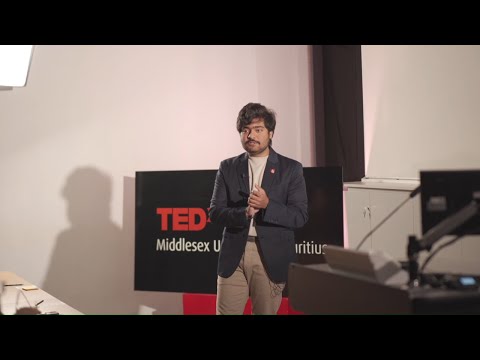
Money is not magic — here’s why | Haardik Gautam | TEDxMiddlesex University Mauritius
TEDx Talks· 2025-10-06 16:38
Investment Philosophy & Financial Independence - Early saving and investing in diverse assets like mutual funds, ETFs, index funds, cryptocurrencies, fixed deposits, and bets are crucial for financial independence [11] - Financial independence is a goal everyone should strive for, allowing time to work for them instead of working for money [10] - Compounding is a powerful concept that can exponentially grow money over time, exemplified by an initial investment of 50,000 rupees [12][13] - Patience, resilience, and starting early are essential for successful investing, but greater rewards come with greater risks [14] Personal Finance Journey - The speaker's journey began with childhood savings and a growing awareness of the value of money [1][2][3] - The speaker's first investment, though initially causing anxiety, led to a passion for finance and financial independence [4][5][6] - The speaker researched and learned about various investment tools and instruments to take control of their finances [7] - The speaker made a well-researched stock investment of 50,000 rupees, highlighting the importance of knowledge in investing [8] Key Takeaways - Financial independence is not just about getting rich but about respecting the effort put into earning money and becoming the boss of one's own finances [15] - Assets provide returns that can sustain a good lifestyle, potentially replacing salary and allowing for more freedom [11][12] - Investing provides a sense of thrill and independence, even with small amounts, and can be achieved through simple clicks on a mobile phone [9][10]

Warren Buffett Has Recommended This ETF. It Could Turn a Monthly $300 Investment Into $1 Million.
The Motley Fool· 2025-10-05 15:40
Core Insights - Warren Buffett, as chairman of Berkshire Hathaway, has consistently delivered market-beating returns for nearly six decades, making his investment advice highly regarded by investors [1] - Buffett has recommended the Vanguard S&P 500 ETF as a complementary investment for portfolios, highlighting its potential for long-term growth [2][6] Investment Strategy - The Vanguard S&P 500 ETF tracks the performance of the S&P 500 index, which has historically provided significant returns for investors, with an average annual gain of 10% since its inception in the late 1950s [3][7] - Investing in this ETF allows for instant diversification across top U.S. companies, making it an ideal choice for non-professional investors seeking to own a cross-section of successful businesses [4][7] Cost Efficiency - The Vanguard S&P 500 ETF has a low expense ratio of 0.03%, making it a cost-effective option for investors looking to maximize their returns [5][8] Compounding Potential - A hypothetical investment scenario suggests that an initial investment of $1,000, combined with monthly contributions of $300 over 35 years, could potentially grow to $1 million, assuming an average annual gain of 10% [9][10] - The strength of American businesses, as emphasized by Buffett, supports the optimism for long-term investments in the S&P 500 index [11]

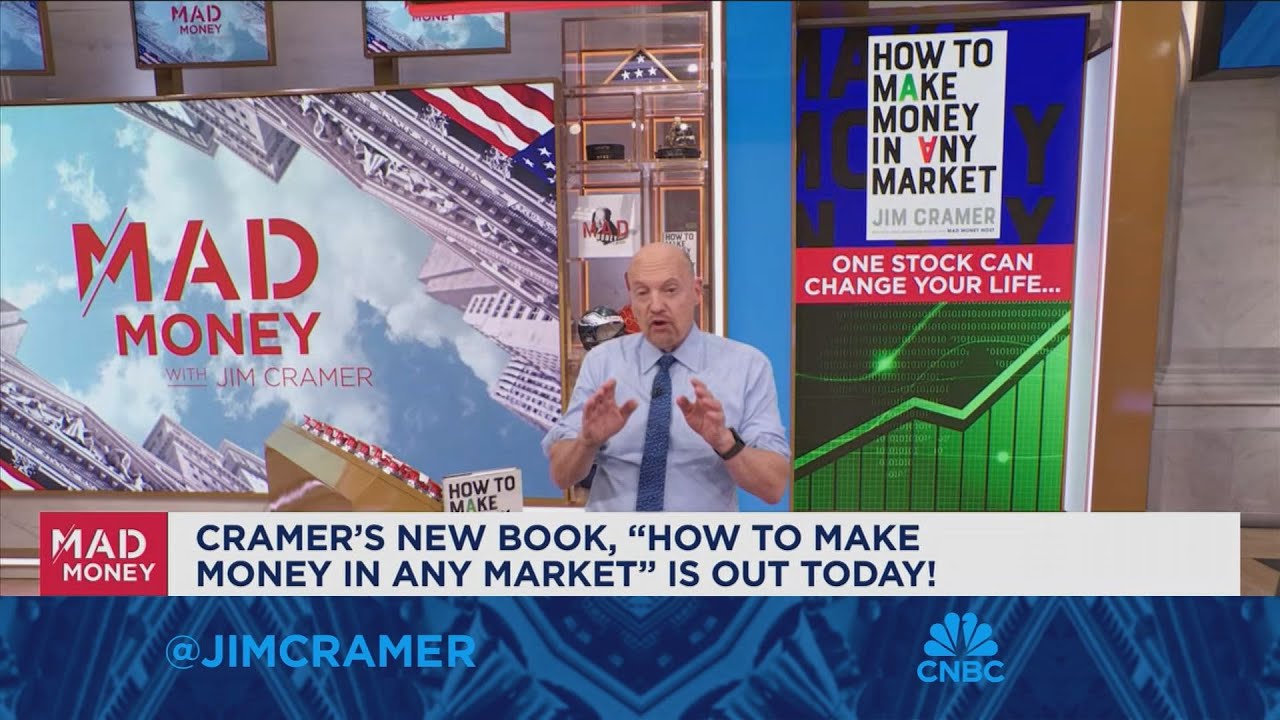
Jim Cramer offers investing advice in his new book, 'How to Make Money in Any Market'
Youtube· 2025-10-01 17:37
Core Insights - Jim Kramer's new book, "How to Make Money in Any Market," aims to democratize investment knowledge and empower individual investors to make informed decisions [1][4][15] - The discussion emphasizes the importance of understanding stock fundamentals, such as price-to-earnings (PE) multiples and balance sheets, to avoid common investment mistakes [4][10][11] - Kramer's approach encourages a balanced portfolio that includes both index funds and individual stocks, highlighting the potential life-changing impact of successful stock investments [15][16][18] Investment Strategies - Kramer's investment philosophy suggests focusing on long-term stock ownership rather than short-term trading, advocating for thorough research before making investment decisions [7][8][22] - He emphasizes the need for diversification among growth stocks while cautioning against over-diversification that can dilute returns [19][20] - The book discusses the significance of recognizing when to sell stocks based on their performance and financial health, particularly through analyzing balance sheets [9][10][11] Market Observations - Kramer's insights reflect a positive outlook on certain stocks, such as Western Digital and Merck, which have shown resilience in the market [2][3] - He notes the changing market structure and the necessity for investors to adapt their strategies accordingly, particularly in turbulent market conditions [9][14] - The conversation highlights the emotional impact of successful investments, with anecdotes of individuals who have significantly benefited from stocks like Nvidia [17][18]

You must learn to trust the market, says Jim Cramer
Youtube· 2025-10-01 00:37
Core Theme - The overarching theme emphasizes that long-term investment in individual stocks can create significant wealth, contrasting with short-term trading strategies [2][27]. Market Performance - The Dow gained 82 points, the S&P climbed 41%, and the NASDAQ advanced 0.3%, indicating a positive market day that may have created new millionaires [3]. Investment Strategy - Investors are cautioned against selling favorite stocks due to market fluctuations, such as typical poor performance in September or potential government shutdowns, as these are deemed distractions from the actual performance of companies [3][4]. - The importance of focusing on the underlying business realities rather than external events is highlighted [5][4]. Case Study: Nvidia - Nvidia is presented as a transformative investment example, with its stock price rising from an adjusted price of just under $4 in 2017 to over $186, showcasing the potential for life-changing wealth through long-term holding [6][7]. - The emotional impact of successful investments is noted, with many investors sharing their positive experiences and financial gains from Nvidia [7]. Historical Performance of Stocks - The performance of the "FANG" stocks (Facebook, Amazon, Netflix, Google, and later Apple) is discussed, illustrating that significant returns were achieved only by those who held onto their investments rather than trading in and out [9][10]. - Specific investment outcomes are provided, such as a $1,000 investment in the S&P index fund growing to nearly $5,000, while investments in individual stocks like Netflix could yield $36,000 [10]. Investment Philosophy - The narrative challenges the prevailing belief that individual stock picking is too difficult for average investors, advocating for a bifurcated portfolio strategy that includes both index funds and select individual stocks [11][12]. - The book aims to democratize investment knowledge, encouraging individuals to understand stock valuation and the importance of compounding returns [19][24]. Generational Wealth Transfer - A significant wealth transfer of $100 trillion from baby boomers to millennials and Gen Z is noted, with concerns that the younger generation lacks investment knowledge and tends to trade rather than invest for the long term [15][16]. Conclusion - The message reinforces that while the market is currently favorable, it is essential to trust in the potential of growth stocks and to focus on long-term investment strategies to achieve financial success [25].



Regeneron: Growth Catalysts Incoming
Seeking Alpha· 2025-09-30 20:25
Core Insights - The article discusses the author's previous successful predictions regarding Regeneron Pharmaceuticals, Inc. (NASDAQ: REGN) share price performance based on fundamental analysis [1] - The author emphasizes the importance of patient investing and the accumulation of high-quality assets, alongside high-risk opportunities and transformative technologies [1] Company Analysis - Regeneron Pharmaceuticals has been a focus of the author's analysis, with a history of accurate predictions regarding its stock performance [1] - The author highlights the company's commitment to making a positive impact on the world through its business practices [1] Investment Philosophy - The investment approach combines steady accumulation of quality assets with high-risk, high-reward opportunities [1] - The author advocates for dividend reinvesting and the benefits of compounding over time [1]


RELX PLC (RELX): A Bull Case Theory
Yahoo Finance· 2025-09-30 14:37
Core Thesis - The bullish thesis on RELX PLC highlights its strong financial performance, robust growth in digital revenue, and strategic integration of AI tools, positioning the company as a reliable long-term investment opportunity [1][5]. Financial Performance - In 2024, RELX generated £9,434 million in revenue, reflecting a 7% underlying growth, with adjusted operating profit of £3,199 million (+10% underlying) and adjusted EPS of 120.1p (+9% at constant FX) [2]. - By H1-2025, revenue reached £4,741 million (+7% underlying) and adjusted operating profit was £1,652 million (+9%), with cash-flow conversion at 100% and net debt/EBITDA at 2.2x [3]. Business Model and Market Position - RELX operates as a critical provider of professional tools across various sectors, including science, law, risk analytics, and exhibitions, with digital and electronic revenue accounting for approximately 83% of total revenue [2]. - The company's competitive advantage lies in its proprietary datasets and its embedded position in workflow-critical spending, serving scientists, lawyers, and financial institutions [3][4]. Growth Drivers - Underlying growth in H1-2025 was broad-based across segments: Risk +8%, Legal +9%, STM +5%, and Exhibitions +8%, driven by analytics and AI integration [4]. - The integration of AI tools such as Lexis+ AI, Nexis+ AI, and ScienceDirect AI is enhancing decision-making and scaling the company's global operations [4]. Shareholder Returns - Management has executed £1.0 billion of a £1.5 billion buyback program, supporting shareholder returns alongside a 7% interim dividend increase [3]. - The company has delivered approximately +328% total shareholder return (TSR) under CEO Erik Engström's leadership, significantly outperforming the FTSE 100's +83% [4]. Future Outlook - Despite facing potential risks from AI monetization delays and pricing pressures, the combination of steady underlying growth, AI-driven workflow penetration, disciplined buybacks, and strong free cash flow positions RELX as a reliable long-term compounder [5]. - Sustaining approximately 10-12% EPS growth with modest leverage could generate 2-3x returns over a cycle, emphasizing the power of compounding and operational execution [5].