
Geopolitical risk

Search documents
Gold's rally just cracked, but one private Swiss bank says it's not over
Yahoo Finance· 2025-10-22 14:20
Core Viewpoint - Gold experienced its worst single-day drop in 12 years, ending a record-breaking rally, but the underlying supply-and-demand dynamics remain strong, even at overbought levels in the short term [1][2]. Supply and Demand Dynamics - Spot gold was trading around $4,140 per ounce, down from a record $4,381.21 per ounce, reflecting a significant price fluctuation [2]. - Prices have increased by as much as 60% as investors, including central banks and private funds, sought protection from inflation, fiscal deficits, and geopolitical risks, while supply remains constrained [3]. Central Bank Influence - Central banks have been steadily increasing their gold holdings since 2008, creating a higher price floor for gold [3]. - The demand from the official sector is seen as a stabilizing force for gold prices, with central banks likely to continue diversifying their reserve holdings in gold due to fiscal uncertainties and geopolitical risks [5]. Macroeconomic Factors - Gold's characteristics as a medium of exchange, unit of account, and store of value are particularly appealing in the context of high US government debt, which negatively impacts Treasuries [4]. - Macroeconomic and geopolitical uncertainties are expected to sustain further demand for gold, prompting analysts to raise their 12-month gold price target from $3,900 to $4,600 per ounce [6]. Investor Sentiment - Despite the recent drop, investor interest in gold remains strong due to ongoing inflation fears and global turmoil, with central banks expected to continue increasing their gold purchases [7].
Geopolitical risk is the 'single biggest risk' for investors right now, says Hermitage Capital CEO
CNBC Television· 2025-10-21 21:15
Geopolitical Risks - Geopolitics is considered the single biggest risk for investors currently [3] - Key geopolitical issues include the war in Ukraine, the US-China tariff conflict, and the potential for China to take over Taiwan [3] - The US's strained relationships with traditional allies could impact the US dollar's reserve currency status [4] War in Ukraine - The war in Ukraine is unlikely to end soon because Vladimir Putin benefits from it as a means to maintain power by creating a foreign enemy [5][6] - Political solutions and offers may be ineffective because Putin's primary concern is staying in power [7] - The war is expected to continue for an extended period [8] Energy Market Leverage - Ending the war requires both weapons for Ukraine to strike Russian targets and addressing Russia's crude oil sales [10] - Since the war began, Russia has sold $400 billion of crude oil to China, India, and Turkey [10] - Targeting the eight refineries (two in China, four in India, two in Turkey) that purchase Russian oil could significantly impact Russia's revenue [10] - An ultimatum to these refineries to choose between doing business with the West or Russia could force them to buy from the West [11] - This could lead to Russian oil selling at $20 per barrel instead of $60, potentially forcing Putin to seek a ceasefire [12]

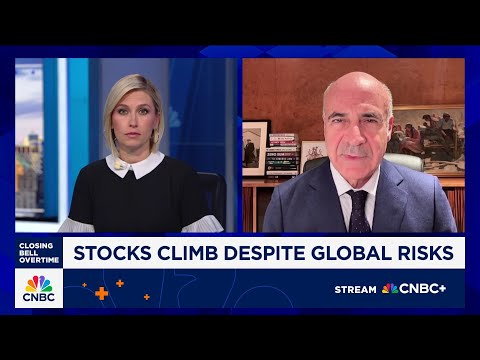
Gold and S&P could reach $10,000 by the end of the decade, says Yardeni Research founder Ed Yardeni
Youtube· 2025-10-17 19:02
Market Outlook - The economy has shown remarkable resilience, with no anticipated recession occurring over the past three years despite various shocks [2][3] - The overall economy is expected to continue growing through the end of the decade, referred to as the "roaring 2020s" [3] Earnings and Stock Predictions - Earnings are projected to exceed $450 per share by the end of the decade, applying a 22x multiple could lead to stock prices approaching 10,000 [4] Gold and Investment Trends - Gold is increasingly viewed as a safe, diversifying asset in investment portfolios, contrasting with Bitcoin, which is seen as a risk-on asset [5][6] - There is a global demand for gold, driven by wealth diversification and as a hedge against geopolitical risks [7][8] Geopolitical Factors - Potential positive developments in U.S.-China relations could impact market sentiment, with ongoing discussions about trade resolutions [10][11] - The outcome of Supreme Court rulings on tariffs may also influence market dynamics [12]

X @Bloomberg
Bloomberg· 2025-10-15 08:48
RT Bloomberg Live (@BloombergLive)Geopolitical risk has become the new normal for Asean leaders.Join us in Malaysia for this year’s #BBGAsean to find out what businesses are doing to navigate a turbulent landscape.Sponsored by @CIMBMalaysiahttps://t.co/RyyzbPSraQ https://t.co/PXsmpXNng7 ...
Why XRP Is Sinking Today
Yahoo Finance· 2025-10-14 16:44
Core Viewpoint - XRP is experiencing a sell-off due to rising geopolitical risks, particularly the deteriorating relations between the U.S. and China, which are impacting investor sentiment in the cryptocurrency market [1][2][9]. Geopolitical Impact - The U.S.-China trade tensions are escalating, with China limiting rare-earth mineral exports and the U.S. imposing a 100% tariff on Chinese goods, leading to further retaliatory actions [4][6]. - These geopolitical dynamics are causing investors to become more risk-averse, affecting the overall market sentiment towards cryptocurrencies like XRP [5][7]. Market Performance - As of the latest trading session, XRP's price has fallen by 3% in the last 24 hours, while Bitcoin and Ethereum have also seen declines of 1.5% and 0.5%, respectively [1][9]. - The cryptocurrency market is increasingly correlating with equities, making it susceptible to macroeconomic and geopolitical factors [7]. Future Outlook - A potential new trade agreement between the U.S. and China could serve as a bullish catalyst for XRP and other cryptocurrencies, but the likelihood of reaching mutually agreeable terms remains uncertain [6]. - The ongoing adversarial relations between the two countries pose significant risks for XRP investors in the near term [6][9].
Trump tariffs don't faze IMAX CFO
Bloomberg Television· 2025-10-14 16:00
Company Operations - IMAX 的所有产品都在加拿大制造,然后运往全球各地的实体,最终交付给客户 [1] - IMAX 总部位于加拿大 [1] Risk Management - 由于 IMAX 是一家全球性公司,因此一直面临关税风险、货币风险、地缘政治风险和供应链波动风险 [2] - IMAX 已经花费数十年时间评估和权衡各种风险,并制定应对策略 [2] - IMAX 正在与供应链团队密切合作,制定应对美国关税的策略 [2]

ETF Edge: Options strategies and commodities as a barrier against volatility
CNBC Television· 2025-10-13 22:12
Market Overview & Risk Management - Equity valuations are high, and markets are on a knife's edge, prompting consideration of hedges like commodities [1] - Diversification into bonds or commodities and option-based strategies are recommended to bolster portfolios against equity market sell-offs [6] - The market offers opportunities to manage risk, and leaning into hedges is advisable given subdued volatility [43] - It's a good time to reduce US-centric equity risk due to valuations and uncertainties [45] Options Strategies - Option markets are efficient, and determining attractiveness requires more than just observing volatility levels [9][10] - Avoiding leverage and ensuring full collateralization are crucial when using options selling strategies [11] - Diversifying the option overlay through laddering (trading a small slice each day) helps adapt to changing market conditions [12][13] - Demand for income and defense against equity drawdowns should drive growth in option strategies [25] Gold & Precious Metals - Gold is traditionally a safe haven during economic turmoil and geopolitical instability, benefiting from falling interest rates [16][17] - There's significant room for gold to run, supported by geopolitical risks and central bank buying (approximately 1,000 tons per year over the last three years) [20][21] - Investors are typically underallocated to gold, with recommendations suggesting a 5% to 15% allocation [33] - Silver's industrial component (60% of overall demand) offers growth potential through industrialization, energy transition, and AI [49][50]
The Politics Premium Is Punishing Bonds From Paris to Tokyo
Yahoo Finance· 2025-10-13 08:21
Group 1 - Bond holders are demanding higher premiums to hold the debt of developed-nation governments due to political turmoil in France and Japan, indicating that politics is becoming a more significant market driver than central bank policy [1][2] - The French bond-market risk gauge reached its highest levels this year following the resignation and reappointment of Prime Minister Sebastien Lecornu amid a budget impasse [2] - In Japan, longer-maturity bonds fell sharply after Sanae Takaichi's unexpected rise in the ruling party, raising concerns about increased government spending [2] Group 2 - Governments worldwide face a dilemma where investors seek fiscal consolidation, but austerity measures are politically contentious and can negatively impact electoral outcomes [3] - Geopolitical tensions, particularly between the US and China, are exacerbating pressures on economic growth, as highlighted by President Trump's threats of increased tariffs [3][4] - Political risk is expected to remain high over the next decade, as stated by Chris Iggo from AXA Investment Management [4] Group 3 - Despite political encroachments on markets, US Treasuries have maintained their appeal as a safe haven during periods of volatility, with the dollar recently experiencing its best week in nearly a year [5] - Real yields on bonds, adjusted for inflation, are reaching new highs, reflecting rising political risks and the increasing need for governments to issue more debt [6] - Long-end real yields are now significantly above potential growth rates in several top-rated countries, including Germany, Italy, France, and the UK [6] Group 4 - Investors are cautioned about a potentially adverse dynamic that could threaten debt sustainability, with expectations that the situation may worsen before achieving a new sustainable equilibrium [7]
RBC Capital Markets' Helima Croft: Move in oil shows de-risking due to peace deal
CNBC Television· 2025-10-10 15:48
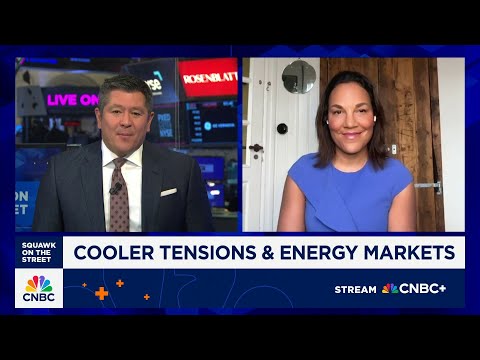
The president planning to go to the Middle East to mark the Israel Hamas peace deal in the next few days. Joining us to talk about how a cooling of tensions in the Middle East might impact the energy markets is Haleem Croft, RBC Capital Markets managing director, global head of commodity strategy. Haleem, good to see you.Thanks for the help today. Thank you for having me on. I I wonder what you make of the the action in oil.Uh yesterday some were taken back that there really wasn't much, but that's clearly ...
Insurers face new exposure as geopolitical conflict becomes a leading business risk
Yahoo Finance· 2025-10-10 14:38
Core Insights - Geopolitical conflict is identified as the most significant risk impacting businesses in the next 12 months, with 40.0% of respondents in a GlobalData poll highlighting its importance [2] - Aon's 2025 Global Risk Management Survey indicates that geopolitical volatility has entered the top ten global risks for the first time in its 19-year history, reflecting the interconnectedness of global markets [3] Business Impact - Ongoing geopolitical tensions are disrupting global supply chains, causing energy market volatility, and increasing regulatory uncertainty for businesses [2] - The survey results show that high inflation (32.7%), digitalisation (10.4%), and cybersecurity (9.9%) are viewed as lesser risks compared to geopolitical conflict [2] Insurance Industry Response - The rise of geopolitical risk presents both challenges and opportunities for insurers, as traditional models may not adequately cover the consequences of political instability [4] - Insurers are encouraged to adopt scenario modeling and geopolitical risk mapping to better understand the cascading effects of regional tensions on global markets [4] Strategic Recommendations - Strengthening partnerships with risk intelligence providers and developing parametric or event-based products can facilitate faster payouts in volatile environments [5] - Proactive client engagement is essential, with insurers playing a strategic advisory role to help clients quantify geopolitical exposure and integrate risk mitigation into broader resilience plans [5]