Immigration

Search documents
Constellation Brands (STZ) 2025 Conference Transcript
2025-06-03 13:00
Constellation Brands (STZ) 2025 Conference Summary Industry Overview - The conference focused on the beverage alcohol industry, particularly the beer segment, with a significant emphasis on the Hispanic consumer market and broader consumer trends. Key Points and Arguments Consumer Behavior and Market Trends - The Hispanic consumer segment, which constitutes roughly half of Constellation's business, is currently facing challenges due to inflation and immigration concerns, leading to reduced dining out and social occasions, with 75% of Hispanic consumers going to restaurants less [1][2][3]. - Despite these challenges, brand loyalty remains strong, and brand health metrics are at an all-time high [4]. - There is a noticeable shift in consumer spending habits, with Hispanic consumers spending less time in convenience stores and opting for broader market stores [6][7]. - Non-Hispanic consumers are also exhibiting value-seeking behavior, influenced by inflation, leading to trade-down behavior primarily in lower price segments [10][11]. Brand Performance and Strategy - Constellation Brands has successfully developed its non-Hispanic consumer base, with Modelo's demographic shifting from 80% Hispanic to 55% over recent years [11]. - The company maintains a strong market position, with Modelo identified as a significant growth driver, particularly in California where its market share is double the national average [44]. - Corona is expected to maintain a neutral growth trajectory, while Pacifico is emerging as a strong growth driver, particularly among younger consumers [47]. Financial Outlook and Guidance - The company anticipates a transitional year for its beer business, with a focus on maintaining a 39% to 40% margin target, supported by low single-digit volume growth and pricing strategies [25][27]. - A robust restructuring program is expected to yield savings exceeding $200 million, with a significant portion benefiting the wine and spirits business [22]. - Operating cash flow is projected to reach approximately $2.7 to $2.8 billion in fiscal 2026, with expectations for continued growth in subsequent years [74][78]. Innovation and Product Development - Constellation is focusing on price pack architecture to cater to varying consumer spending capabilities, introducing smaller pack sizes to meet consumer needs [16][17]. - The company is committed to maintaining a simple SKU assortment, which enhances efficiency and effectiveness in distribution [32][36]. - Investments in R&D and data analytics are aimed at improving product quality and consumer insights, with a focus on internal capabilities [90][92]. Marketing and Brand Support - Constellation Brands is committed to maintaining high marketing spend, with a focus on effective channels such as live sports and digital advertising [56][59]. - The company emphasizes the importance of brand health and consumer engagement, ensuring that marketing efforts are aligned with consumer trends [53][54]. Long-term Aspirations - The company aims to continue outperforming the market, gaining share, and ensuring that its stock reflects its operational results by 2030 [93][94]. Additional Important Insights - The company has increased its influence with major retailers, achieving category captain status in over 80% of accounts, which has contributed to share gains [66]. - Constellation's relationship with wholesalers is strong, with a focus on delivering growth and profitability [73]. - The company is strategically managing its debt profile, with plans for early redemption of senior notes to optimize its financial structure [82][84]. This summary encapsulates the key discussions and insights from the Constellation Brands conference, highlighting the current challenges and strategic initiatives within the beverage alcohol industry.

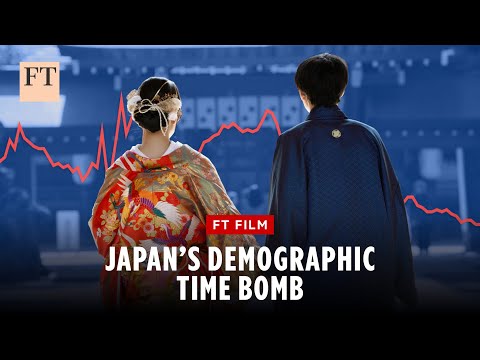
Japan's population crisis reaches tipping point | FT Film
Financial Times· 2025-05-23 05:05
Demographic Crisis & Economic Impact - Japan faces a demographic tipping point in 2025 as the postwar baby boom generation enters their late 70s, increasing medical and care costs [1][4][5][11] - Japan's population is shrinking by 1.7% every minute, potentially leading to a population decline equivalent to Australia's current population by 2050 [3] - The total fertility rate in Japan is around 1.2%, significantly below the 2.1% needed to maintain a stable population [6] - Stagnant wages for over three decades have led to a surplus of "economically unattractive men," impacting relationship formation and birth rates [19][20] - Government spending on pensions and elderly support has risen to approximately 10% of GDP [32] - The number of patents granted to Japanese researchers has declined, correlating with the decline in the working-age population [33] Potential Solutions & Adaptations - Japan has quietly increased immigration, with projections suggesting foreign nationals could represent about 10% of all residents within 20 years [25][26] - Businesses are adapting to the aging population by focusing on elderly care products and services, such as adult diapers and modified food products [34][35] - The Tokyo Metropolitan Government is experimenting with policies like 4-day workweeks and a marriage app to encourage dating and marriage [22] Global Implications - Japan's experience serves as a warning to other countries facing demographic decline, including China, France, Germany, the UK, and the US [41][42] - Despite economic challenges, Japan has maintained social stability, good health, and a globally competitive economy, offering potential lessons for other nations [8][43]