一人独角兽公司

Search documents
一场面向年轻人的对话:AGI时代的职业跃迁与创业新物种
红杉汇· 2026-01-26 00:05
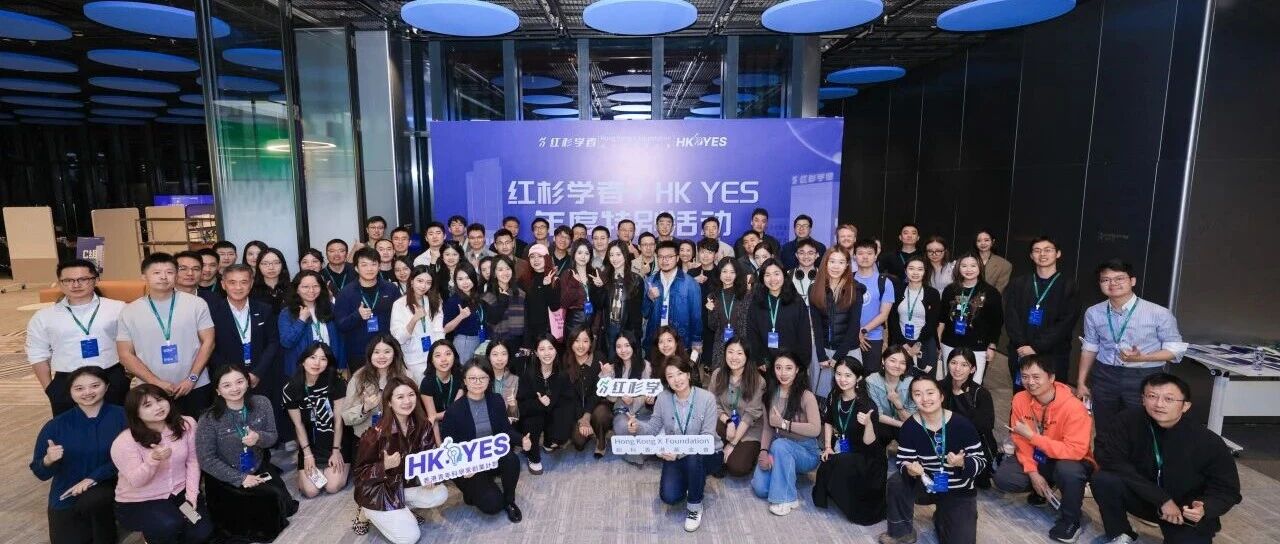
Core Insights - The article discusses the transformation of career paths, entrepreneurial methods, and organizational structures in the context of the rise of AGI (Artificial General Intelligence) [2] - The event organized by Sequoia Scholars and HK YES focuses on the opportunities and challenges presented by AGI for young professionals and entrepreneurs [2] Group 1: Changes in the Tech Industry - The excitement surrounding AI's rise is comparable to the opportunities seen with mobile internet in 2010, creating long-term opportunities across various industries including semiconductors and data centers [11] - The Hong Kong biotech sector has seen significant growth, positively impacting investments and exits in the past year [11] - The innovation environment in Hong Kong has accelerated significantly, moving beyond its traditional image as merely a wealthy financial hub [11] Group 2: New Entrepreneurial Dynamics - The emergence of "super individuals" is expected to shift the structure of society and the nature of work, moving from centralized organizations to individual-driven economies [12] - AI is making communication and information gathering more efficient and flattening traditional hierarchies, leading to a greater emphasis on deep market understanding and positioning for entrepreneurs [13] - Core qualities such as integrity, transparency, and perseverance remain crucial for entrepreneurs, even as the importance of intellectual skills diminishes in the AI era [14] Group 3: Educational Perspectives - The value of traditional education is being re-evaluated, with a focus on personal interests and the learning environment rather than merely obtaining a degree [18][19] - The role of interdisciplinary skills is emphasized, as no single discipline can fully prepare individuals for the complexities of the future [16] - Continuous learning and the ability to adapt are highlighted as essential traits for success in an ever-evolving landscape [20][21]

李开复:CEO将成为AI总指挥,未来将出现一人独角兽公司
Xin Lang Cai Jing· 2025-11-01 02:46
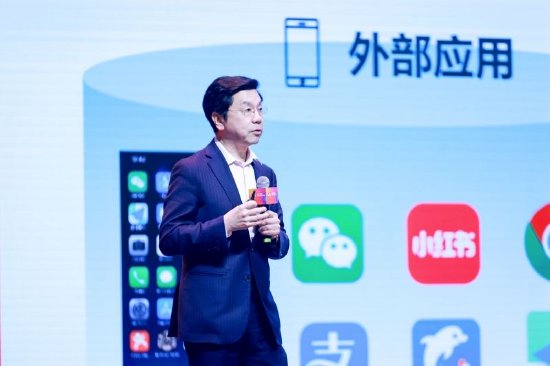
Group 1 - The core viewpoint is that the organizational structure of companies is evolving towards AI Agents replacing human roles, leading to a reduction in the number of employees and a shift in task responsibilities [1][3] - Companies will have various types of AI Agents, such as HR Agents, technical Agents, and marketing Agents, which will collaborate to enhance efficiency and optimize tasks across departments [3] - The future may see the emergence of "one-person unicorn companies" that leverage AI Agents to create valuable businesses, as these Agents can work continuously without fatigue or conflict [3]
AI改变创业生态,“一人独角兽公司”不远了?
Di Yi Cai Jing· 2025-10-02 00:31
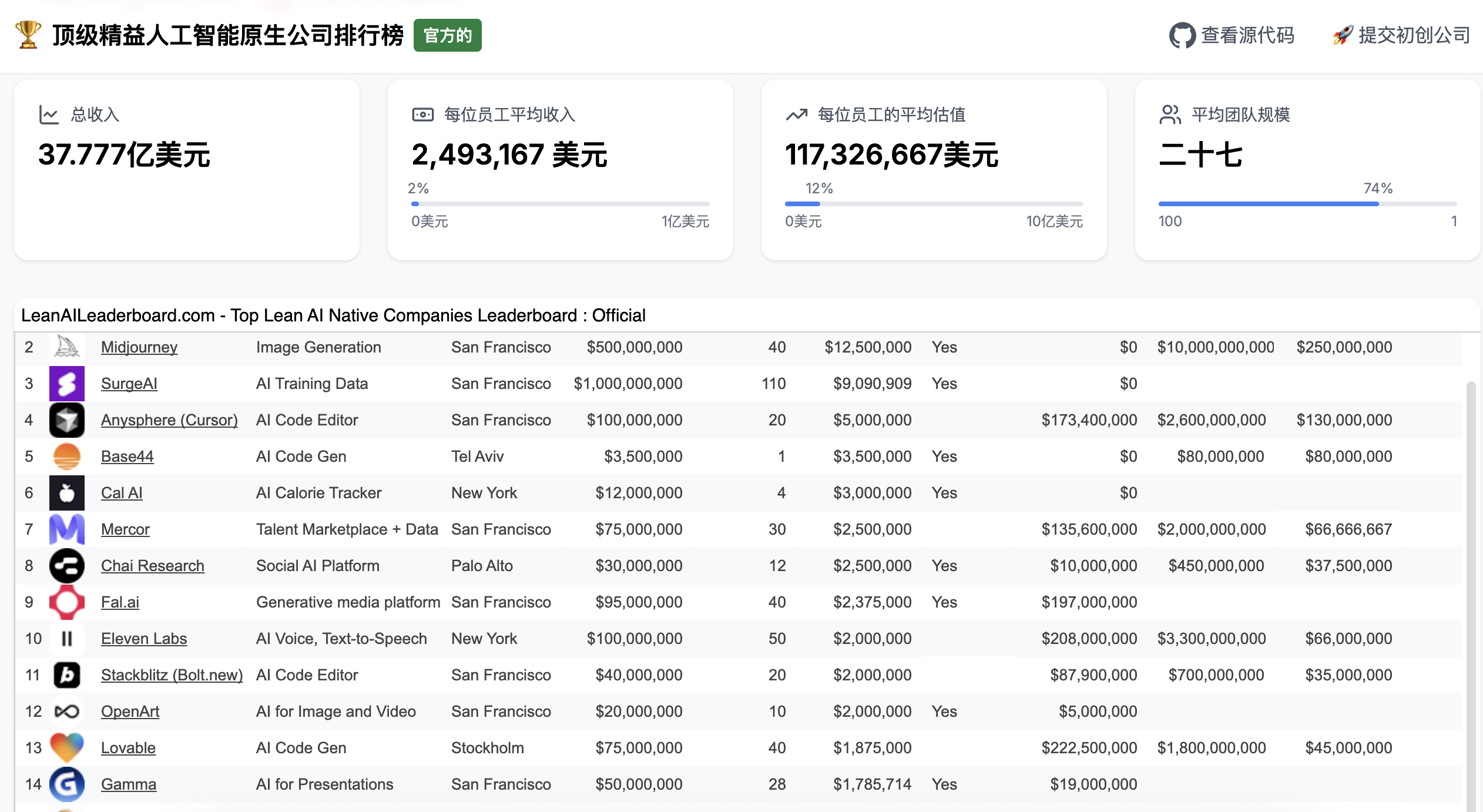
Core Insights - The emergence of "1-Person" Billion Dollar Companies is becoming a reality, with significant advancements in AI capabilities enabling individuals to manage substantial operations independently [1][5][6]. Group 1: AI-Driven Business Models - OpenAI's CEO Sam Altman predicts the rise of one-person unicorns, highlighting a shift towards smaller, highly efficient teams in the AI era [1]. - A leaderboard tracking top lean AI-native companies shows that 44 companies with an average team size of 27 generate nearly $3.8 billion in annual revenue, indicating a valuation of over $100 million per employee [1]. - Companies like base44 and Midjourney exemplify this trend, achieving significant revenues and valuations with minimal team sizes [7][8]. Group 2: Organizational Structure Changes - Traditional management structures are being challenged as AI capabilities allow a single founder to manage multiple AI agents, reducing the need for large teams [5][6]. - The shift towards smaller teams is evident, with many entrepreneurs finding that managing fewer than ten employees is becoming the norm [8][9]. - The ability of top AI researchers to leverage AI tools for rapid learning and problem-solving is transforming organizational dynamics, allowing individuals to fulfill multiple roles [9][10]. Group 3: Industry Transformation and Challenges - The transition to AI-native organizations is not uniform, with larger traditional companies struggling to adapt due to their existing structures and processes [10][11]. - A report from MIT highlights that despite significant investments in generative AI, 95% of organizations see no return, primarily due to integration challenges [12][13]. - Successful AI implementation requires a fundamental rethinking of business processes, moving beyond merely embedding AI into existing workflows [13].