AI时代

Search documents
投顾晨报:慢牛仍在稳字当头,投资聚焦中盘蓝筹-20260331
Orient Securities· 2026-03-31 06:46
Market Strategy - The market experienced a "first decline then rise" trend in March, with a "slow bull" pattern expected to continue into April, indicating a stable market environment despite geopolitical tensions [2][6] - The adjustment in the market provides upward space, and the structural factors will determine excess returns, suggesting that investors should seize opportunities during dips [2][6] Sector Strategy - The transition towards manufacturing is underway, with new energy leading the manufacturing market, highlighting the importance of energy independence amid geopolitical conflicts [3][4] - The photovoltaic (PV) industry is expected to see valuation recovery due to the increasing emphasis on energy autonomy, with public fund holdings in the sector remaining low at 1.16% as of June 30, 2025, compared to 5.69% in mid-2022, indicating significant room for growth [4][6] Thematic Strategy - The defense and aerospace sectors are accelerating core segment advancements, with a focus on the domestic large aircraft industry, which is expected to scale up production significantly [5][6] - The global aviation manufacturing sector is facing capacity constraints due to core bottlenecks, with the aircraft shortage anticipated to persist for the next 5 to 8 years, emphasizing the importance of domestic production capabilities [5][6]
16岁就能进私募,AI时代要“颠覆”资管业?
华尔街见闻· 2026-03-27 10:59
Core Viewpoint - A Beijing-based private equity firm has announced a recruitment drive for investment research positions, allowing candidates as young as 16 years old to apply, claiming that the AI era breaks traditional barriers of age and education [3]. Recruitment Legality - According to China's Labor Law, individuals aged 16 and above can legally work, provided they do not engage in hazardous labor. The law also mandates special protections for workers under 18 [5]. - The recruitment of 16-year-olds is legal as long as the roles do not involve dangerous tasks, but compliance with industry regulations and internal controls remains crucial [5]. Suitability of Recruitment - The appropriateness of hiring 16-year-olds for investment research roles is debatable, as traditional industry standards typically require relevant educational qualifications and experience [6]. - There are concerns regarding the psychological and social capabilities of 16-year-olds, as they may still be considered children in many families, which could affect their acceptance in such roles [6]. Recruitment Details - The private equity firm "止于至善投资" is actively seeking candidates born in 2010 or later, with a minimum educational requirement of being a high school junior or graduate [7]. - The firm emphasizes that skills and abilities are prioritized over formal education, reflecting a shift in hiring practices in the AI era [7]. - Candidates are expected to have a global perspective, resilience, and self-motivation, indicating a high-pressure work environment [7]. Company Background - "止于至善投资" was established in 2016 and manages assets between 500 million to 1 billion RMB, with a small team of 14 employees [8]. - The firm has not yet crossed the 1 billion RMB threshold, which is considered a critical point for sustainability in the private equity industry [8]. AI Investment Philosophy - The firm's founder, He Li, has a non-traditional background, having previously worked in various roles without significant investment experience [9]. - The firm announced in 2023 that it would utilize AI robots to manage its asset management products, although the effectiveness of this approach remains unverified [9]. Employee Compensation and Structure - The firm operates a partnership system where employees receive a share of the profits, and all formal employees are entitled to a basic salary package [12]. - Compensation for research positions is negotiable, with additional AI tool usage allowances provided to enhance research efficiency [13]. Market Impact - The recruitment announcement is seen as a marketing strategy to differentiate the firm in a competitive landscape, challenging traditional career paths in finance [14]. - The experiment of hiring young candidates raises questions about their ability to handle the complexities of the capital markets, highlighting the ongoing impact of AI on the talent market [14].


视涯科技20260325
2026-03-26 13:20
Summary of the Conference Call for Visionary Technology Company Overview - **Company**: Visionary Technology - **Industry**: Silicon-based OLED (Organic Light Emitting Diode) Key Points Industry Insights - The global silicon-based OLED market is entering an explosive growth phase, with sales expected to rise from 1.27 billion in 2024 to 67.93 billion by 2030, achieving a CAGR of 94% [2][6] - XR (Extended Reality) applications are projected to account for 98.59% of the market by 2030 [2][6] - The competitive landscape is characterized by a duopoly, with Sony (50.8% market share) and Visionary Technology (35.2% market share) being the only two companies capable of mass production at a million-unit scale [2][6] Company Performance - In 2025, Visionary Technology's revenue from silicon-based OLED is projected to be 412 million, accounting for 80.3% of total revenue, with a gross margin of 23.4% [2][3] - The company operates the world's first 12-inch silicon-based OLED production line, which reduces costs by over 40% compared to 8-inch lines, with a current monthly capacity of 9,000 wafers and an annual capacity exceeding 20 million wafers [2][14] Business Segments 1. **Silicon-based OLED Microdisplays**: - Revenue: 412 million (80.3% of total revenue) - Gross Margin: 23.4% - Features: 4K resolution, 60,000 nits brightness, and high pixel density [3][4] 2. **Strategic Product Development**: - Revenue: 74 million (14.35% of total revenue) - Gross Margin: 13.1% - Focus on customized development for diverse XR product requirements [3][4] 3. **Optical Systems and XR Solutions**: - Revenue: 30 million (5.36% of total revenue) - Gross Margin: 17.24% - Offers various optical solutions for VR and AR applications [4] Competitive Advantages - **Technological Breakthroughs**: - Strong microcavity technology reduces power consumption by 30% while maintaining brightness [12] - Pixel crosstalk reduction technology lowers crosstalk rate to below 0.3%, addressing user discomfort in XR devices [12][13] - High-efficiency stacked full-color OLED technology increases brightness and lifespan [12][13] - **Customer Stickiness**: - Long supplier verification cycles (up to 18 months) create strong customer loyalty, with deep partnerships established with major firms like ByteDance and Lenovo [3][11] - **Market Positioning**: - Positioned as a key hardware supplier in the AI era, benefiting from the growing demand for high-end XR devices [9][10] Future Trends - **Screen Brightness and Lifespan**: - Adoption of more efficient organic materials and multi-layer stacking technology to enhance brightness and longevity [7][8] - **Resolution and Power Consumption**: - Continuous improvement in screen resolution and reduction in power consumption through advanced circuit design [7][8] - **Collaborative Design Capabilities**: - Emphasis on integrated design of microdisplay chips and optical systems to enhance product quality and user experience [8] Investment Highlights - Visionary Technology's strategic positioning in the silicon-based OLED market, characterized by a duopoly with Sony, provides a strong competitive edge [9][10] - The company has crossed critical production thresholds, ensuring stable revenue streams and long-term growth potential [10][11] Conclusion Visionary Technology is well-positioned in the rapidly growing silicon-based OLED market, with strong technological capabilities, a solid customer base, and a strategic focus on high-demand XR applications. The company's competitive advantages and market positioning suggest significant potential for future growth and profitability.
理想官宣10亿美元股份回购计划
理想TOP2· 2026-03-24 11:33
Core Viewpoint - The article discusses Li Auto's share repurchase plan, reflecting the company's confidence in its strategic roadmap and future value creation, aimed at benefiting shareholders and attracting top talent [1][2]. Group 1: Share Repurchase Plan - Li Auto's board has approved a share repurchase plan allowing the company to buy back up to $1 billion of Class A common stock and/or American depositary shares from the approval date until March 31, 2027 [1]. - The share repurchase is seen as a strategy to enhance the company's appeal to top talent, which includes both existing employees and future recruits [2]. Group 2: Importance of Top Talent - Li Auto's CEO emphasizes the increasing importance of attracting top talent, which relies on three aspects: the nature of the work, job satisfaction, and compensation [3]. - The company aims to become a leader in the embodied intelligence sector, with a vision to be the best-performing company in this field within the next 3-5 years [5]. Group 3: Financial Performance and Market Perception - Li Auto's expected net profit and free cash flow are projected to decline for three consecutive years from 2023 to 2025, indicating a decrease in actual earnings [3]. - The company's market value influences employee compensation; a larger market cap allows for better equity grants to employees [5]. Group 4: AI and Competitive Landscape - The CEO believes that in the AI era, the leverage effect of top talent has increased significantly, with a disparity in value creation between ordinary and top-tier professionals becoming more pronounced [6][7]. - The mission and vision of Li Auto have evolved to focus on becoming a leading company in embodied intelligence, moving away from previous branding that was less appealing to top AI talent [8]. Group 5: Communication and Company Culture - The clarity of the company's goals has diminished over the past two years, attributed to growth in size and complexity, which has made alignment more challenging [9]. - The company previously excelled in ensuring that all employees had a unified understanding of its objectives, but this has become more difficult as the organization has expanded [9].


【申万宏源策略】周度研究成果(20260316 - 20260322)
申万宏源研究· 2026-03-23 01:06
Group 1: Market Overview - The current market is experiencing significant pressure, with a potential peak in stress levels observed. This is attributed to a decline in funds supporting the "first phase of the rally," leading to a contraction in industry ETFs and a reduction in pension fund allocations to avoid net value losses [7][8]. - The A-share market is in a "two-phase rally" undergoing a consolidation phase, with expectations of a rebound following a period of overselling. The market is likely to remain in a range-bound state, with leading sectors potentially rotating [7][8]. - Short-term investment opportunities are focused on sectors like CPO and energy storage, which are expected to benefit from energy diversification and supply resilience trends. The second phase of the rally is anticipated to include AI industry chains and price increase cycles [8][11]. Group 2: Industry Comparisons - Geopolitical tensions are driving up prices for commodities such as oil, coal, and agricultural products, while concerns about stagflation in overseas economies are rising. The Federal Reserve's hawkish stance has increased the likelihood of no interest rate cuts in 2026, leading to a significant drop in metal and lithium battery futures prices [11][12]. - Despite a continued decline in real estate construction starts, expectations of supply clearance have led to a rebound in prices for cement and glass [11][12]. - Retail sales in January-February showed a year-on-year increase of 2.8%, surpassing expectations, with growth in manufacturing, infrastructure investment, and power generation [11][12]. Group 3: Asset Allocation Strategies - The latest global quantitative asset allocation model suggests an overweight position in gold, A-shares, and resource-based emerging markets, while maintaining standard allocations in US stocks, crude oil, and industrial metals [19][20]. - The strategy emphasizes the importance of "inflation assets," with a continued positive outlook on commodities, energy, precious metals, and industrial metals, while also considering potential rebound opportunities in agricultural products [19][20]. - Caution is advised regarding fixed income investments, particularly long-duration bonds, in light of rising inflation and expectations of wide credit spreads, suggesting a shift towards medium to short-duration credit bonds [19][20]. Group 4: Thematic Investments - The approval of the first invasive brain-computer interface marks a significant advancement in the industry, indicating a notable increase in sector attractiveness [16][18]. - Developments in quantum technology and bio-manufacturing are gaining attention, with significant breakthroughs in energy efficiency and practical applications [16][18]. - China's commitment to the "Triple Nuclear Declaration" and advancements in hydrogen energy and nuclear fusion are expected to drive future investment opportunities in these sectors [16][18].

投资人准备用Token打款了
投资界· 2026-03-20 08:30
Core Viewpoint - The article discusses the emergence of Token as the currency of the AI era, highlighting its increasing importance in funding AI projects and the associated costs for startups [2][8]. Group 1: Token as Currency - Token has become essential for AI startups, with companies like Nvidia indicating that engineers will require an annual Token budget [2][9]. - The Token Grant initiative by Zhenge Fund aims to support entrepreneurs by providing Token funding for AI projects [2]. - The concept of Token as a form of salary is gaining traction, with companies considering it as a fundamental part of their operational budget [9]. Group 2: Rising Costs of Tokens - Startups are experiencing significant anxiety over the rising costs of Tokens, which are necessary for utilizing AI tools [3][4]. - The cost of Tokens has increased dramatically, with reports of some companies seeing their AI-related expenses triple due to Token consumption [4][5]. - A specific example includes a toy company claiming to consume 200 million Tokens daily, raising concerns about balancing Token costs with product pricing [6]. Group 3: Economic Implications - The traditional business model of decreasing marginal costs is being disrupted by the need to pay for each interaction with AI, leading to a new economic model centered around Token consumption [7][8]. - Companies that can effectively manage Token costs while delivering unique value will be more successful in the competitive landscape [11]. - The importance of human judgment in leveraging AI and managing Token resources is emphasized, suggesting that the ability to make strategic decisions remains crucial [12]. Group 4: Price Increases and Market Response - Major cloud service providers like Alibaba and Baidu have announced price increases for Token-related services due to rising demand and costs [10]. - The adjustments in pricing reflect the growing pressure on startups that rely heavily on Tokens for their operations [10].

中国云市场,一场史无前例的涨价潮来了!
硬AI· 2026-03-19 02:37
Core Viewpoint - The Chinese cloud computing industry is experiencing a rare pricing reversal, marking the end of a two-decade trend of continuous price declines, with major players like Alibaba Cloud and Baidu Intelligent Cloud announcing price increases due to surging AI demand and rising supply chain costs [3][6][13]. Group 1: Price Increases - Alibaba Cloud announced price adjustments for AI computing and storage products, with increases of up to 34% due to global AI demand and supply chain price hikes [3][6]. - Baidu Intelligent Cloud also raised prices for AI computing services by approximately 5%-30% and for parallel file storage by about 30% [3][6]. - Tencent Cloud previously announced a significant price increase for its intelligent development platform, with some model input prices rising by 463.13% [6]. Group 2: Market Dynamics - The rapid growth in Token consumption, driven by AI applications, is changing internal resource allocation priorities within cloud service providers [6][10]. - The global AI model's weekly Token usage has reached approximately 16 trillion, nearly tripling since January 2026 [10]. - Supply constraints from chip production and increased operational costs for new data centers are contributing to a cost-push inflation environment in cloud infrastructure [11][10]. Group 3: Future Projections - Morgan Stanley predicts a compound annual growth rate of 72% for the Chinese AI cloud market from 2024 to 2029, with market size expected to grow from 15 billion RMB in 2024 to 218 billion RMB in 2029 [13]. - The share of GenAI in China's IaaS and PaaS market is projected to increase from 6% in 2024 to 39% in 2029, indicating a shift in AI cloud from a marginal role to a core growth engine [13]. - A 1% price increase could enhance Alibaba Cloud's EBITA margin by 1 percentage point, potentially raising EBITA forecasts by 11% [13].



中国云市场,一场史无前例的涨价潮来了!
美股IPO· 2026-03-19 00:04
Core Viewpoint - The Chinese cloud computing market is experiencing a rare pricing reversal, marking the end of a two-decade trend of continuous price declines, with major players like Alibaba Cloud and Baidu Smart Cloud announcing price increases due to surging AI demand and rising supply chain costs [4][10]. Group 1: Price Increases by Major Cloud Providers - Following Tencent Cloud, both Alibaba Cloud and Baidu Smart Cloud have announced price hikes, with Alibaba Cloud increasing prices by up to 34% for AI computing and storage products [4][6]. - Baidu Smart Cloud has raised prices for AI computing services by approximately 5%-30% and for parallel file storage by about 30% [6]. - Tencent Cloud has also adjusted its pricing, with significant increases in its model billing strategy, such as a 463.13% rise in the input price for the Tencent HY2.0 Instruct model [6]. Group 2: Market Dynamics and Demand - The rapid growth in Token consumption, driven by AI applications like OpenClaw, has led to a geometric increase in Token usage compared to traditional conversational AI, reaching approximately 16 trillion Tokens weekly [8]. - Supply constraints, particularly in chip production, are contributing to rising costs, with memory chip shortages expected to persist until 2030 [8]. - The combination of explosive demand and limited supply expansion is creating an inflationary environment for cloud infrastructure, characterized by "cost-push + supply-demand tightness" [9]. Group 3: Future Market Projections - Morgan Stanley predicts that the Chinese AI cloud market (GenAI-related IaaS + MaaS) will experience a compound annual growth rate of 72% from 2024 to 2029, with market size projected to grow from RMB 15 billion in 2024 to RMB 218 billion by 2029 [10]. - The share of GenAI in China's IaaS + PaaS market is expected to rise from 6% in 2024 to 39% in 2029, positioning AI cloud as a core growth engine in cloud computing [11]. - Price elasticity on the profit side is significant, with a 1% price increase potentially boosting EBITA margins by 1 percentage point, and a 10% overall contract price increase could expand EBITA margins by 4 percentage points [11].


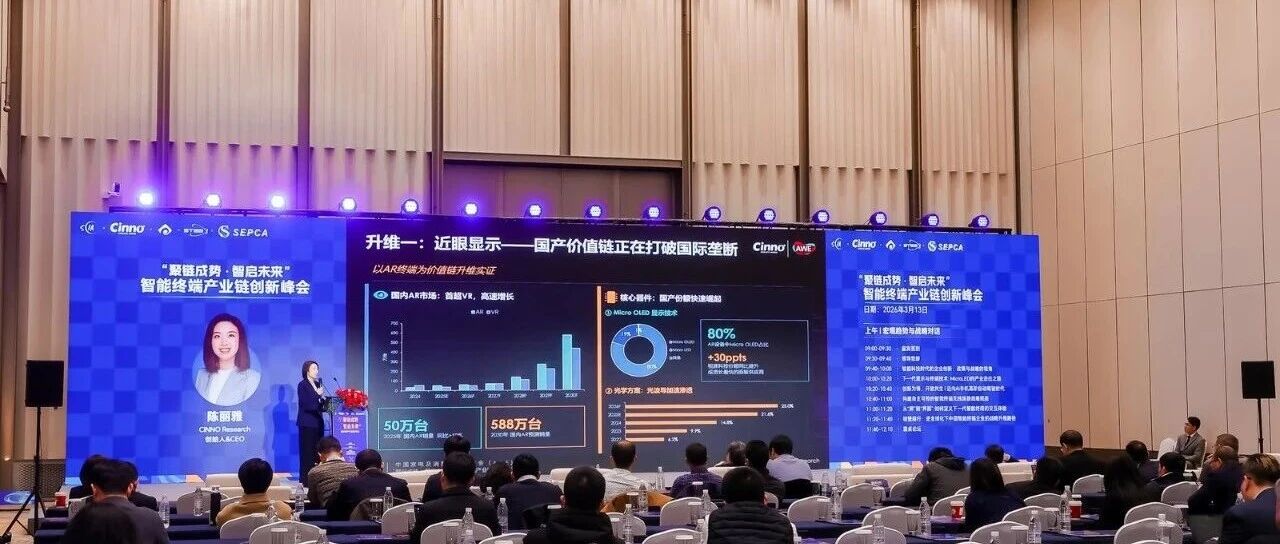
聚链成势 • 智启未来:2026智能终端产业链创新峰会圆满举办,共探产业破局新路径
CINNO Research· 2026-03-17 12:09
Core Viewpoint - The summit focused on the future of the smart terminal industry, emphasizing innovation, collaboration, and the integration of advanced technologies to navigate the challenges posed by global uncertainties and to enhance the industry's competitiveness [4][36]. Group 1: Summit Overview - The "2026 Smart Terminal Industry Chain Innovation Summit" was held in Shanghai, gathering key leaders and industry experts to discuss the future of the smart terminal sector [2][3]. - The event was supported by various industry associations and companies, highlighting a collaborative effort to address industry challenges and opportunities [3]. Group 2: Keynote Speeches - Pan Yan, Deputy Director of the Shanghai Municipal Economic and Information Commission, outlined Shanghai's strategic blueprint for high-quality development in the smart terminal industry, emphasizing the need for a globally competitive ecosystem [4]. - Professor Yu Jiang from the Chinese Academy of Sciences discussed the necessity of digital transformation in supply chains, stating that it has become a "must" for companies to integrate data and intelligent decision-making to meet national strategic needs [5]. - Dr. Yan Qun, an expert in next-generation display technologies, presented insights on MicroLED technology, highlighting its advantages and the need for industry collaboration to achieve mass production [7]. Group 3: Industry Challenges and Strategies - CINNO Research's CEO Chen Liya discussed the strategic elevation paths for Chinese smart terminal companies amid geopolitical tensions and technological barriers, predicting a significant rise in costs due to AI computing demands and geopolitical risks [15]. - The report indicated that the average price of DRAM is expected to rise by over 105% by 2026, leading to a 25% increase in smartphone costs [15]. - The Chinese display panel industry is projected to capture 70% of global production capacity, with a notable increase in domestic market share for OLED technology [15]. Group 4: Roundtable Discussions - A roundtable discussion highlighted the integration of display and semiconductor technologies, with experts emphasizing the importance of collaboration in developing standards and enhancing supply chain security [18]. - The discussion also addressed the need for companies to adapt their compliance strategies for international markets, particularly in light of potential legal challenges [18]. Group 5: Industry Innovations and Applications - The afternoon sessions focused on practical applications of technology, with presentations on exoskeleton robots and humanoid robots, showcasing their potential in various sectors [21][22]. - Innovations in acoustic technology were discussed, emphasizing the shift towards interactive sound interfaces in smart devices, which are becoming essential for user interaction [24]. - The advancements in display technologies were highlighted, with a focus on how AI and energy efficiency are driving the evolution of display interfaces [27][28]. Group 6: Future Outlook - The summit concluded with a call for the smart terminal industry to embrace innovation and collaboration to navigate the complexities of the global market, aiming for a transition from cost competition to value chain competition [36]. - CINNO Research aims to continue providing insights and support for the high-quality development of the smart terminal industry [36].
前 P10:阿里高层最不缺有认知的人,最缺的是愿意默默付出和实践的人
程序员的那些事· 2026-03-16 13:37
Core Viewpoint - The article discusses the departure of Junyang Lin from Qwen and highlights the importance of practical action over mere cognitive understanding in the AI era, as emphasized by Frank Wang. Group 1 - Junyang Lin announced his departure from Qwen on March 4, 2026 [1] - Frank Wang believes that while there are many knowledgeable individuals in Alibaba, there is a lack of those willing to work quietly and implement ideas [2] - In the AI era, cognitive understanding is not the key; rather, the ability to respect common sense and take action is crucial for success [2]